



It’s fairly self-explanatory: Anybody who needs to keep their drill bits, multimeters, wire cutters, and other essentials within their reach needs a toolbox. While you can always find an easy, portable storage box to carry all your existing essentials, getting your hands on a dedicated toolbox that comes with all the required essentials and separate compartments comes in handy, especially if you don’t have all of the required tools for the job. You’ll need to know what to look for before you just go out there and choose a too box; this article will cover it all. Not only have we put together a list of the best deep tool boxes in 2023, but we’ve also provided a detailed buying guide that will answer all of your burning questions about them. So, without further ado, let’s get started so we can get you building!
Detailing the Best Deep Toolboxes of 2023
Best Overall

The DEWALT TSTAK deep toolbox is perhaps one of the best in its category. Each drawer has 9 compartments to store all your tools separately and the dividers are adjustable, giving you more flexibility to make space for bigger tools. All the units can link up with durable side latches for safe stacking and ease of carrying.
Pros
- Adjustable dividers for more flexibility
- Can sustain up to 44 pounds of weight
- Convenient handle for portability
Cons
- Doesn’t come with foam inserts to protect the tools
Key Features
The flexible platform upon which it is constructed allows several combinations to accommodate tools of different sizes. The deep toolbox is built using heavy-duty metal hinges and latches, giving it a sturdy and reliable structure. Weighing 44 pounds, this toolbox is the perfect weight and size for you to carry around. It also comes with a removable interior tray for convenience. However, some users didn’t like the fact that the deep toolbox didn’t come with foam inserts to protect its contents.
Runner-Up

This is the ideal storage and organization box for a tape measure, power drill, and screwdriver set with removable bins and a locking system. For your numerous tools, you will enjoy ample tool storage with the bottom divider, which offers deep storage for more extensive tools such as power drills, hammers, and flashlights.
Pros
- Polypropylene construction for durability
- Central locking system gives more stability and security
- The extendable handle makes it easier to carry
Cons
- This deep toolbox is not waterproof
Key Features
The box is made with all-weather resin with a weight capacity of 66 pounds. It has a weather-resistant polypropylene construction, which helps prevent peeling, rusting, and denting. It is also equipped with a central locking system for stability and security when traveling. It comes with six removable bins, which come in 2 sizes used for organizing hardware, small parts, and bolts and nuts. Potability is another feature that makes this box stand out. It comes with an extendable handle that makes it easier to carry.
Honorable Mention

If you are searching for a compact toolbox that can fit all your essential tools and is lightweight and durable, this is an ideal choice. It was built with the user in mind and takes toolbox organization to a new level! Includes a lid organizer for all vital accessories and minor parts and also has removable latches which can get operated using one hand, thus making it easy and quick to detach and connect.
Pros
- Double-sided locking system to keep the tools secure
- Detachable bottom section with a separate handle
- Adjustable dividers for more flexibility
Cons
- Might need foam inserts to keep the tools from clattering inside the box
Key Features
This heavy-duty deep toolbox can handle a capacity of 66 pounds, making it the perfect organizer for all your essential tools. It has removable dividers, which makes it easy to customize the organization of parts and tools. The extendable handle and rolling wheels are great for transporting it from one site to another. It has a simple proportion and shape, which gives it easy access to both power tools and hands. However, it’s important to note that the box is not waterproof, so users will have to handle it with care.
Also Consider

Makita Interlocking Cases rank as one of the best products from the brand. It comes with interlocking cases made to help transport and organize your power tools. This box can be conveniently linked, stacked, and transported together using a collective array of features. The box is compatible with the SP6000J/J1 system as well as other modular storage systems.
Pros
- Offers optional foam inserts
- Reinforced lid for durability
- Rounded handle for easy transport
Cons
- Doesn’t have a locking mechanism to keep tools secure
Key Features
This extra-large interlocking deep toolbox has corresponding channels located along the base and lid for non-shift stacking. It links multiple cases together, and the interlocking latches help to secure the lid shut. The toolbox has a rounded carrying handle and is low-profile for easy use. The foam insert ensures that your tools stay safe and secure inside the box during transportation. However, these inserts are sold separately and are not included in the purchase.
Buyer's Guide to Finding the Best Deep Toolbox
How To Find the Best Deep Toolbox for Your Needs
People spend a lot of time choosing the tools they need for a specific task. Tools are expensive and vital to certain work environments, which is why you need a safe place to store your tools is important as well.
Whether you’re a DIY enthusiast or a professional mechanic, keeping tools and equipment in one place is necessary. Thus, you need to maintain and prolong their value through proper storage. Deep toolboxes are designed to keep your valuables safe without taking up too much space.
Using a deep toolbox will not only keep your tools within reach but can also help you organize your clutter as well. However, with the number of options available in the market, it’s hard to choose the right one; you might end up wasting your money without knowing the basics.
Before shopping, here’s a rundown of everything you need to know about deep toolboxes.
What Are the Different Types of Toolboxes?
Toolboxes have the same function, but they vary in a lot of factors.
Stationary toolboxes
Stationary toolboxes are perfect for a variety of tools. They come with several drawers and compartments that you can label for proper storage. Organize all your tools by keeping the big and heavy ones in the lowest drawers, with the lighter objects in the upper drawers. They also come in different sizes. Average-sized stationary toolboxes have handles on top, while the bigger ones have wheels.
Hand-carry toolboxes
Most people picture toolboxes that look like hand-carry toolboxes. They are the most common and popular type for their handy, compact design. Hand-carry toolboxes also come with sturdy covers and handle on top. Once you open it, you can organize and separate your tools with dividers and trays. They’re best for small and quick repair jobs.
Portable toolboxes
You can compare a portable toolbox to rolling luggage and see the similarities. Both have wheels and handles best for traveling. What makes them easy to move around is the lightweight material they’re made of, which keeps your tools safe and portable. This toolbox also has a chest of drawers to arrange your tools according to your preference. If you frequently travel for work and need your tools, you could utilize a portable toolbox.
Rolling toolboxes
If you need to transport big and bulky tools at the same time, rolling tool boxes are your best option. They come in an upright design, consisting of wheels and stacked-up drawers for easy mobilization.
Rolling and workbench toolboxes
These are similar to rolling toolboxes, but what makes them different is their flat, sturdy workbench on top of the box. This can be convenient for people who don’t have designated work areas or need a portable workspace. You can simply move your deep toolbox wherever you want and work on the bench at the same time. Some rolling and workbench tool boxes have a height adjustment system that allows you to work while standing.
Truck-mounted toolboxes
Carrying a large toolbox in a distant or remote work area may not be convenient for some. If this is your concern as well, you should opt for truck-mounted toolboxes. Before buying this type of toolbox, make sure that you know where to put it inside the truck. You can choose from side-mounted, rail-top mounted, and cross bed toolboxes. Then, choose one that fits in your truck. Set up the toolbox with bolts and hinges, and you’re good to go!
What Should a Person Consider Before Buying a Deep Toolbox?
Aside from these classifications, you can also narrow down your options with the help of these additional factors.
1. Material
Did you know that the earliest toolboxes were made from wood? While you can still find that material, manufacturers have created modern toolboxes made from other, more sustainable materials.
- Aluminum toolboxes are one of the top picks when it comes to their special properties. In choosing an aluminum toolbox, you can assure that it’s durable and lightweight at the same time. It’s composed of piled-up aluminum sheets that give a rough, rugged texture. They are also corrosion-resistant. This is why many people still prefer this material. Aluminum toolboxes are commonly placed in trucks and other types of vehicles.
- Toolboxes made of steel are the most durable of all material types. They can resist dents and scratches, which can be ideal for long-term use. Aside from that, steel toolboxes can withstand extreme weather conditions, which allows you to carry them wherever you need them.
- If you want an upgrade from aluminum or steel, you can go for stainless steel toolboxes. They’re quite expensive, but the price is justifiable. Stainless steel toolboxes are lighter, more corrosion-resistant, and the best option for longevity. You can use a stainless steel toolbox for years and expect that it still looks brand new.
- For a budget-friendly and convenient toolbox, opt for one made from plastic. Plastic toolboxes are also lightweight and non-corrosive, but they’re less durable than the other types. Despite that, they’re still popular for their transparent walls, where you can see the tools in place. Cleaning and maintenance are also easier with plastic toolboxes.
2. Ease of access
Aside from the material itself, you should also pick a deep toolbox that you can easily open and close the cover to access the tools inside. Most importantly, get one with a key and lock for securing your tools.
3. Mobility
Before buying a deep toolbox, you must know the scope of the project or task where you will need it. Is it only for home use? Or do you have projects in far and remote areas? For the former, a toolbox with a handle can suffice. The latter situation may require you to buy a toolbox with a handle and wheels for easy transportation.
4. Size
Check all the tools and equipment that you have. If you have big, heavy tools, don’t hesitate for a larger box. If you mainly have small, handy tools—go for a compact box for easy access.
5. Durability and rigidity
Before making a buying decision, the last thing you should consider is quality. The overall structure of the box should be able to support all the tools and equipment that you have. Check the sturdiness of the box and the extra parts such as trays and dividers. If you’re opting for a rolling toolbox, take a look at the casters and wheels to make sure you’re buying a high-quality deep toolbox.
Organizing a Tool Box
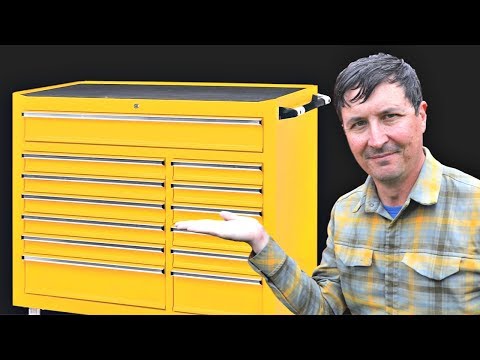
It’s important to keep your toolbox tidy and organized so that you can spend more time actually working than looking for tools. This video from Wranglerstar may help you organize your tools:
People Also Asked
Are deep toolboxes expensive?
Toolboxes serve the crucial purpose of protecting your tools and storing them efficiently. They're made of high-quality and durable material and offer a variety of features that can make them expensive.
What can I put inside a deep toolbox?
A deep toolbox can store a lot more than regular toolboxes. These handy storage boxes have plenty of compartments for all your tools to be safely stowed away for when you need them. Since most toolboxes have adjustable compartments, you can store even the bigger hardware tools like drill machines and hammers with ease.
How can I clean my deep tool ox?
A portable toolbox will need occasional cleaning to make sure that it doesn't collect any dirt or oil. You can clean the outside of your deep toolbox with a regular surface cleaning. For the inner compartments that might have some oil residue, a cloth soaked in paint thinner will work best to loosen the dirt and oil particles.


