


Few woodworking tools combine versatility with mess-making ability quite like a router table. A router bit spinning at high speed can produce a steady stream of chips along with plenty of fine airborne dust.
The most effective solution is to capture dust and chips as close to the router bit as possible.
The challenge is that debris doesn't always travel in the same direction. When you're routing an edge, most of it can be captured behind the bit at the fence. Cut a dado or groove, however, and much of the debris is trapped beneath the workpiece and falls below the table.
That's why an effective router table dust collection setup may use more than one collection point.

1. Start with a Fence-Mounted Dust Port
For most router tables, a fence-mounted dust port is the simplest place to start.
The port sits directly behind the router bit and connects to a shop vacuum or compatible dust collection hose. Because it's positioned close to where the cutter throws the chips, it can be particularly effective during edge-routing operations.

The setup shown here uses a port with a 2 1/2" opening, a common size for connecting to shop vacuum and small-shop dust collection hoses.

For routing profiles along the edge of a board, this simple addition can capture a large percentage of the debris before it spreads across the table and into the shop.
Woodsmith Tip: Get Close to the Cutter. Dust collection becomes less effective as the collection point moves farther from the source. Position the fence opening and dust port as close to the router bit as the operation safely allows while maintaining adequate clearance for the bit and workpiece.
2. Collect Dust Below the Router Table
A fence port works well for edge routing because the chips have a clear path toward the fence. Dados and grooves are different.
With the cutter buried beneath the workpiece, the board itself can block the path to the fence-mounted port. Chips and dust are then directed below the table.
For these cuts, adding a below-table collection point around the router bit can make a big difference.

The system shown here uses a collector surrounding the router bit and insert opening. Airflow pulls debris downward before it can collect around the router or escape into the shop.

This particular design attaches to the router table insert plate and can be connected to a shop vacuum or dust collector.

The larger lesson isn't necessarily the specific accessory. It's where the airflow is located. For cuts that trap debris beneath the workpiece, collection below the table puts suction where the chips naturally travel.
3. Enclose the Router for More Complete Collection
Another approach is to surround the router with an under-table dust collection enclosure.
Instead of collecting debris only immediately around the bit, an enclosure captures chips that fall through the router plate and contains them before they're scattered throughout the cabinet.

Used along with a fence-mounted port, this creates two collection zones:
- Above the table at the fence
- Below the table around the router
This can provide more complete collection across a wider variety of router table operations.
Don't Forget Router Cooling
There's an important consideration when enclosing a router: airflow.
A router motor needs adequate ventilation for cooling. The enclosure shown here includes an adjustable vent that regulates airflow through the box while providing cooling air for the router.
So don't simply build an airtight box around the motor. Any router enclosure needs to account for the motor's ventilation requirements and follow the router manufacturer's recommendations.
The original enclosure shown here was intended for use with a full-size dust collector rather than a shop vacuum, so the dust collection system needs to be matched to the enclosure design.
4. Dust Collection for Freehand Routing
Freehand routing presents another challenge.
When routing a curved or irregular workpiece, the fence may need to be removed. That eliminates the fence-mounted dust port right when you still have a router bit throwing chips across the table.
A freehand router guard with integrated dust collection provides one solution.

The setup shown here combines several functions. It provides a starting point for feeding the workpiece into the bit, helps collect chips and dust, and includes a clear shield between the cutter and operator.
The exact hardware may vary from one router table to another, but the principle remains useful: when the fence goes away, move the dust collection point with it.
Which Router Table Dust Collection Setup Works Best?
There's no single dust collection setup that's ideal for every router table operation.
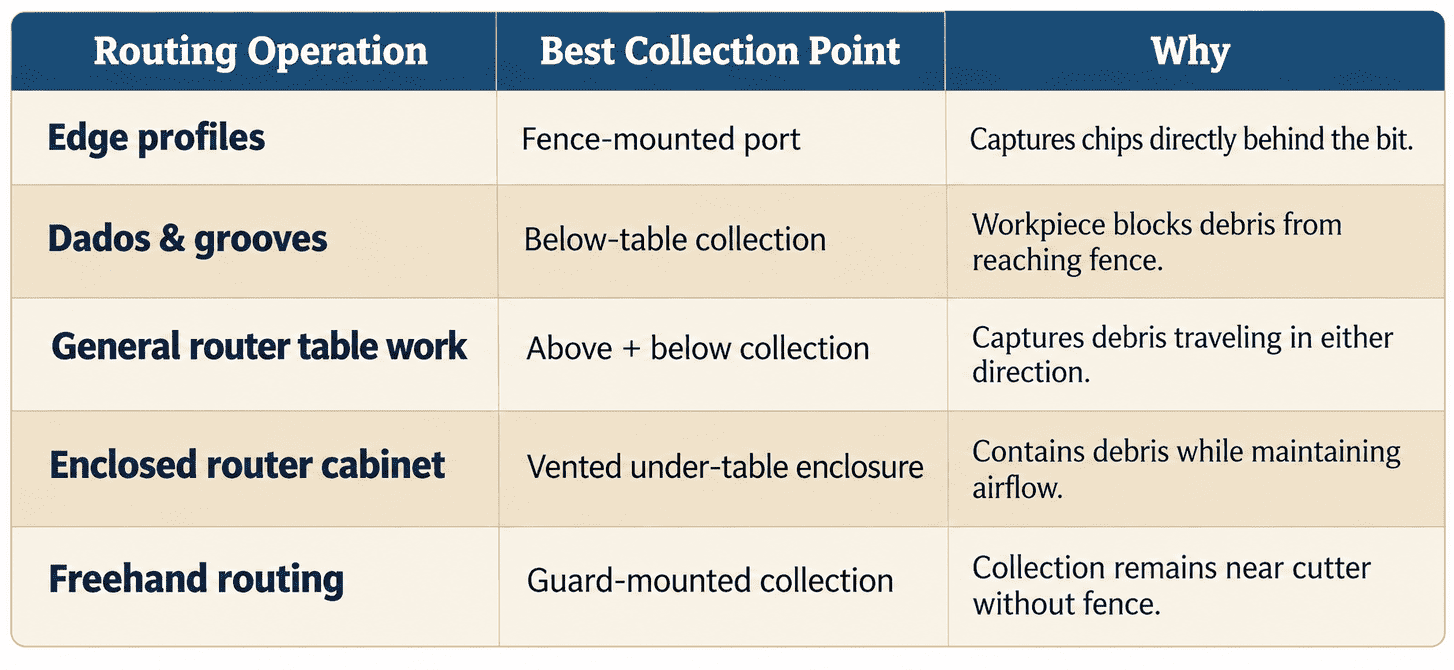
For a basic router table, I'd start with a fence-mounted port. It's simple and effective for many common operations.
If you routinely cut grooves, dados, or other operations where the cutter is buried beneath the workpiece, add below-table collection. Combining the two provides a much more complete system.
Better Dust Collection Starts at the Source
The goal isn't simply to connect a larger dust collector to the router table. Good dust collection depends just as much on where you collect the debris.
Put the collection point close to the cutter. Pay attention to where chips travel during different operations. And when possible, capture debris both above and below the table.
A few thoughtful improvements can dramatically reduce the pile of chips around your router table — and, more importantly, help control the fine dust that would otherwise end up in the shop air.
Upgrade Your Router Table
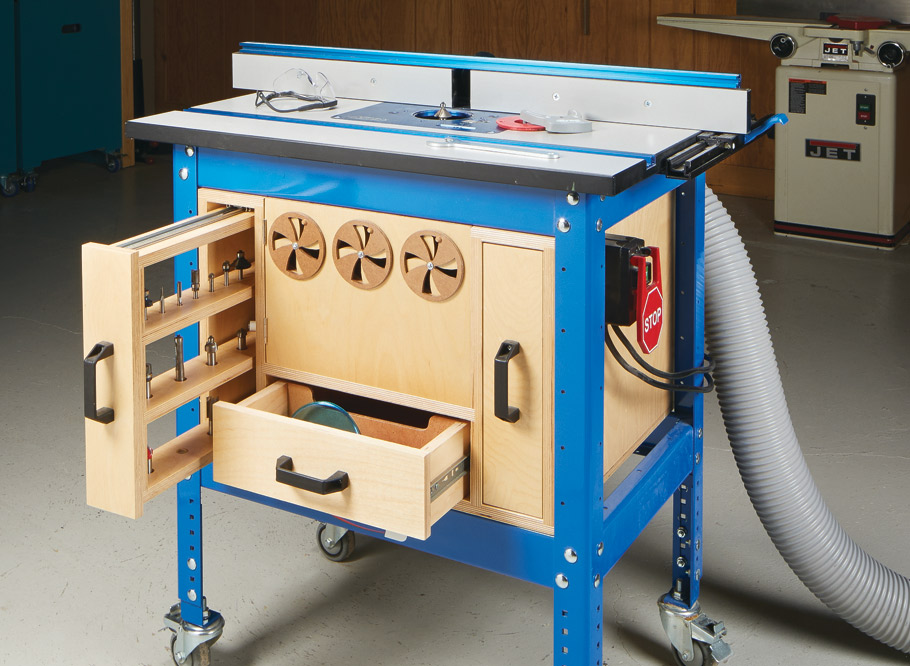
Turn the unused space beneath your router table into a more organized and efficient workstation. This Router Table Storage Cabinet adds drawers and slide-out router bit storage while enclosing the router for improved dust collection. Built-in airflow vents and a dust collection connection help capture chips while keeping router accessories organized and close at hand.
BUILD THE ROUTER TABLE STORAGE CABINET → Add Storage and Built-In Dust Collection


