



Coping Saw vs. Fret Saw: Uses, Blades & Cutting Tips
When it comes to cutting curves, intricate shapes, and small woodworking details, you don't always need a power tool. A coping saw or fret saw can often do the job with greater control and less setup than a jigsaw or band saw.
These two hand saws look similar, but each has distinct advantages. A coping saw is ideal for cutting curves, fitting molding, and removing waste from small workpieces. A fret saw uses a much finer blade, making it especially useful for delicate fretwork, hand-cut dovetails, and decorative inlays.
Understanding the differences between coping saws and fret saws will help you choose the right tool for the job and get cleaner, more accurate cuts.
What Is a Coping Saw?
A coping saw is a versatile hand tool designed for cutting curves and intricate shapes in wood and other materials.
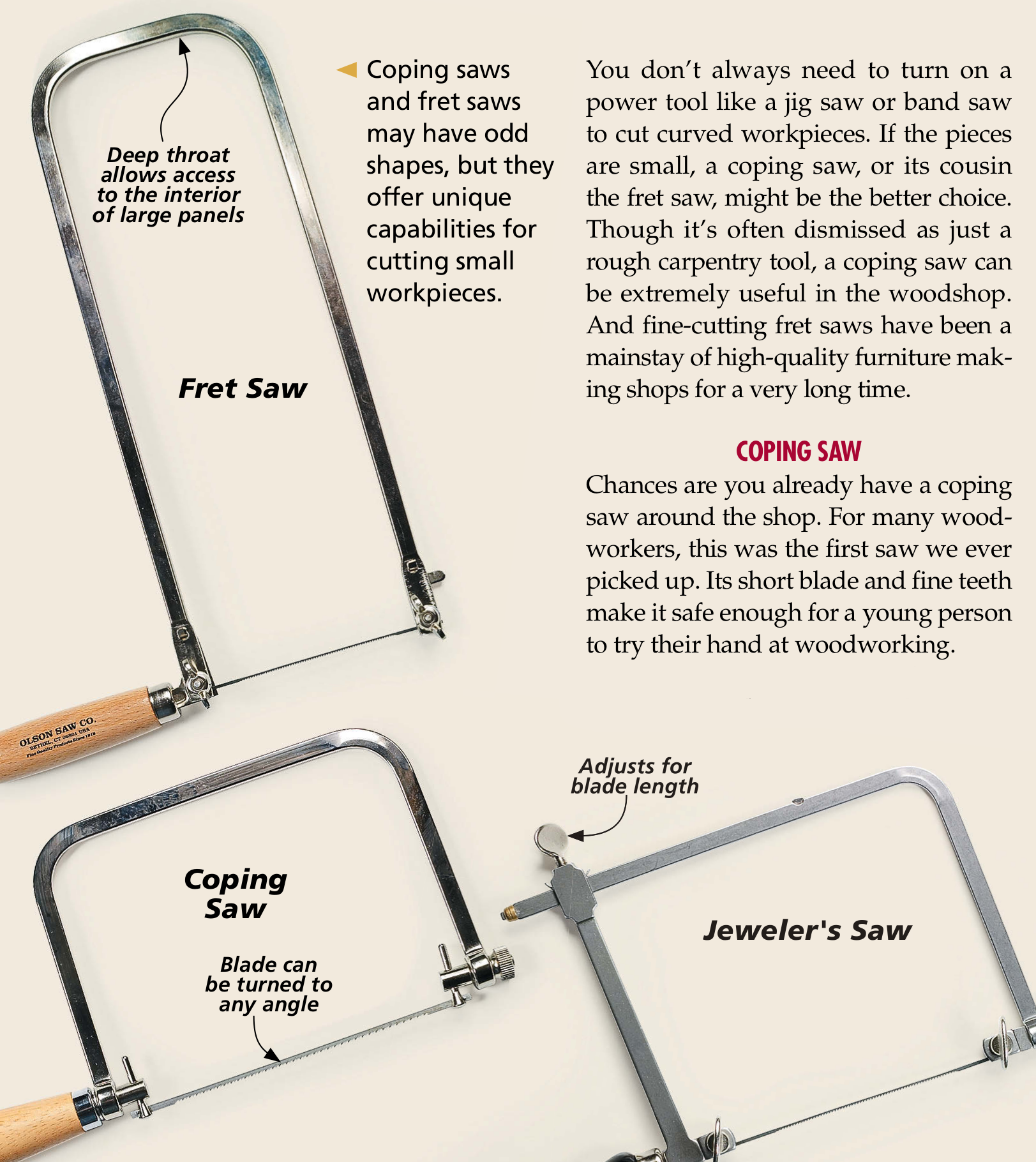
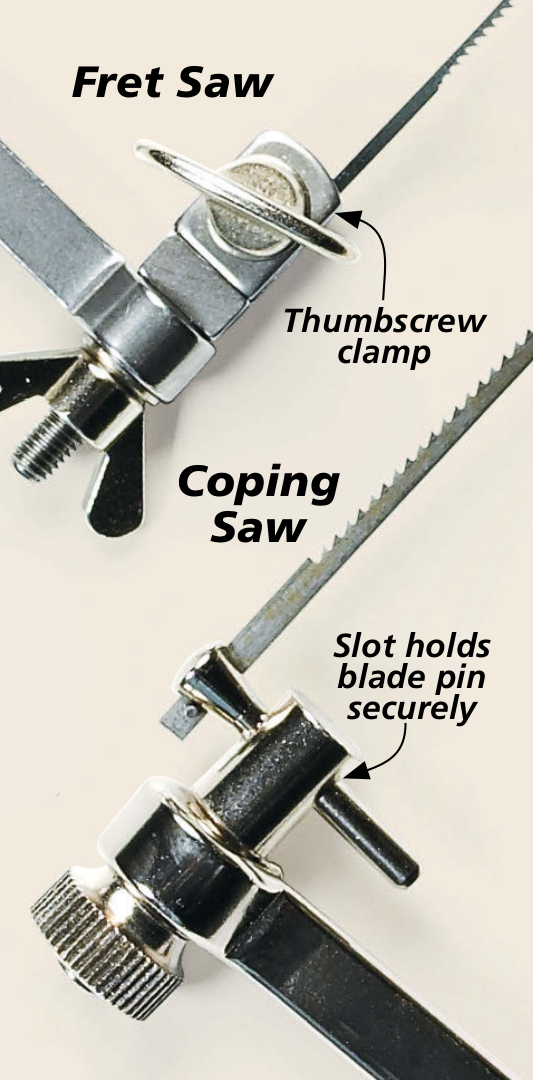
The saw features a C-shaped steel frame that holds a narrow blade under tension. Pins on the ends of the blade fit into pivoting holders, and turning the handle tightens the blade.
One advantage of this design is that the blade can be rotated within the frame, allowing you to cut at different angles or work into tight corners.
A coping saw blade can be installed to cut on either the push or pull stroke. For most woodworking tasks, positioning the teeth to cut on the pull stroke provides good control.
Common Uses for a Coping Saw
Coping saws are useful for a variety of woodworking tasks, including:
- Cutting curved furniture parts: Follow curved layout lines on small workpieces.
- Coping molding joints: Shape the end of one molding piece to match the profile of another.
- Making interior cutouts: Remove material from inside a workpiece without cutting through its outer edge.
- Cutting tight corners: Rotate the blade within the frame to reach areas that are difficult to access with other saws.
To make an interior cut, drill a starter hole inside the waste area. Remove one end of the blade from the saw, thread it through the hole, and reattach it to the frame.
This allows you to cut openings without disturbing the surrounding material.
What Is a Fret Saw?
A fret saw is similar to a coping saw, but it's designed for finer, more intricate cutting.
The most noticeable difference is its deeper frame, which provides additional clearance when cutting detailed patterns farther from the edge of a workpiece.
Another important distinction is the blade attachment system. Unlike coping saw blades, which have pins at their ends, fret saw blades are typically pinless and held in place by clamps.
These extremely thin blades allow the saw to follow tight curves and make precise cuts in delicate materials.
Some fret saws can also accept compatible pinless scroll saw blades, providing additional options for different materials and cutting tasks.
Fret Saws vs. Jeweler's Saws
Smaller fret saws are often called jeweler's saws because they're commonly used for cutting intricate shapes in thin metal.
Many jeweler's saws feature adjustable frames that accommodate different blade lengths.
While these tools are especially useful for delicate work, their thin blades aren't intended for the heavier cutting tasks typically handled by a coping saw.
When to Use a Fret Saw for Woodworking
A fret saw excels at tasks where precision and the ability to make tight turns are more important than cutting speed.
Removing Waste from Hand-Cut Dovetails
One of the most useful applications for a fret saw is removing waste between the pins and tails of hand-cut dovetail joints.
After making the initial cuts with a dovetail saw, insert the fine fret saw blade into the kerf and turn it to cut across the waste near the baseline.
Because the blade is so thin, it fits easily into narrow saw kerfs and can make tight turns.
With practice, this technique removes most of the waste quickly, leaving only a small amount of cleanup with a chisel.
Cutting Inlays and Marquetry
Fret saws are also ideal for cutting decorative inlays, marquetry, and other intricate woodworking details.
The fine blade follows tight curves and delicate patterns that would be difficult to cut with a larger saw.
Because these workpieces are often thin and fragile, supporting the material properly is essential.
A simple fretwork cutting table, sometimes called a bird's-mouth or V-board, provides the necessary support.
The V-shaped opening allows the blade to move freely while supporting the workpiece on both sides of the cut.

Choosing the Right Coping Saw and Fret Saw Blades
The blade you choose has a major influence on cutting speed, accuracy, and surface quality.
Both coping saws and fret saws accept a variety of blades designed for different materials and cutting tasks.
Coping Saw Blade Sizes
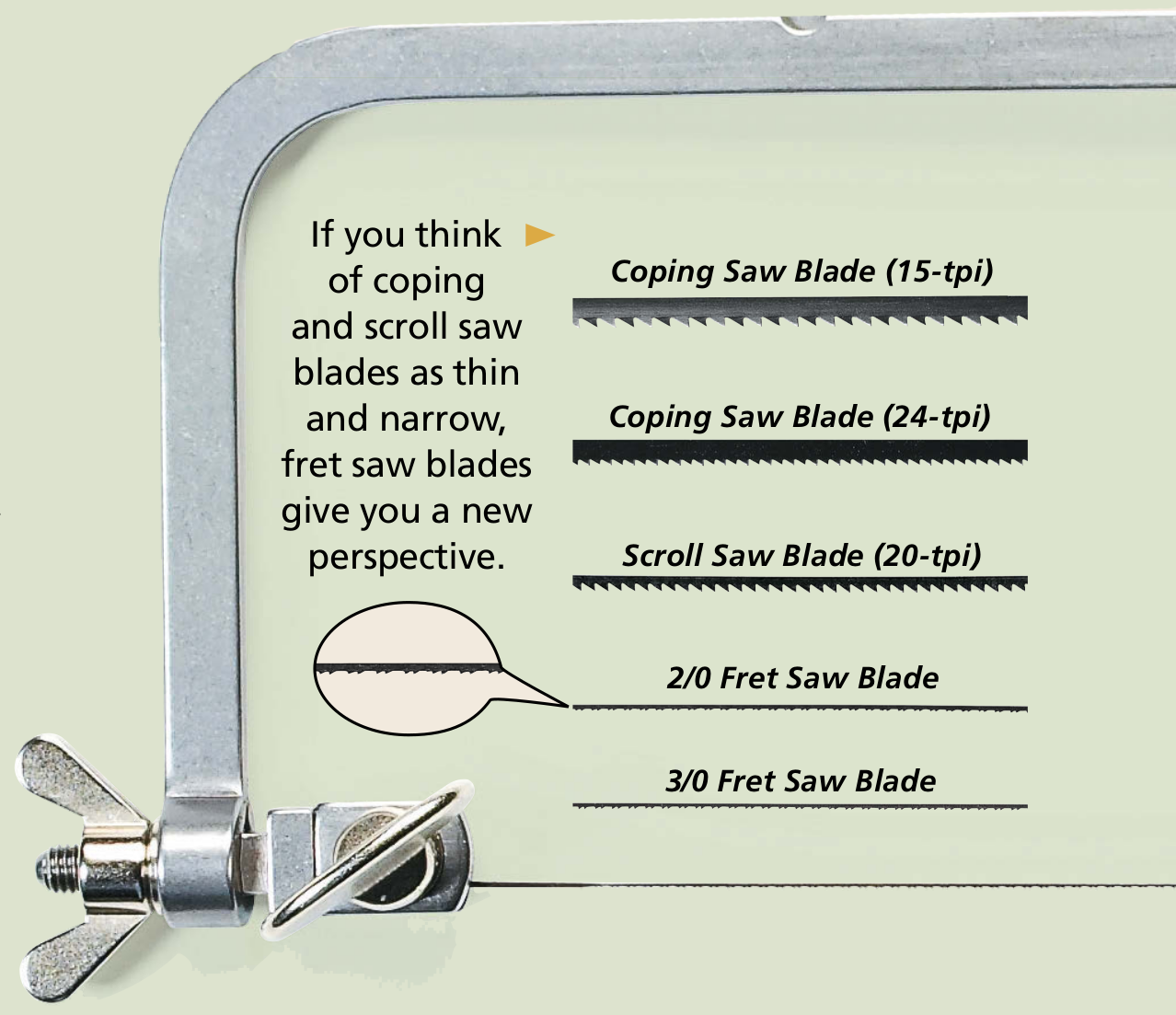
Coping saw blades are commonly available with 10, 15, 20, or 24 teeth per inch (TPI).
- 10–15 TPI: Coarser blades that remove material quickly and work well for general curved cuts.
- 20–24 TPI: Finer blades that produce smoother cuts and are better suited for detailed work.
For most woodworking tasks, a finer blade provides better control and leaves less cleanup along the cut edge.
Specialized coping saw blades are also available for cutting plastic, metal, and other materials.
Fret Saw Blade Sizes
Fret saw blades are commonly identified by numbered sizes that correspond to blade dimensions.
Two fine sizes traditionally used for woodworking are:
- 2/0 blade: Approximately 0.011" thick.
- 3/0 blade: Approximately 0.009" thick.
These thin blades are well suited for detailed work, including dovetails, fretwork, and inlays.
For thicker material or more aggressive cutting, a compatible scroll saw blade may be a better option.
Tips for Making Smooth, Accurate Cuts
Whether you're using a coping saw or fret saw, a few simple techniques will help improve your results.
Keep the blade properly tensioned. A loose blade can wander during the cut, making it difficult to follow your layout lines.
Support the workpiece. Clamp larger parts securely and use a bird's-mouth cutting table when working with thin or delicate material.
Let the saw do the cutting. Use smooth, controlled strokes rather than forcing the blade through the wood.
Avoid twisting the blade. Turn the saw gradually while cutting to prevent binding, especially when using the thin blades found on fret saws.
Choose the right blade. Use coarser teeth for faster cutting and finer blades when accuracy and surface quality are the priorities.
Thin fret saw blades can break if they're forced or twisted in a cut. Keeping the blade moving freely and avoiding excessive pressure will help extend blade life.
Coping Saw vs. Fret Saw: Which One Do You Need?
Both tools deserve a place in a woodworking shop, but they serve slightly different purposes.
A coping saw is the better choice for general curved cuts, coping molding, and removing material from small workpieces.
A fret saw is ideal for intricate patterns, delicate inlay work, and removing waste from hand-cut dovetails.
Neither tool requires much space or complicated setup, and both offer excellent control for tasks that can be awkward with power tools.
If you regularly cut curves, fit molding, or make traditional woodworking joints, adding a coping saw and fret saw to your hand-tool collection is a worthwhile investment.
More Hand Tool Tips & Techniques

There's something satisfying about working with hand tools, and they're just as useful in today's workshop as ever. From cutting precise joinery with handsaws and chisels to smoothing surfaces with hand planes, the right techniques can make woodworking more accurate and enjoyable. Explore our collection of hand tool tips, techniques, and practical advice to help you sharpen your skills and get better results without plugging in a power tool.
READ MORE → Explore More Hand Tool Tips & Techniques


