



Making & Using Router Templates for Perfect Matching Parts
A router is one of the most versatile tools in the woodworking shop. From shaping decorative edges to cutting joinery, it can handle jobs that would take considerably longer with hand tools. But one of my favorite ways to get more from a router is by using templates to make identical parts.
Whether you're shaping curved cabinet rails, making matching furniture components, or cutting decorative inlays, a well-made router template takes much of the guesswork out of the process.
The concept is simple: A router bit or guide bushing follows the edge of a template, allowing you to reproduce the same shape accurately. Once you understand how template routing works, you can use it for a wide variety of woodworking projects.
How Router Template Routing Works
If you've used a dovetail jig, you're already familiar with the basic idea of template routing.
A router equipped with a guide bushing follows the fingers of the dovetail template, guiding the bit to cut evenly spaced joints.
The same principle works for curved parts, matching profiles, recesses, and decorative inlays.
The key is choosing the right router bit or guide bushing for the job, then making a template with smooth, accurate edges.
Choosing the Right Router Bit for Template Routing
There are several ways to follow a template with a router. The best choice depends on where the template is positioned relative to the workpiece.
Flush-Trim Router Bits
A flush-trim bit is one of the most common choices for template routing.
The traditional flush-trim bit has a guide bearing at the tip of the bit. This makes it useful when the template is positioned beneath the workpiece while using a handheld router.
As the bearing follows the template, the cutting edges trim the workpiece flush with the template's profile.
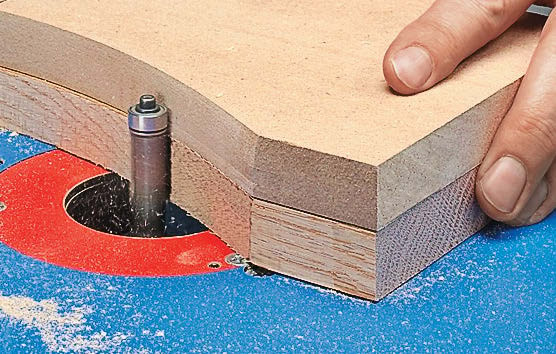
A flush-trim bit also works well in a router table. In that setup, the template can be positioned above the workpiece, allowing the bearing to follow its edge.
For example, this is a handy way to make matching curved top rails for cabinet doors.
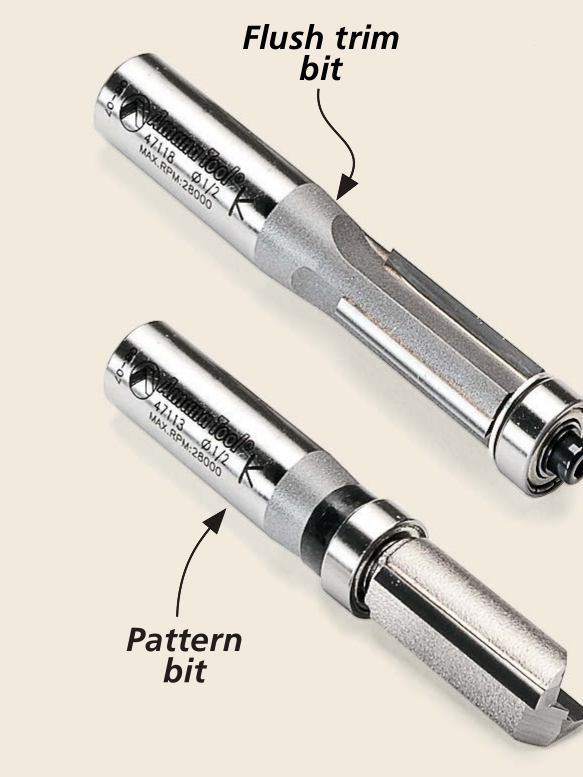
Pattern Router Bits
Sometimes it's more convenient to attach the template to the top of the workpiece when using a handheld router.
For this setup, I usually reach for a pattern bit.
Unlike a traditional flush-trim bit, a pattern bit has its guide bearing near the shank, above the cutting edges.
This allows the bearing to follow a template mounted on top of the workpiece while the cutters shape the material below.
Pattern bits are especially useful for routing curved furniture parts and other irregular shapes.
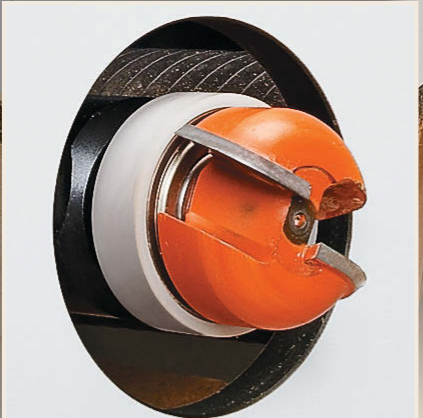
And they aren't limited to straight cutting profiles. A bowl-routing bit, for example, can use a bearing near the shank to follow a template while creating a rounded recess.
Router Guide Bushings
Another option is to use a guide bushing mounted in the router's baseplate.
Instead of a bearing on the bit following the template, the outside edge of the bushing rides against the template.
Guide bushings are available in different diameters, making them useful with a variety of router bits.
One important difference is that a guide bushing creates an offset between the template edge and the cutting edge of the bit.
That offset needs to be considered when laying out the template.
For a centered guide bushing, the offset is:
Offset = (Guide Bushing Outside Diameter − Router Bit Diameter) ÷ 2
For example, a 5/8"-diameter guide bushing used with a 1/4"-diameter straight bit creates a 3/16" offset.
That means the router bit cuts 3/16" away from the edge of the template.
Understanding this relationship is especially important when routing recesses, mortises, and decorative inlays.
How to Make Your Own Router Templates
Commercial router templates are available for many common tasks. But learning to make your own templates gives you the flexibility to create custom shapes for almost any woodworking project.
The process starts with selecting a suitable material.
MDF: My Favorite Template Material
For most router templates, I prefer MDF.
It's flat, stable, inexpensive, and easy to shape using files and sandpaper.
The template shown here is used to create matching curved rails for cabinet doors.
I started by laying out the curve with a compass, then cut the rough shape at the band saw.
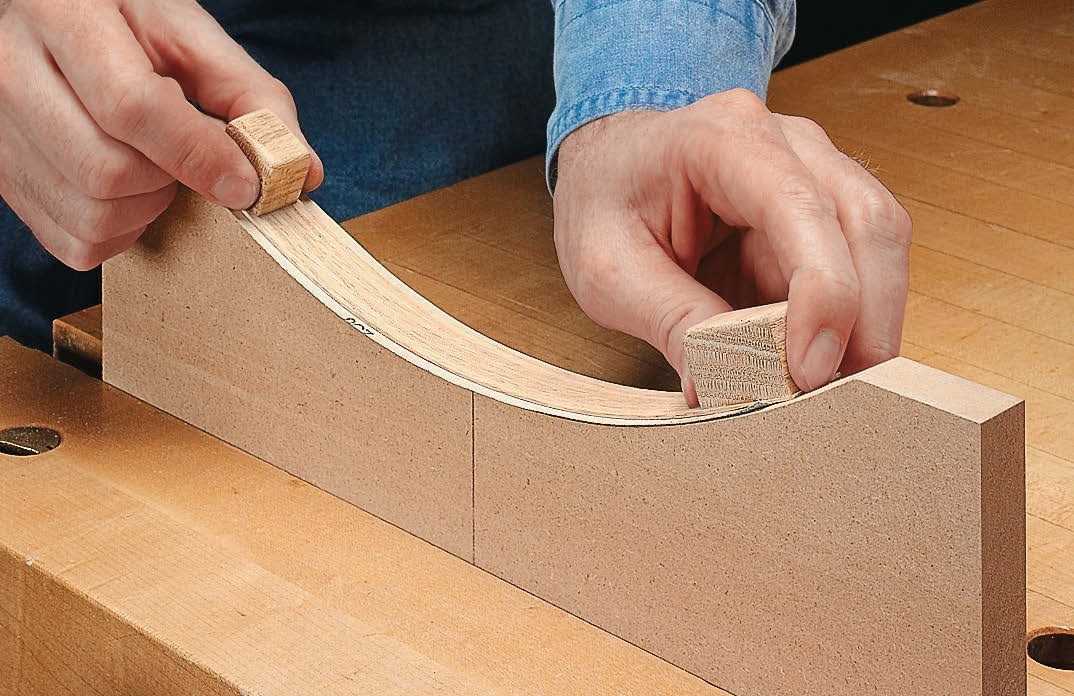
After cutting just outside the layout line, I refined the curve with a file and a simple shop-made sanding strip.
The goal is to create a smooth, consistent edge for the router bearing to follow.
Any bumps or irregularities left in the template can be transferred to every workpiece you rout, so it's worth taking a little extra time to get the shape right.
Hardboard and Acrylic Templates
MDF isn't the only material that works well for router templates.
Hardboard is another inexpensive option. Its smooth surface and consistent thickness make it a good choice for many simple patterns.
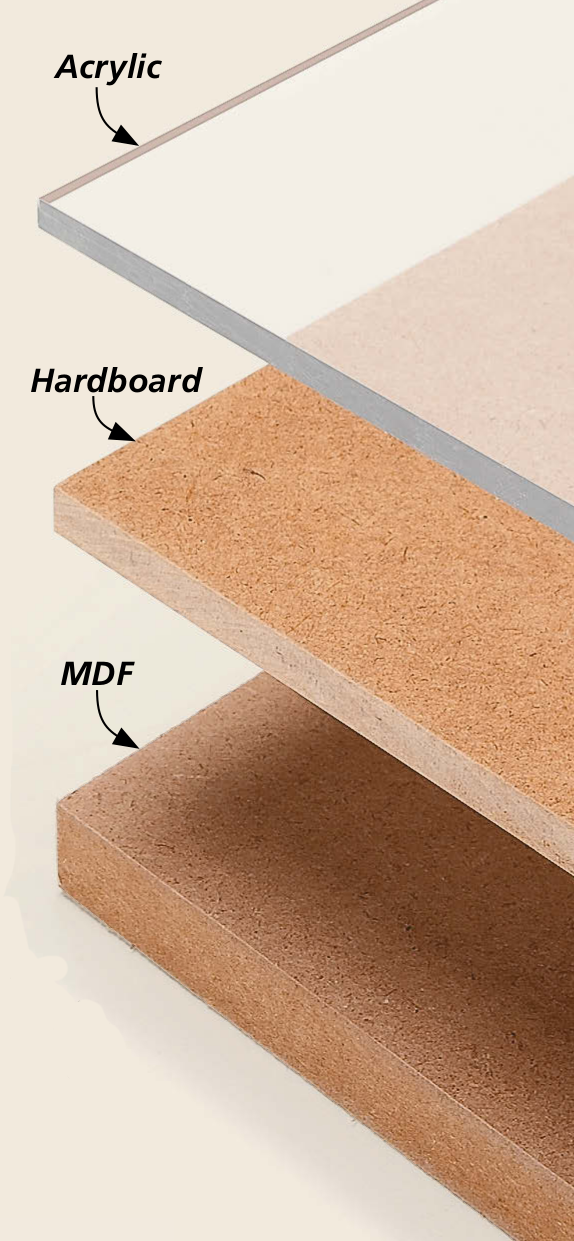
I also occasionally use acrylic, especially when I need to see the workpiece through the template.
A clear acrylic template makes it easier to position the pattern to take advantage of attractive grain or figure in the wood.
Make a Template from Hardwood Strips
Not every template needs to be cut from a solid sheet.
For rectangular openings or recesses, you can make a template using short pieces of hardwood joined with pocket screws.
Simply arrange the pieces to form the desired opening and fasten them together.
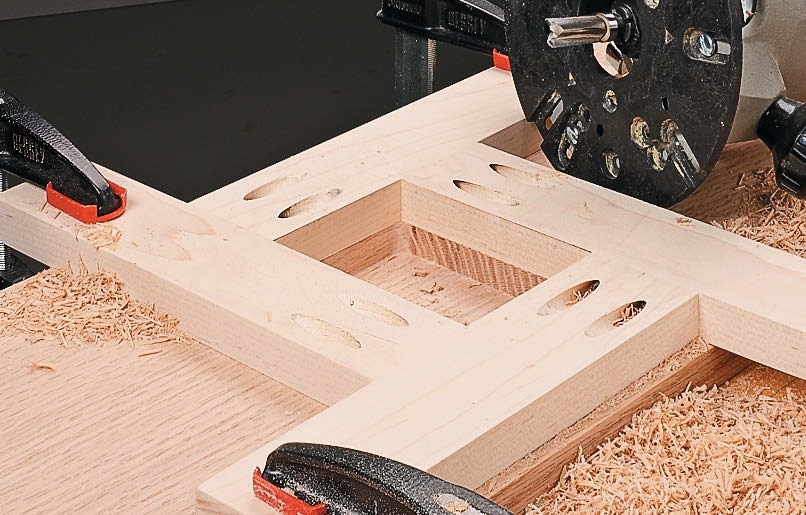
When using a guide bushing, remember to account for the bushing offset when determining the inside dimensions of the template.
This approach is especially useful when you need a custom rectangular routing guide without cutting a large opening in a sheet of MDF.
Tips for Accurate Template Routing
A good template is only part of the process. How you secure and use it matters just as much.
Start by rough-cutting the workpiece close to its finished shape. Removing most of the waste before routing reduces the amount of material the bit needs to cut.
Secure the template firmly to the workpiece using clamps, suitable double-sided tape, or another reliable method that won't interfere with the router.
Make sure the guide bearing stays in contact with the template throughout the cut.
For thick workpieces, take lighter passes rather than trying to remove too much material at once.
Pay attention to grain direction, especially when routing curves. Changing grain direction can increase the risk of tearout or grabbing.
Finally, use a sharp router bit and make sure the workpiece is securely supported before starting the cut.
Decorative Inlays with a Router Template
One of my favorite applications for template routing is making decorative inlays from contrasting wood.
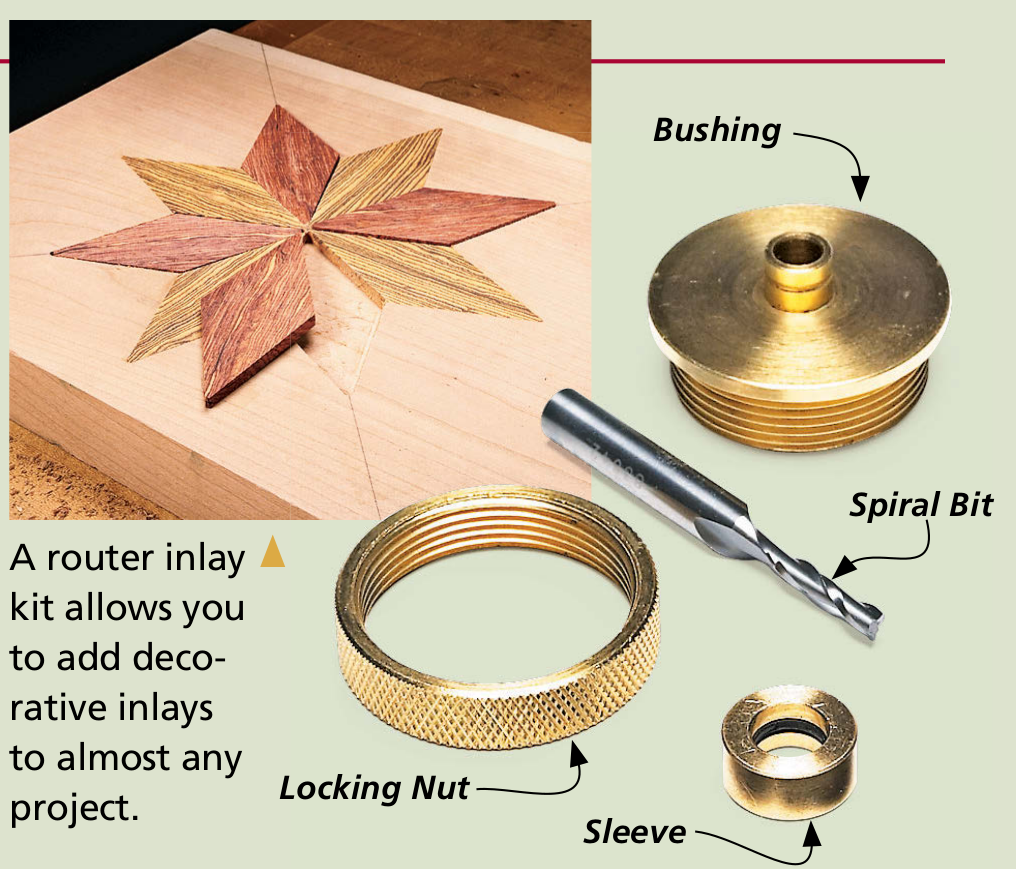
A specialized router inlay kit makes this process surprisingly straightforward.
The kit uses a guide bushing with a removable sleeve. By installing or removing the sleeve, you can use the same template to rout both the recess and the matching inlay piece.
Step 1: Rout the Inlay Recess
Start by positioning the template on the workpiece and securing it with double-sided tape.
Install the guide bushing with its removable sleeve in place.
Follow the inside edge of the template to rout the outline of the recess, then remove the remaining waste inside the opening.
If the design includes sharp corners that the router bit can't reach, clean them up with a chisel.
Step 2: Rout the Matching Inlay
Next, attach the same template to the contrasting wood you've selected for the inlay.
Remove the sleeve from the guide bushing, leaving the smaller-diameter bushing in place.
Follow the template again to rout the outline of the inlay piece.
Then use the band saw to resaw the inlay free from the board.
The change in guide bushing diameter compensates for the router bit's cutting width, allowing the inlay to fit the recess.
With a little practice, this technique makes it easy to add custom decorative details to boxes, cabinet doors, tabletops, and other woodworking projects.
Get Better Results with Router Templates
Once you start using router templates, you'll find opportunities for them throughout your woodworking projects.
They make it easier to create matching curved parts, repeat complex shapes, rout precise openings, and add decorative inlays.
The real secret is taking the time to make a good template and choosing the right router bit or guide bushing for the task.
With those two things in place, you can produce accurate, repeatable results without having to lay out and shape every part individually.


