


How to Cut Round Tenons on Dowels with a Table Saw Jig
When making wooden toys and other small woodworking projects, you'll often need to form a smaller-diameter tenon on the end of a dowel. These round tenons are useful for creating axles, pivot points, and a variety of joinery details.
However, the small size and round shape of a dowel make it difficult to support and control using conventional table saw techniques.
This shop-made dowel tenoning jig provides a way to support the dowel while cutting a round tenon. Best of all, the jig is made from just a couple of pieces of scrap plywood.
Build a Simple Dowel Tenoning Jig
The heart of the jig is a sturdy block made by gluing together two layers of plywood.
A hole drilled into the block holds the dowel in position during the cut. The hole is sized to closely fit the dowel while still allowing it to rotate freely.
The plywood block attaches to the table saw's miter gauge, providing support and helping maintain the position of the dowel relative to the saw blade.
A stop block establishes the position of the jig and helps control the cut.
The straightforward construction makes it easy to create additional jig blocks to accommodate different dowel diameters.
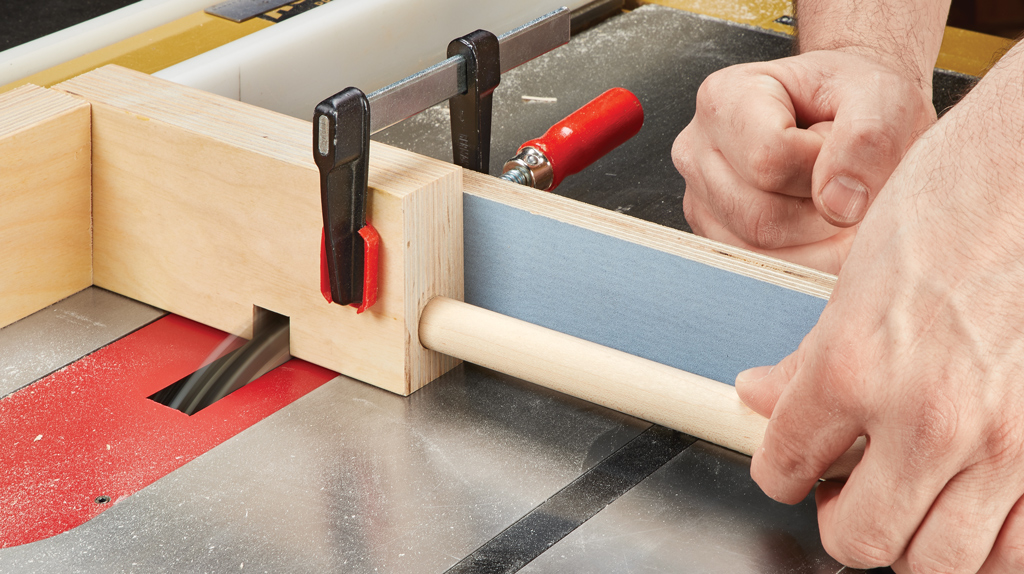
How the Round Tenoning Jig Works
Unlike cutting a rectangular tenon on the end of a board, forming a round tenon requires removing material evenly around the circumference of the workpiece.
The hole in the jig supports the dowel and establishes its centerline. Rotating the dowel relative to the cutting edge allows material to be removed around its circumference, creating a smaller-diameter section at the end.
The resulting round tenon has a defined shoulder where it meets the original diameter of the dowel.
The position of the jig relative to the blade establishes the length of the tenon, while the blade height determines its diameter.
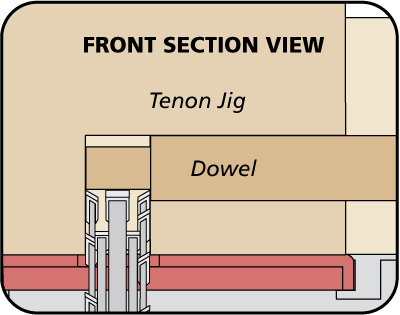
Adjusting the Diameter of a Round Tenon
One of the useful features of this jig design is its adjustability.
Changing the blade height changes the amount of material removed from the dowel and, consequently, the finished diameter of the tenon.
A higher blade setting produces a smaller-diameter tenon, while a lower setting leaves a larger-diameter tenon.
Use a scrap piece of the same diameter dowel to check the setup and verify the finished dimensions before milling your project parts.
A properly sized tenon should fit its mating hole without requiring excessive force.
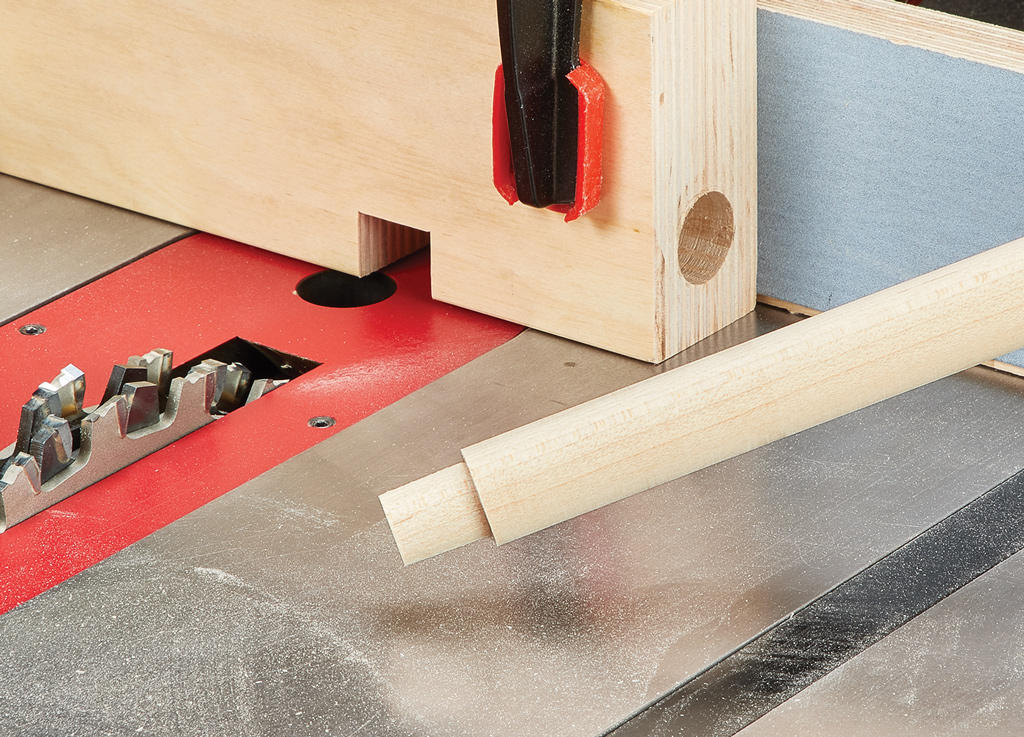
Woodworking Projects That Use Round Tenons
Round tenons are particularly useful when building small woodworking projects, including:
- Wooden toy axles and wheels
- Spindles and decorative dowels
- Pivoting and moving wooden components
- Small handles and knobs
- Traditional wooden toys and mechanical projects
Being able to form a reduced-diameter tenon on a piece of standard dowel stock opens up a number of design possibilities without having to purchase specialty wooden components.
A Simple Jig for Specialized Woodworking Tasks
Shop-made jigs don't need to be complicated to be useful. Sometimes a small block of plywood with a carefully positioned hole is the starting point for solving a specialized joinery challenge.
This dowel tenoning jig illustrates how a purpose-built fixture can provide additional support and more consistent positioning when working with small, round woodworking parts.
Explore More Woodworking Tips & Techniques
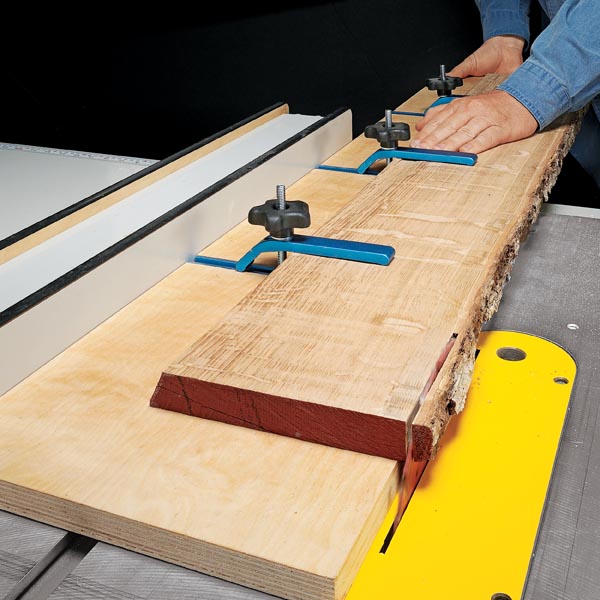
Looking for more clever ways to work smarter in the shop? Explore our collection of woodworking tips and techniques from Woodsmith readers and shop experts. From practical joinery tricks and sharpening advice to finishing techniques, tool improvements, and simple workshop solutions, you'll find plenty of useful ideas to make your next project easier and more enjoyable.
READ MORE → Explore More Woodworking Tips & Techniques


