


The mortise and tenon joint is one of the strongest and most versatile joints in woodworking. But there's more than one way to make one. In fact, mortise-and-tenon joinery includes a whole family of joints, each suited to different structural and design needs.
A simple stub tenon may be all you need for a cabinet door, while a table or chair calls for a stronger standard mortise and tenon. Other situations may benefit from a haunched tenon, through tenon, twin tenons, or split tenons.
So how do you choose the right one?
The key is to consider how the joint will be used, the amount of stress it needs to withstand, the dimensions of the parts being joined, and whether the joint will be visible. Understanding the strengths and limitations of these common types of mortise and tenon joints makes choosing the right one much easier.
Stub Tenon and Groove Joint
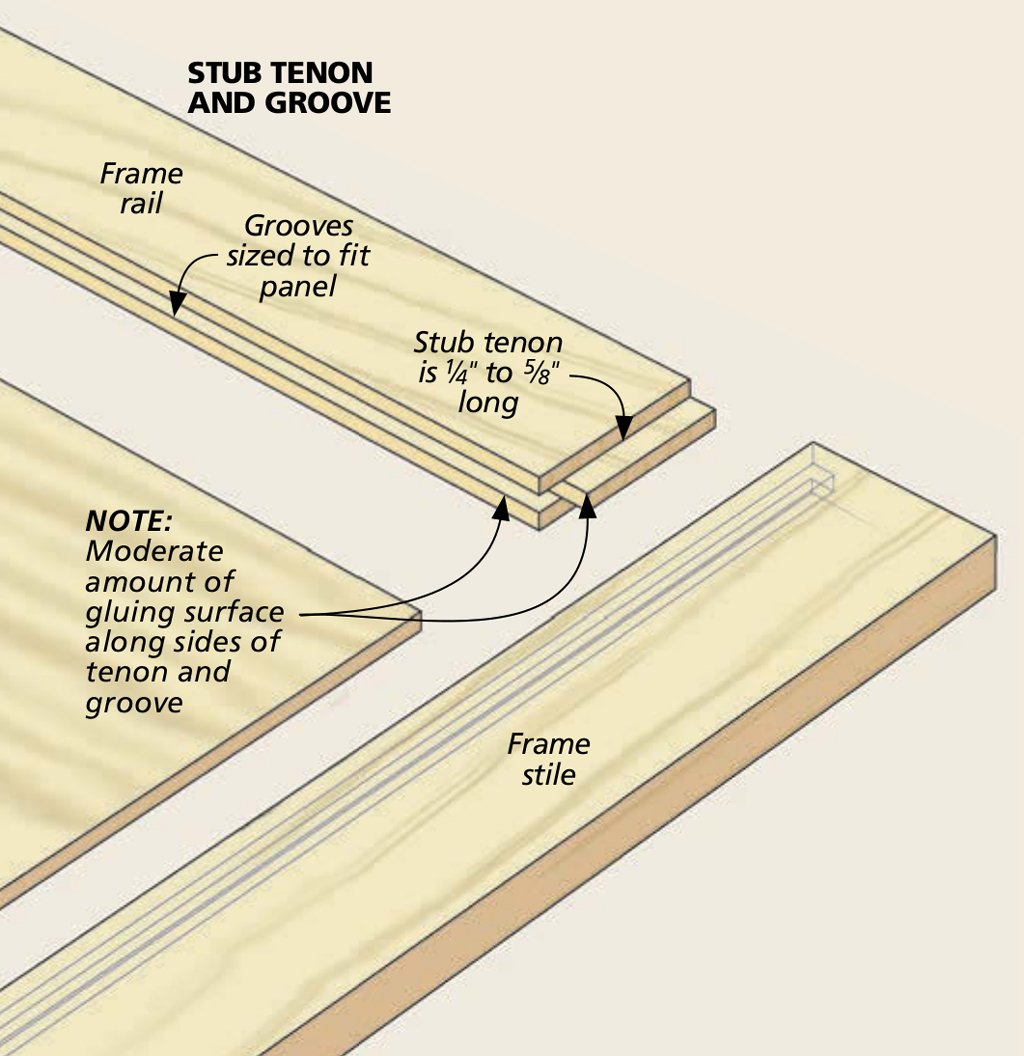
One of the simplest forms of mortise-and-tenon joinery is the stub tenon and groove. Instead of fitting into an enclosed mortise, a short tenon fits into a continuous groove cut in the mating piece.
The tenon is typically no longer than about 5⁄8", making the joint quick and easy to cut. It provides a reasonable amount of glue surface and works particularly well for cabinet doors and other light-duty frame-and-panel assemblies.
The tradeoff is strength. Because the groove is continuous and open at the ends, its sides can crack if the joint is subjected to significant stress.
In a frame-and-panel assembly, however, gluing a plywood panel into the surrounding grooves can add considerable strength to the completed assembly.
When to Use a Stub Tenon and Groove
Choose a stub tenon and groove for cabinet doors, small frames, and light-duty frame-and-panel construction where ease of assembly is more important than maximum joint strength.
Standard Mortise and Tenon Joint
For furniture and other projects that need a stronger connection, the standard mortise and tenon joint is the go-to choice.
Here, a longer tenon fits into a deeper, fully enclosed mortise. Since solid wood surrounds both ends of the mortise, the joint is much less likely to split than a stub tenon and groove. The deeper mortise and longer tenon also provide more glue surface.
These qualities make the standard mortise and tenon an excellent choice for joints that will experience significant stress, such as connecting a table or chair rail to a leg or attaching a stretcher to a leg.
Two-Shouldered vs. Four-Shouldered Tenons
A standard tenon can have shoulders on either two or four sides.
A two-shouldered tenon is quicker and easier to make because you only need to establish the two long shoulders.
A four-shouldered tenon takes a little more work, but the additional shoulders provide greater resistance to racking. They also conceal any small gaps between the ends of the mortise and tenon.

When to Use a Standard Mortise and Tenon
For most furniture construction, this is the mortise-and-tenon joint I'd consider first. It's particularly well suited to tables, chairs, benches, frames, and other projects where strength and resistance to racking are important.
Haunched Mortise and Tenon Joint
A haunched mortise and tenon adds a short extension, or haunch, along one edge of the tenon.
One common use is in heavy-duty frame-and-panel construction. The main tenon fits into a traditional mortise while the haunch fills the groove that holds the panel. This allows the groove to run the length of the workpiece without leaving an opening at the end.
But a haunch isn't just useful for filling a groove. It can also improve the structural characteristics of a joint.
Why Use a Haunched Tenon?
Consider a large table frame where a rail joins a leg. Extending a deep mortise too close to the end of the leg can weaken the leg and increase the chance of splitting.
With a haunched tenon, the primary mortise can be shortened and stopped farther from the end of the leg. A shallow groove continues from the mortise to house the haunch.
The result is a continuous glue surface while leaving more solid wood at the end of the leg. The haunch also provides a mechanical connection that helps keep the rail from twisting out of alignment.

When to Use a Haunched Mortise and Tenon
A haunched tenon is a good choice for heavy frame-and-panel construction, large table frames, and joints where a groove intersects the mortise. It's especially useful when you want the strength of a traditional mortise and tenon without extending a deep mortise too close to the end of a workpiece.
Through Mortise and Tenon Joint
For heavy-duty woodworking, a through mortise and tenon joint provides both strength and visual appeal.
Unlike a blind mortise, the mortise extends completely through the workpiece and the end of the tenon is visible on the opposite face.
This traditional joint is designed to maximize mechanical strength and rigidity. It's well suited to projects such as workbench and table trestles, large doors, and other structural assemblies.
A through tenon can also be wedged. After the tenon passes through the mortise, wedges are driven into kerfs in the end of the tenon. This spreads the tenon and helps lock the joint securely in place.

Using Through Tenons as a Design Detail
Strength isn't the only reason to choose a through mortise and tenon.
The exposed end of the tenon can become an important visual element and is often featured in Craftsman-style and Arts & Crafts furniture.
The tradeoff is that there's nowhere for sloppy joinery to hide. Because the joint remains visible, both the mortise and tenon need to be cut cleanly and fitted accurately.
When to Use a Through Mortise and Tenon
Choose a through mortise and tenon for heavy-duty structural joints, trestle tables, workbenches, doors, and furniture where you want the joinery to become part of the design.
Twin or Double Tenon Joint
Sometimes the proportions of the parts being joined make a single mortise and tenon less effective. That's where twin tenons, also called double tenons, come into play.
One example is joining a wide, flat horizontal rail to a vertical piece. A single wide tenon may provide relatively little long-grain glue surface along its edges.
Dividing the joint into two side-by-side mortises and matching tenons effectively increases the amount of long-grain glue surface.
Twin tenons are commonly used in solid-wood case construction, where they create a strong connection between horizontal dividing rails and the sides of the case.

When to Use Twin Tenons
Consider twin or double tenons when joining wide horizontal rails to vertical case parts and you want more effective long-grain glue surface than a single wide tenon provides.
Split Mortise and Tenon Joint
A different problem occurs when joining a particularly wide rail — around 6" or wider — to a stile or leg.
You could simply make one very wide tenon and an equally long mortise, but that creates a couple of potential problems.
First, gluing a wide tenon rigidly into a long mortise can restrict seasonal wood movement. That stress can eventually cause the rail to crack or the joint to fail.
Second, cutting one long mortise removes a substantial amount of material from the mating workpiece. This can weaken the part and increase the possibility of splitting along the sides of the mortise.
Why Split a Wide Tenon?
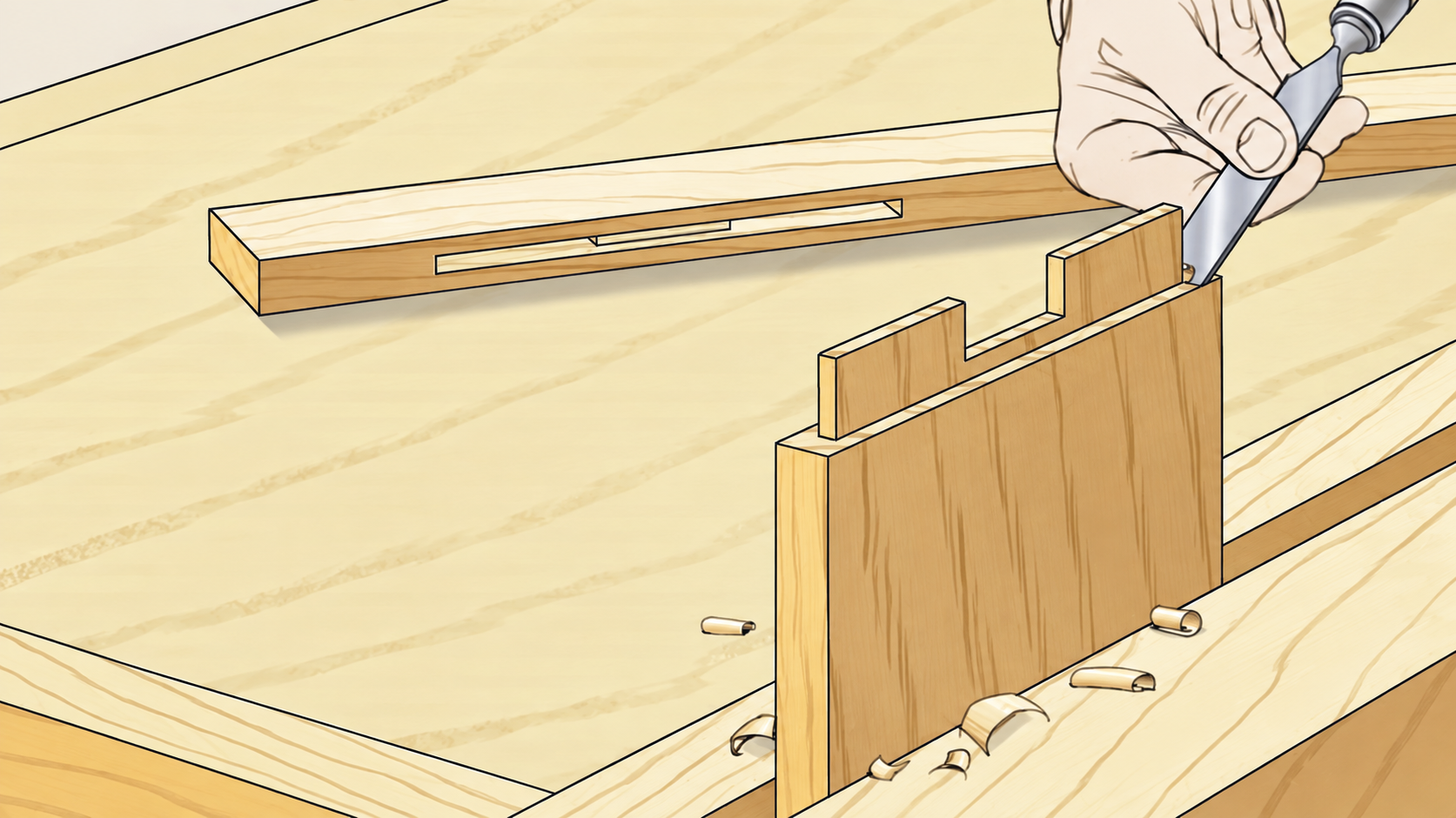
The solution is to divide the tenon into two sections and cut two shorter mortises rather than one long mortise.
A shallow groove can connect the two mortises while leaving solid material between them. This maintains more strength in the workpiece while separating the tenons to allow a small amount of wood movement.
When to Use Split Tenons
A split tenon is particularly useful for joining wide rails to legs or stiles, especially when a single large mortise would remove too much material or restrict wood movement.
How to Choose the Right Mortise and Tenon Joint
The best mortise-and-tenon joint depends on what you're building and what the joint needs to accomplish.
For cabinet doors and light frame-and-panel construction, a stub tenon and groove is simple and efficient. For tables, chairs, and general furniture construction, a standard mortise and tenon provides considerably more strength.
A haunched tenon works well when a groove intersects the joint or when you need to keep a deep mortise away from the end of a workpiece. A through tenon is a strong choice for heavy structural assemblies and also creates an attractive exposed joinery detail.
For unusually wide parts, twin and split tenons solve problems that a single large tenon can create.
There's no single mortise and tenon that's right for every project. The goal is to match the joint to the structural requirements, proportions, and appearance of the project. Make that choice correctly, and you'll have a strong woodworking joint that's built to last.


