


Quick & Easy Plywood Cases: Simple, Strong Bookcase Joinery
Building a sturdy bookcase doesn't have to involve complicated joinery or expensive specialty tools. With a few basic table saw techniques, you can assemble a strong, accurate plywood case that serves as the foundation for a variety of bookcase styles.
In this Woodsmith Shop video, we'll show you how to build a basic plywood bookcase using tongue and dado joinery. It's a straightforward construction method that creates strong connections between the sides, top, bottom, and center shelf.
Best of all, the same basic case can be used for three different bookcase designs.
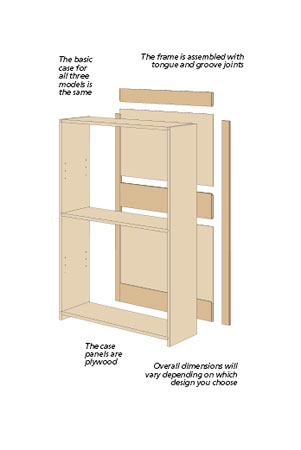
Start with a Simple Plywood Bookcase
The basic case consists of two plywood sides, a top, bottom, and center shelf. These pieces are joined using tongues that fit into matching dadoes.
This type of joinery offers several advantages. The dadoes help position the shelves accurately during assembly, while the interlocking tongues provide additional glue surface and help keep the case aligned.
Once the plywood pieces are cut to size, you're ready to start machining the joinery.
Cut Dadoes and Rabbets at the Table Saw
The first step is installing a dado blade in the table saw.
With the blade set to the proper width and depth, cut three dadoes in each side panel. These dadoes will receive the tongues on the top, bottom, and center shelf.
Next, attach an auxiliary fence to the rip fence and partially bury the dado blade in it. This setup allows you to cut a rabbet along the back edge of each side panel.
The rabbets create a recess for installing the plywood back later in the construction process.
Drill Holes for Adjustable Shelves
Before assembling the case, take a few minutes to drill the adjustable shelf pin holes.
I prefer to do this while the plywood sides are still separate. With the panels lying flat on the workbench, it's easier to lay out the hole locations and drill accurately.
After marking the holes, install a stop collar on the drill bit to control the drilling depth.
Make sure the corresponding holes on both side panels are aligned so the adjustable shelves will sit level once the bookcase is assembled.
Cut the Tongues for a Perfect Fit
With the side panels complete, the next step is preparing the top, bottom, and center shelf.
Each piece needs a tongue on its ends that fits into the dadoes in the case sides.
To make the tongues, return to the table saw and use the dado blade to cut a rabbet on each face of the shelf ends. This leaves a centered tongue that fits into the dado.
The key is getting the tongue thickness just right.
Rather than cutting all the tongues at once, I like to start with a test piece. Make a few adjustments until the tongue slides into the dado with a snug fit.
Once the setup is dialed in, you can cut the remaining tongues with confidence.
A Strong Foundation for Any Bookcase
Tongue and dado joinery is a practical choice for plywood case construction. It provides strength, helps keep the parts aligned, and makes assembly more straightforward.
By cutting the dadoes, preparing the back rabbets, and drilling shelf pin holes before assembly, you'll have everything ready to put the case together.
It's a simple approach that works well for bookcases, storage cabinets, and other plywood casework projects.
Build Your Own Custom Bookcase
Now that you've seen how easy it is to build a sturdy plywood case, why not turn it into a beautiful piece of furniture? Our 3-in-1 Bookcase woodworking plan starts with the same straightforward tongue-and-dado construction demonstrated in the video, then lets you choose from three distinctive designs.
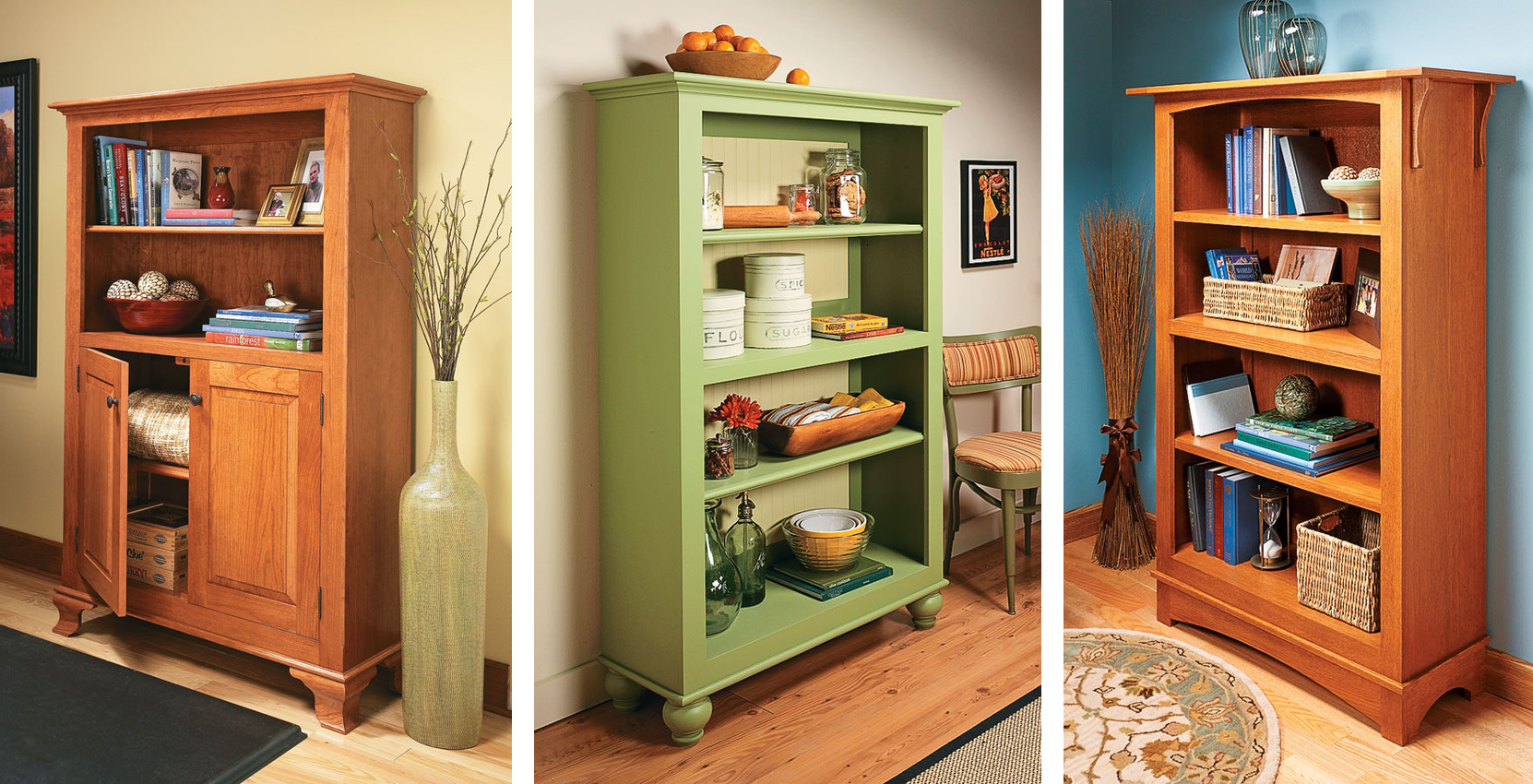
Go with Country style featuring beadboard and bun feet, a Craftsman design with decorative corbels and graceful curves, or a Traditional bookcase with clean, timeless details. Each version uses the same basic case, making it easy to customize the finished look to match your home.
Download the complete step-by-step plans and build a bookcase that's as practical as it is attractive.
GET THE COMPLETE STEP-BY-STEP WOODWORKING PLANS → 3-in-1 Bookcase: One Simple Case, Three Distinctive Styles


