


DIY Table Saw Outfeed Support Using PVC Pipe
Ripping long boards or plywood at the table saw is much easier when you have adequate outfeed support. But in a small workshop, finding room for a dedicated outfeed table isn't always practical.
This simple DIY table saw outfeed support offers a clever alternative. Made from PVC pipe, scrap plywood, and a few pieces of hardware, the clamp-on roller turns an existing workbench or shop cart into a convenient outfeed station.
It's an inexpensive woodworking accessory that makes better use of the space and equipment you already have.
Turn Your Workbench into a Table Saw Outfeed Support
In a small woodworking shop, it's helpful when workbenches, carts, and other shop fixtures can serve more than one purpose.
Woodsmith reader Craig Turner of Lafayette, Louisiana, designed this roller support when his workbench no longer matched the height of his table saw.
Rather than rebuilding the bench or raising its entire surface, he made a removable roller that clamps directly to the benchtop.
The roller provides support for longer workpieces as they move past the saw blade, helping keep the material supported throughout the cut.
And when the table saw isn't in use, the roller can be removed so the bench is available for other tasks.
A Simple PVC Roller Makes the Difference
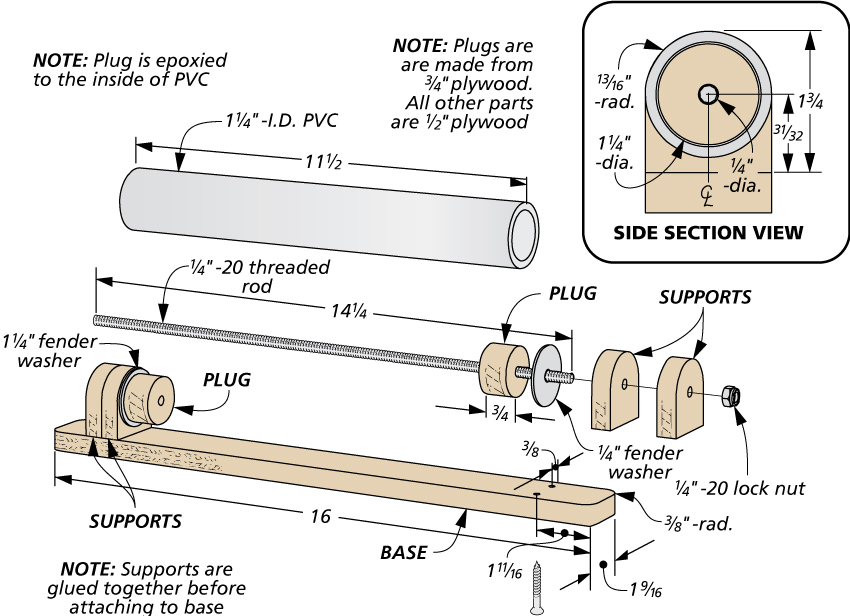
The heart of this shop-made outfeed support is a length of 2" PVC pipe.
Plywood disks fit inside both ends of the pipe, and a threaded rod passes through their centers to serve as an axle.
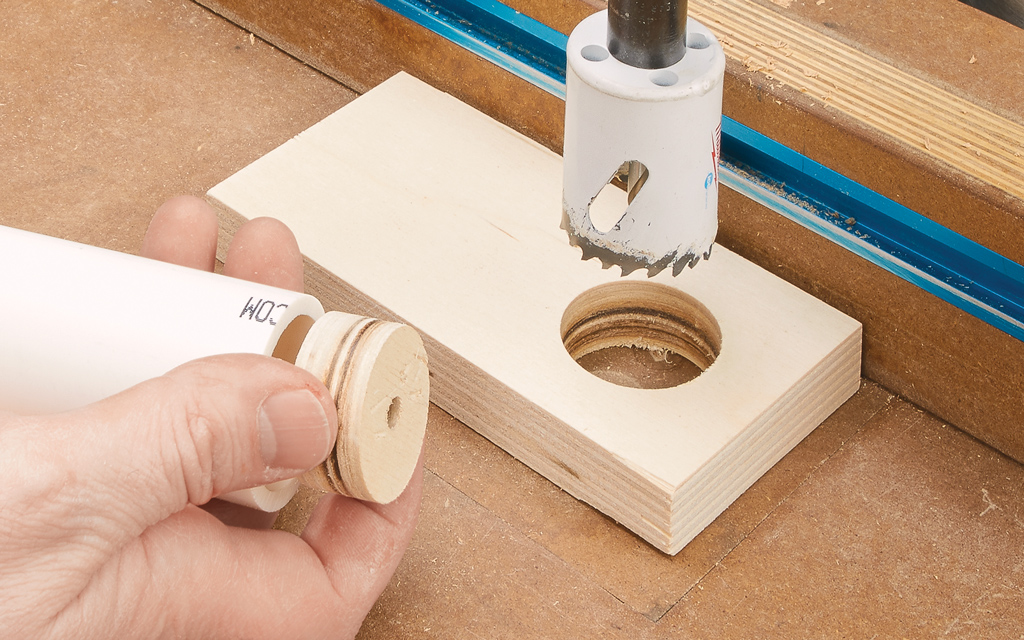
The rod rests in a pair of plywood supports, allowing the PVC roller to rotate as a board passes over it.
Large fender washers provide clearance between the roller and its supports, helping the pipe turn freely.
Everything attaches to a plywood base that can be secured to the workbench with a pair of small clamps.
The design is straightforward, inexpensive, and easy to adapt to different workbench or shop cart heights.
Set the Roller at the Correct Table Saw Height
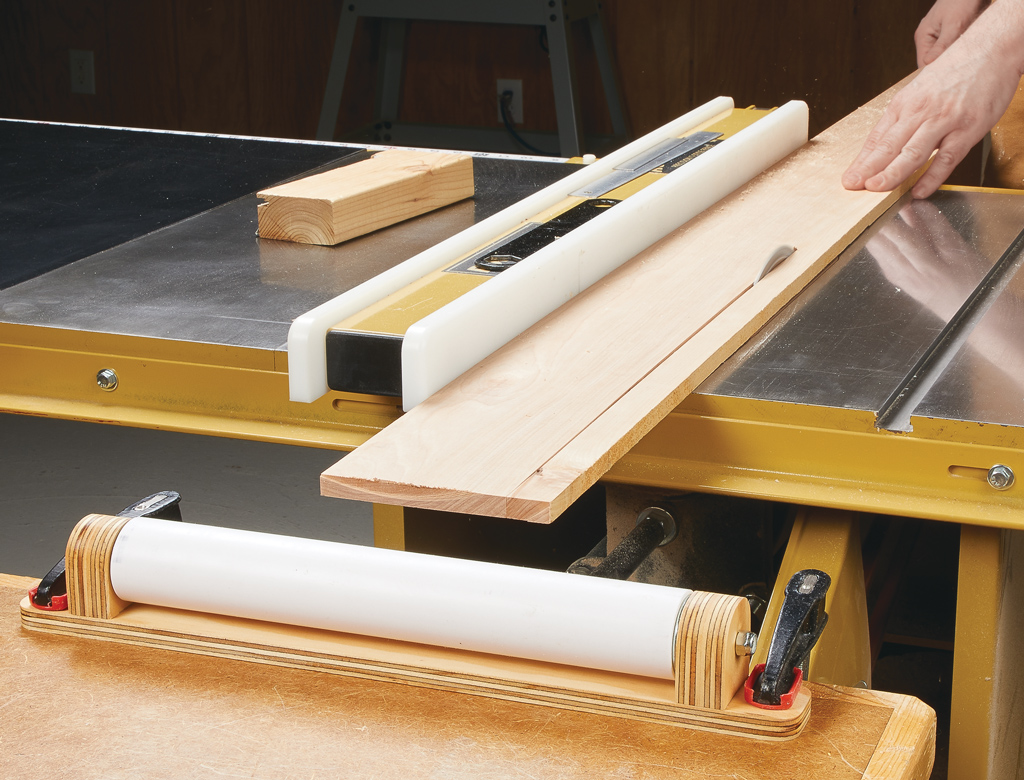
One of the most important details is positioning the roller at the proper height.
The top of the roller should be level with the table saw surface or just slightly below it.
If the roller sits too high, the workpiece may catch against it as it leaves the saw, potentially disrupting the cut.
Sizing the plywood supports correctly allows the roller to support the material without interfering with its movement.
Position the roller so it supports the workpiece as it exits the blade, and make sure the bench or cart is stable and cannot shift during use.
The roller should support the board, not force it upward or sideways. Always maintain control of the workpiece and use appropriate table saw safety practices.
An Inexpensive Table Saw Accessory for Small Shops
One of the best features of this PVC outfeed roller is its versatility.
Because it clamps to an existing work surface, you don't need to dedicate additional floor space to another shop fixture.
It's also easy to remove and store when you don't need it.
With a short length of PVC pipe, a few plywood scraps, and some common hardware, you can make a useful table saw outfeed roller without spending much money.
For woodworkers with limited shop space, it's a practical way to make long rip cuts more manageable while getting more use from an existing workbench or shop cart.
Woodworking shop tip submitted by Craig Turner, Lafayette, Louisiana.


