


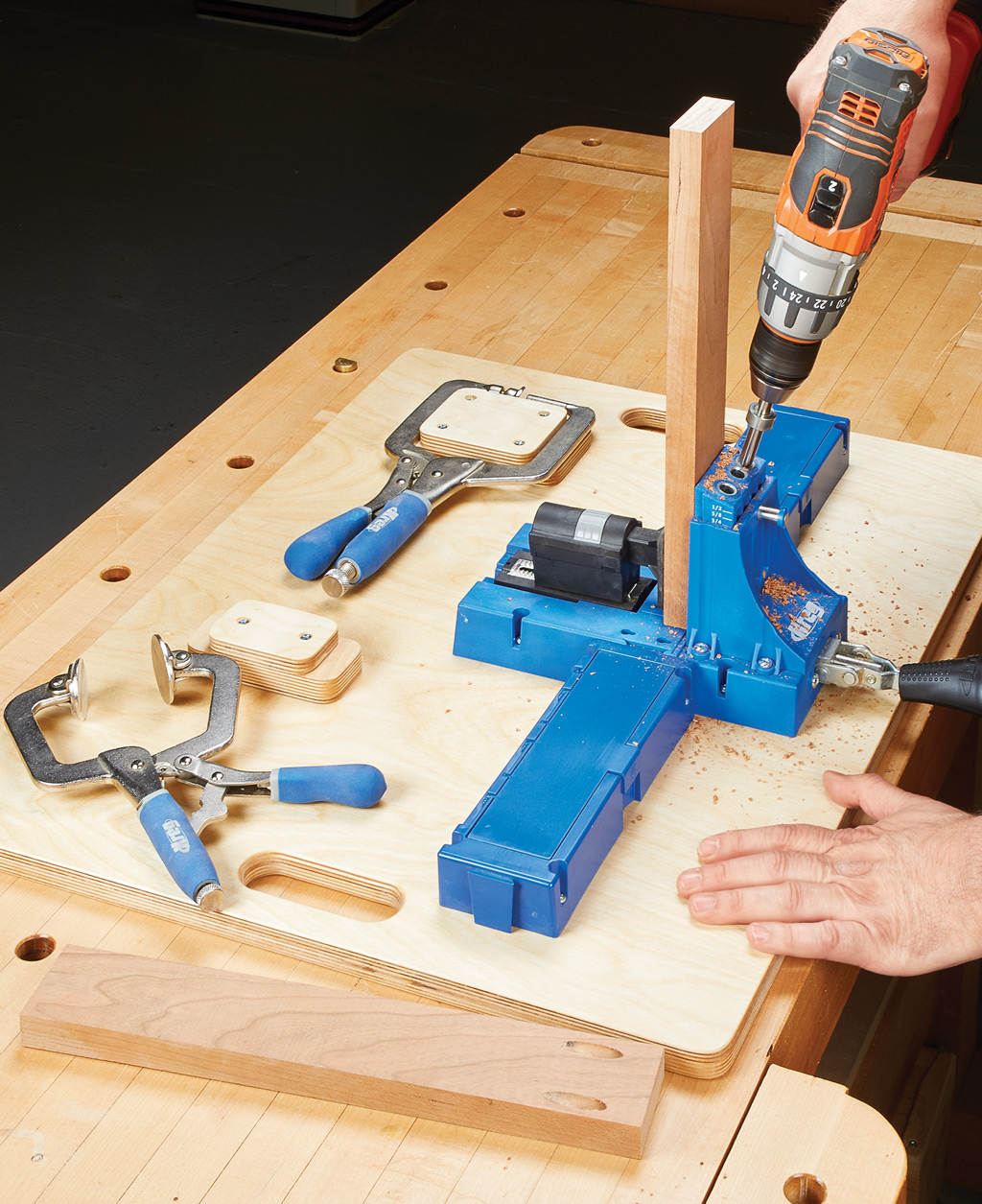
A pocket-hole jig is convenient for quick joinery, but the jig itself is only part of the setup. You also need clamps, a drill bit, and other accessories nearby. Instead of storing everything separately, this simple Kreg Jig workstation keeps the tools together on one portable base.
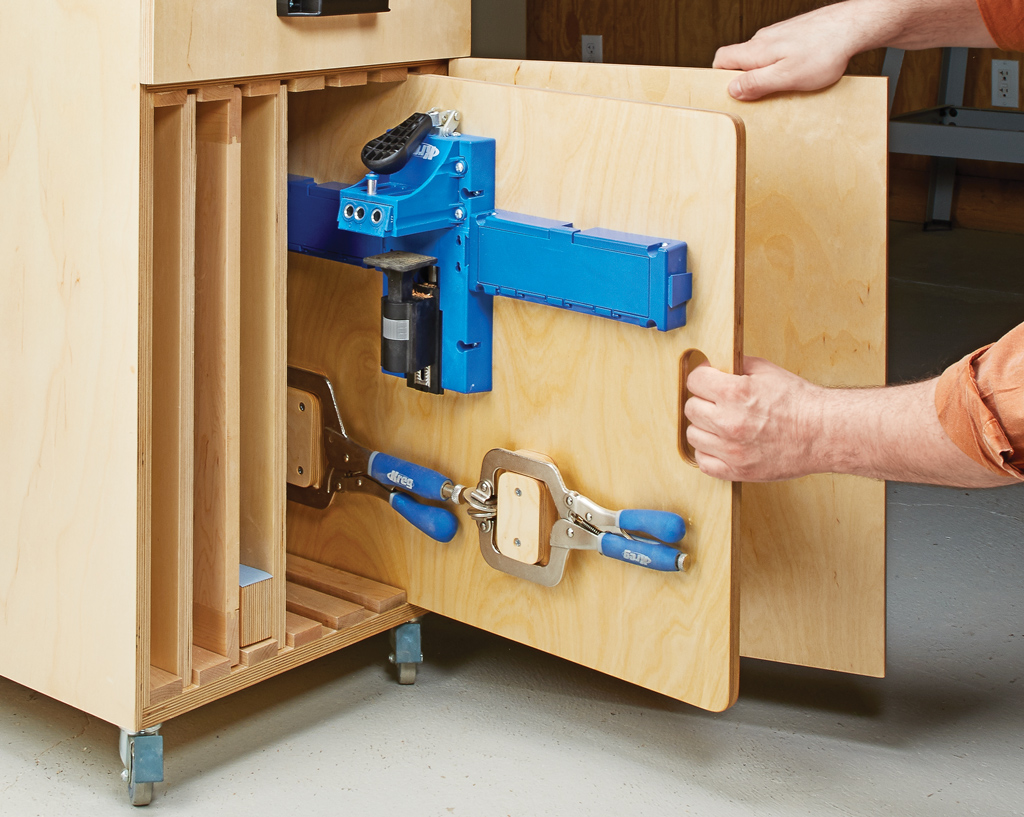
This setup started as an upgrade to the Table Saw Storage Cart from Woodsmith No. 233. Instead of using one of the cart's pegboard frames, I replaced it with a plywood panel designed specifically for my Kreg Jig.
The result turned out to be more than just storage. The panel also serves as a portable pocket-hole workstation that can be pulled out and used wherever it's needed.
Start with a Simple Plywood Base
The foundation of the workstation is simply a piece of plywood sized to support the pocket-hole jig and provide room for the clamps.
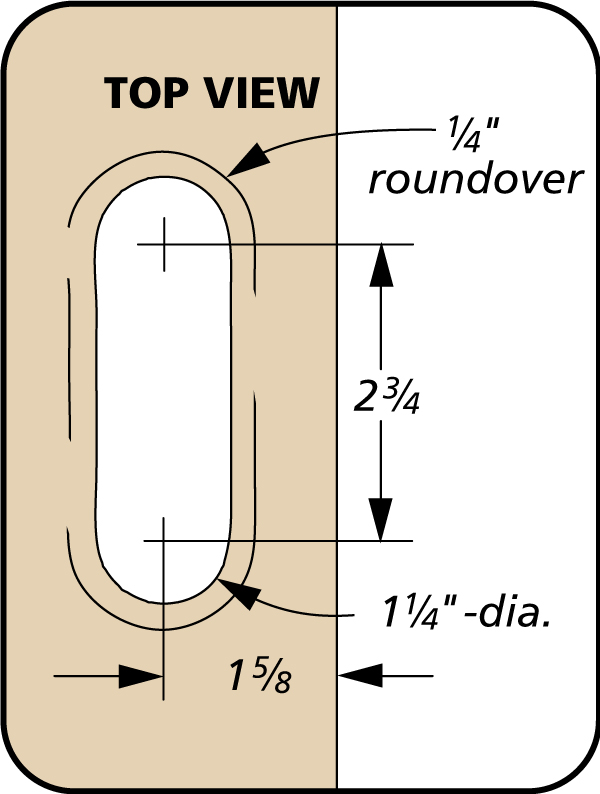
Cut a pair of hand holes near the ends of the plywood. These provide convenient grips for sliding the workstation in and out of its storage location.
They also make the entire setup easy to carry around the shop.
Mount the pocket-hole jig to the plywood base, leaving enough open space around it to support the workpiece during use.
Add Storage for Pocket-Hole Clamps
A few simple blocks turn the unused portion of the plywood base into dedicated clamp storage.
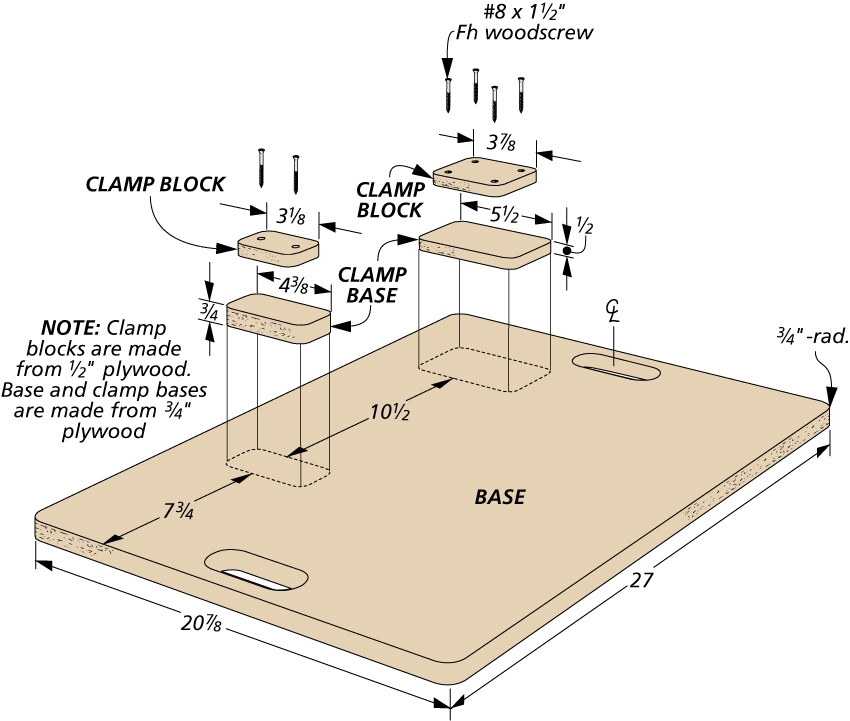
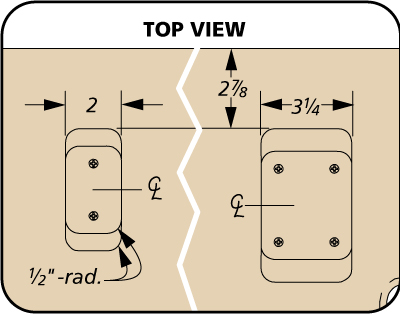
Position the blocks so your assembly clamps stay securely on the base but remain easy to grab. This keeps the tools used for pocket-hole joinery together instead of scattering the jig and clamps among several drawers or cabinets.
Woodsmith Tip: Lay Out the Tools Before Adding the Blocks. Set your jig and clamps on the plywood and experiment with their positions before attaching anything permanently. Make sure the clamps don't interfere with the jig or the hand holes and that you can easily remove each tool.
Keep the Drill Bit & Accessories with the Jig
With the K5 system shown here, the Kreg base itself provides storage for the drill bit and accessories.
That means virtually everything needed to set up and drill pocket holes can travel together. Instead of finding the jig, then looking for the correct bit, and finally hunting down a clamp, you can pull out one workstation and get started.
Make the Pocket-Hole Jig Portable
Portability is one of the best features of this setup.
The plywood panel is wide enough to provide a stable base for the jig, so the workstation can be set directly on a workbench without necessarily having to clamp the base down.
It can also be placed across a pair of sawhorses when you're working with larger parts or need to take the pocket-hole jig somewhere else in the shop.
The hand holes make moving the complete setup easy. Pick it up, carry it to the work area, and your jig, drill bit, accessories, and clamps come along with it.
A Simple Upgrade for Pocket-Hole Joinery
This project doesn't require much material or complicated construction, but it solves several shop problems at once.
The plywood panel provides a stable base for the pocket-hole jig. Dedicated blocks organize the clamps. Built-in storage keeps the bit and accessories nearby. And the hand holes turn everything into a portable workstation.
Most importantly, all the tools needed for pocket-hole joinery stay together and ready to use instead of disappearing into different corners of the shop.
Build a Complete Pocket-Hole Workstation
Want more support and storage for pocket-hole joinery? A dedicated workstation can provide a larger worksurface and keep your jig, clamps, screws, and accessories organized in one place.
BUILD A POCKET-HOLE WORKSTATION → Pocket-Hole Workstation


