


Build a 5-Minute Miter Box for Small Parts
Cutting a 45° miter on a wide frame or a long piece of trim is pretty straightforward. But when the workpiece is a narrow strip of molding or glass stop, a power miter saw can be more tool than you need.
Small pieces can be difficult to hold securely, and a narrow workpiece may splinter or be thrown by the blade.
For pieces like these, sometimes the simplest solution is the best one.
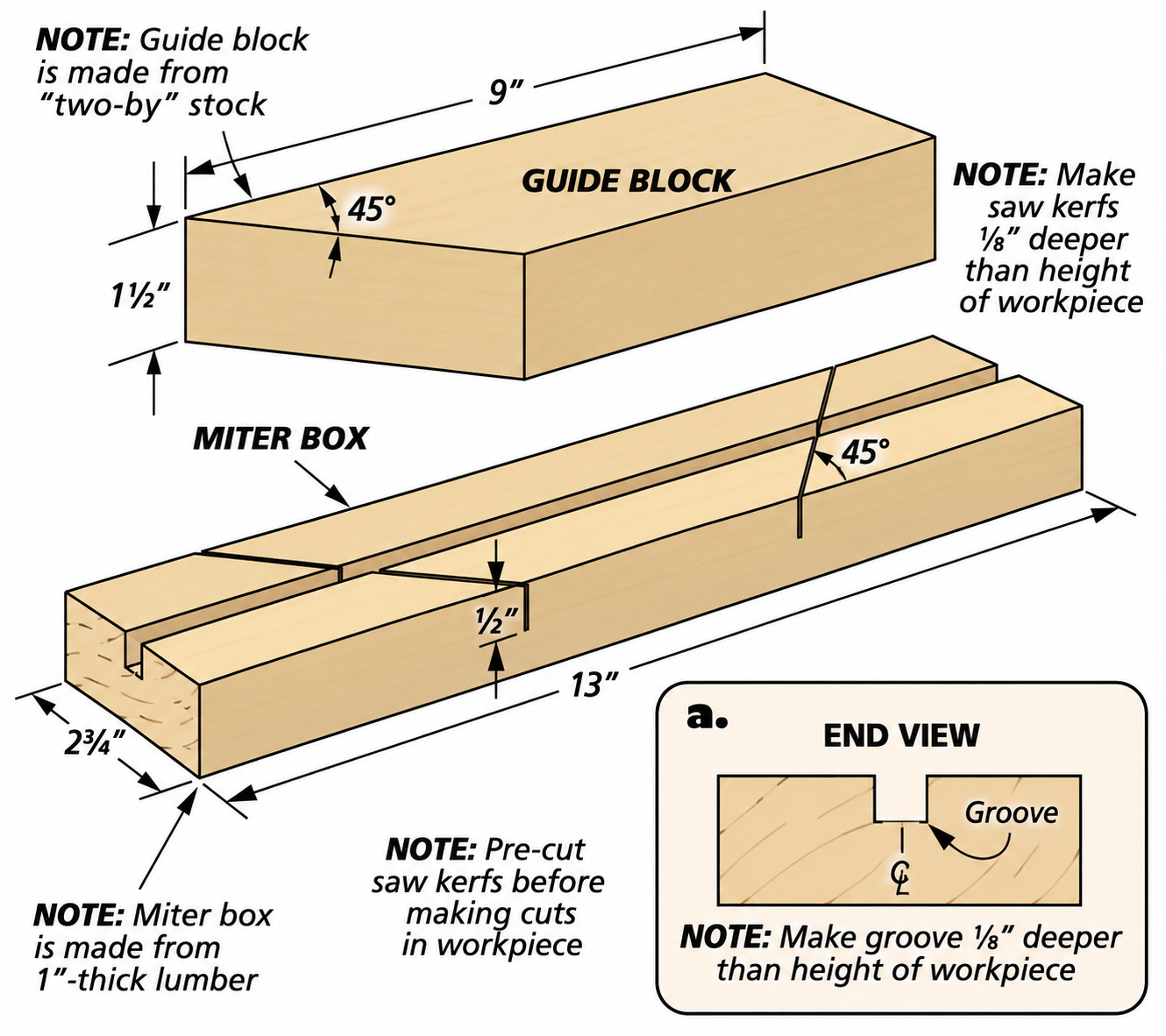
This 5-minute miter box is made from a scrap of lumber and used with a hand saw. A groove captures the workpiece while a pair of 45° kerfs guides the saw.

Start With a Scrap of Lumber
There's not much to this jig.
The body is simply a piece of 1"-thick scrap lumber with a groove cut down the center.
Size the groove to fit the molding or glass stop you're planning to cut. The groove should be slightly deeper than the thickness of the workpiece so the molding rests below the top surface of the miter box.
Recessing the workpiece does two things. It helps contain the narrow strip during the cut, and the sides of the box provide additional guidance for the saw as you begin cutting.
WOODSMITH TIP: Make the Groove Fit the Work. Don't worry about making one miter box that handles every piece of trim in your shop. A groove that's sized closely to the workpiece provides better support. Since the jig takes only a few minutes to make, it's easy to build another one when you need a different size.
Cut Two 45° Saw Kerfs
The next step is creating the guides for the hand saw.
Lay out two opposing 45° kerfs with a combination square. Having kerfs in both directions allows you to cut either half of a mitered corner without repositioning the workpiece awkwardly.
Accuracy matters because these initial cuts establish the angle of every miter you make with the jig.
A simple scrapwood guide makes it easier.
Cut a guide block with an accurate 45° edge. Position it along your layout line and temporarily secure it to the miter box with double-sided tape.
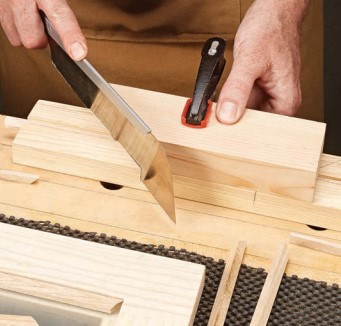
Hold the blade of a pull saw against the guide and carefully establish the kerf. Once the cut is started, continue sawing into the body of the miter box.
Move the guide to the opposite layout line and repeat the process to create the second 45° kerf.
Cut Small Molding with a Hand Saw
Using the miter box couldn't be much simpler.
Place the molding or glass stop in the center groove. Position your cut line at the appropriate 45° kerf, then use the kerf to guide the hand saw through the workpiece.
The groove supports and contains the small part, while the kerf controls the angle of the saw. This setup gives you much more control over a tiny workpiece than trying to hold it near the blade of a power miter saw.
WOODSMITH TIP: Leave the Miter Slightly Long. Don't try to hit the finished length exactly with the saw. Instead, cut the molding about 1⁄32" longer than needed. Then use a block plane or sanding block to carefully fine-tune the miter to its finished length. That little bit of extra material gives you room to adjust both the length and fit of the joint.
Make a Miter Box for Each Size
One of the best things about this jig is that there's almost nothing invested in it.
So rather than designing an elaborate adjustable miter box, make several dedicated versions with grooves sized for the small molding profiles and glass stops you commonly use.
A close-fitting groove provides better support and makes those tiny pieces easier to control.
For five minutes of shop time and a piece of scrap wood, that's a handy jig to have around whenever a project calls for small, precisely mitered parts.
More Jigs & Fixtures for Your Workshop
Simple Shop-Made Solutions That Make the Work Easier The 5-minute miter box is a perfect example of what makes a good jig: it doesn't need to be complicated to make a woodworking task easier and more accurate. Explore more shop-made jigs and fixtures for the table saw, router table, drill press, band saw, and workbench.
EXPLORE JIGS & FIXTURES → Simple Shop-Made Solutions That Make the Work Easier


