


Accuracy doesn't always require an expensive jig or measuring tool. A simple toggle clamp can improve control when cutting small miters, a flexible wood strip can lay out sweeping curves, and a double square can become a precise router-table setup gauge.
Here are four reader-submitted Woodsmith tips for making common woodworking tasks easier and more repeatable.
1. Add a Toggle Clamp for More Accurate Miter Cuts

Cutting miters on small pieces of trim can be challenging. Even a slight shift in the workpiece during the cut can throw off the angle and leave a visible gap in the finished joint.
Dan Martin of Galena, Ohio, solves the problem with a shop-made miter fence equipped with a toggle clamp.
The auxiliary fence provides additional support for the workpiece, while the toggle clamp holds the small part securely against the fence during the cut. With the workpiece immobilized, Dan can concentrate on making the cut instead of trying to hold a small part in position by hand.
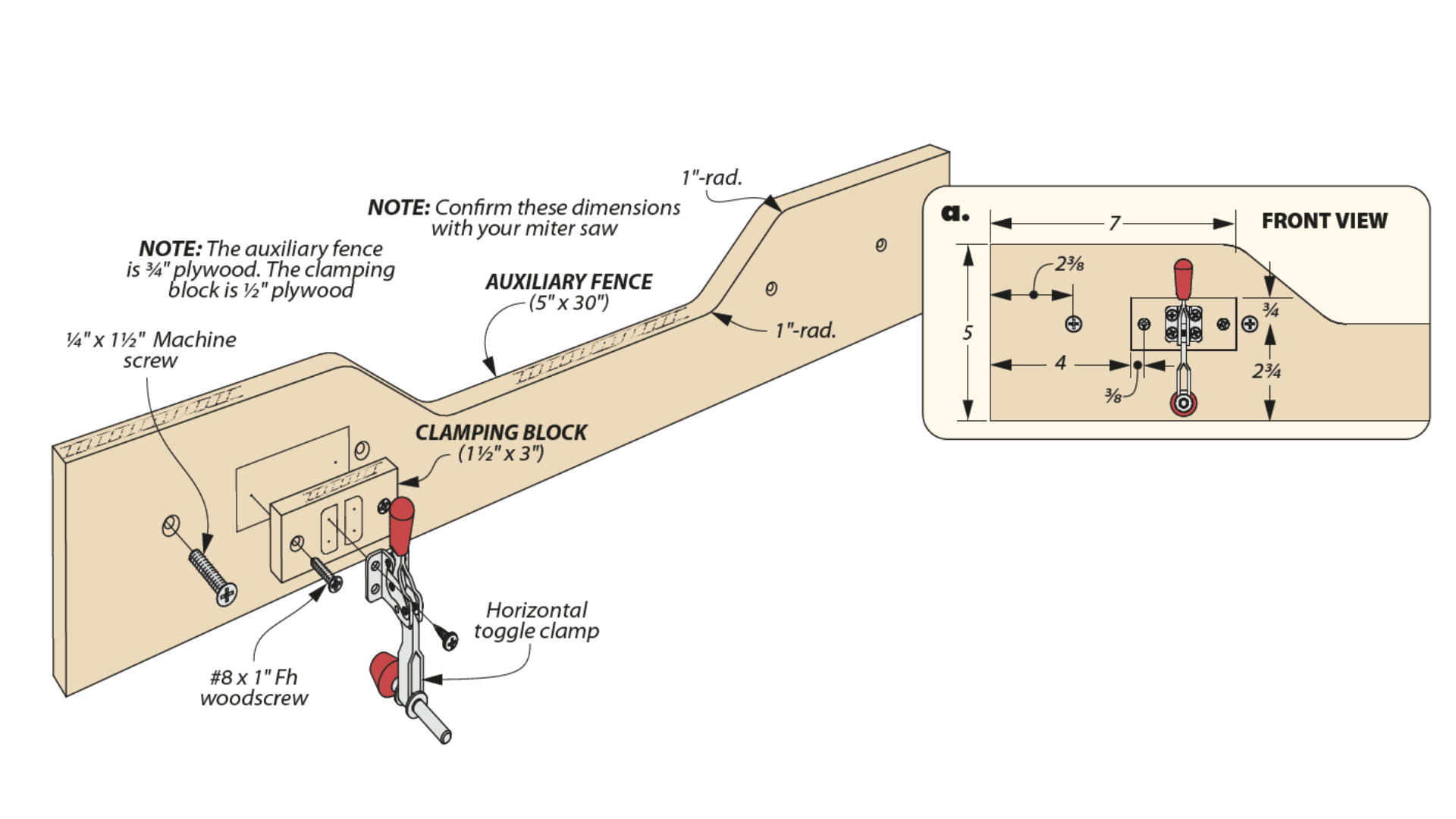
This is especially useful when making several identical mitered pieces where consistent results are important.
Woodsmith Tip: Position the toggle clamp so it securely holds the workpiece while remaining well clear of the blade and its cutting path. With small parts, use the jig to keep your hands safely away from the blade rather than attempting to hold the workpiece by hand.
Shop tip submitted by Dan Martin, Galena, Ohio.
2. Make a Bow for Laying Out Large Curves and Arcs
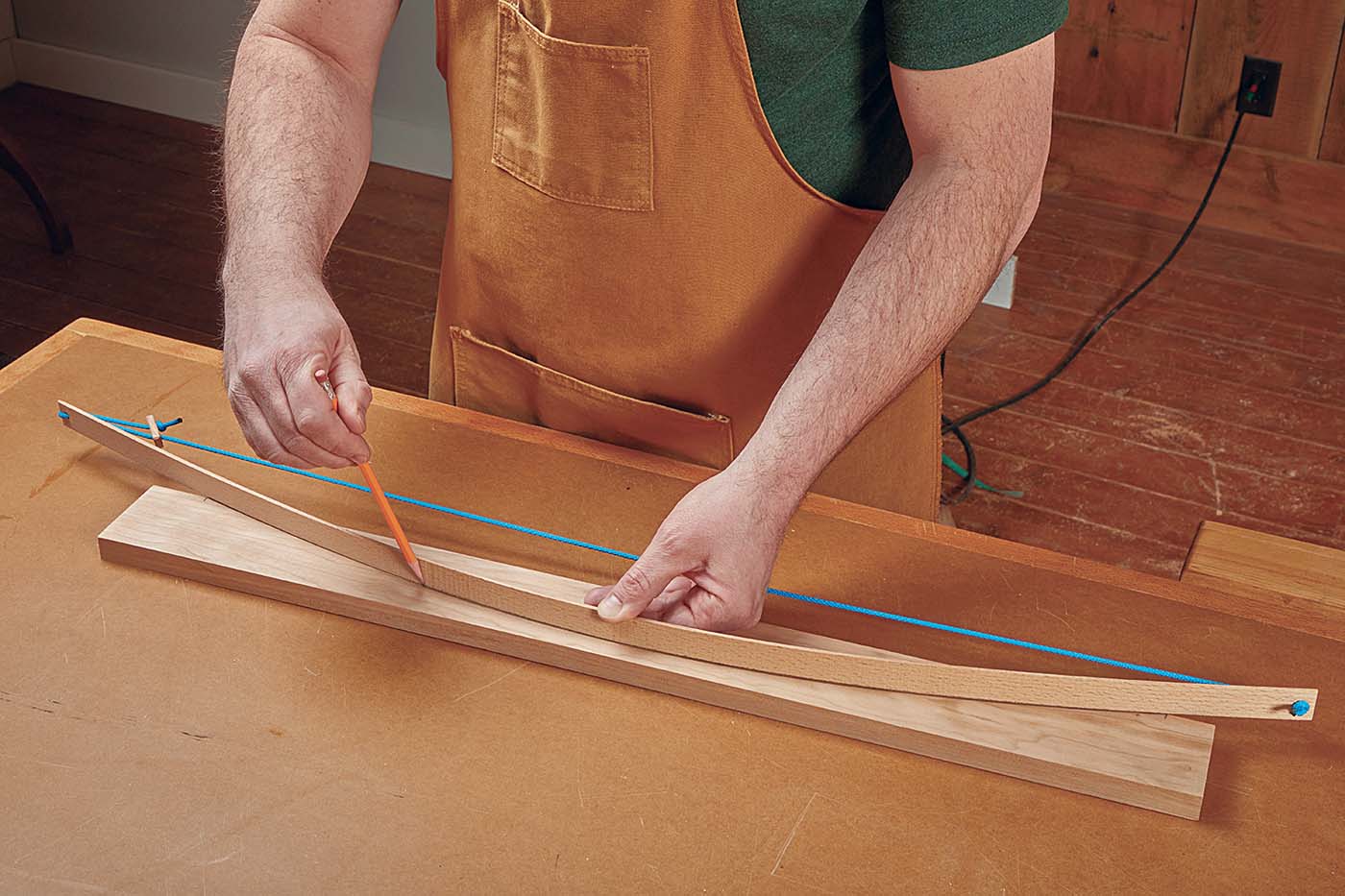
A compass is ideal for laying out small circles and arcs, while a trammel works well for larger radii. But when Phil Huber of Urbandale, Iowa, needs to draw a long, sweeping curve, he uses a simple arc-striking bow.
A long, thin strip of flexible wood forms the body of the bow. A cord passes through holes near each end. Shortening the cord bends the wood strip, allowing Phil to adjust the amount of curvature.
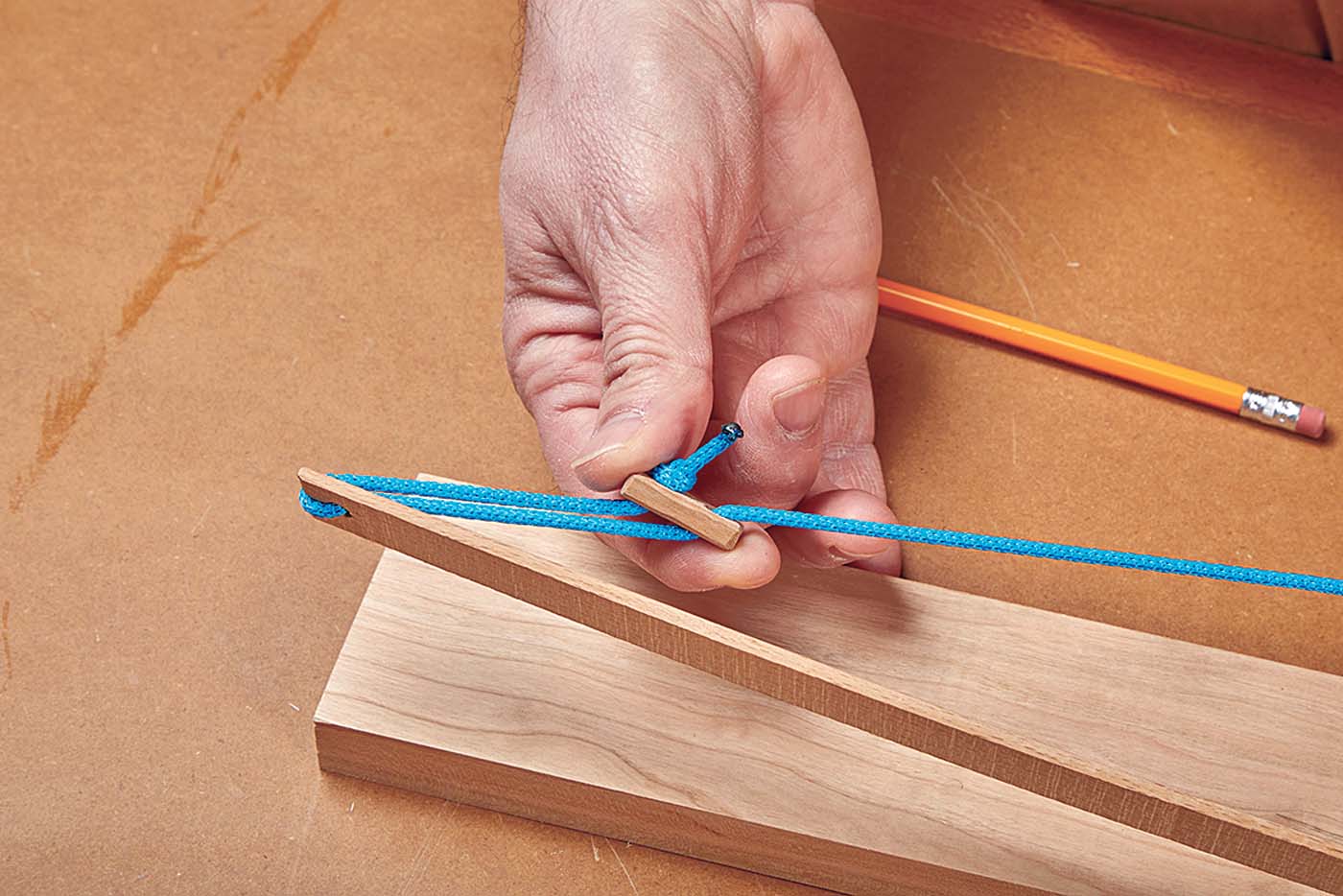
To hold the setting, Phil added a simple cord lock made from a small piece of wood with two holes drilled through it. Once the bow reaches the desired curve, the lock maintains the cord length while he traces along the flexible wood strip.
The result is an adjustable layout tool for drawing smooth, flowing curves without calculating a radius or locating a distant centerpoint.
Woodsmith Tip: Choose straight-grained, knot-free stock for the bow so it bends smoothly. Avoid forcing a stiff strip into an excessively tight curve, which could cause it to break.
Shop tip submitted by Phil Huber, Urbandale, Iowa.
3. Keep CA Glue Caps from Sticking
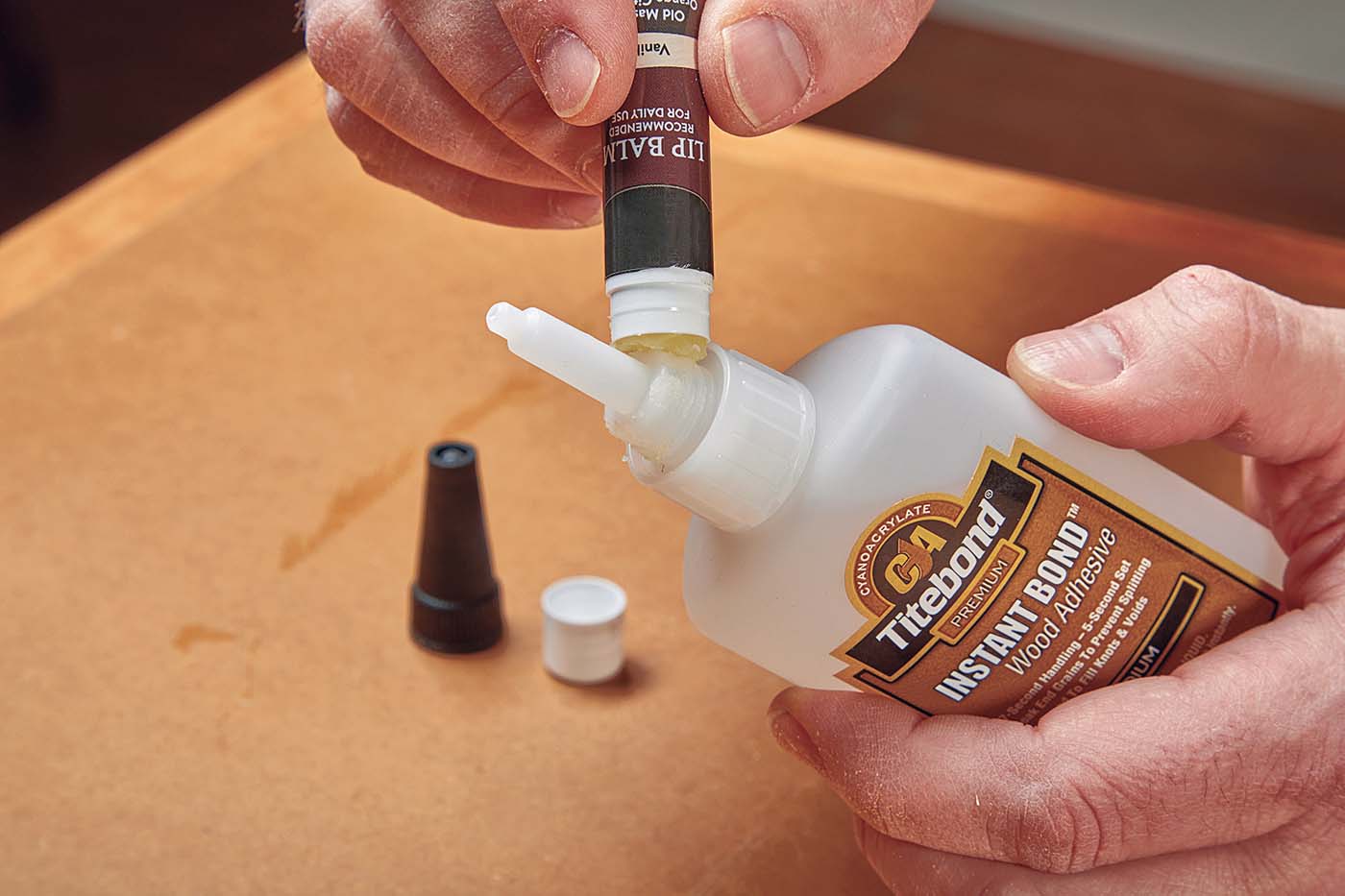
Cyanoacrylate, or CA glue, is handy for quick repairs, small assemblies, and a variety of workshop tasks. But any glue left around the bottle threads can also bond the cap firmly to the nozzle.
Max Doyle of Hazelton, Iowa, prevents that problem by applying a little wax to the threads.
In this case, Max uses ordinary lip balm. The thin coating helps prevent excess CA glue from bonding the cap to the bottle threads, making the cap easier to remove the next time the glue is needed.
Woodsmith Tip: Apply only a light coating to the threads and keep the wax away from the dispensing opening and surfaces that will be glued. Follow the CA glue manufacturer's storage and handling instructions.
Shop tip submitted by Max Doyle, Hazelton, Iowa.
4. Set Router Bit Height with a Double Square
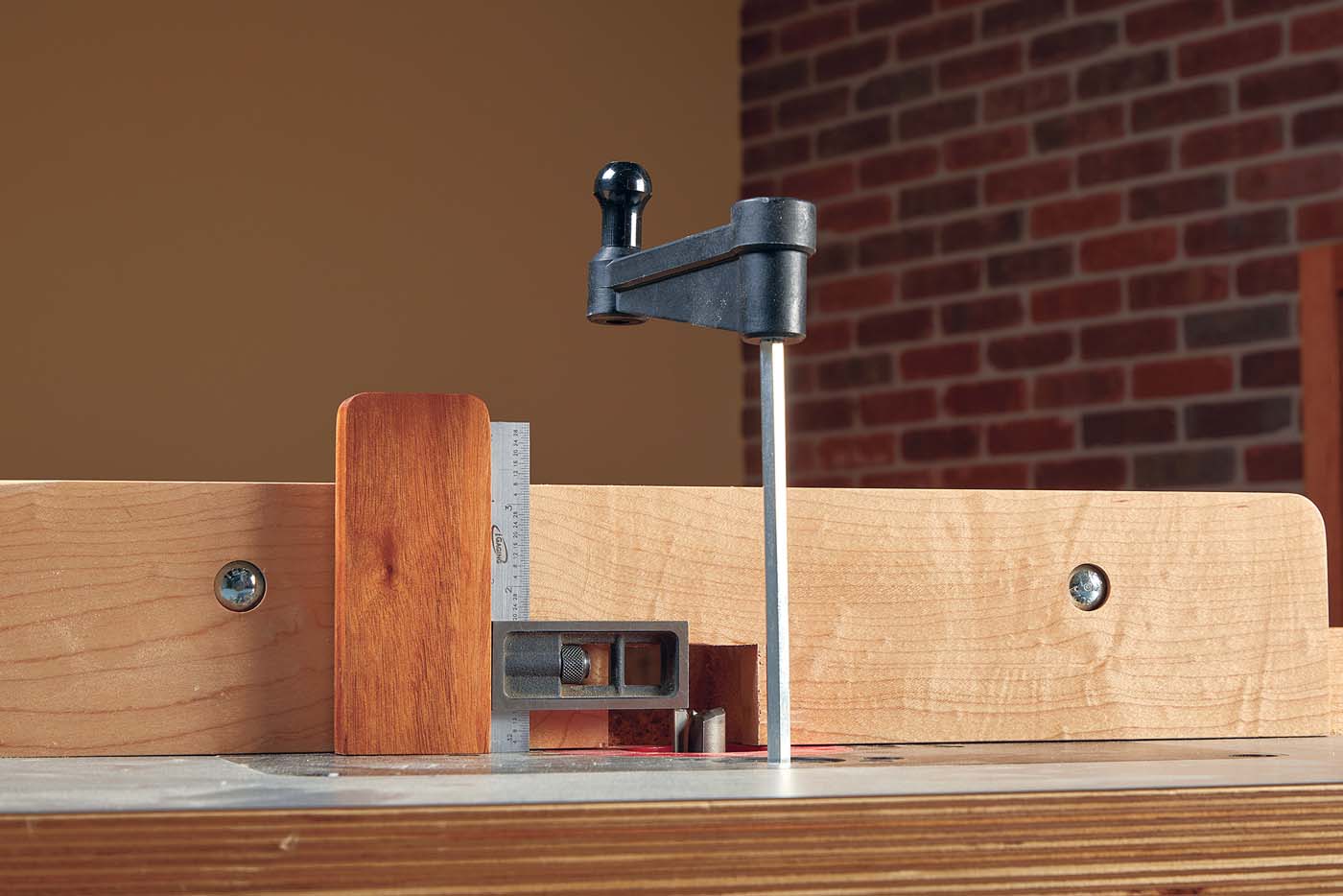
Accurately setting router bit height is important when routing grooves, rabbets, profiles, and joinery at the router table. Jeffrey Fiore of West Chester, Pennsylvania, created a simple accessory that turns a double square into a convenient setup gauge.
Jeffrey starts with a hardwood block. He drills a hole in one edge for a small magnet and cuts a groove along the same edge sized to fit the ruler of his double square.
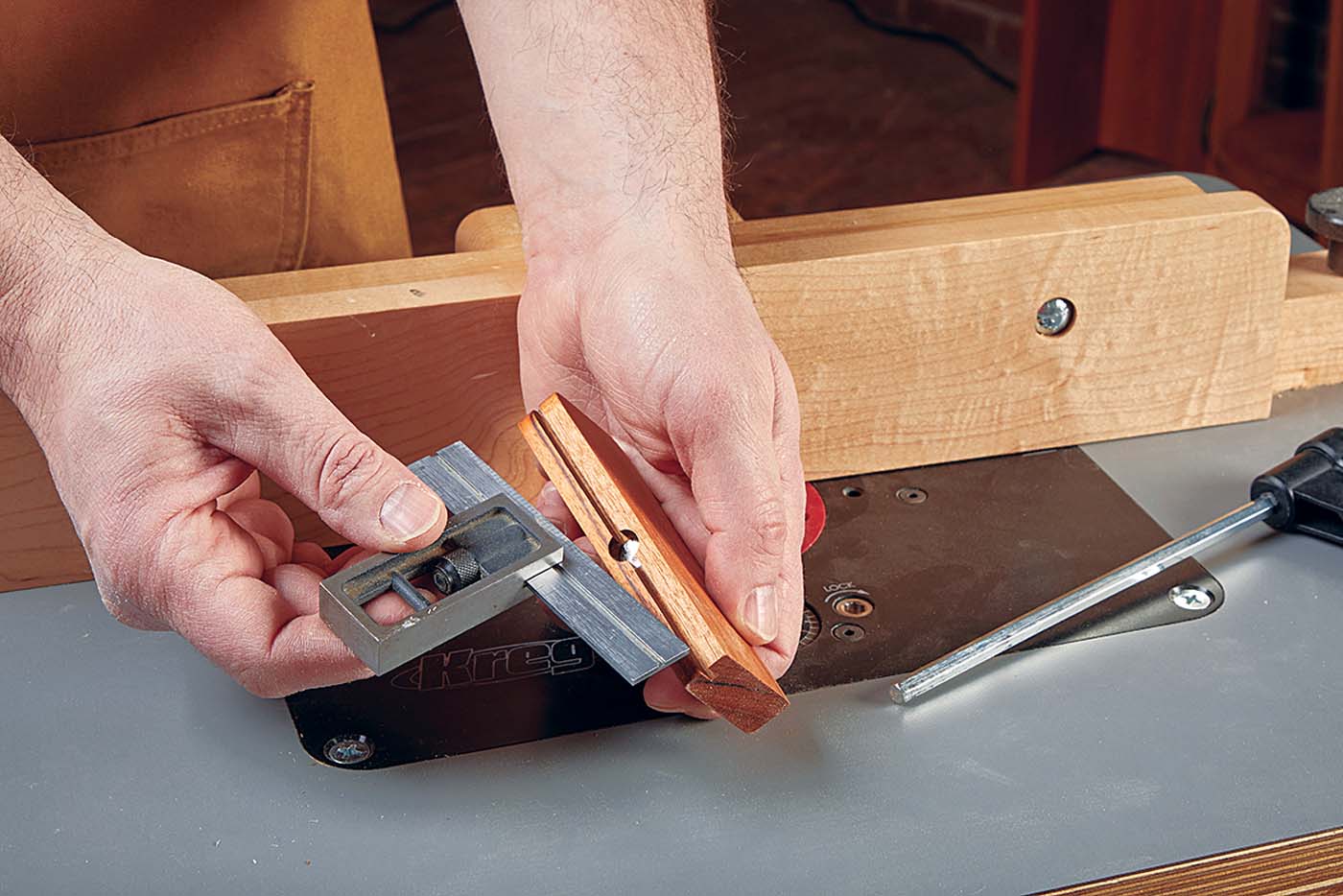
Once the magnet is glued in place, it holds the square in the groove. The block keeps the ruler upright and parallel to the router-table surface.
To use the gauge, Jeffrey sets the double square to the desired measurement and places the block alongside the router bit. He can then raise or lower the bit until its cutting edge aligns with the square.
The block stabilizes the square so he can concentrate on making a precise router-bit adjustment.
Woodsmith Tip: Always unplug or otherwise disconnect the router from power before measuring or adjusting bit height. Rotate the bit by hand as necessary to position the cutting edge for an accurate measurement.
Shop tip submitted by Jeffrey Fiore, West Chester, Pennsylvania.
Simple Shop-Made Solutions for More Accurate Woodworking
These four tips show how small modifications can make common woodworking operations easier and more repeatable. A toggle clamp provides better control over small mitered parts, a flexible bow lays out smooth curves, wax keeps CA glue caps from sticking, and a simple hardwood holder turns a double square into a precise router-table setup tool.
Best of all, each solution can be made or adapted with inexpensive materials you may already have in the shop.


