



A rolling tool chest offers the perfect balance between the storage capacity of a cabinet and the portability of a toolbox. They are suitable for carrying larger and heavier tools, such as saws that would otherwise not fit in a small toolbox while being rolled between different jobs. For the best results, try a top-rated rolling tool chest that has been verified by customers to have delivered exceptional value for money. But, how do you choose one among the hundreds of options available in the market? What do you need to know to make an informed buying decision? To help you answer these questions and make a wise buying decision, our team has researched and put together the following list of the best rolling tool chests in 2023.
Our Top Picks
Here Are The Best Rolling Tool Chests of 2023
Best Overall

If you don’t have a lot of space for a more spacious tool chest, you may want to consider the WEN 71015 tool chest. You can fold it to the side to save on space. It has a fairly large amount of storage, rolls smoothly, and comes with a useful seat. The tool chest is easy to assemble and doesn’t require any special tools. You can also modify the tool chest with a little effort. It has two magnetic wings on both sides, providing a simple storage option for loose bolts and screws.
Pros
- Compact and portable
- Many storage slots
- Easy to assemble
Cons
- Drawers don’t slide smoothly
- Unsuitable for large tools
Runner Up

If you need a toolbox that offers a combination of protection, versatility, and portability, you may want to consider the Dewalt (DWST17820) toolbox with wheels. The unit is made of tough plastic shells with a metal clasp and a metal rod in the hinges of the lid to ensure durability. While it looks like it’s cramped on the image, it’s very roomy. While the exterior isn’t truly ballistic, it’s not made of flimsy plastic so it is bound to last you a long time.
Pros
- Solidly-made
- Drawer latch and racks operate smoothly
- Spacious interior
Cons
- No interior dividers
- Unsuitable for heavy loads
Honorable Mention

With a large bottom cabinet and 6 drawers, the Goplus tool chest is a convenient option for putting different sizes of tools separately. It’s made of high-quality cold-rolled steel and has drawers that move smoothly. Its exterior features anti-corrosion and anti-rust paint that makes it suitable for indoor and outdoor use. If you choose to, you can detach the storage cabinet into two boxes, so that you can use them separately.
Pros
- Made of steel, making it sturdy
- Four swivel casters make it portable
- Drawers open and close smoothly
Cons
- The drawers aren’t deep enough
- Instructions aren’t very clear
Contender

The rolling toolbox with wheels comes with 24 compartments and two removable trays to keep all your tools organized. The toolbox has a polypropylene and metallic construction providing good protection to your tools. It also comes with wheels and a comfortable handle for transportation ease. The bottom compartment is deep enough to store your power tools.
Pros
- Nice spacious compartment
- Great for organizing your tools
- Highly portable and lightweight
Cons
- It’s made of thin plastic
- The top lid can come off the hinges when fully opened
Also Consider

The Husky 36 in. 3-Drawer Rolling Tool Cart with Wood Top features 3 drawers for handling various tools. The bottom storage tray is reinforced with steel to withstand the larger and heavier items. It comes with a smooth work surface at the top and solid lockable drawers. The bottom tray has a high load capacity and is reinforced with steel, making it suitable for big tools. The rolling tool chest has a big push handle and large casters for portability and ease.
Pros
- Sturdy and well built
- Premounted threaded bolts make it easy to assemble
- Great work surface at the top
Cons
- The lower drawer is a bit shallow
- Screw organizers don’t fit well
Also Consider

The Keter Rolling Tool Chest with Storage Drawers is made of heavy-duty plastic with 4 metallic casters that enable it to roll smoothly across the floor. The casters have a full range of motion and two of them are locking to keep the chest securely fixed in position. It comes with a side clip that locks securely in place. It features drawer locks that prevent the drawers from sliding open. The tool chest is recessed at the top providing a tray for your tools. While it will not fit huge tools, it’s a great option for organizing nails, screwdrivers, batteries, wires, washers, bolts, and more.
Pros
- Sturdy but lightweight plastic construction
- Wheels roll and lock well
- Drawers slide perfectly well
Cons
- Only the front wheels lock
Also Consider

The Seville Classics UltraHD 6-Drawer Rolling Cabinet is a heavy-duty tool chest that features a powder-coated stainless steel body, sturdy doors, and keylock security. It has a wooden top that provides an extra working space. It comes with 2-inch caster wheels that make it portable. It also has an adjustable shelf that is made of hardwood to provide a good working surface. The tool chest is very roomy and has a capacity to hold up to 300 lbs.
Pros
- Spacious interior
- Highly portable
- Magnetic screwdrivers and all screws included
Cons
- Lots of assembly is required
Best Rolling Tool Chests Buying Guide
Factors To Consider When Buying a Rolling Tool Chest
There are several factors you should consider when searching for the best rolling tool chest in 2021. These include:
Size
The best tool chests come in a variety of sizes. Some may be as small as 2 feet wide while others may be as big as 5 feet wide. Choose a size that is suited for your tool collection and the amount of space in your workshop. If you have a few DIY tools, you can choose an average-sized chest with drawers of different sizes. If your goal is to store large power tools, choose a large tool chest.
Drawers and shelving
Tool chests have multiple drawers that provide a convenient place where you can arrange tools for ease of access and protect them from the grime in the workshop. The majority of drawers in a tool chest have ball-bearing slides that ensure smooth opening and closing. Consider if the drawers provide enough room for all tools. Is there enough space for opening the drawers in your workshop? How easily can you grasp the handles? Some tool chests have adjustable shelves. Shelving can help to store power tools that don’t fit in the drawers.
Material
Some of the common materials used to make tool chests are hardened plastic, metal, and wood. Metallic tool chests can be categorized in steel or aluminum. Aluminum is usually lightweight and is best suited for portable tool chests. Steel offers a greater level of security. Plastic and wood materials offer limited protection. But unlike wood, plastic tool chests cannot be destroyed by chemicals and oils.
Mobility
Tool chests are usually very large and heavy. If you will be carrying your tools from one place to the other, you may want to consider an aluminum tool chest. Also, choosing a tool chest with wheels makes it easy to move the chest from one place to another.
Security
Many tool chests come with a key and lock for locking the drawers. This provides a layer of protection that can prevent theft of your tool. If you work in an area with other mechanics, make sure your tool chest has a locking mechanism to keep your belongings protected.
Slide type
Slides are used to open and close the chest drawers. These can be categorized into ball bearing or non-bearing. The ball bearing slides come with ball or roller bearings that enable a smooth, easy, and quiet opening. The downside of these slides is that they are usually more expensive than the frictional or non-bearing slides.
Tool Chest vs. Toolbox: Which One Should I Choose?
Which one should you go for: A tool chest or a toolbox? A toolbox is a must-have accessory for any tool owner. It’s usually smaller than a tool chest and is, therefore, easier to move around. Toolboxes are often made of plastic or composite material, making them suitable for carrying tools from one place to the other. They open at the top and have handles to increase mobility.
There are, therefore, suitable for DIY enthusiasts and small business owners who would like to carry out small tasks around the home. Therefore, a toolbox is a smaller alternative for ferrying specific equipment around the home.
The rolling tool chest is a portable toolbox on wheels that offers the perfect balance between the big storage space of a chest and the portability of the toolbox. It is, therefore, suitable for carrying larger and heavier tools that will not fit in a toolbox. The rolling tool chest may, therefore, be bigger for the average DIY enthusiast or average home user. If you have too many tools to fit in a toolbox, a tool chest is, therefore, the right option for you.
Why Do I Need a Rolling Tool Chest?
There are several reasons you should consider buying the best portable rolling tool chest. These are:
Convenience
The best value tool chests offer you the convenience of storing all your tools in one place. They look like cabinets on wheels and with drawers so that they can be easily pushed around.
Spacious
Another reason you should choose the best rolling toolbox over other storage options is that it offers more space. This makes it a good choice for homeowners with a large collection of tools.
Efficiency
When your tools are organized in one place, this increases your efficiency. You can also complete your task faster when you can easily reach your tools.
Protection
The traditional toolbox may cause tools to jostle around leading to damage. A good tool chest will keep your tools organized, protecting them from damage. You can also safely secure and store your tools away.
How Do I Organize My Rolling Tool Chest?
Keeping your tool chest organized can help to increase your productivity. Here are a few tips on organizing your rolling tool chest.
Upper, middle, and lower drawers
Here are tips on organizing the different sections of the drawer.
- Upper drawer: This is the best place for storing lighter tools like sockets, copper coils, sandpaper, and more. It makes it easier to reach them and read markings. You can also add a good socket organizer
- Middle drawer: Use the middle drawers to keep your screwdrivers, wrenches, chisels, and other specialty tools. You can add a well-cushioned drawer line in the drawers. This will ensure that tools stay in place while the bottom drawer remains protected
- Lower drawer: To add to the stability of your tool chest, you should store the heavier tools in the lower drawers. This may provide more stability for the chest. This will also ensure that heavier tools are kept near the ground level. Power tools also need more storage space, which is often available in the lower drawer.
Same set of tools
It’s advisable to store the same set of tools in the same place. For instance, you should keep the screwdriver, drills in one place. Similarly, the oscillating tools and their attachment should be placed in one area.
Label the small item compartment
You can sort the nails, nuts, and screws by their type and size. You can then put them in individual well-labeled containers. Cleary labeled containers can help you to easily choose the right type of nail or screw.
Pegs
Pegs can be beneficial for large tool chests. Organize the pegboard inside the tool chest and fix it to the outside. Pegs will help you store lightweight tools, cords, and other accessories. Ensure that the pegs are well secured and are nicely spaced out so that the items stored don’t bump into each other. Pegboards can also provide some extra storage space when they are affixed on the garage walls.
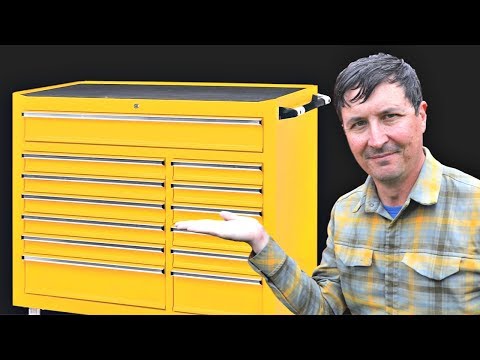
If you want to learn more toolbox organization tips, check out this helpful video from Wranglerstar:
Final Words
We have provided you with product reviews as well as all the information you need to choose the perfect rolling tool chest for your needs. With the information included in this guide, it should be easier for you to make a wise buying decision.
People Also Asked
How can I secure my rolling tool chest?
You can secure your rolling tool chest by installing a hidden foot brake under the tool chest.
How can I maintain a rolling tool chest?
Ensure that you lubricate the wheels yearly. You can clean the pockets or compartments using a clean towel. If there are spills of grease or oil, clean them using a detergent solution. You can also wipe or vacuum the dust weekly.
Are rolling tool chests waterproof?
Not all tool chests are waterproof but this will depend on the material the tool chest is made of. Most plastic tool chests can withstand water to a certain level.


