



Are you looking for the best drill press to take your DIY projects to the next level? Drill presses offer a level of precision and accuracy that hand drilling simply can’t match, and they come in a variety of sizes and styles to fit any budget or workshop.
In this post, we’ll be reviewing the top-rated drill presses of 2023. We’ll discuss the features you should look for when choosing a model and the different types of drill presses available. We’ll also discuss how to properly use a drill press to get the most out of it and how to maintain it for long-term use. With the right drill press, you can create projects that you can be proud of!
Top Drill Press Models of 2023 in Detail
Best Overall Drill Press

This budget drill press is the most affordable model that WEN has to offer but there is no compromise on quality on the part of this manufacturer. Primarily suited for woodworking, this drill press will make drilling into wood or low-density metal an easy job. The five-speed function allows you to adapt to the material quickly and the operation is very user-friendly.
Pros
- 5 speeds that allow you to work on a broad range of material
- Affordable price for its features
- Sturdy construction of base, column, and table
Cons
- Not suitable for higher density metal
Key Features
Small and easy to assemble, this is a great option for anyone who isn’t swimming in space in their workshop. But despite the size, it retains power and stability with the 2.3 Amp motor and cast iron base.
Highest-Quality Drill Press

The JET JWDP-12 is the most expensive drill press on our list but it’s also the most powerful. This drill press is exquisite and it’s suitable for projects big and small with its ½ horsepower motor that can bore a hole in anything you throw at it. With a maximum of 3-⅛” spindle travel, you won’t have any depth issues.
Pros
- Powerful ½ horsepower motor
- High accuracy
- Suited for larger projects
Cons
- High price point
Key Features
Make no mistake, this model is heavy – especially when compared with the other budget-friendly options on our list. But for what it can do, it’s surprisingly portable. Quiet and smooth, this is a high-power tool that’s versatile and solid and it will handle your drilling needs for a good while.
Budget Option Drill Press

Easy to set up and more powerful than some of its price range competitors, the Genesis drill press can be exactly what you need if you’re looking to increase the accuracy and power of your drilling. Level up from a manual drill with a drill press that’s heavy enough to reduce vibration, increase precision and stand the test of time, but light enough to move around at will.
Pros
- Its ⅝” chuckle will handle larger bits as well
- The 4.1 Amp motor is powerful and quiet
- Work light for better visibility
Cons
- Suitable for more light duty jobs
Key Features
For the best experience make sure to assemble it carefully, tightening all of its nuts and bolts. Although this drill press doesn’t come with a laser, the powerful motor makes up for it. Simply designed but efficiently engineered, the Genesis brings more oomph than expected to the 5-speed drill model.
Most Accurate Drill Press

The PROXXON Bench Drill Press is a reliable and professional tool that is ideal for any workshop. It is designed with a high-quality die-cast aluminum work table and features a powerful 3-speed motor which allows the user to adjust the speed depending on the application. The bench drill press is also capable of drilling precision micro holes as small as 1/64 inches (0.5 mm), making it perfect for hobbyists and professionals alike.
Pros
- Powerful enough for light applications
- Smooth operation and clean performance
- Solid construction and quality build
- Accurate, consistent holes over multiple uses
Cons
- The motor is noisy and has some vibration
Key Features
One of the key benefits of this machine is its highly accurate rotational accuracy, enabling users to produce precision hole drilling in metal, wood, and other materials. The quill diameter of 1 ¼ inches (32 mm) and 5 ½ inches (140 mm) throat depth allows for a wide range of drilling depths, making it suitable for a wide range of projects. Additionally, the spindle speeds of 1,800, 4,700, and 8,500rpm enable optimal power and torque at lower speeds. The drill press also includes a MICROMOT steel collet set with each unit, allowing you to make more precise cuts with your bits. Finally, the ribbed die-cast aluminum work table gives you plenty of room to tackle projects while still being able to move around easily.
Benchtop Drill Presses: A Buyer's Guide
Whether your drill press will be suitable for the work you intend is essential. Before you get started and choose the power tool you think is best, you should keep in mind the following aspects.
What Material Will You Need to Drill?
It’s important to keep in mind that not all drill presses will be able to handle all types of workpieces. A five-speed drill press should be enough for you if most of your projects are wood-based but if you’re looking for something that can handle metal you might want to look for a drill press with more speed range. This is because, with drill presses, the harder a material is, the lower the rotations per minute need to be.
The Head of the Drill Press
The head of the drill press is going to be crucial in determining what type of material you will be able to work with. The two essential measurements you need to keep in mind are the swing and the travel.
The swing is the distance between the chuck and the metal column supporting the drill. This will be the aspect that limits how far into the workpiece you can drill.
The travel is the distance that the spindle on which the drill is held can travel down. This is going to determine how deep your drill holes will be.
The Speeds
The speeds that the drill press will have determine what sort of capacity your power tool has as well. More professional models have between 12-16 speeds which makes them ideal for drilling in any kind of material you can think of. More lightweight drill press bench models usually have 5 speeds. These types of drill presses have narrower scopes and they’re generally more suitable for woodworking than metal drilling.
The Power of the Motor
Another important aspect is the power of the drill press motor. A powerful motor will have high torque at lower speeds which is important when you’re working with harder materials. This is another crucial factor that will determine what your drill press can do.
Vibrations
When it comes to drilling, vibrations are a no-no. If you’re looking for accuracy, the more vibrations a drill press is going to have the likelier you are to come out with an unsatisfactory result. Sturdier machines with more weight are less likely to be wobbly but even in those cases, the taper is the essential piece in reducing vibrations. The more massive the taper is going to be the more precise you will find your drilling. This is because the taper itself will absorb the vibration by sitting between the arbor and the spindle of the drill.
Straight vs Angled Drilling
Some projects require straight drilling while others will need to have the workpiece angled. Make sure that the guide on your drill press is adjustable and allows for this sort of functionality before making a purchasing decision.
Portability
Last but not least, it’s important to determine whether all of your drillings will happen in your workshop, in a set corner, or whether you will need to be able to change the location of the drill. This is important because drill presses range in weight from about 30 to hundreds of pounds and if you’re going to need something that you can haul around, you might want to sacrifice power for portability, depending on the tasks you have in mind.
The Size of the Drill
When it comes to drilling presses a bigger size usually means a better drill. This is because larger drills usually have more powerful motors and therefore higher applicability. But these models are also a lot harder to move around. They’re usually very heavy and also quite expensive. Not everyone needs a heavy-duty drill press.
Benchtop drill presses are usually the go-to models for lighter tasks. They’re more portable, easier to work with, and can satisfy a good variety of needs for DIY-ers or woodworkers without breaking the bank or your back.
The Chuck Capacity
The chuck capacity is going to determine what sort of bits your drill press can handle and as a result, what kind of holes it can bore. The overall size of the tool is going to be a good indication of the size of the hole but check with the manufacturers to see the capacity for the model you’re interested in.
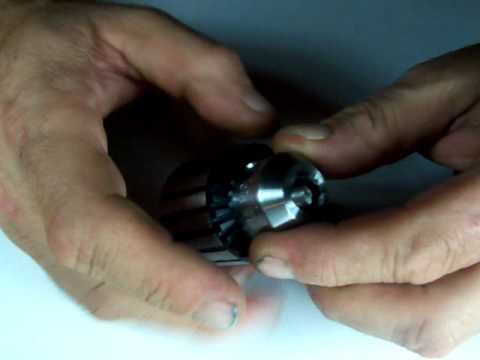
To learn more about chuck sizing and mounting, watch this video from the machinist guide:
Common Drill Press Questions
What do you use a drill press for?
A drill press is used for boring holes into various materials ranging from wood to metal. The drill head is fixed on a rotating spindle that bores into the workpiece, which is usually fixed on a bench top or vise.
Is a drill press worth it?
Drill presses will offer superior stability and precision when compared to a handheld drill. If your projects entail a lot of straight hole drilling, this tool will make your life much easier and the drilling process more effective and less time consuming.
Can a drill press drill metal?
Yes, a drill press can be used to drill metal, although not all drill presses will be able to. In order to safely and efficiently drill into metal, a press will need to go into lower RPM numbers which rule out most hobbyist 5 speed drills - especially when it comes to drilling into hard metal.


