


Essential Woodworking Clamps: What Every Beginner Needs
There's an old saying in woodworking: You can never have too many clamps. While that might be true during a complicated glue-up, you don't need a wall full of clamps to get started.
What matters most is having the right types of clamps for the projects you build.
Clamps are some of the most useful tools in any woodworking shop. They hold parts together while glue dries, keep assemblies aligned, and secure workpieces during a variety of woodworking tasks.
But with so many styles, sizes, and designs available, choosing which clamps to buy can be confusing.
The good news is that a few versatile clamp styles will handle most woodworking jobs. From F-style bar clamps and pipe clamps to spring clamps and specialty band clamps, each has its own advantages.
In the video, Woodsmith's Bryan explains the essential clamps every woodworker should consider, what each type does best, and how to build a useful collection without spending a fortune.
1. F-Style Bar Clamps: The Foundation of Your Clamp Collection
If you're just starting to build a woodworking shop, F-style bar clamps are one of the first types you should buy.
These versatile clamps have a fixed jaw at one end of a metal bar and a sliding jaw that can be positioned to accommodate different workpiece sizes.
A threaded screw applies pressure to hold the parts securely.
F-style clamps are useful for nearly every type of woodworking project, from edge-gluing boards to assembling cabinets and furniture.
They're also available in a wide range of lengths, making them easy to match to different tasks.
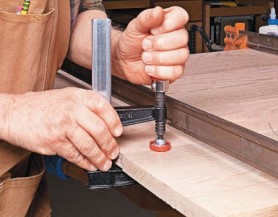
Why Heavy-Duty Bar Clamps Are Worth Considering
Not all F-style clamps are built the same.
Light-duty models work well for small projects and general holding tasks. But for furniture assembly and larger glue-ups, heavier-duty clamps offer some advantages.
Look for a sturdy steel bar that resists flexing under pressure and a screw mechanism that operates smoothly.
Clamps with Acme-thread screws are particularly useful because the threads are designed to handle clamping loads while allowing the screw to turn efficiently.
A quality bar clamp should provide consistent pressure without twisting or slipping.
Best uses: Panel glue-ups, cabinet assembly, furniture construction, and general woodworking.
2. Pipe Clamps: Affordable Clamping for Large Projects
When you start building larger projects, you'll eventually need clamps with greater reach.
Pipe clamps are one of the most economical ways to add long clamps to your shop.
Unlike conventional bar clamps, pipe clamps use separate clamp heads that attach to a length of standard threaded pipe.
This allows you to customize the clamping capacity by choosing the length of pipe.
For example, you can use shorter pipes for smaller assemblies and longer pipes for tabletops, cabinet panels, and other large glue-ups.
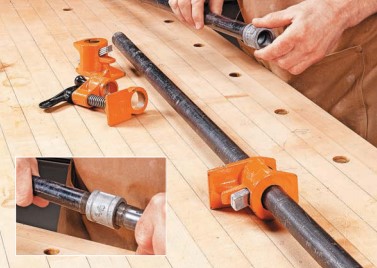
Adjustable Length Is the Biggest Advantage
One of the best features of pipe clamps is their flexibility.
The clamp heads can be transferred to different pipe lengths as your needs change.
You can also use threaded pipe couplers to join sections of pipe when extra length is required.
Black iron pipe is commonly used because it's strong and widely available.
However, long pipe clamps can become heavy, especially when working with several clamps during a large glue-up.
Best uses: Tabletops, large panels, workbenches, cabinet assemblies, and other wide glue-ups.
3. Aluminum Bar Clamps: Lightweight Clamping for Large Assemblies
Aluminum bar clamps are another option when you need longer clamping capacity.
Their main advantage is weight.
Compared with steel bar clamps or pipe clamps of similar length, aluminum bar clamps are generally easier to lift, position, and adjust.
This can make a noticeable difference when you're working with large panels or complicated assemblies that require several clamps.
Many aluminum bar clamps feature wide jaws that distribute pressure over a larger area.
However, clamping strength and resistance to flexing vary by design. Lightweight aluminum clamps aren't necessarily a direct replacement for heavy-duty steel clamps in every application.
For many woodworking projects, though, their lighter weight makes them a convenient choice.
Best uses: Cabinet glue-ups, wide panels, furniture assembly, and projects where clamp weight is a concern.
4. Band Clamps: Ideal for Picture Frames and Mitered Assemblies
Some woodworking projects are difficult to clamp with conventional bar clamps.
Picture frames, small boxes, and other mitered assemblies are good examples.
A band clamp solves this problem by applying pressure around the outside of the entire assembly.
The clamp consists of a flexible strap that wraps around the workpiece and a tightening mechanism that pulls the strap snug.
Many band clamps include corner blocks that help distribute pressure evenly across the corners.
This makes them especially useful for holding mitered joints together while the glue dries.
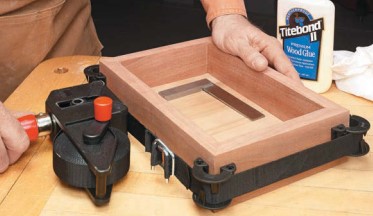
Why Band Clamps Work So Well for Frames
When assembling a picture frame, applying pressure with ordinary clamps can cause the corners to shift out of alignment.
A band clamp applies pressure around the perimeter of the frame, drawing the joints together.
You can then check the assembly for square and make adjustments before the glue sets.
Band clamps are also useful for hexagonal, octagonal, and other multi-sided assemblies.
Best uses: Picture frames, mitered boxes, polygonal assemblies, and small decorative projects.
5. C-Clamps: Strong Clamping Pressure in a Compact Size
C-clamps are among the simplest and most familiar clamps in woodworking.
Their rigid C-shaped frame and threaded screw provide substantial clamping pressure in a relatively compact package.
They're especially useful for small jobs where you need a strong, concentrated grip.
C-clamps work well for securing jigs, holding small parts, and attaching temporary fixtures to a workbench.
Because the screw can apply considerable force, it's important to avoid overtightening, particularly when working with softer woods.
Using a small scrap block between the clamp and workpiece helps distribute pressure and prevent dents.
Although C-clamps aren't as convenient as sliding bar clamps for many assembly tasks, they're worth keeping on hand for situations where a strong grip is needed.
Best uses: Small glue-ups, jig construction, temporary fixtures, and securing workpieces.
6. Spring Clamps: Quick and Convenient Shop Helpers
Spring clamps may not provide the same pressure as a heavy-duty bar clamp, but they're incredibly useful for everyday woodworking tasks.
These clamps operate much like oversized clothespins.
Squeezing the handles opens the jaws, and an internal spring provides the clamping force when you release them.
The biggest advantage is speed.
You can position or remove a spring clamp with one hand, making it ideal for temporarily holding parts in place.
Everyday Uses for Spring Clamps
Spring clamps are useful for holding stop blocks, templates, and lightweight jigs.
They also work well for securing cords, holding small parts during layout, and temporarily positioning pieces before final assembly.
Because they're inexpensive and available in several sizes, it's easy to build a collection without spending much money.
Keep in mind that spring clamps provide limited pressure compared with threaded clamps.
They're best suited to light-duty tasks rather than demanding glue-ups.
Best uses: Stop blocks, templates, temporary positioning, small parts, and light-duty holding tasks.
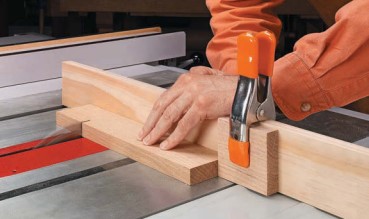
A Practical Starter Clamp Collection
For a beginner, I'd start with several F-style bar clamps in a couple of different lengths.
These will handle most small furniture projects, cabinet assemblies, and general shop tasks.
Next, add a few spring clamps for temporary holding and positioning.
As you begin building larger projects, invest in pipe clamps or longer bar clamps.
Finally, add specialty clamps such as band clamps or C-clamps as your projects require them.
This approach lets you build a useful collection over time instead of spending money on clamps you may rarely use.
Tips for Getting Better Results With Woodworking Clamps
Even the best clamps won't produce good results if they're used incorrectly.
A few simple techniques can make your glue-ups easier and more accurate.
- Dry-fit before gluing. Assemble the parts without glue to make sure everything fits and you have enough clamps.
- Use clamping cauls. Scrap wood cauls can distribute pressure and help keep panels flat.
- Protect the workpiece. Use pads or scrap blocks to prevent clamp jaws from denting the wood.
- Apply even pressure. Tighten clamps gradually and alternate between them to avoid pulling an assembly out of alignment.
- Check for square. Measure diagonally across cabinet and frame assemblies before the glue sets.
- Avoid overtightening. Excessive pressure can distort parts, damage wood fibers, or cause joints to slip.
- Keep clamps clean. Remove dried glue and occasionally maintain the screw threads so the clamps operate smoothly.
Build Your Clamp Collection One Project at a Time
Clamps are essential woodworking tools, but building a useful collection doesn't have to be expensive.
Start with versatile F-style bar clamps and a handful of spring clamps. Add pipe clamps or lightweight aluminum bar clamps when your projects require greater reach.
Then round out your collection with specialty clamps for picture frames, boxes, and other assemblies.
By choosing clamps based on the work you do most often, you'll end up with a practical collection that makes glue-ups easier, assemblies more accurate, and everyday woodworking tasks more convenient.
And as any experienced woodworker will tell you, there's always room for one more clamp.
Build Your Own Specialty Woodworking Clamps
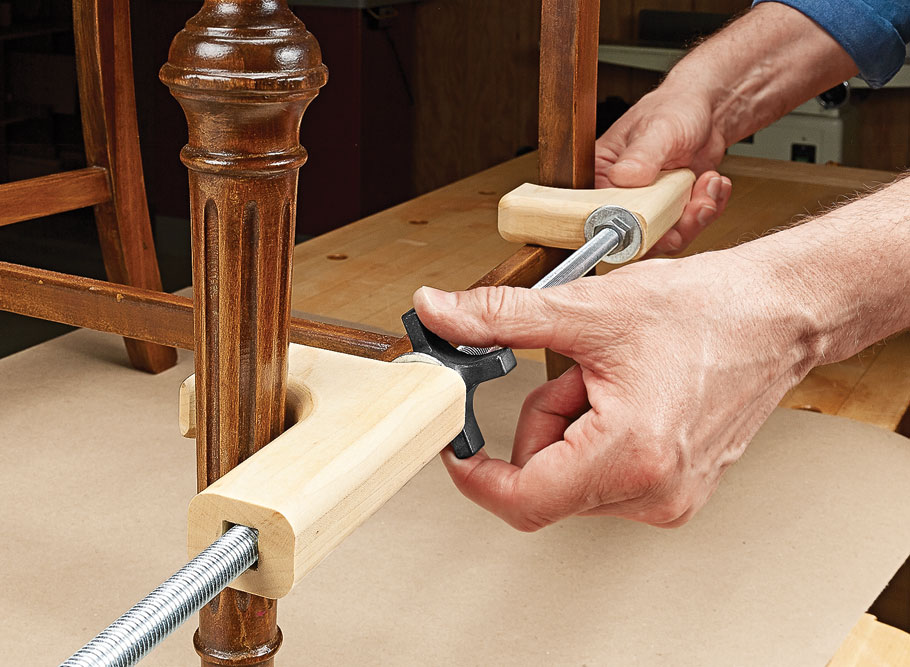
Sometimes a standard clamp just won't reach where you need it. Discover how to make a set of useful shop-built clamps, including deep-reach and specialty designs, using common materials and hardware.
GET THE STEP-BY-STEP WOODWORKING PLANS ➜ Explore 5 Shop-Made Clamps


