


When it comes to building cabinet doors and other frame-and-panel assemblies, stub tenon and groove joinery is hard to beat. The joints are strong, straightforward to make, and particularly well suited to the table saw. With just a few simple setups, you can cut perfectly centered grooves and matching tenons that fit together snugly.
One of the keys to building a long-lasting woodworking project is choosing the right joinery for the job. My goal is always to produce strong, accurate joints without spending more time on the process than necessary. That's why I frequently turn to stub tenon and groove joinery for cabinet doors, furniture panels, and other frame-and-panel construction.
The entire process takes place at the table saw. First, you'll cut a continuous groove in the rails and stiles. Then, using the finished groove as a reference, you'll form short tenons on the ends of the rails. Once the setup is dialed in, it's easy to produce a complete set of matching joints.
Here's how I approach the process.
What Is a Stub Tenon and Groove Joint?
A stub tenon and groove joint is similar to a traditional mortise-and-tenon joint, but with one important difference. Instead of cutting individual, deep mortises into the stiles, you cut a shallow, continuous groove along the inside edges of the frame parts.
The short tenons on the ends of the rails fit into these grooves, creating a mechanical connection between the rails and stiles. The same grooves can also capture the edges of a plywood or solid-wood panel.
This makes stub tenon and groove joinery especially useful for frame-and-panel construction. A single groove serves two purposes, simplifying the machining process and helping keep the parts aligned during assembly.

Plywood vs. Solid-Wood Panels
Before cutting the grooves, consider the type of panel you'll be using. The panel thickness determines the required groove width, so it's important to have the actual panel material on hand when setting up the saw.
I often use plywood panels and glue them into the frame. Because plywood is dimensionally stable, it can be glued into the grooves without the same wood-movement concerns associated with solid wood. The glued panel also contributes to the overall strength of the assembly.
Solid-wood panels, on the other hand, need room to expand and contract across their width. They should float in the grooves rather than being glued into the frame.
The groove depth can vary depending on the project, but I typically work within a range of 1/4" to 5/8". A groove that's too shallow won't provide enough engagement for the tenon, while an excessively deep groove can weaken the frame.
Step 1: Set Up the Table Saw to Cut Centered Grooves
The first step is cutting the grooves in all four frame pieces: the two stiles and the two rails. Each groove needs to be centered on the thickness of the workpiece, sized to fit the panel, and cut to the correct depth.
Fortunately, you can accomplish all three with a simple table saw setup.
The basic arrangement consists of the rip fence, a featherboard, and either a standard saw blade or a dado blade. The blade you choose depends primarily on the width of the groove.
For grooves 1/4" wide or narrower, I generally use a standard table saw blade. For wider grooves, I install a dado blade that's slightly narrower than the desired finished width.
Using a blade that's narrower than the groove allows you to make two passes and center the groove accurately.

Use Two Passes to Center the Groove
The trick to cutting a perfectly centered groove is to reference both faces of the workpiece against the rip fence.
Start by making the first pass with one face against the fence. Then turn the workpiece end for end so the opposite face bears against the fence, and make a second pass.
Because both cuts are referenced from the fence, the resulting groove is centered on the thickness of the workpiece. This also helps compensate for small variations in the initial fence setting.
A featherboard keeps the workpiece snug against the fence throughout the cuts, helping maintain a consistent groove location. Use a push block or other appropriate workholding to keep your hands clear of the blade.
Step 2: Adjust the Groove Depth and Width
Before cutting the grooves in your project parts, make a few test cuts in a scrap piece that's the same thickness as your rails and stiles.
Start by setting the blade slightly lower than the intended groove depth. Position the rip fence so the first cut falls near the center of the workpiece, then make the two passes described above.
Check the depth of the groove. If it's too shallow, raise the blade slightly and make another pair of passes. Continue adjusting until you reach the desired depth.
At this point, the groove may still be narrower than the panel. Make a small adjustment to the rip fence and repeat the two-pass process to widen it.

You're looking for a snug but easy fit. The panel should slide into the groove without excessive force, but it shouldn't rattle or feel loose.
Once the groove width and depth are correct, lock the fence and blade settings. You can now cut matching grooves in the remaining frame parts.
Step 3: Set Up the Dado Blade to Cut the Stub Tenons
With the grooves completed, you can use them as a gauge for sizing the stub tenons on the ends of the rails.
For this operation, I use a dado blade that's wider than the finished tenon length. The original setup uses an auxiliary rip fence with clearance for the dado blade. This allows the fence to establish the tenon length while the blade removes the waste from one cheek in a single pass.
An auxiliary fence attached to the miter gauge supports the workpiece during the cross-grain cut and helps prevent chipout at the shoulder.

Make sure the auxiliary fence provides the necessary blade clearance and that the workpiece is fully supported throughout the cut. Don't use a setup that traps loose waste between the blade and a standard rip fence.
Adjust the Blade Height for Tenon Thickness
The dado blade height determines how much material is removed from each face of the rail, which establishes the finished tenon thickness.
I like to start with the blade slightly lower than the estimated final setting. With the fence positioned approximately, make a cut across the end of a test rail. Then flip the workpiece over and make a matching cut on the opposite face.
This creates a short test tenon that you can compare directly with the groove.
If the tenon is too thick, raise the blade slightly and repeat the cuts. Continue making small adjustments until the tenon slides into the groove with a snug fit.
Keep the workpiece flat against the table and firmly supported by the miter gauge fence during each cut. Consistent workholding is essential for producing tenons of uniform thickness.
Step 4: Set the Tenon Length and Check the Fit
Once the tenon thickness is correct, adjust the rip fence to establish the finished tenon length.
The tenon needs to engage the groove fully without bottoming out. I like to leave a small amount of clearance between the end of the tenon and the bottom of the groove. This ensures the rail shoulders can close tightly against the stile during assembly.
Make a test cut, then fit the tenon into the groove to check both its thickness and length.

If the tenon bottoms out before the shoulders close, shorten it slightly by adjusting the fence. When the fit is correct, lock the setting and cut the remaining tenons.
For consistent results, keep the end of each workpiece firmly against the intended stop and maintain steady contact with the table and auxiliary miter gauge fence.
Once all the tenons are complete, test-fit the frame before applying glue. This is your opportunity to make any final adjustments while the parts are still easy to work with.
Step 5: Assemble the Frame-and-Panel Door
With the tenons cut and the panel sized, the assembly process goes quickly.
I start by positioning the panel in the groove of one stile. Next, I add a rail at each end, fitting the stub tenons into the stile. Finally, I install the remaining stile over the panel and exposed tenons.
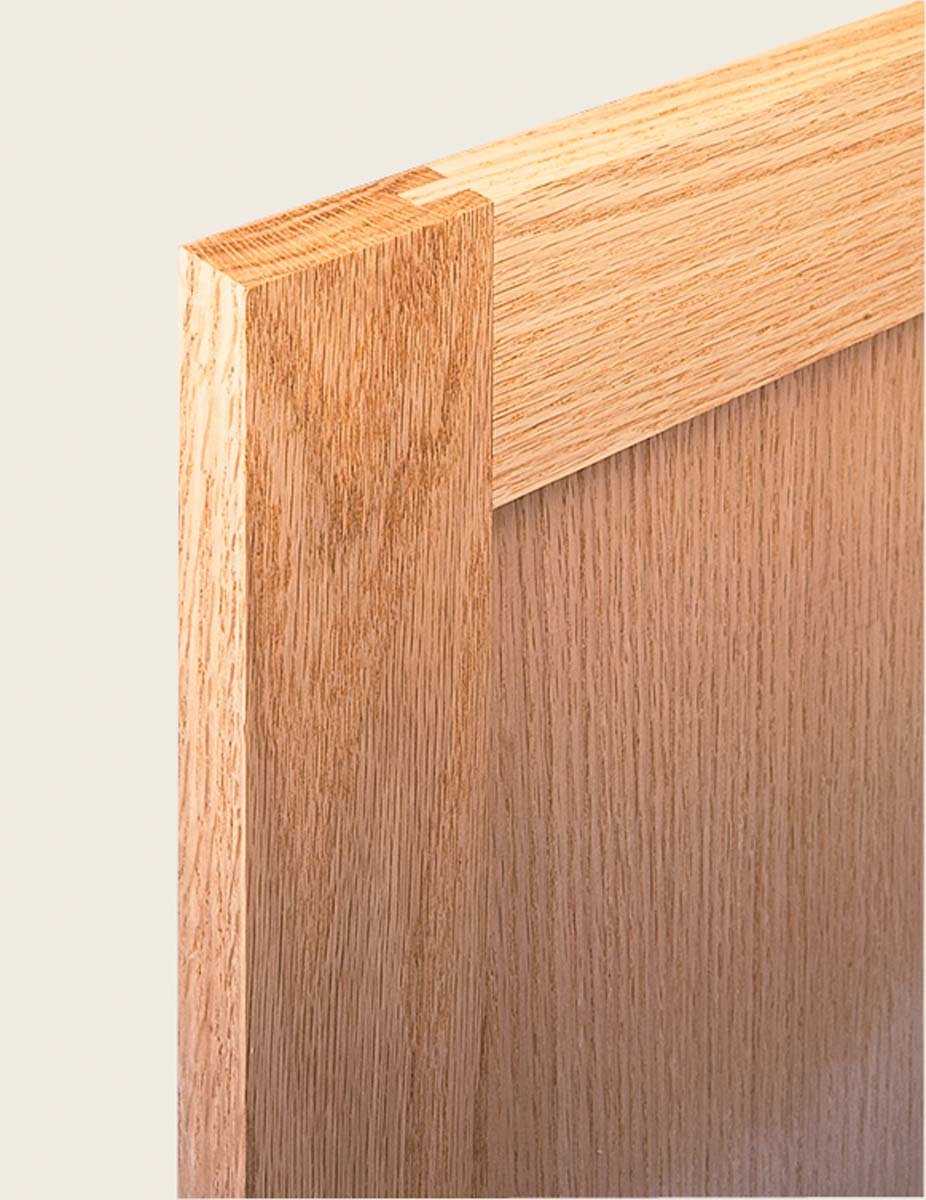
Before tightening the clamps, check that the rail ends are flush with the stiles and that the frame is square. Apply enough clamping pressure to close the joints without distorting the assembly.
If you're using a plywood panel, you can glue it into the grooves as part of the assembly. For a solid-wood panel, leave it free to move within the frame.
For a more detailed look at the gluing and clamping process, see our related article on how to assemble a frame-and-panel cabinet door.
Strong, Accurate Joinery with a Simple Table Saw Setup
Stub tenon and groove joinery is a practical choice for cabinet doors, furniture panels, and other frame-and-panel woodworking projects. It provides a strong connection between the rails and stiles while allowing the same grooves to hold the panel.
By cutting the grooves first and using them as a reference for the tenons, you can dial in the fit with a few simple test cuts. Once the table saw is set up, producing matching joints for an entire project is quick and repeatable.
And if you'd rather use a router table, check out our companion article on making stub tenon and groove joints with a router table. Both methods produce the same basic joint, so you can choose the approach that works best with your tools and project.
The result is a tight-fitting, square assembly that looks great and is built to last.


