


Radial Arm Saws
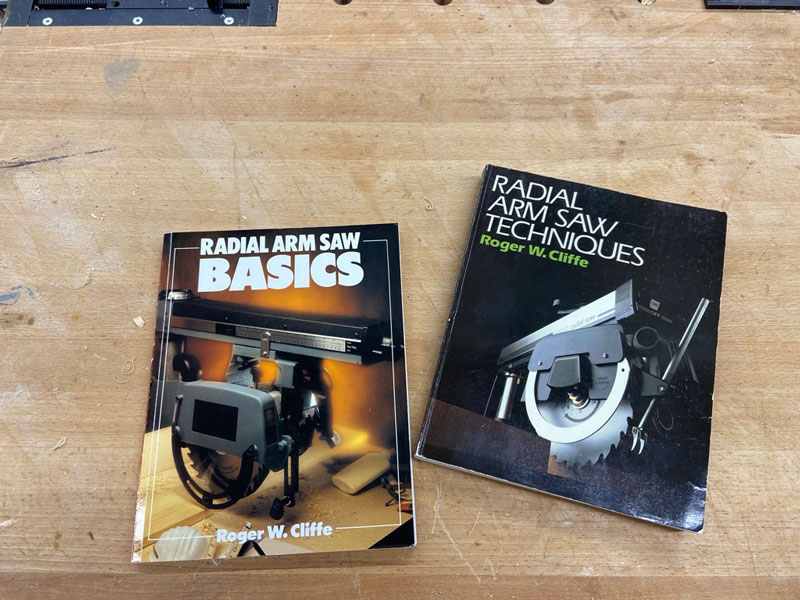
This week we riffed on radial arm saws. Logan has a 20" version for dicing up slabs for Chunk-A-Trunk. I found a couple books in the Great Woodsmith Bookery on the topic.
Kitchen Island Series
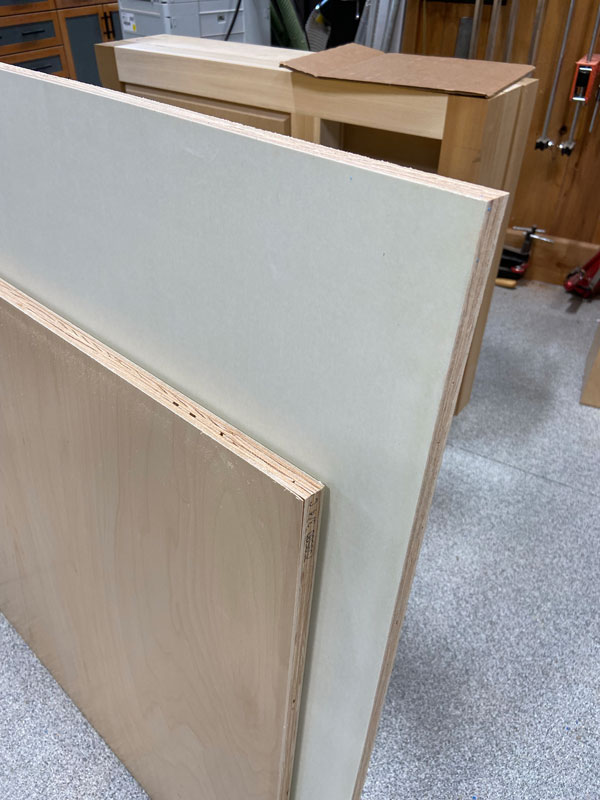
We also discussed a video project on making a kitchen island. Logan asked whether dadoes, grooves, and rabbets are worth it. He also has some interesting materials for the project. The case are made from plywood that's prefinished with a UV-cured clear finish on one side and a sorta primed, ready-to-paint surface on the other.
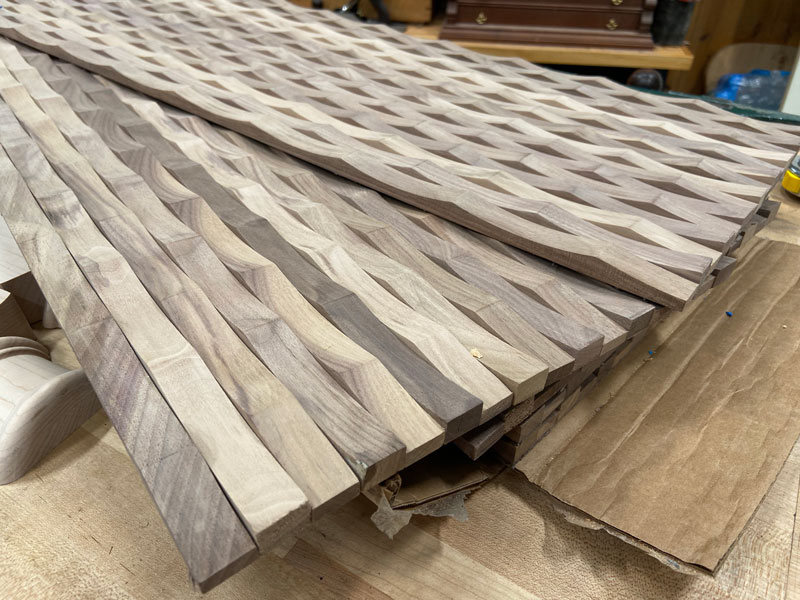
The other material is a tambour door uh panel that has a scalloped look and is canvas-backed. Logan is going to use this for the door panels.
Transcript
Phil Huber (01:19.17) Here we are, everybody. It's time for another episode of the ShopNotes Podcast. I'm Phil Huber, joined by Logan Wittmer and John Doyle today. We have our shapeware on just to make sure that we're not too top heavy. we're gonna get started today, as usual, with listener comments, and then we're gonna dive right into updates on what's going on here at Woodsmith and Popular Woodworking.
Lots of activities. It feels like summer's winding down and the fall season of woodworking crazy is just about to begin. We're gonna dip here for a word from our sponsor and then join right back.
Phil Huber (02:09.996) All right, just a couple of comments from last week's episode. James Scottingham says, You know, I'm getting old when you talk about radial arm saws, and I remember my dad using one. Back in the mid-1960s, my dad bought a Sears radial arm saw. He used it to build our house. He had some specialty blades for it, and I think he even had a dato set for it. He didn't even have a table saw until he was my age. Shortly before his death, he gave it to my stepbrother.
Who loaded it into his pickup truck? Somewhere between Burley, Idaho and Reno, Nevada, it took flight and disappeared. I hope it landed along the side of the road and not in the middle. I missed that saw.
John Doyle (02:53.444) P
Phil Huber (02:57.176) my dad also had a Craftsman radial arm saw, but that was in the nin late eighties. his had a little digital readout on it for height and blade angle and stuff like that. So that one was
Logan (03:09.599) Mm.
John Doyle (03:10.124) nice. Yeah. Yeah.
Logan (03:14.566) E go ahead.
John Doyle (03:17.516) I was gonna say I was using Rail Armsaw to when I was resiting my ho our first house, it would have been like two thousand four, so turn of the centuries type stuff. So well not that long ago.
Logan (03:30.482) I I was I was gonna say I would have a hard time trusting a DRO on a radial arm saw. Radial arm saw. Now this is we had a radial arm saw in my shop in high school. So like 2005, 2006, had had one in the shop. used it to cut dados to cross cut stuff. I and maybe it's because it was a
shared shop, but like I wouldn't ever claim a radial arm saw to be a precision cross cut tool, right? So like a DRL, I'm kinda like, mm, like could you do it? I'm sure you could if you're pretty, you know, particular on how you set it up and, you know, you're gentle with it, but like, I don't know.
Phil Huber (04:11.756) Right.
Phil Huber (04:25.164) Yeah, as a that was the primary my dad says that he had a tape like a benchtop table saw prior to the radial arm saw that I don't have a memory of for some reason. I remember doing a lot of my early woodworking in his shop with that radial arm saw. And yeah, the little digital readout on it, it was one of those things where you just had to zero it out kind of right routinely.
When he bought the saw from Sears, they actually sent a tech out and set it up for him so that it was all leveled and adjusted right and whatever. And yeah, I used it for we used it for cross cutting dados and I did ripping on it. Like I know that some people are weirded out by that fact, but it wasn't bad. I I was like a high schooler and I figured it out and
Logan (05:00.981) Mm.
Phil Huber (05:23.712) And it worked out okay on it. It was it something that I would wanna do all the time? Not necessarily, but you know, I we got really accurate cross cuts and datos with it. So I I think it I think your point, Logan, exactly is if it's in a shared shop where you're not sure who the previous user was and what they did to it, then it makes it a much sketchier setup. But
Logan (05:49.642) Yeah. I mean it also kind of is in the same vein as like a miter saw, right? It's gonna be as accurate as you set it up to be, I guess, and as accurate as you allow it to be. If you just are whacking crap to length, it's gonna give you a whack to length crap. So which is what I want mine for. I'm not ripping on it, I'm not finished cutting.
Phil Huber (06:17.079) Yeah. I mean we're we're s running up against that here in the shop at Woodsmith too, where you know, Mark really wants to get a nicer saw in a nicer miter saw in the shop for that specific use to have a fine cutting, cross cutting and or miter cutting tool because the two the we have a Bosch
Logan (06:45.207) Yeah.
Phil Huber (06:45.953) glide in there now. And that one has just been used for lopping off long boards repeatedly that it's just not
Phil Huber (07:00.023) It's not a precision tool anymore.
Logan (07:02.452) It's tired, boss.
Phil Huber (07:04.311) Yeah. So
Totally first world problems, but it would be having two of One saw, one saw set up for rough cutting, you know, whatever kind of boards we end up getting in, whether it's sawmill lumber or from the lumber yard, which may have non square straight edges or whatever, where you're just looking to cut it to rough length to get it into a usable form, versus something where it's like this needs to be
Logan (07:11.058) Phil Huber (07:37.444) dead on cross cut with a nice blade. Because a lot of times, you know, somebody's put a nice blade on the cross on the miter saw, and then the next person comes in and is buzzing through eight-quarter rough sawned white oak with it, which is wrong blade for the wrong job.
Logan (07:59.512) Mm-hmm.
Phil Huber (08:04.377) So yeah. Yeah, whatever you want to do with your miter saw or with your radial arm saw, I think you can set it up for that. When I was in college, they had a shop at the school for, you know, the various maintenance tasks and they had a radial arm saw in there that had it was a dado saw. You know, you just had a dado blade set up in it and that's what it was for. Which I can totally see that.
Logan (08:31.307) I think it would be a sweet dado saw if you were doing I don't know if this is a thing, but like prefab timber frame buildings, right? So like if you were selling like a prefab 20 by 20 timber frame building for shops, let's say, and you were doing all the tenanting on a radio arm saw in a shop that you're building these and you know, putting them together for kits, it'd be beautiful.
Phil Huber (09:00.163) yeah. Well, I mean, even translate that to kind of like the the hobby shed, she shed kind of thing, where you could do small things or arbors and trellises and things like that too, where you just crank that out. Especially if you have a twenty inch radial arm saw that can take a two inch dado blade.
Logan (09:10.508) Mm-hmm.
Logan (09:15.041) Yep.
Yeah. Yeah. 'Cause
Yeah.
That's right. Which I cannot find one that big. I tried.
Phil Huber (09:29.837) Ha ha ha.
John Doyle (09:31.708) You just gotta buy three sets and just stack up.
Logan (09:32.002) I also yeah. I also so this regular I bought is the is the DeWalt GE. five or seven and a half horse. I don't remember how big it is. but it will take 20 inch blade, it will do a 30 inch cross cut with the 20 inch blade. smaller blade, smaller cross cuts. Right now I think there's like a 16 inch blade on it, so it'll do like 26 ish inches.
so I was like, well, psh, of course, Lowy Wimmer has to buy the biggest blade he can find. Because why not? It's very hard to find a 20 inch radial arm saw blade. I did find a few. could not find anywhere that I could find a two inch wide dado blade for the radial arm saw. Like, I just I just believe that that would be amazingly cool, just to I mean, it would be like
automatic dust collection because of the air turbulence coming off that blade. Like, it would be amazing. However, it would also need to be the right type of dado blade or else you're gonna get a lot of grab, I think.
Phil Huber (10:46.925) Yeah. Right.
So we do know that the guys over at Woodpeckers are listening to this show. So if you're looking to really create some
Logan (10:56.711) Yep.
Phil Huber (11:06.585) Create some noise, so to speak. Holler at your holler at your boy.
Logan (11:08.693) Yeah. I should yeah, I sh yeah. Yep. I should have I should have texted Jared and be like, Hey, I know you don't do the saw blade design, but
Phil Huber (11:19.961) About
Logan (11:20.205) Could you? Could you? Yeah, like we'll prototype it. I just need I just need three prototypes that will last me the rest of my life.
John Doyle (11:21.98) It's a one off, one time tool. Yeah.
John Doyle (11:29.166) Yep. Mm-hmm.
Phil Huber (11:29.197) Yeah. Although to be honest, you know, we have a bunch of extra ra datablades here. You could like mix and match a set and then just get them rebored. And then just put together.
Logan (11:39.611) Yeah.
Yep. I have a mill. I mean, how hard can it be?
John Doyle (11:44.689) Yeah. You have the means and the know how. Make it happen. yeah. Speaking of know how when Phil, when you were saying you like figured out the saw you were figuring out in high school or whatever, and I was thinking back, it's like, how did we figure things out without like YouTube tutorials back then? We didn't have the internet. 'Cause you know we weren't reading the manual.
Phil Huber (11:45.965) Right. Yeah.
Logan (11:49.633) Hmm, I have the means. No how is generally what is lacking.
Phil Huber (12:13.015) Right.
John Doyle (12:13.232) We were just we were just figuring it out. We're just blindly just we got it done somehow.
Phil Huber (12:20.601) Well, I do challenge people who have grown up with YouTube to go to some kind of second hand store like Goodwill or half price books or your local used bookstore and check out the woodworking section and see the kind of nonsense books that were cranked out by the hundreds in that era,
Logan (12:39.884) Mm-hmm.
This is
John Doyle (12:43.962) Yeah.
Logan (12:47.25) my god, so many of
Phil Huber (12:51.577) You know, a lot of them were black and white. And I know, I know, I've been around enough photographers to know that black and white photography can be really stunning. That was not the photography in these woodworking books. And they were printed on something one step up above paper towel for paper. So the photo, these these black and white photos were the definition of muddy.
Logan (13:05.471) No.
Phil Huber (13:21.301) hard to see, felt like they were just sort of hastily written. I think when you bought that radial armsaw, I sent you Logan image of two f books. I don't think I have them in my office yet, of on like radial armsaw techniques, you know, and it's just like super weird kind of thing. So yeah, it's amazing we did actually figure it out, John. You're right. Because
Logan (13:33.291) Yes. Yeah, two books that we had in the library. Yep.
Phil Huber (13:49.911) When you had those books, they were tough to tough to get through.
John Doyle (13:56.141) The thing I was wondering when you said the technician from Sears came out. So if Best Buy ha their technicians are called the Geek Squad, what would Sears technicians have been called? The monkey wrenches? The w the woodchucks, maybe? I don't know.
Logan (14:07.329) Monkey wrenches.
Phil Huber (14:08.739) Monkey.
Logan (14:11.317) Isn't the wood checks?
John Doyle (14:14.086) Who knows? Lost of time.
Logan (14:15.309) I mean, to me that like that is cool, right? Like you you that there was that level of service at one point where it was like, hey, I bought this tool. Like, I bought my saw stop. Did somebody from the Woodsmith store come out and set up my saw for me? Nope. That would have great.
Phil Huber (14:22.03) yeah.
John Doyle (14:32.257) They would have if you asked. If you would have asked, they would have.
Phil Huber (14:40.333) Yeah, so I did find the books Radial Armsaw Techniques by Roger Cliff. This one's a chunky one. Sterling Publishers. And then a slightly smaller version, same author, Radial Armsaw Basics. I'll put photos of that on the show notes page.
Logan (14:48.236) Yeah.
Logan (14:55.415) So like I I mean like I'm I'm curious about these books now because to me
Phil Huber (15:01.55) Yeah.
Logan (15:06.581) You grab it and you pull. You don't you you control pull, right? Like how much more technique is there? Like it's a one like I I say it's a one action tool. I'm gonna use it as a one action tool. So like I guess, I guess there's other things I know you can do with it that I don't want to. but like
Phil Huber (15:19.159) Right. Yeah.
Phil Huber (15:25.409) Right. and that that's where the big book really dives into is the like using router bits in the chuck and the sanding disc and the all the other stuff that goes with it. But it's, you know, bevel cuts and miter cuts and
Logan (15:42.714) They had router chucks for that?
John Doyle (15:42.95) Can you
Phil Huber (15:46.03) yeah, 'cause that's one of the things in here is it's under intermediate and advanced operations.
Logan (15:55.69) I mean to me this this sounds dangerously close to shopsmith territory, and I don't like this.
Phil Huber (15:56.811) Molding head cutters.
Phil Huber (16:04.791) Yeah. I I mean it's been a while since we threw some shade at Shopsmith, but yes. So there's like the molding head. Yeah.
Logan (16:10.733) We're letting get back on their feet.
John Doyle (16:12.528) Yeah. Then knock down. Push him down again.
Phil Huber (16:16.345) Yeah, sanding disks to boot and making like a separate sanding table for it. Spindle sanders.
Logan (16:24.749) I mean like I get this I I get the sanding disc. Like I kinda get that. Also, like I'm kinda curious about the sanding discs for the table saw. Kinda curious about
Phil Huber (16:36.021) they also have one on here. This one for setting up your radial armsoft as a stroke sander.
Logan (16:44.225) Sure.
John Doyle (16:45.508) What? Full circle. Full circle.
Phil Huber (16:46.635) Yes.
Logan (16:47.095) I didn't have to buy both of them Dang it.
Phil Huber (16:49.461) No you did not.
So there you are. I will
putting like a buffing wheel in there?
Logan (17:01.462) yeah, I'm done with that. For sure.
Phil Huber (17:03.393) Yeah, yeah. Which is funny to me that all of those were included under basic techniques. Intermediate and advanced operations go way beyond that.
Logan (17:12.461) Yeah.
Logan (17:17.749) Mm.
Phil Huber (17:21.613) Yeah. I mean there is a
Cultural curiosity of reading those books like that, where it's like, really? Really? I want to know how many people actually did that. So for the folk that used radial arm saws out there, like how deep did you go? Was it? For real, because I would like to know because it's like one of those things where it's like, yes, you can do that, but how many people are? So
Logan (17:30.817) Yeah. Why? yeah.
Logan (17:40.833) Did you get weird with it?
Logan (17:52.727) Yeah.
John Doyle (17:56.935) I would guess it would be like when did you pick up woodworking? 'Cause if you took a like high school shop class growing up, you probably kinda learned that way. But if you're picking it up just later in life, maybe you're grabbing a book and reading about it, but who knows?
Logan (18:15.181) Mm-hmm.
Phil Huber (18:17.443) Yeah. So anyway, like I said, they're kinda interesting to flip through, if just for the general information and entertainment value of it, part of it. So other comment that we got was from an email. You can always check in with us, woodsmith at woodsmith.com. Ryan Osterbrink, our correspondent from Rhinelander, Wisconsin, says, Great podcast once again. He writes, W when the white pine was king.
was a great read about the history of logging in the Northwoods of Wisconsin. Highly recommend checking it out. So that was a that was a cool one, a good recommendation. I looked that one up. that one's written by a guy named Jerry Apps, who has written he doesn't write anymore, but wrote several books on growing up on dairy farms.
when he was a kid in Wisconsin in the I don't know, the interwar years, let's call it that. So that was kind of a those are all really fun books. He wrote a a variety of Wisconsin related history books that I think would apply pretty generally to the Midwest. So I'm definitely gonna check that book out, see if I can find that and pick it up. his writing style is really good and
Like I said, I've just been taking kind of a deep dive in the
Phil Huber (19:48.791) I don't know, the material cultural history of white pine and softwoods in general. So yeah. There we go.
Logan (19:52.798) Mm-hmm. Mm-hmm. so I did have another email that was sent in just to me. Just to me. from Ron Henderson out of Novado, California. hey, really enjoy listening to the Shop Notes podcast. Funny story. First episode I ever listened to was one where you were speaking at length about all the walnuts falling on your yard and maybe paying your children to fill buckets with walnuts. Walnuts, walnuts, walnuts.
Phil Huber (19:59.884) Okay. All right.
Logan (20:20.151) Did I mention walnuts? After that episode, I was kind of like, huh? Anyways, came back the following week, and now I understand that topics like walnut deep dives are part of the charm of the podcast. Seriously, you guys are great, and I enjoy every episode. I think Ron is full of shit. but yeah, yeah. Sorry, Nate. but then he gets he said, Hey, now about shave horses. Recently took a green wood.
John Doyle (20:37.124) Yeah, yeah.
Phil Huber (20:38.883) Pee
Logan (20:47.915) Chairmaking class in San Francisco. Shout out to Mission Community Workshop and instructor Dan Slatzer. I seem to recall you writing an article about making a shave horse, but he couldn't find it. he was digging around asking for it. So I emailed back to Ron and said, Ron, appreciate the comments about the podcast. We're just a bunch of people that love what we do and go off on tangents about gas stations. and secondly, in regards to the shave horse.
Having used my shave horse quite a bit and then used other shave horses, I did not send him the plans for my shave horse. I highly suggested that he take a look at Jeff Lufkowitz's design, which is based on a Brian Boggs design. while I like some of the things about my shave horse, theirs are much more user friendly. So.
I will point you in their direction, Ron, and that's what I did. Check your email. So
John Doyle (21:57.213) Speaking of gas stations.
Logan (21:59.27) Yes.
Phil Huber (22:00.472) Right, we have an update breaking news.
John Doyle (22:01.382) Kiwi yeah, we have b breaking news here.
Logan (22:03.869) is this the one that I saw that I go ahead. I think I saw it on KCCI.
Phil Huber (22:10.201) Yeah. So you know, several episodes ago we went on at length about Midwest gas stations and the various tribes that are going in there. Well, our little snow globe of gas station
Logan (22:17.772) Yeah.
Phil Huber (22:30.073) Peace and tranquility is about to get shaken up here because it just came out that in Urbindale, one of the next door neighbor suburbs to Des Moines, is going to be getting Iowa's first Buckeys, which if you know about Buckys, you know. And if you don't, it's the nine hundred pound gorilla of Texas invading this the rest of the country.
Logan (22:56.295) Is is it confirmed? Because the e the the article I saw said they were eyeing a several hundred acre plot of land for a Bucky's. I did not see legit confirmation. I'm waiting for Buck to tell me that he is putting a gas station there.
Phil Huber (23:12.439) Right. Okay. So if you're looking for that
John Doyle (23:15.376) We're not reporting this, but our sources say Yeah. Yeah, yeah.
Logan (23:18.505) Our sources say our sources are reporting that.
Phil Huber (23:22.957) Yeah. No, it's the development company that works with Buckeys to do the build out.
Logan (23:29.665) Mm-hmm.
Phil Huber (23:35.022) Looks like they what was it? The article that I saw, I'd have to dig it up, was on Axios that had that the Urbendale City Council approved a zoning change for that plat. So that would open the door for Buckeys, which I believe has a purchase agreement on the property. I think.
Logan (23:39.317) I just found it, yep.
Logan (23:58.926) Mm.
Phil Huber (24:03.149) So I know at that particular intersection that they're looking at, there are already two gas stations, which I feel like just dead man walking, even though one of them is a quick star, and I would really hate to see a quick star leave this leave this earth, but yeah.
Logan (24:20.863) we will keep we will keep Quixar in in business, don't you worry. So I was just reading this article. One cat Carrie Carney of Thousand Friends Iowa says, I'm disappointed to see the long term climate mayor is pushing a hundred pump gas station. So I I think there are gonna be a lot of people that would be interested in this, and then there are gonna be people that are gonna revolt against Buckies.
Phil Huber (24:47.543) I guess I would wanna know for the people that have buckies in your area.
Is that basically just for the people driving through? Cause it's on Iowa 80 interstates eighty and thirty-five are connected in that stretch. So are you just getting the through travelers or how much local traffic is there really?
Logan (24:59.585) Yeah, it has to be, right?
Logan (25:12.427) Yeah, like is that somebody's morning stop is a Bucky's? Or is it your road trip stop? Like that's that is a good question.
John Doyle (25:22.748) I would think you're gonna have some people from around Iowa traveling just to see the circus that is Bucky's. But yeah, I don't know. I don't know how long that will last, but
Logan (25:30.381) The the Yeah, the the hundred pump gas station Bucky's. But but I just I didn't know this, and this just was as I was reading the article briefly while we were talking about it. I didn't know Bucky's does not allow semis. Did not know that.
John Doyle (25:36.24) Yeah, yeah.
Phil Huber (25:49.476) Right. That's the big draw for it for travelers is that you don't have to fight semi traffic and you know be able to
Logan (25:55.713) Fight some eyes, yeah.
Do th do they allow like RVs and campers and stuff?
Phil Huber (26:05.913) Yes. But I don't know what the I don't know th I guess it would depend on whether your particular vehicle is takes diesel, 'cause I don't know if they do diesel.
John Doyle (26:05.946) Yeah, what's the size of their funnel? Is it minivan sized or RV size like what can you get in there?
Phil Huber (26:23.351) I would imagine they do, but but they yeah. But they have when I've been to Buckey's, there's been, you know, campers and RVs and stuff there, so they probably do have diesel pumps, but
Logan (26:25.035) Definitely not visiting Bucky's then.
Logan (26:39.639) They do. According to my AI overview on Google, Bucky's centers almost all sell
Phil Huber (26:42.689) Right. Yeah. So as you're listening to this podcast, you're learning right along with us. It's a group exercise here.
John Doyle (26:48.464) Yep. Yeah.
Phil Huber (26:54.061) I will say I was in one in Texas, kind of centralish Texas, that was what I would say more human sized Buckeys. It was like the size of a normal quick trip, which I was surprised that they that they made like a mini version of it. But that wasn't it was an older one in a smaller town. So
John Doyle (26:54.353) Mm-hmm.
Logan (27:06.669) Yeah.
John Doyle (27:15.484) Yeah, I'm I'm a little shook to be honest, because I thought they would kind of nibble around the edges a little bit, maybe come up from the south. But there that's like smack dab in the urban sprawl here, the middle of it all. So I was not prepared for that.
Logan (27:20.129) The periphery.
Logan (27:25.761) Yep.
Phil Huber (27:25.923) Yeah.
Logan (27:31.489) Just another reason not to go to the west side of Des Moines.
Phil Huber (27:36.324) Wow. All right. So I wanna hear from listeners and viewers on your thoughts and feelings on Buckeys. It's not it's woodworking adjacent. We're travelers, people moving around. But do you go to Buckeys when you're on the road? Are you from a Buckeys area and what is the what's been the effect? So
Logan (27:37.387) Yeah. I said it.
Phil Huber (28:05.945) one of my brothers in law is a Bucky's devotee, if you will. Always gets the the big gulp slurpy thing with the little Bucky's mouthpiece on it. So there you go.
Phil Huber (28:28.057) I mean they might do a killing during state fair time with all the people coming in and out, so
Logan (28:32.471) Wrong side of town though.
Phil Huber (28:34.349) Yeah, but if you're getting people from like western Iowa or southern Iowa coming in, who knows?
Logan (28:36.353) West, I guess. Yeah. Yeah.
Phil Huber (28:46.925) Maybe invest in billboards because Bucky's if for if anything has a bajillion billboards for every Bucky's station leading up to it. So I'm not saying it's an investment opportunity that's guaranteed to go up, but
Logan (29:04.909) It's not going down.
John Doyle (29:05.146) Buy buy in now.
Phil Huber (29:05.293) There you have it. It's not going Yeah. Yep.
All right, that's our little diversion there. Just constantly changing in the gas station affiliation mark. So checking in there. Logan.
Logan (29:25.537) We're really just pulling for that Exxon mobil sponsorship, is what we're pulling for. That's money's not in woodworking, it's in it's in gas.
Phil Huber (29:29.721) Ha ha ha
Phil Huber (29:39.907) Logan, what's going on in your world?
Logan (29:42.09) I am in the midst of getting the shop ready for video this week. so we have, I don't know who else coming this week, but tomorrow and Thursday, we are shooting, starting a series on building kitchen cabinets, concentrating on building a kitchen island. there's a lot of kitchen cabinet videos out there, so we're kind of taking a different approach and doing a kitchen island because there are some differences when you do a kitchen island versus built-in cabinets.
so this will be a cool three or four part series. we have a handful of sponsors on this video just to kind of help us fund it because there's a lot of man hours that go into a series like this between you know designing the project, getting materials, building parts, and then you know, three, four, or five people on set for a week or two, and then all the editing time, just a lot of resources that go into it. so we have
Craig Tools sponsoring this Osborne Wood products and Dap. we're also looking at adding a fourth for finishing. so really worked through the design this weekend. we are I'm gonna tear out my not so old kitchen island in my house to put this one in. so you know, kind of is what it is. So kind of was bouncing ideas off of the client to figure out exactly what she wanted.
what works on an island, what doesn't work on an island, what kind of storage we could include, stuff like that. and it kind of brings up a an interesting thought process as I'm looking at cabinets. And I've I've built cabinets, I've built lots of cabinets before. And I think people tend to overthink cabinets. Like they can be so simple, you know? Like I I mean
Phil Huber (31:40.109) I mean some cabinets don't even need to have drawers and doors in them.
Logan (31:40.19) Square
Logan (31:44.024) Correct. That's right. I know. Like an office cabinet. Like they have face frames. but like you know, like my my furniture building sense says, All right, you got side panels, you got a back, a bottom, and then a couple tops before the face frame. It's like I wanna dado all those in and run grooves and make everything like register in the right spot.
But is there a reason for that? Like, could you butt joint everything, glue it and screw it, and call it good? Like, is there a reason to run datos and grooves?
I think there's an argument for and there's if somebody doesn't want to, I'd think that are perfectly fine. Like I don't think you're gaining enough strength to make a difference. What do you guys think?
John Doyle (32:40.304) I think if you're hanging them on a wall, how long do you want them to hang on the wall?
Logan (32:46.955) Well, okay. Fair point. Fair point for uppers. But for base cabinets, like I mean, if
John Doyle (32:52.06) Mm. Yeah. Yeah.
I mean you could just trap the back between the wall and the cabinet. I mean you're you can yeah, just have some sort of like nail or strips that are attached with pocket screws or screwed on to the to the
Logan (33:11.649) You mean what you mean for the like for upper cabinets?
John Doyle (33:15.482) it's base cabinets. I mean, I guess same for upper cabinets, I suppose. But as long as
Logan (33:18.116) yeah.
Logan (33:21.675) Well, but mean like just the actual construction of the boxes. Like, is there any reason to run dados and grooves versus just screwing through the sides? So assuming the sides not shown, screw through the sides into the the bottom of the cabinet.
John Doyle (33:38.64) Yeah. I I assume a lot of that is for ease of assembly for the most part.
Logan (33:40.085) And then
Logan (33:43.905) Yeah.
Phil Huber (33:46.35) Yeah, that you're putting in a little bit of time up front to make the assembly easier just because parts are in their position and you don't have to do a lot of like pre clamping or right angle squares or whatever to hold please pieces where they need to be before you drive those fasteners.
Logan (33:56.866) Yeah.
Logan (34:02.593) Yeah. But like are you are you gaining enough there? Is my question.
John Doyle (34:08.272) Depends if you're mass producing cabinets or just building a few cabinets. Is it worth the setup of cutting dados and grooves?
Logan (34:13.985) Yeah. Yeah. Well, and like you know, and it's it's interesting as I'm kind of designing everything and and modeling it all in SketchUp and stuff. I'm like, I know how I would do it if if somebody said, Hey, I need you tomorrow immediately to start mass producing cabinets in a cabinet shop. I want you to do fifty kitchens a year in cabinets.
I know how I'm doing it. I mean, I'm grabbing a C and C that can handle four by eight sheets. It is going to cut the cabinet sides out. It's going to cut the grooves and dados. And then I'm going to have a couple of guys that are pulling parts off and zipping them together with glues and screws because, like you said, everything's registered at that point. And the speed at which a CNC can do that versus setting it up on like a router guide or
Table saw or whatever is, you know, it doesn't take any extra time hardly. So like I know that, but like if I'm building, let's say, six six or eight base cabinets, is it worth the extra time to do that? I don't know. I don't know. I I'm and I I haven't, you know, we start filming tomorrow and I haven't decided if I'm going to do butt s butt joints or if I'm gonna route in dados and grooves.
Phil Huber (35:20.341) Your kitchen cabinets.
Logan (35:38.904) Haven't decided yet. That might be a game time decision. I like the idea of making it approachable for everyone. It's like, hey, yeah, you can just butt joint this. Like if you have never picked up a a tool before, or I mean you're familiar with tools, but like you can buy a decent track saw, sheets of plywood, and build cabinets with tracksaw and plywood.
Logan (36:05.901) Like I like I kinda like that idea.
John Doyle (36:06.278) I would yeah. I'd throw in a pocket screw jig into the mix. I think that that would hold cabinets to bet better than screwing in from the side, just 'cause you then worry about plywood or whatever sheet goods you're using splitting or whatever, and I think that kinda solves that.
Logan (36:11.361) Yes, one hundred percent.
Logan (36:26.879) Really? You think you think you think pocket screws are stronger or are bet a better option than just screws?
John Doyle (36:33.392) Well then with pocket screws you're not screwing screws into in grain to hold it. You're screwing it into the from the the tops and bottoms or whatever into the sides of cabinets. Yes. So I think that's a valid upgrade.
Logan (36:37.633) That's fair. Yeah, that's fair.
Logan (36:44.481) Yeah. Through the layers instead of between the layers. Yeah. Yeah. I I get that.
Or or do I break out the narrow crown stapler and staple the crap out of these which I kinda also want to do.
John Doyle (37:02.268) Just do hey, you know me. I would just do both. Do both. Pocket screw it and then nail it from the other side.
Phil Huber (37:03.713) The fact that you give me crap Yeah.
Logan (37:07.981) Yeah.
Phil Huber (37:10.901) If you're giving me crap about edge gluing plywood and then they're gonna put it together with narrow crowned staplers, then
Logan (37:19.649) I mean I'm not gonna argue with you.
Phil Huber (37:23.597) Ha ha.
Logan (37:26.423) However, it's the ease of assembly. Yeah.
Phil Huber (37:30.999) Right. Well, I mean, like the house that I grew up in, and then my first house here in Iowa, built in the twenties, the kitchen cabinets were site built. They're not they're not separate boxes. They were just basically face frames and cleats and panels put together as it was built up. You know, it was built the same way the house was, stick by stick, you know. So I I think that there's
Logan (37:43.116) Yes.
Logan (37:50.093) Mm-hmm.
Logan (37:53.889) Yep.
Phil Huber (37:59.182) you definitely have an argument for durable construction that doesn't need to require dados and grooves. I think you're just you're playing a diff it there's like a whole system that surrounds it. Like if you're trying to put together, you know, say a run of eight or ten base cabinets for an average kitchen ish, you know.
Logan (38:22.283) Mm-hmm.
Phil Huber (38:27.255) What's the speed of the sizing and the creation of the parts and then what's the speed of the assembly process? You know, does do you gain that efficiency back in the assembly by spending a little bit more time with datos and grooves up front because parts just kind of lock together and you're not tapity tap with mallets and whatever as you have clamps on before you drive screws? I don't know. I don't that's those that's a really good question. I would
Logan (38:55.585) Yeah. I I don't know either.
Phil Huber (38:56.707) Like I said, you said it, you could go either way on it, and I think you could make a strong case.
Logan (39:00.161) Yeah. Yeah. It is it's interesting because I ordered I ordered material from Liberty Hardwoods for this. because Chunk of Truck currently does not supply plywood. and I just I emailed Brian and I said, Hey, I need prefinished one side, paint grade other side. you can get prefinished both sides and it's fine.
I just like I want prefinished on the inside because I think that is a huge time saver. I think if somebody wants professional looking cabinets, the very first step is buy prefinished at least one side. Because then you do not have to touch the inside of the case of the boxes. Like, and that is an absolute nightmare trying to spray in there. correct. Yes. so
Phil Huber (39:33.681) yeah.
Phil Huber (39:50.303) Or trying to pre finish it all and avoid your glue spots.
Logan (39:57.036) W it showed up yesterday. and so I got I got prefinished plywood and I got soft maple. Soft maple for face frames and drawer boxes. Okay. I was a little taken aback, not not really taken aback because all the whenever I get pre-finished.
Let me back up. Whenever I get paint grade stuff, it's either been finished on one side or both sides. Sometimes they they call the the UV finished paint grade. you have to scuff sand it, but sometimes it's just as a nicer veneer on one side that may have some filler in it, but it's smooth enough that you could paint it. this stuff is like paperbacked on one side.
Phil Huber (40:44.96) okay.
Logan (40:46.613) So like one side of the plywood is white. Technically it's ivory per the pick ticket. But it is like a veneered with white craft paper-ish.
John Doyle (41:03.632) Hmm. Yeah.
Logan (41:03.659) I'm not mad about it. It's interesting though. It's not something I had ever considered. So you know when you buy like MDO, that's kind of what it looks like. It instead of being a a brown craft finish, it's like a white ivory craft finish. It's like it's yeah, it looks like it's primed almost. Which I'm like, cool, this is great. I don't have any issue with this.
John Doyle (41:23.612) So it's like prime like a primed like pre primed type.
Phil Huber (41:23.65) Okay.
Logan (41:33.366) So yeah. But, you know, kind of going back to the whole like designing and stuff. So this video series is gonna be putting together this this island. So I have three, four, five, six, seven base cabinets we're gonna be putting together. and I'm kind of following the mentality of like the really the only thing that's that distinguishes a
Phil Huber (41:33.517) Okay.
Logan (42:03.927) Doored cabinet versus a drawered cabinet is the face frame. Right? Like the cases, the boxes are all the same. And I have a lot of my base cabinets that I have designed currently are all 18 inches. So it's like I'm making like five of these cabinets that are exactly the same. Then the only thing that changes between them are face frames. which is is pretty cool.
Phil Huber (42:27.992) Okay.
Logan (42:32.019) And it's there's also a an interesting
There's an interesting approach to this where it's like, do you so so when you go to somebody like Mole Millwork, they're up in Ankeny, and you say, Hey, I need I need kitchen cabinets, they have a bunch of pre-made cabinets, basically, that you are getting what what is showing up to the job site are cabinets that are painted and finished. And they are ready to install with spacers and stuff like that.
Logan (43:07.977) So I'm kind of looking at these like, do I
I know if if I was building this not for a video, if I was building this for my house, I would do all of these cabinets.
install them, I would build a face frame, one face frame that goes on one side, and then I'd paint it in place. Not gonna do that here, I don't believe. I believe I'm gonna do individual face frames for each cabinet and then attach them together with some spacers between the the the cabinet bases, which I think is how a production cabinet would be done. Right. So it's just an interesting thought process of like, okay, do I
Do it how I would do it, or do I do it how I'm going to do it for video? because they're not always the same. And they're I'm not saying one way is right, one way's wrong. I think it would be cleaner if it was one big face frame. But yeah, it's it's interesting. so it'll be it'll be I'm I was kind of dreading this video.
Because there was a lot of work on the front end. But once I started like laying out the cabinet designs, I'm like, ooh, I'm kind of excited about this. Like there's a it's interesting because I think a lot the tr a traditional kitchen island has seating on one side, right? Like you have a row of seating. Which I'm looking at that and I'm like, that's like you're sitting at a bar without the benefit of somebody waiting on you.
Phil Huber (44:28.632) Okay.
Logan (44:48.769) Like if you want to sit at your kitchen island and talk to people, it's very awkward to do that. So I'm like shifting all the seating around one of the corners. So like I have two seats and then two seats. So like as you're sitting there, you're kind of looking at each other. Which is is an interesting, I think, way to put an island together where you have basically then storage on two and a half sides of the island, you know, on one long side on the end, and then halfway on the other side, before the seating starts. So
It'll be kind of interesting. I'm also very excited. Let me grab these panels quick because I think they're super cool.
Logan (45:29.483) These for anybody w watching, these are panels from Osbourne.
So these are walnut panels. They're actually tamperdore panels.
Phil Huber (45:43.895) okay.
Logan (45:45.272) However, I'm gonna slice these apart and these are gonna become the panels for the doors on it. Which I think will be kind of cool. Yeah. Yep, yep, yep. Kind of a basket weave look. So I think this is gonna be super cool. my wife has not sold on it, but that's okay. Sometimes the builder has to take things into their own hands when their clients being a pain in the butt. So but
Phil Huber (45:50.681) All right. So kind of a basket weave look for all the people who are watching on the radio here.
John Doyle (45:54.523) Ha ha ha.
Phil Huber (46:11.341) The views expressed on the Shop Notes podcast do not always rec reflect those of actor active interest media or its subsidiaries.
John Doyle (46:11.343) If if we
Logan (46:14.381) John Doyle (46:14.902) Ha ha ha.
John Doyle (46:22.64) I'm looking at that and I see if we have leftovers, we should make like a scaled like samurai armor out of it. Like, how cool would that be?
Logan (46:28.269) Yes.
Phil Huber (46:30.059) It does have a samurai armor look to it. Yeah. Yeah. Very kung fu panda, yes.
Logan (46:32.429) Paul Rins like that. Yeah. Yeah. Yep. Yep. I think that's exactly what Osborne was going for with this. But I saw it it's funny because I saw these panels several years ago at either AWFS or IWF, when I was standing there talking to Jeremy from Osborne and they just released them at that time. And I'm like, man, those are super cool. Like those would be such a cool like door panel or the backs of a cabinet or something like that.
John Doyle (46:33.711) Yeah, yeah, yeah, yeah.
Logan (47:02.811) it's funny, last time I talked to Jeremy, he's like, Hey, we've been talking about this video for a long time. I'm so excited that this is finally happening. It's like, yeah, I've been looking forward to using these things for a long time. So I just could never come up with the right project that made sense for And you I mean, you can you could clearly make these if you wanted to. but for the price, I'm like, I'm not spending that time, no way.
John Doyle (47:24.186) Yep. And just think if we could open up Osborne wood products to the cosplay community, that's an untapped market right there.
Logan (47:30.541) I know that's probably probably gonna start shifting all their marketing dollars there.
John Doyle (47:36.228) We might have something. Yeah, yeah. 'Cause they'll spend the money. Yeah.
Phil Huber (47:41.281) I mean it only seems reasonable, yeah.
Phil Huber (47:46.553) All right, there you go. All right, John, let's wrap it up. Checking in with you. What do you got going on?
John Doyle (47:52.347) Well, Wednesday, Thursday I'm gonna be at Logan's working on cabinets. So whatever so whatever he talked about. Yeah.
Logan (47:55.447) Yeah.
Phil Huber (47:56.729) by the way
Yeah. I was also hoping that maybe with Logan we can do a little side quest of assembling one cabinet with your giant cabinet clamp.
John Doyle (48:11.74) We're gonna need a g barrel of W D forty.
Phil Huber (48:15.777) Ha ha
Logan (48:15.947) I got WD forty. Not yet. At some point we will be able to. I know. I was supposed to have a guy sandblast it this last weekend, but I had to bail on it because I didn't have time to disassemble.
John Doyle (48:17.766) Yeah.
Phil Huber (48:21.477) Phil Huber (48:29.367) No disassemble. All right, John, go ahead.
John Doyle (48:32.222) so yep, working on that. That'll be kind of wrap up this week. And then next week we have some people coming for a shoot for fine home building, one of our sister publications, I guess you'd say. So working on some prop walls for them. They got they're gonna do some
showing some final siding and siding products and so we're gonna do a little video shoot here towards the end of next week and getting stuff ready for that.
Phil Huber (49:07.385) All right. There you have it. That wraps up another episode of the Shop Notes Podcast. You can get in touch with us, send us an email, woodsmith at woodsmith.com, or subscribe to the Shop Notes Podcast YouTube channel where you can check out all the shenanigans as they happen with a video feed that goes along with it. Shopnotes Podcast is a podcast that comes out every week related to woodworking, workshops, and
gas stations apparently. it's a production of active interest media. Ben Strano is the executive digital editor. Nate Gruca edits the show. Thanks for listening, everybody. We'll see you next week.


