

Walk through the sheet goods aisle at a lumberyard or home center and you’ll find plenty of options. Baltic birch, hardwood plywood, veneer-core panels, MDF-core plywood, and MDF can all have a place in a woodworking shop. The challenge is deciding which material makes the most sense for the project at hand.
There isn't one type of plywood that's best for every woodworking project. Flatness, strength, weight, appearance, cost, and the type of finish you plan to apply all play a role in making the right choice.
For shop cabinets, tool carts, jigs, fixtures, and other utility projects, a few sheet goods stand out. Here's how they compare.

Baltic Birch Plywood: Strong, Stable & Good-Looking
Baltic birch has long been one of our favorite materials for building shop projects. One of its biggest advantages becomes obvious when you look at the edge.
Unlike conventional plywood with a few relatively thick inner plies, Baltic birch is made with numerous thin, consistent layers of birch veneer. This construction produces a strong, stable panel that's typically flat and consistent in thickness.

The face veneers are also generally more substantial than the paper-thin veneers found on some hardwood plywood. That gives you a little more latitude when sanding and finishing the surface, although you still need to avoid getting overly aggressive.
Exposed Baltic Birch Edges
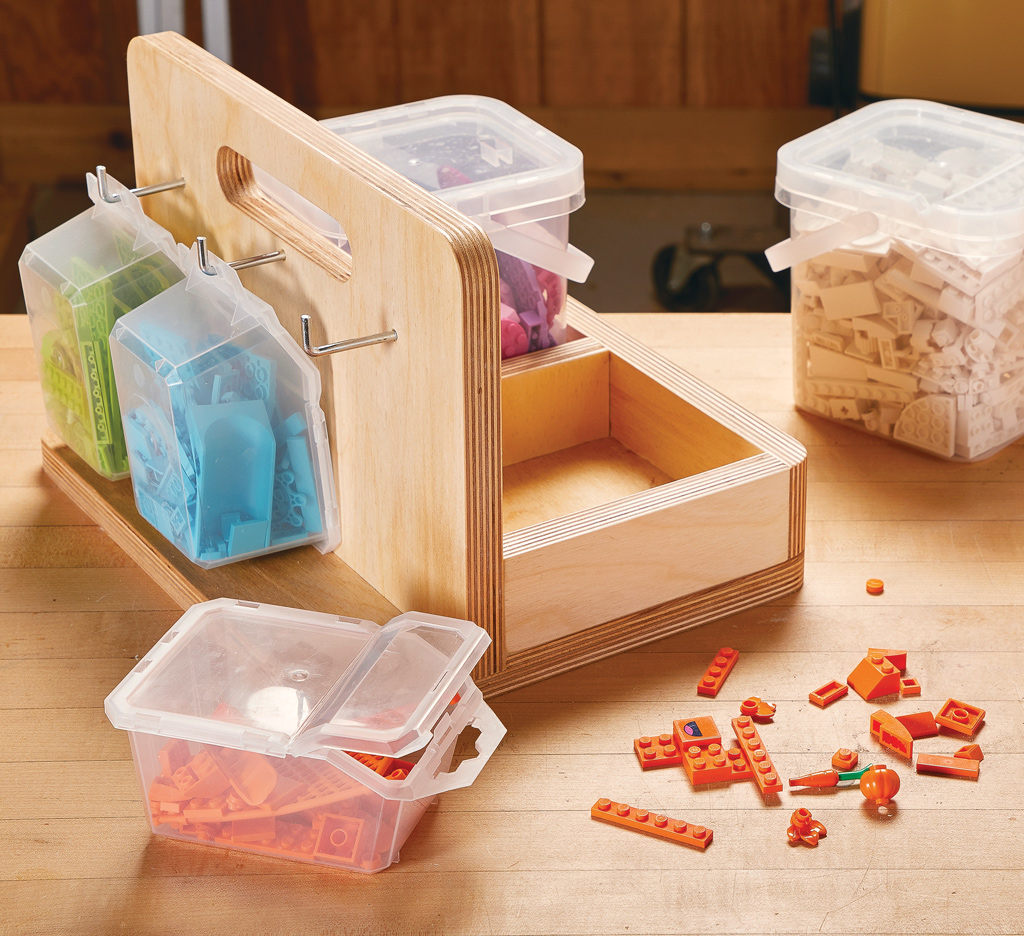
Another reason we like Baltic birch for shop furniture is that the edge can become part of the design. The alternating layers create a clean, uniform appearance that often looks good without edge banding.
That's particularly handy when you're building tool carts, cabinets, drawers, or fixtures where a lot of plywood edges will remain visible. Instead of covering every edge with solid-wood edging, you can simply smooth the plywood edge and leave it exposed.
Baltic birch isn't always the least expensive or easiest plywood to find, however. So it's worth knowing what your other options can offer.
Veneer-Core Hardwood Plywood

Traditional veneer-core plywood is probably what most woodworkers picture when they think of hardwood plywood. A typical panel consists of several layers of wood veneer covered with a hardwood face veneer and a backing veneer.
Compared with Baltic birch, the interior plies are generally thicker and the outer face veneers may be quite thin.
That thin face veneer deserves some attention in the shop. Aggressive sanding can quickly cut through it and expose the core underneath. For that reason, it's better to start with a reasonably smooth panel and sand the surface lightly.
Depending on the quality of the plywood, you may also encounter voids in the interior plies, variations in thickness, or panels that aren't quite as flat as you'd like.
Covering Plywood Edges
The exposed edge of conventional veneer-core plywood usually isn't as attractive as Baltic birch. Fortunately, that's an easy problem to solve.

Adding strips of matching solid wood creates a durable, finished edge and conceals the plywood core. For example, maple plywood paired with solid maple edging gives you the economy and stability of a sheet good while creating the appearance of solid-wood construction.
It adds a few steps to the project, but the finished result can be well worth the effort.
MDF-Core Plywood: Flat & Stable
If flatness is especially important, MDF-core plywood is another material worth considering.

Instead of multiple veneer layers making up the center of the panel, MDF-core plywood uses a medium-density fiberboard core with wood veneers applied to the faces.
MDF is exceptionally smooth and flat, so the resulting panel offers a stable substrate that's useful for cabinetry, furniture, and other projects where you want large, consistently flat components.
There are a couple of tradeoffs.
First, MDF is heavy. That might not matter much once a cabinet is assembled, but you'll certainly notice the extra weight while wrestling a full sheet around the shop.
Second, the hardwood face veneers can still be thin, so you'll want to be careful when sanding. The exposed MDF edge is also something you'll need to consider. It's uniform, but it doesn't accept finish the same way the wood veneer does. For furniture-quality work, covering the edge with solid wood or edge banding usually produces a more finished appearance.
MDF: An Economical Alternative to Plywood

Sometimes you don't need plywood at all. Medium-density fiberboard (MDF) is inexpensive, flat, smooth, and readily available, making it a useful material for many shop projects.
Because there's no face veneer, you don't have to worry about sanding through the surface. MDF also takes paint exceptionally well, making it a good choice for painted cabinets, fixtures, jigs, templates, and other shop accessories.
The downside is durability at the edges and corners. MDF edges can be vulnerable to dents and crumbling, especially on projects that get knocked around the shop.
Protect MDF Edges
One simple way to make MDF more durable is to ease sharp edges with a small chamfer or roundover. Removing that fragile corner helps prevent it from getting chipped during everyday use.
If the project will be painted, pay extra attention to the edges during finishing. The exposed MDF edge absorbs finish differently than the face and may require additional preparation to achieve an even appearance.
Don't Overlook Solid Wood

Plywood and MDF aren't your only choices for shop furniture.
Construction lumber can be an affordable option for cabinets, shelving, workbenches, and other utility projects. And if you don't want to glue up wide panels yourself, many home centers sell pre-glued solid-wood panels that can simply be cut to size.
Solid wood introduces another consideration: wood movement. Unlike plywood and MDF, solid wood expands and contracts across its width as humidity changes. Your joinery and construction methods need to accommodate that movement.
Still, solid wood can be a practical and attractive option, especially when suitable lumber is inexpensive and readily available.
Which Plywood Should You Use?
There's no reason to feel locked into the exact material specified in a woodworking plan. In many cases, Baltic birch, hardwood plywood, MDF-core plywood, MDF, and solid wood can be substituted for one another with a few adjustments to the construction.
When choosing sheet goods, consider:
- Flatness and stability: MDF-core panels and quality Baltic birch are good choices when consistent, flat parts are important.
- Appearance: Baltic birch works particularly well when you want to leave plywood edges exposed.
- Finish: Hardwood veneer works well with clear finishes, while MDF is an excellent choice for painted projects.
- Weight: MDF and MDF-core panels can become surprisingly heavy in large projects.
- Edge treatment: Decide whether you'll leave the edge exposed or cover it with solid wood or edge banding.
- Cost and availability: Prices vary considerably, so compare what's available locally before settling on a material.

Choose the Material to Fit the Project
The best plywood for woodworking isn't necessarily the most expensive panel on the rack. It's the one that provides the combination of strength, stability, appearance, workability, and cost your project requires.
Baltic birch is an excellent all-around choice for many shop projects, particularly when exposed edges are part of the design. Veneer-core hardwood plywood can give you an attractive finished surface at a different price point. MDF-core plywood provides exceptional flatness, while standard MDF is hard to beat for painted jigs and shop fixtures.
Knowing the strengths and weaknesses of each lets you make the choice based on the project you're building — rather than simply reaching for the same sheet good every time.
Keep Reading: Best Workshop Materials
Now that you know the differences between Baltic birch, veneer-core plywood, MDF-core plywood, and MDF, the next question is where each one works best. Cabinets, jigs, workbenches, and other shop fixtures all put different demands on the material you use.
CHOOSING MATERIALS FOR YOUR NEXT SHOP PROJECT → Best Materials for Workshop Cabinets, Jigs & Workbenches