

Baltic Birch vs. Regular Birch Plywood: How to Choose
Solid wood is often the first choice for fine furniture, but plywood has some important advantages. It's dimensionally stable, available in large sheets, and well suited for cabinets, workshop projects, and woodworking jigs.
When you need thin panels, flat surfaces, or parts that won't expand and contract as much as solid wood with seasonal humidity changes, plywood is often the better material.
But not all plywood is created equal.
Even plywood sold with a birch face veneer can vary considerably in construction, quality, and performance. Some sheets have thin decorative veneers over inexpensive cores, while others are made from multiple layers of high-quality hardwood veneer.
Understanding the differences between Baltic birch plywood, cabinet-grade birch plywood, and other plywood options will help you choose the right material for your next woodworking project.
What Is the Difference Between Baltic Birch and Regular Birch Plywood?
The biggest difference between Baltic birch and conventional birch plywood is what's beneath the surface.
Regular cabinet-grade birch plywood often uses a thin birch face veneer over a core made from other wood species. The core may contain voids, patches, or layers of varying quality.
Baltic birch plywood, on the other hand, is traditionally manufactured from multiple thin layers of birch veneer. These layers are bonded together with alternating grain directions to create a strong, stable panel.
The consistent construction of Baltic birch provides several advantages, including better edge quality, reliable machining, and improved screw-holding performance compared with many lower-grade plywood cores.
However, Baltic birch is generally more expensive, and the quality of products marketed under that name can vary.
Cabinet-Grade Birch Plywood: A Practical, Affordable Choice
Cabinet-grade birch plywood is one of the most common options available to woodworkers.
It's typically designed for cabinet construction and other projects where a smooth, attractive face is important.
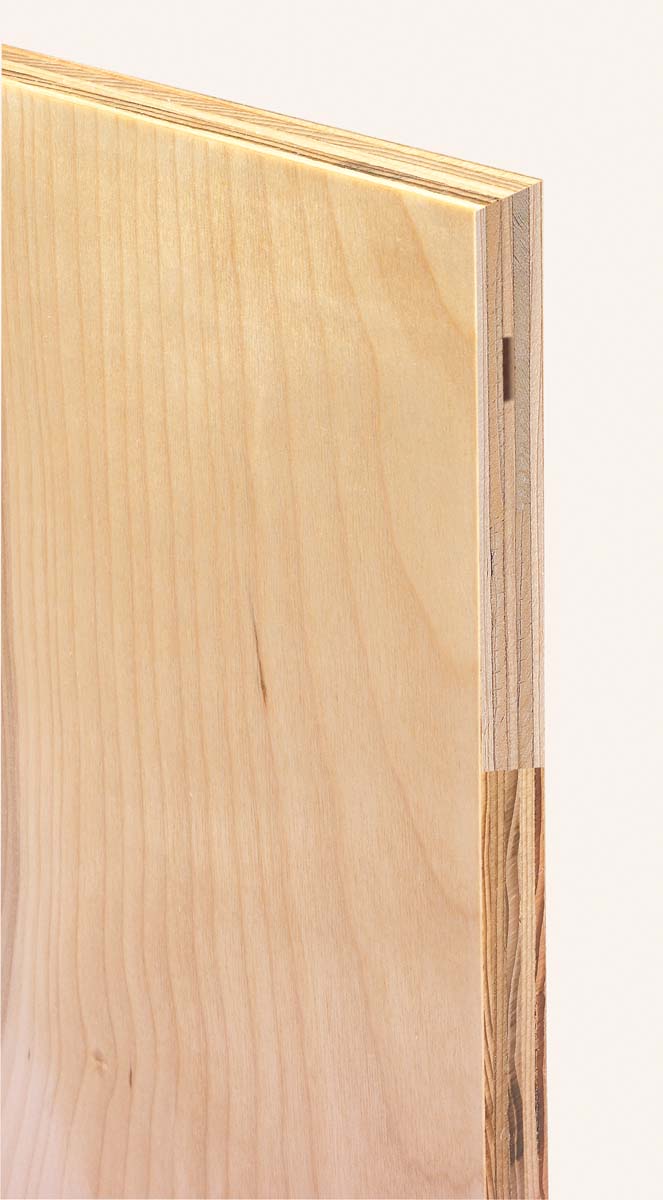
Thin Birch Veneers Over a Mixed-Wood Core
In many cabinet-grade panels, only the outer face veneers are birch.
These veneers can be extremely thin, sometimes around 1⁄40" thick. Beneath them, the core may consist of softer wood species such as fir or other materials.
Depending on the grade and manufacturer, the inner veneers may contain knots, gaps, or voids.
These imperfections aren't always visible until you cut into the panel.
Advantages of Cabinet-Grade Birch
For many woodworking projects, cabinet-grade birch provides a good balance of appearance, performance, and cost.
The smooth face veneers work well for cabinet sides, shelves, and other components where the exposed surface matters more than the appearance of the plywood edges.
However, the thin face veneers require care when sanding. Aggressive sanding can quickly cut through the birch veneer and expose the core beneath.
Voids in the inner layers can also create problems when machining joinery or installing fasteners near an edge.
Best Uses: Cabinet cases, painted or veneered projects, shelves, and general shop cabinetry.
Arauco Plywood: An Alternative Core Construction
Another plywood option you may encounter is manufactured by Arauco.
Arauco is a wood products manufacturer that produces plywood using radiata pine, a plantation-grown softwood commonly sourced from South America.
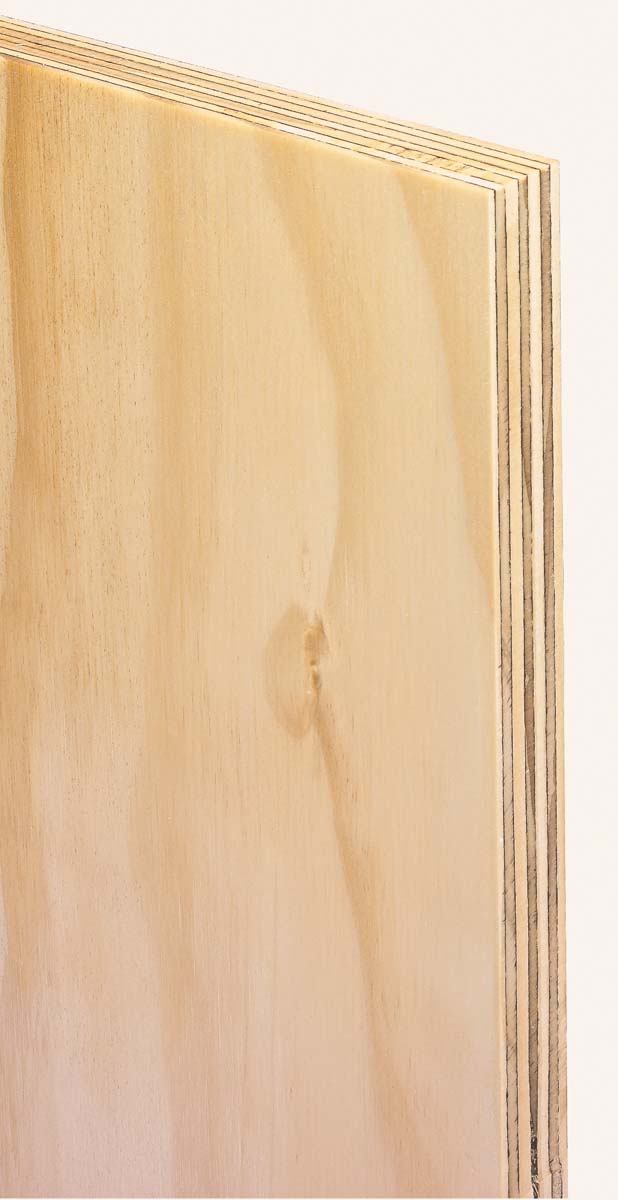
Thicker Veneers and a Different Core
Compared with some cabinet-grade plywood, radiata pine plywood often has noticeably thicker inner veneers.
This can make the core construction look quite different from Baltic birch, which typically uses a larger number of thinner layers.
The quality and appearance of the outer veneers depend on the particular product and grade.
Some panels may contain patches, filled defects, or other cosmetic imperfections.
When to Choose Radiata Pine Plywood
Radiata pine plywood can be a practical choice for utility projects, workshop fixtures, and applications where appearance isn't the primary concern.
However, don't assume that all radiata pine plywood is equivalent to birch-faced cabinet plywood or Baltic birch.
Core construction, face grade, and panel flatness vary by product.
Best Uses: Utility cabinets, shop fixtures, painted projects, and applications where a lower-cost plywood meets the project's requirements.
Baltic Birch Plywood: A Premium Choice for Woodworking
When strength, stability, and consistent machining are priorities, Baltic birch plywood is hard to beat.
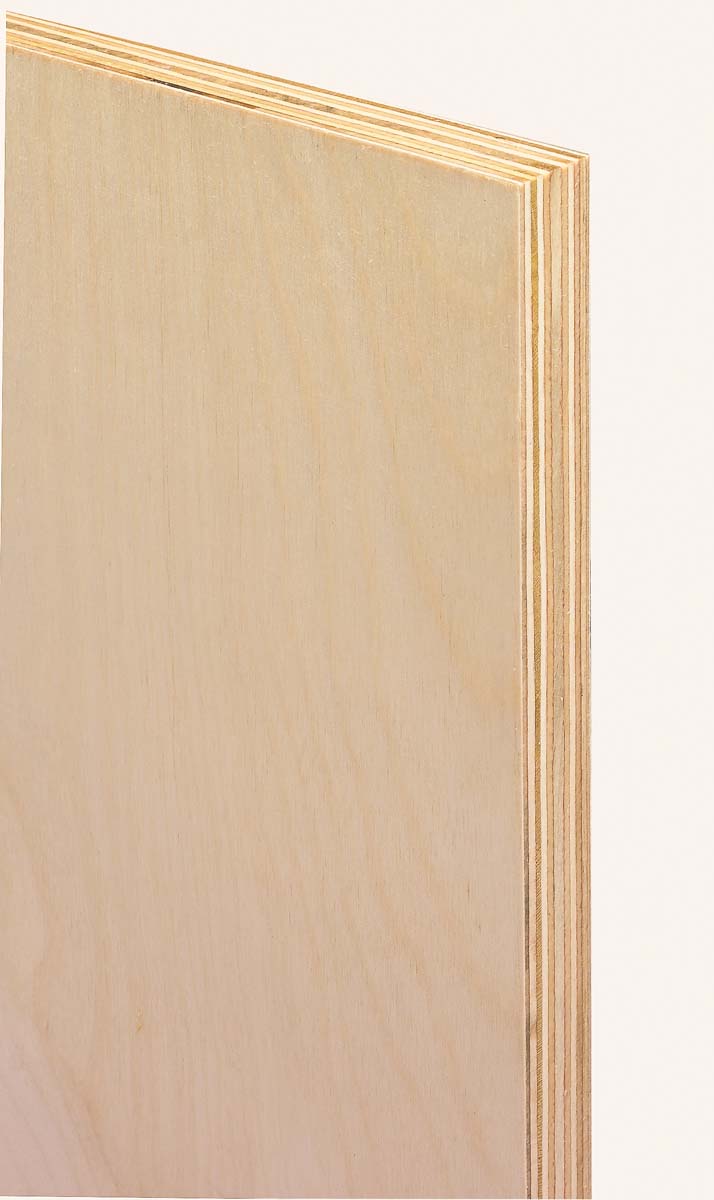
Unlike conventional birch-faced plywood, traditional Baltic birch is made from multiple layers of birch veneer throughout the panel.
Multiple Thin Layers Create a Strong Core
The defining feature of Baltic birch is its layered construction.
Instead of using a few thick inner plies, Baltic birch typically contains numerous thin veneers bonded together with alternating grain directions.
This creates a dense, consistent core with relatively few internal voids.
The result is plywood that machines cleanly and provides dependable support for screws and other fasteners.
The exposed edges also have an attractive striped appearance that can be incorporated into a project design.
Why Baltic Birch Works Well for Jigs
Baltic birch is especially useful for woodworking jigs and fixtures.
Its consistent construction makes it a good choice for parts that require accurate machining, such as dadoes, rabbets, grooves, and routed openings.
The dense core also holds up well in shop accessories that see repeated use.
For example, a table saw sled benefits from a stable plywood base that resists seasonal movement.
Router jigs, drill press accessories, and shop-made fixtures can also take advantage of Baltic birch's strength and durability.
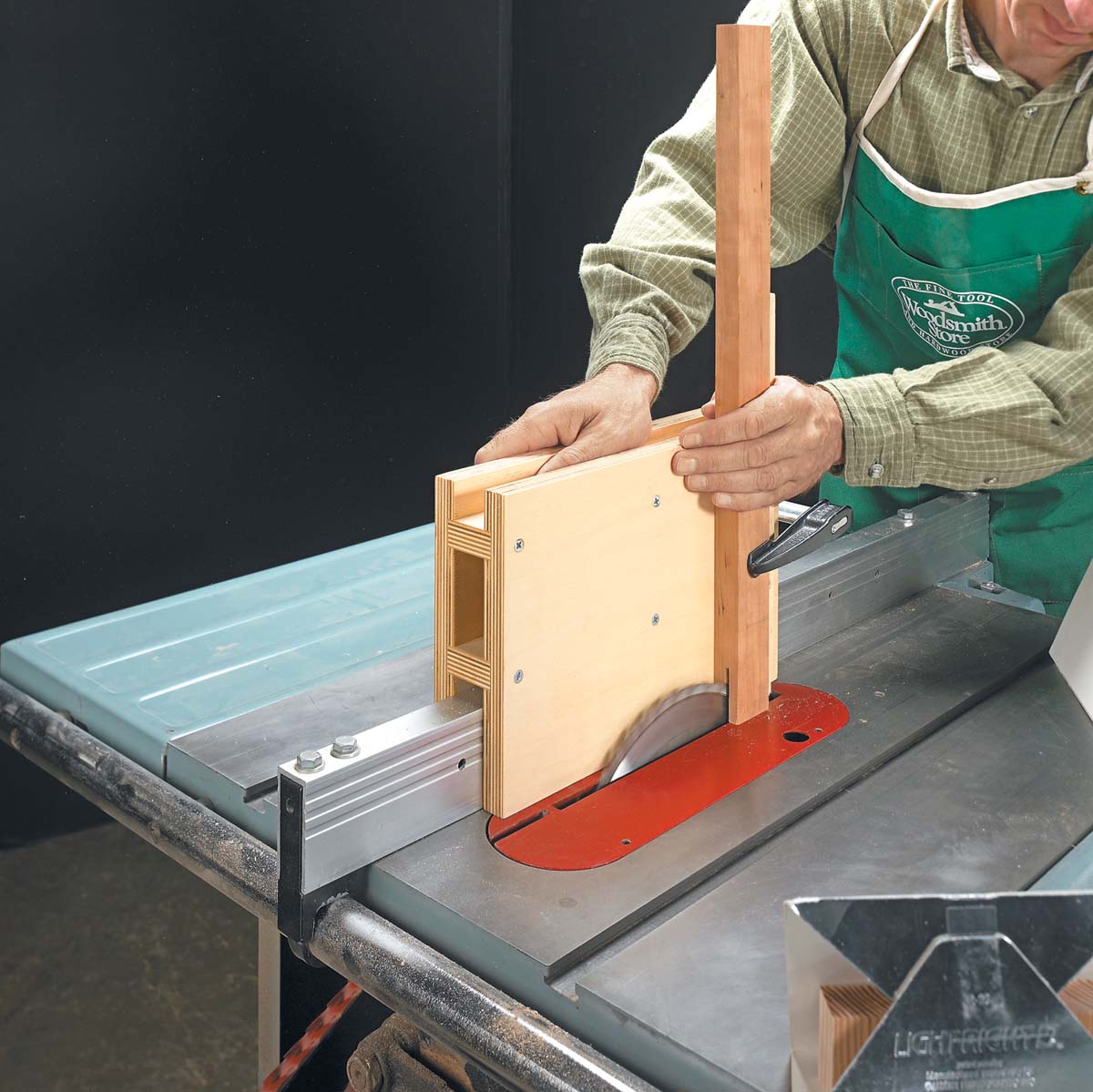
Best Uses: Table saw sleds, router jigs, shop fixtures, drawer boxes, precision assemblies, and high-quality cabinet construction.
Baltic Birch Plywood Sizes and Thicknesses
Traditional Baltic birch plywood has often been sold in 5' × 5' sheets, or approximately 60" × 60".
This format differs from the familiar 4' × 8' plywood sheets commonly sold in the United States.
However, Baltic birch and similar multi-ply products may also be available in larger formats, depending on the manufacturer and supplier.
Understanding Metric Plywood Thicknesses
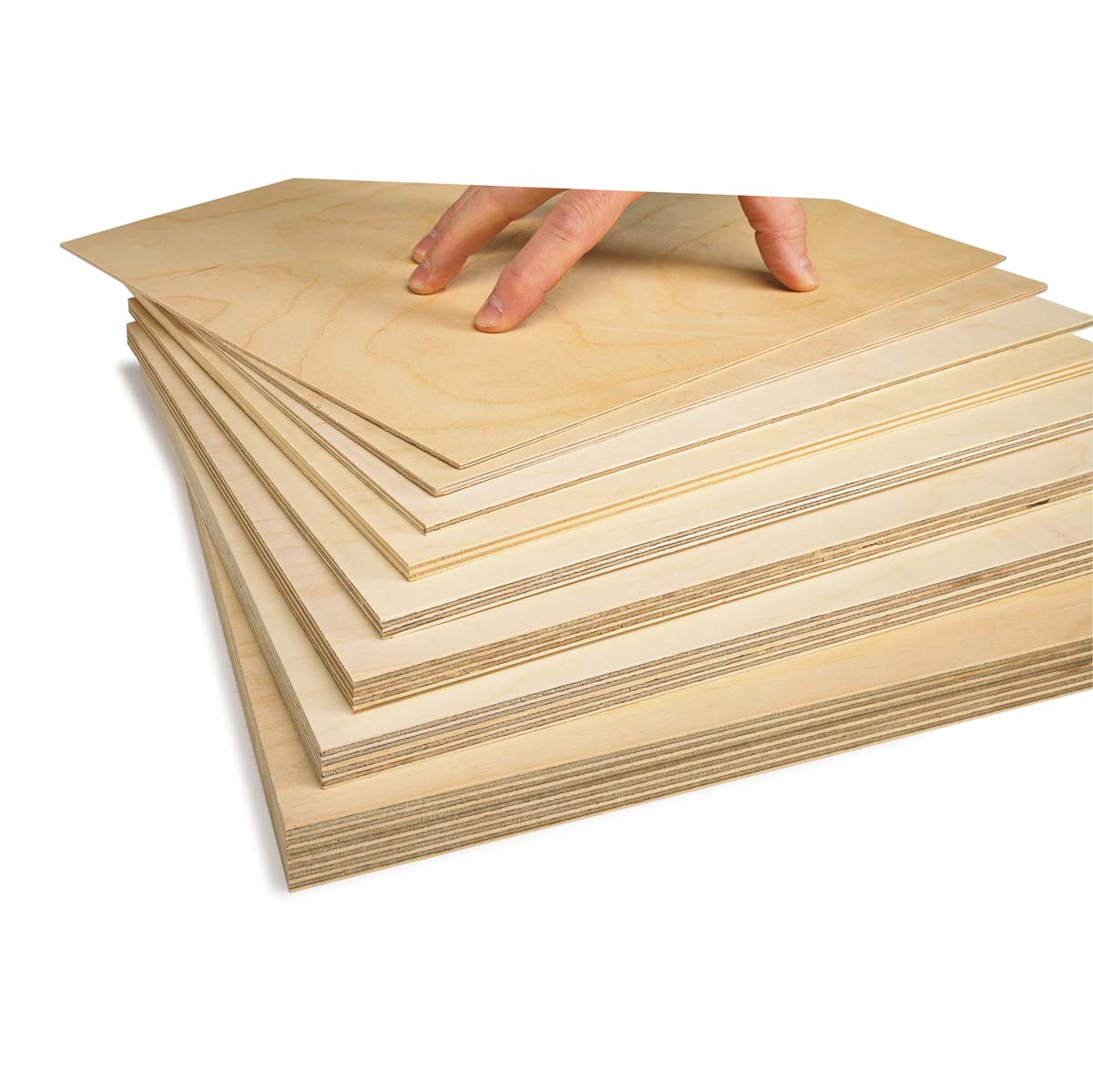
Baltic birch is commonly manufactured in metric thicknesses.
You may encounter panels labeled:
- 3mm
- 6mm
- 9mm
- 12mm
- 15mm
- 18mm
- 24mm
These are nominal sizes, and the actual thickness may vary slightly.
For example, 18mm plywood is approximately 0.709" thick, making it thinner than a true ¾" panel.
This difference matters when cutting dadoes, rabbets, and other joinery.
Shop Tip: Always measure the actual thickness of your plywood before setting up a dado blade or router bit. Don't assume that a sheet labeled ¾" or 18mm matches its nominal thickness exactly.
Is All Baltic Birch Plywood the Same?
No. One of the challenges when buying Baltic birch is that products with similar names may have different construction and quality standards.
Traditional Baltic birch has been associated with plywood manufactured in northern and eastern Europe, particularly the Baltic region and nearby countries.
However, some manufacturers produce Baltic birch-style plywood using similar multi-ply construction.
These products can look nearly identical at first glance.
The differences may become apparent when examining the edges, cutting joinery, or inspecting the face veneers.
What to Look for When Buying Baltic Birch
Before purchasing, inspect the sheet carefully.
Look at the exposed edges to see whether the layers are consistent and tightly bonded.
Check for visible voids, overlapping veneers, and other defects.
Examine the face veneers for patches, splits, and repairs.
Also, check the panel for bowing or twisting.
Even high-quality plywood can develop a warp if it has been stored improperly.
When possible, choose panels with consistent thickness and flat surfaces, particularly for precision woodworking jigs.
Where to Buy Baltic Birch Plywood
Finding quality Baltic birch plywood can take a little more effort than purchasing ordinary construction plywood.
Some home centers carry multi-ply birch panels, but selection and quality can vary.
For a wider range of thicknesses and grades, start with a hardwood lumber supplier or specialty plywood distributor.
These businesses often carry materials intended for cabinetmakers and furniture builders.
Before visiting, call ahead to ask about available sheet sizes, thicknesses, grades, and country of manufacture.
If you're buying plywood for a large project, it's also worth asking whether multiple sheets are available from the same shipment.
This can help maintain consistency in thickness and appearance.
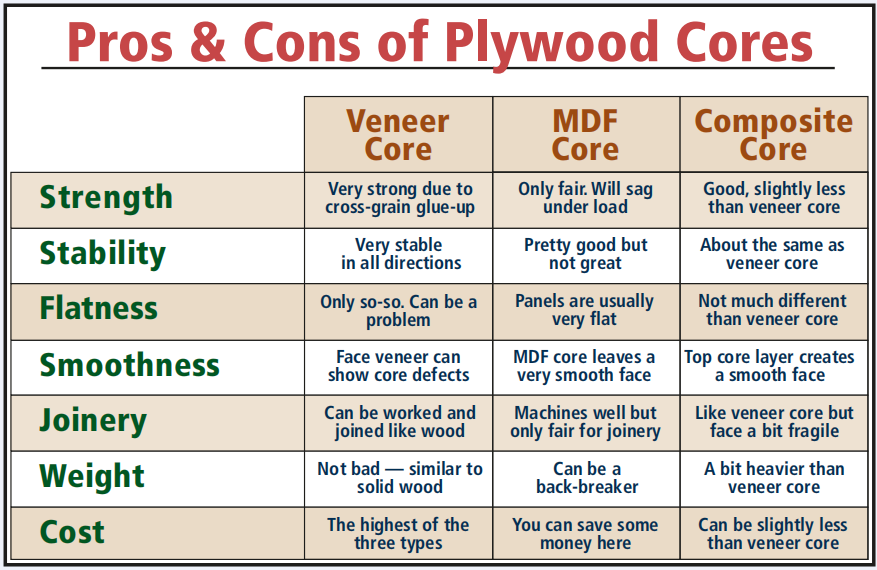
Plywood Core Types: Veneer Core, MDF Core, and Particleboard Core
Birch plywood isn't the only option when choosing sheet goods.
Different plywood core materials offer different advantages, depending on the project.
Veneer-Core Plywood
Veneer-core plywood consists of multiple layers of wood veneer.
It's generally lighter than composite-core alternatives and offers good strength for its weight.
Quality varies depending on the wood species, veneer thickness, and manufacturing process.
Veneer-core plywood is a versatile choice for cabinets, furniture, and shop projects.
MDF-Core Plywood
MDF-core plywood uses a medium-density fiberboard core with decorative wood veneers on the faces.
Because the core is uniform, it provides a smooth, consistent substrate.
This makes MDF-core plywood particularly useful for veneered panels and projects where a smooth surface is important.
However, MDF-core panels are usually heavier than veneer-core plywood and can sag when used for long, unsupported spans.
Particleboard-Core Plywood
Particleboard-core plywood uses a particleboard center beneath the face veneers.
It's commonly used in cabinet and furniture manufacturing where a smooth surface and economical construction are priorities.
Like MDF-core plywood, particleboard-core panels are generally heavier than veneer-core plywood.
They also require appropriate joinery and fasteners, particularly near panel edges.
Which Birch Plywood Should You Choose?
The best plywood depends on what you're building.
For general cabinet construction, cabinet-grade birch plywood is often a practical and economical option.
For utility projects where appearance is less important, radiata pine plywood may provide the performance you need.
When building precision jigs, shop fixtures, or projects that require clean, consistent edges, Baltic birch is usually worth considering.
And when you need an exceptionally smooth surface for a veneered panel, MDF-core plywood may be a better choice.
The important thing is to look beyond the face veneer.
Core construction, thickness, flatness, and overall quality have a major impact on how plywood performs.
Understanding these differences will help you choose the right sheet goods for your next woodworking project.
Best Materials for Workshop Cabinets, Jigs & Workbenches

Plywood, MDF, particleboard, and other sheet goods each have advantages in the workshop. Learn how to compare strength, stability, durability, and cost so you can choose the best material for cabinets, workbenches, and shop-made jigs.
EXPLORE WORKSHOP MATERIALS → Choose the Right Sheet Goods for Your Shop