


Clamps are essential in any woodworking shop, but conventional clamps aren't always the easiest solution when you're working with jigs, fixtures, or small parts. Sometimes the clamp itself gets in the way, especially when you need to hold a workpiece securely while routing or drilling.
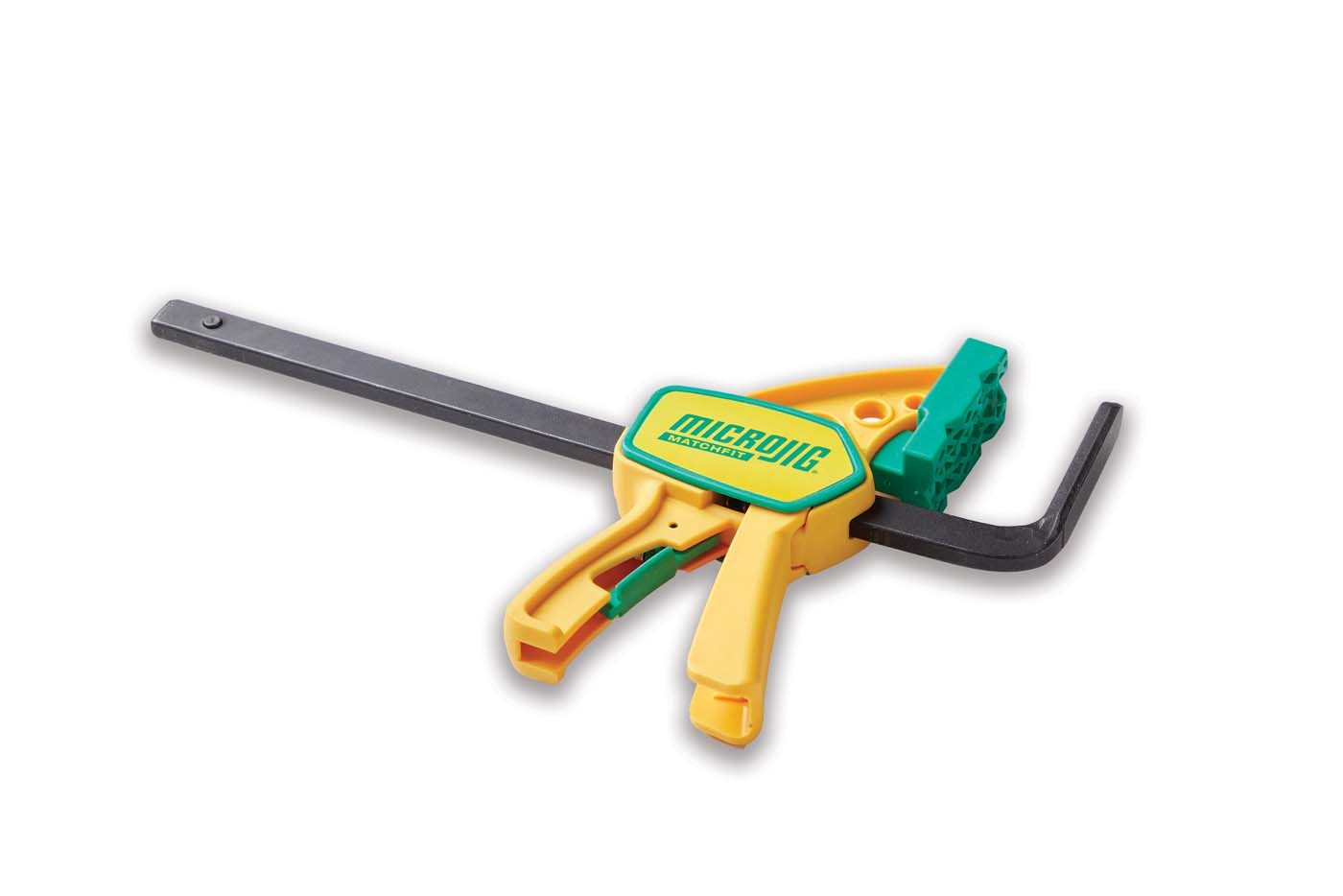
That's where MicroJig's MATCHFIT GRR-RIP Clamps come in. Instead of relying on a clamp that reaches around the edge of a workpiece, these clamps use a dovetail-shaped bar that fits into a routed slot. This lets you position the clamp exactly where you need it.
I've used MicroJig's earlier ratcheting dovetail clamps, but the GRR-RIP version uses a more familiar trigger-style, quick-grip mechanism. And I have to admit, I prefer this design.
How Do MicroJig GRR-RIP Clamps Work?
The GRR-RIP Clamp combines a quick-grip mechanism with a bar designed to fit into a MATCHFIT-style dovetail slot. Rather than clamping directly to the edge of a bench or jig, the bar slides into the slot and provides an anchor point for the clamp.
The advantage is flexibility. You can position the clamp along the track to accommodate different workpiece sizes and move it out of the way of your cutting or drilling operation.
Of course, the clamps need a compatible dovetail slot to work. Fortunately, making one is a straightforward shop operation.
Make Your Own Dovetail Clamp Tracks
One of the things I like about the MATCHFIT system is that you don't need to purchase a separate metal track for every jig or fixture.
Using a 14° dovetail bit with a 1/2" cutting diameter, you can rout compatible slots in a sheet of 3/4" plywood. Follow MicroJig's specifications for the slot dimensions and routing procedure to ensure the clamp fits properly.
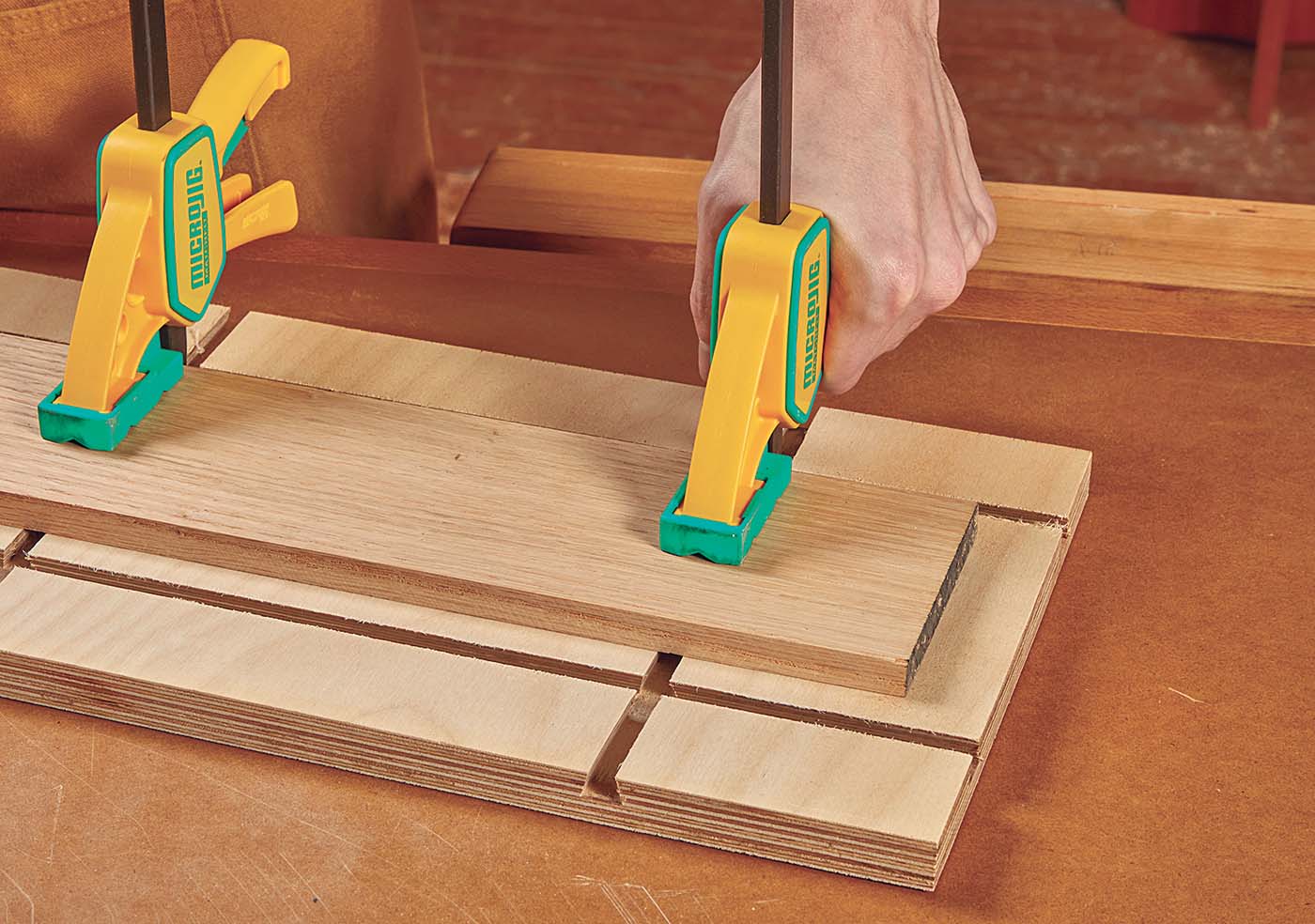
Once you've routed the slots, you have a versatile clamping surface. Secure the plywood to your workbench, slide the clamps into position, and use them to hold the workpiece above.
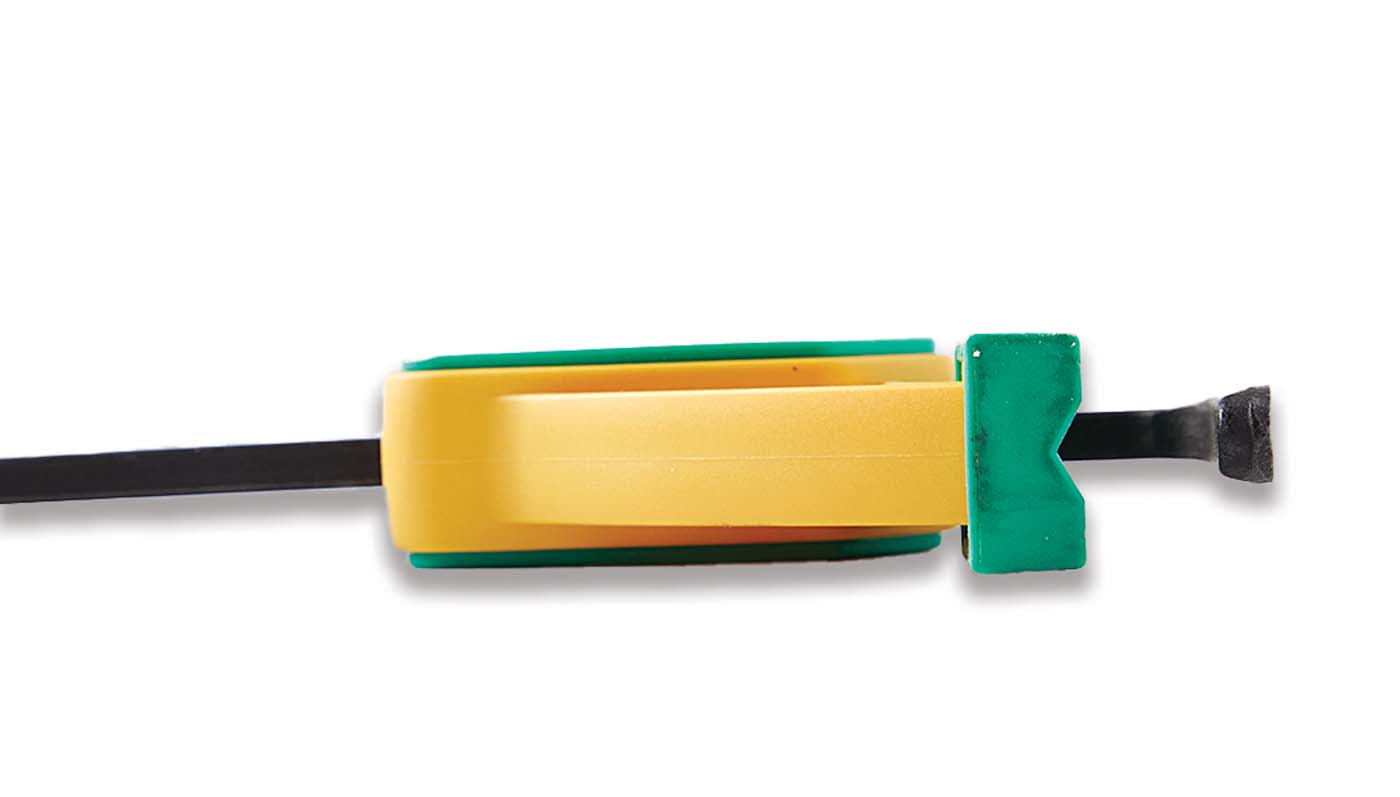
Caption: The dovetail-shaped bar slides into a routed slot. The V-shaped clamping pad provides two points of contact for gripping flat stock or round workpieces.
You can also incorporate the slots directly into shop-made jigs and fixtures, giving you built-in clamping points without adding bulky hardware.
A Quick-Grip Clamp That's Easy to Position
The GRR-RIP Clamp uses a trigger-style mechanism similar to a conventional quick-grip clamp. Once the dovetail bar is positioned in its slot, you can bring the clamping pad down against the workpiece and squeeze the trigger to apply pressure.
The bar helps keep the clamp aligned, which means there's less fussing with its position as you tighten it. That's a welcome improvement when you're trying to hold a part steady with one hand while operating the clamp with the other.
I find this especially convenient for operations that involve frequent setup changes. You can release the clamp, reposition the workpiece, and tighten it again without rebuilding your clamping arrangement.
Where Are GRR-RIP Clamps Most Useful?
These clamps are particularly well suited to woodworking tasks where you want secure workholding without having conventional clamp bars extending across the work area.
Routing dadoes for case joinery is a good example. A plywood work surface with dovetail slots lets you hold a panel in position while keeping the router's path clear.
They're also useful for securing parts while drilling pocket holes or building a shop-made taper jig. By incorporating dovetail slots into a fixture, you can create adjustable clamping points that are easy to reposition for different workpieces.
The V-shaped clamping pad is another useful detail. It provides a solid, two-point grip and can accommodate both flat boards and round stock, such as dowels.
GRR-RIP Clamps vs. Ratcheting Dovetail Clamps
MicroJig's earlier dovetail clamps use a ratcheting cam mechanism. Both designs offer the convenience of clamping through a routed dovetail slot, but I prefer the GRR-RIP's trigger-style action.
With a ratcheting clamp, you may reach the end of the mechanism's travel before the workpiece is fully secured. When that happens, you need to reposition the clamp head and continue tightening.
The trigger-style design feels more straightforward to me. It provides a firm grip with less adjustment, particularly when I'm moving between workpieces of different thicknesses.
Neither style is intended to replace the clamping force of a heavy-duty F-style clamp in every application. But for holding parts during routing, drilling, and jig operations, the GRR-RIP design provides plenty of convenience.
Are MicroJig MATCHFIT GRR-RIP Clamps Worth Adding to Your Shop?
If you already use dovetail tracks in your shop, the GRR-RIP Clamps are a useful addition. Their quick-grip action makes setup and repositioning easy, while the V-shaped pads provide a secure hold on a variety of workpieces.
If you're new to dovetail clamping, the ability to rout your own slots in plywood makes the system worth exploring. You can start with a simple clamping board and expand into dedicated jigs and fixtures as the need arises.
For my work, the trigger-style mechanism is the main attraction. It combines the convenience of a conventional quick-grip clamp with the flexibility of a dovetail-track system, making it a practical option for many everyday shop tasks.


