


A few small changes can make your woodworking shop more convenient and help protect your tools and materials. Sometimes all it takes is an old hand brace, a handful of spring clamps, a block of wood, or a pool noodle.
In this collection of Woodsmith Quick Tips, four readers share clever ideas for improving router lift adjustments, storing thin plywood, remembering band saw blade tension, and protecting sheet goods while moving them around the shop.
1. Use an Old Hand Brace as a Router Lift Crank

A router lift makes it easy to adjust bit height from above the router table. But if your lift requires a socket wrench for adjustments, you may find yourself borrowing a ratchet from your tool set every time you need to change the bit height.
Don Filson of Lima, Ohio, uses the router lift featured in ShopNotes No. 121. Rather than tying up a socket wrench, he found a more convenient solution.
Don fitted an old hand brace with a driver bit that engages the lift's adjustment mechanism. The brace's crank handle allows him to turn the adjustment quickly and smoothly without repeatedly working a ratchet back and forth.
It's a clever way to give an old hand tool a new job in the workshop.
Woodsmith Tip: Make sure the driver fits the lift's adjustment mechanism securely. Follow the lift manufacturer's instructions for adjustments, and disconnect power to the router before making changes that require reaching near the bit.
Shop tip submitted by Don Filson, Lima, Ohio.
2. Keep Thin Plywood Flat During Storage

Thin plywood and other flexible sheet goods can be difficult to store. If they're left unsupported, they may sag or develop a curve over time.
Kathy McNulty of Parma, Idaho, came up with a simple way to keep thin sheets flat.
She places the thin plywood against a thicker, more rigid sheet and secures the two together with several spring clamps. The thicker sheet provides support, helping the thinner material maintain its shape while it's stored.
It's an easy solution that doesn't require building a dedicated storage rack or adding permanent supports.
Woodsmith Tip: Start with a flat, rigid backing sheet and use enough clamps to hold the thinner material securely without denting its edges. Store the sheets in a dry location with adequate support.
Shop tip submitted by Kathy McNulty, Parma, Idaho.
3. Make a Band Saw Blade Tension Reminder
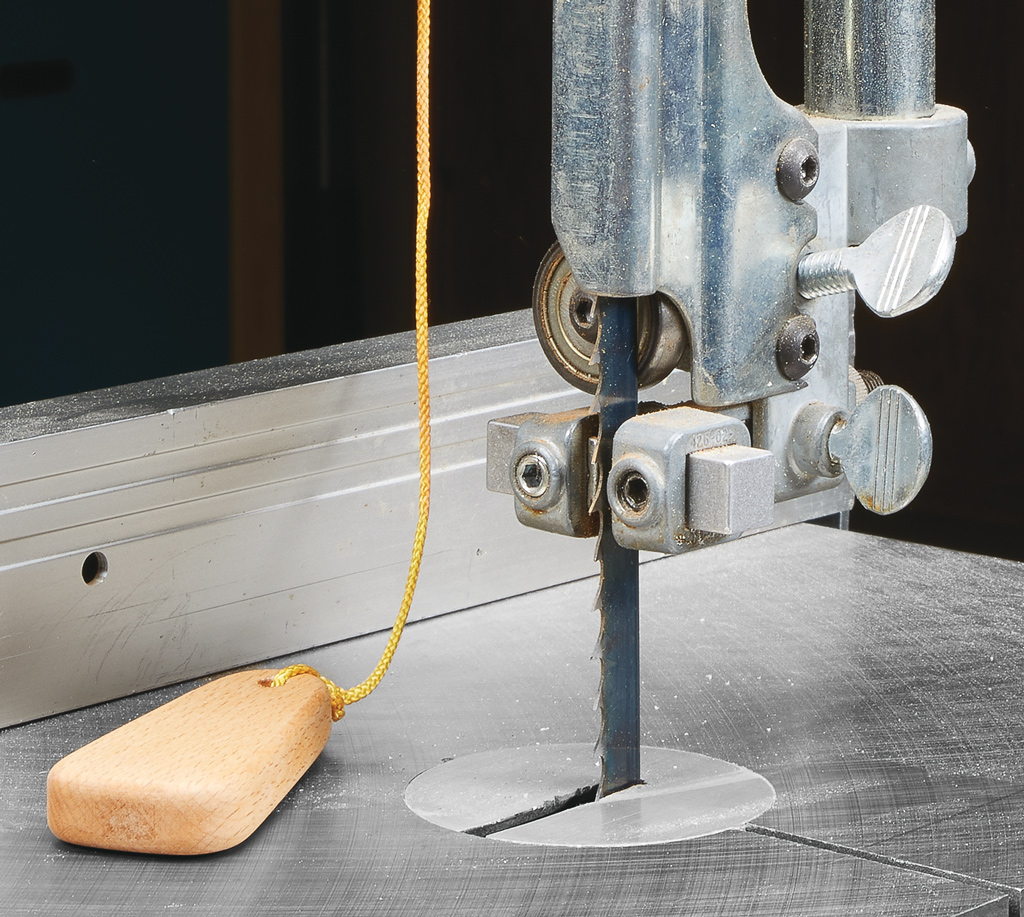
Some woodworkers release the tension on their band saw blade when the saw won't be used for an extended period. The trouble is remembering to restore the proper tension before starting the saw again.
William Collett of Bettendorf, Iowa, uses a simple visual reminder.
He attaches a small block of wood to the blade tension arm with a length of string. When he releases the blade tension, he places the block on the band saw table.
The next time he approaches the saw, the block is right where he'll see it. It's a reminder to tension the blade before making a cut.
This low-tech solution is easy to make and doesn't require modifying the saw's controls.
Woodsmith Tip: Always check blade tension and tracking according to your band saw manufacturer's instructions before operating the machine. Remove the reminder block from the table before cutting, and keep the string clear of moving parts.
Shop tip submitted by William Collett, Bettendorf, Iowa.
4. Protect Plywood Edges with a Pool Noodle

Moving large sheets of plywood around the shop can be awkward. Even when you're careful, the bottom edge can get chipped or dented when you set a sheet down or shift it across the floor.
Larry Renalds of Ankeny, Iowa, found an inexpensive way to protect that vulnerable edge.
He cuts a slit along the length of a foam pool noodle, allowing it to slip over the edge of a plywood sheet. The foam cushions the edge and helps prevent damage while the sheet is being moved or temporarily set down.

The protector is easy to install and remove, and it can be reused whenever Larry needs to handle another sheet.
Woodsmith Tip: A pool noodle helps protect the plywood edge, but it doesn't replace proper lifting and handling. Make sure you have a secure grip on the sheet, especially when moving large or heavy panels.
Shop tip submitted by Larry Renalds, Ankeny, Iowa.
Simple Shop Upgrades That Make Woodworking Easier
These four reader-submitted tips show how everyday items can solve familiar workshop problems. An old hand brace speeds up router lift adjustments, spring clamps help keep thin plywood flat, a wooden block serves as a band saw tension reminder, and a pool noodle cushions sheet goods during handling.
They're inexpensive ideas that are easy to put to work with tools and materials you may already have in your shop.


