


Pocket Hole Joinery Guide: Easy, Strong Woodworking Joints
There's a lot to learn about woodworking, and it can feel overwhelming when you're just getting started. One piece of advice I've found especially useful is to learn a technique well before moving on to the next one. Once you understand how it works, you'll start seeing opportunities to use it throughout your projects.
Pocket hole joinery is a perfect example. It's easy to learn, requires only a few tools, and works for everything from assembling cabinets to building furniture.
The basic process couldn't be simpler: Drill an angled hole, drive a screw, and pull two workpieces together.
But there's a lot more you can do with pocket screws than you might expect.
What Is Pocket Hole Joinery?
Pocket hole joinery uses specially designed screws driven through angled holes to connect two workpieces.

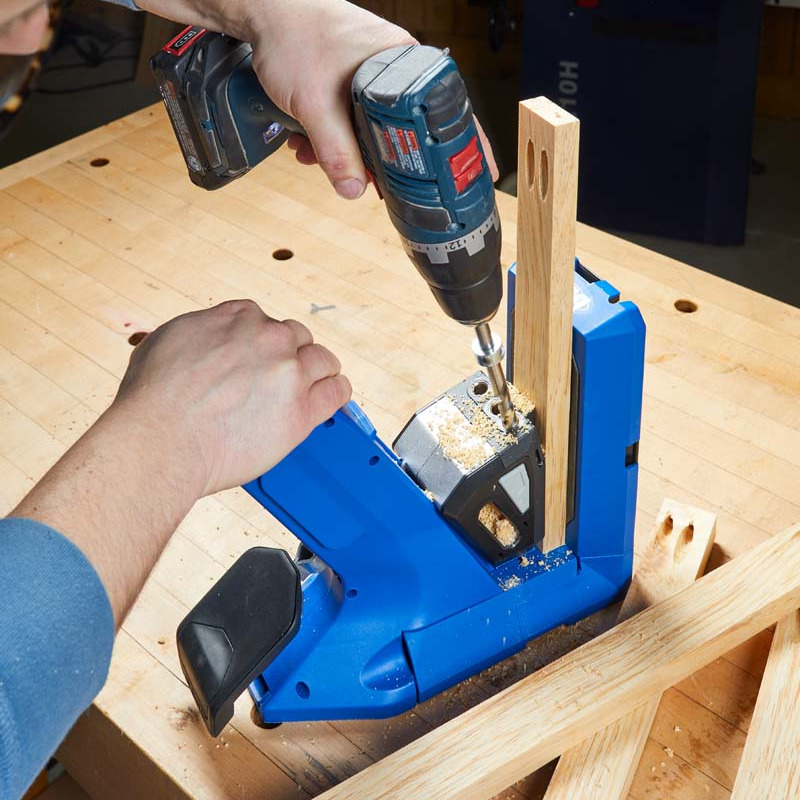
A pocket hole jig guides a stepped drill bit into the face of one board near its end. The resulting angled hole provides clearance for the screw head while directing the screw into the adjoining piece.

When you drive the screw, it pulls the two parts together to create a secure connection.
One of the biggest advantages is that the screws can usually be hidden on the back, underside, or inside face of a project.
And unlike traditional mortise-and-tenon or dovetail joinery, pocket holes don't require complicated layouts or extensive fitting.
1. Join Boards to Make Wide Panels
One of my favorite uses for pocket hole screws is assembling wide panels from narrower boards.
Whether you're making a tabletop or a cabinet panel, the boards need to be held tightly together while the glue dries.
Normally, that means reaching for a collection of clamps.
But pocket screws can do the same job.

Drill pocket holes along the underside of the boards, apply glue to the mating edges, and drive screws across the joints to pull the pieces together.
The screws act as built-in clamps, helping you keep the assembly moving without tying up your regular clamps.
Once the glue cures, you can leave the screws in place or remove them.
2. Assemble Cabinets and Face Frames
Cabinets, bookcases, and other casework projects are ideal candidates for pocket hole joinery.
A series of pocket holes along the mating edge of a plywood or MDF panel allows you to fasten it to another panel at a right angle.
 |
|
For this type of case construction, I generally space the pocket holes about 4" to 6" apart.
Pocket screws are also useful for building solid-wood face frames.

Many pocket hole jigs have closely spaced drill guides designed to accommodate narrow face frame stock, including common 1½"-wide rails and stiles.
Once the face frame is assembled, you can use another set of pocket holes to attach it to the cabinet.
The key is planning where the holes will end up. Position them on surfaces that won't be visible once the project is complete.
Installing Shelves and Dividers
Pocket screws also make it easy to install fixed shelves and interior dividers.
For shelves, the underside is often the best location for the holes because they're less noticeable.
Dividers can require a little more planning. Depending on their location, you may need to conceal the holes with plugs or trim pieces.

3. Build Drawers with Pocket Screws
Drawers are another place where pocket hole joinery can simplify construction.
I like to drill the pocket holes in the drawer fronts and backs so the screws connect those parts to the drawer sides.
This arrangement helps the screws resist the forces created as the drawer is opened and closed.
The holes in the drawer back are rarely visible, so there's little reason to conceal them.
At the front, you have a couple of options. You can place the holes on the inside face of the drawer, or drill them on the outside and cover them with a separate false drawer front.
That makes pocket screws a practical choice for drawers where the joinery won't be exposed.

4. Use Pocket Holes for Table Construction
Pocket hole joinery isn't limited to boxes and cabinets.
I've also used it to build tables, including a Shaker-inspired entry table.
The basic approach is similar to case construction, but there are a few additional considerations.
Connecting Aprons to Table Legs
A typical table consists of thick legs connected by thinner aprons that support the top.
To assemble this frame with pocket screws, drill the holes in the ends of the aprons so the screws enter the legs.
Because longer table legs can place more stress on these connections, I like to use additional screws and position them closer together than I would for cabinet construction.
For a heavily loaded or frequently moved table, it's worth considering whether traditional joinery or additional reinforcement would provide a more durable connection.
Creating an Apron Offset
Most table aprons aren't flush with the outside faces of the legs. Instead, they're set back slightly to create a reveal.
This isn't just a decorative detail.

Moving the apron toward the center of the leg can also allow for a longer screw, improving its purchase in the wood.
An easy way to establish the offset is with a spacer.

For example, placing a piece of ¼" plywood beneath the apron while clamping it to the leg creates a consistent ¼" setback.
Once the screws are driven, remove the spacer and move on to the next joint.
Adding Drawer Runners and Other Parts
Pocket screws are also handy for attaching internal table components.
On my entry table, I used them to install drawer runners and kickers after the main frame was assembled.
Being able to add these parts later simplifies the construction process and makes assembly less stressful.
Pocket holes can even be used to attach a tabletop, although a solid-wood top needs a fastening method that accommodates seasonal wood movement.
5. Reinforce Miter Joints
Miter joints can be frustrating to assemble.
The angled surfaces tend to slide out of alignment when glue is applied, and the joint itself often needs reinforcement.
Pocket screws can help solve both problems.
By placing pocket holes on a concealed face of the assembly, you can draw the mitered pieces together and hold them in alignment.
This makes pocket screws useful for certain frames and other mitered assemblies where the back of the joint won't be visible.

6. Choose the Right Pocket Hole Screws
Not all woodworking screws are designed for pocket hole joinery.
Most pocket hole applications call for screws with a washer-style head. The flat bearing surface under the head seats against the bottom of the pocket and pulls the workpieces together.
A typical countersunk flathead wood screw isn't a good substitute because its tapered head can split the surrounding wood.
For thinner material, such as ½"-thick stock, a suitable panhead screw may be a better choice.
Fine-Thread vs. Coarse-Thread Screws
The thread style also matters.
 - Fine-thread pocket screws are generally best for hardwoods.
- Coarse-thread pocket screws work well in softwoods, plywood, and MDF.
- Screw length depends on the thickness of the materials being joined.
- Fine-thread pocket screws are generally best for hardwoods.
- Coarse-thread pocket screws work well in softwoods, plywood, and MDF.
- Screw length depends on the thickness of the materials being joined.
 Using the correct screw helps provide a secure connection without splitting the workpiece or driving the tip through the opposite face.

Make Pocket Hole Joinery Part of Your Woodworking Skills
One of the best things about pocket hole joinery is how quickly you can put it to work.
It's simple enough for a beginning woodworker to learn in an afternoon, yet versatile enough to remain useful as your skills improve.
From assembling cabinets and drawers to building tables and reinforcing tricky joints, pocket screws offer a fast, practical way to connect woodworking parts.
They're not the right choice for every joint, but having a pocket hole jig in your shop gives you another dependable option when time is short or conventional joinery would make a project unnecessarily complicated.
And sometimes, that's exactly what you need to keep a project moving.
There’s a lot to learn about woodworking. The subject can feel overwhelming frankly. One key piece of advice I was given was to pick a single technique and stick with it. This applies to sharpening, finishing, and joinery.


