


Drawers show up in everything from shop cabinets and workbenches to desks, dressers, and fine furniture. And while a drawer is a simple box, there are several good ways to join that box together.
The right drawer joinery depends on the project. A small shop drawer might need nothing more than a reinforced rabbet. A furniture drawer with a false front can benefit from tongue-and-dado joinery. And when you want a strong joint with a clean, finished appearance, a locking rabbet is hard to beat.
Here are three practical approaches and where each one makes the most sense.

Why Drawer Front Joinery Matters
The front corners deserve the most attention when building a drawer. Every time you pull the drawer open, those joints transfer the pulling force from the front into the sides.
That means a useful drawer joint needs to do more than simply hold the pieces together during assembly.
Appearance matters, too. Some joints leave the ends of the drawer sides exposed. Others conceal them. And some are particularly well suited to adding a separate false front.
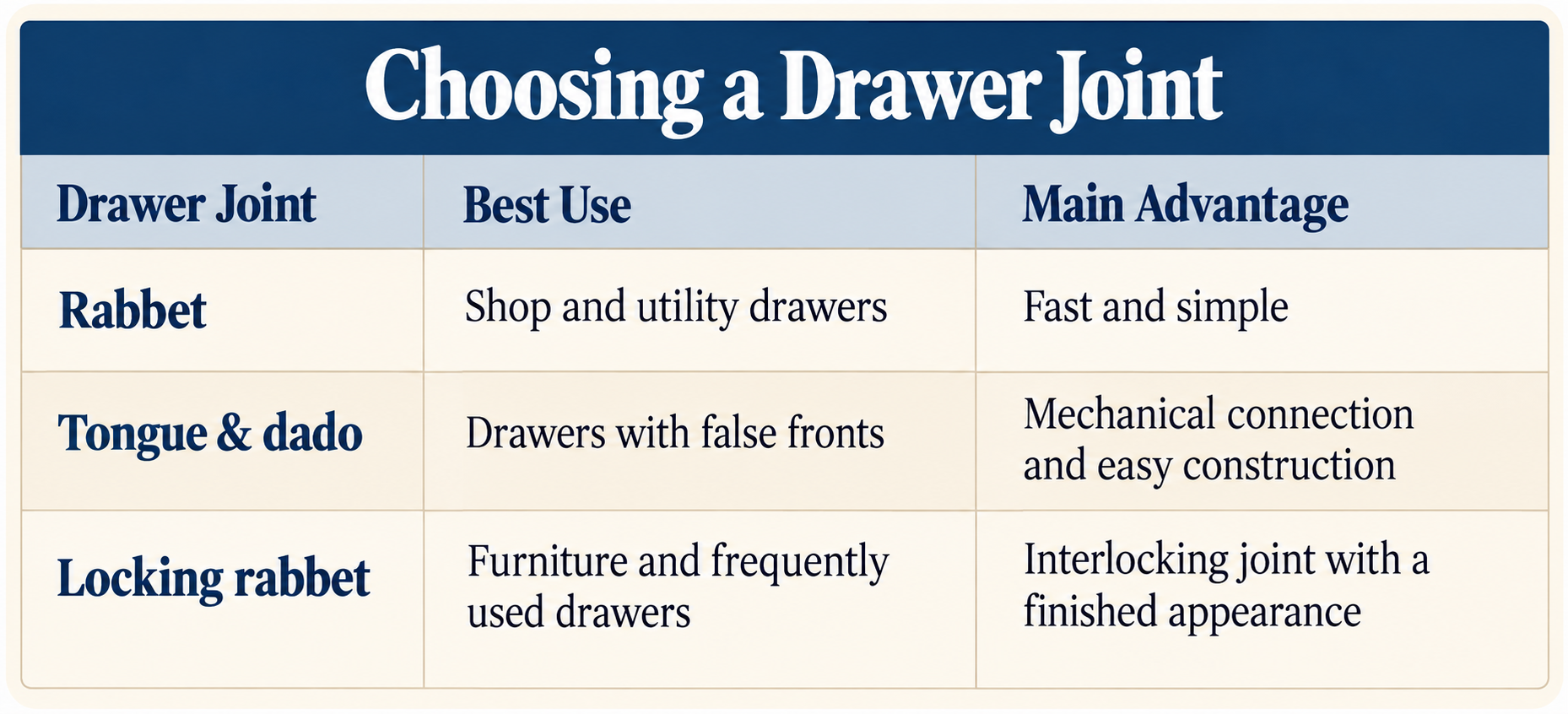
Those considerations make three joints especially useful in the shop:
1. Rabbet Joint: Fast & Simple Drawer Construction
For a straightforward utility drawer, it's difficult to make the construction much simpler than a rabbet joint.
A rabbet cut across each end of the drawer front accepts the sides and automatically establishes their position during assembly. That makes this a particularly handy choice when you're building small drawers for a shop cabinet or garage storage.
The tradeoff is strength.
The basic rabbet doesn't provide much mechanical resistance to the drawer front being pulled away from the sides. That's why this construction is reinforced with fasteners.
Nails driven through the sides and into the rabbeted front work well for small, lightly loaded drawers. Angling the nails slightly toward the back helps resist the pulling force on the drawer front. Larger drawers can be reinforced with screws or dowels.
Woodsmith Tip: Match the Joint to the Job. There's nothing wrong with simple joinery when the application doesn't demand anything more complicated. For small utility drawers, a reinforced rabbet can be an efficient solution.
2. Tongue & Dado: Ideal for a False Drawer Front
A tongue-and-dado joint provides more mechanical engagement between the drawer front and sides.
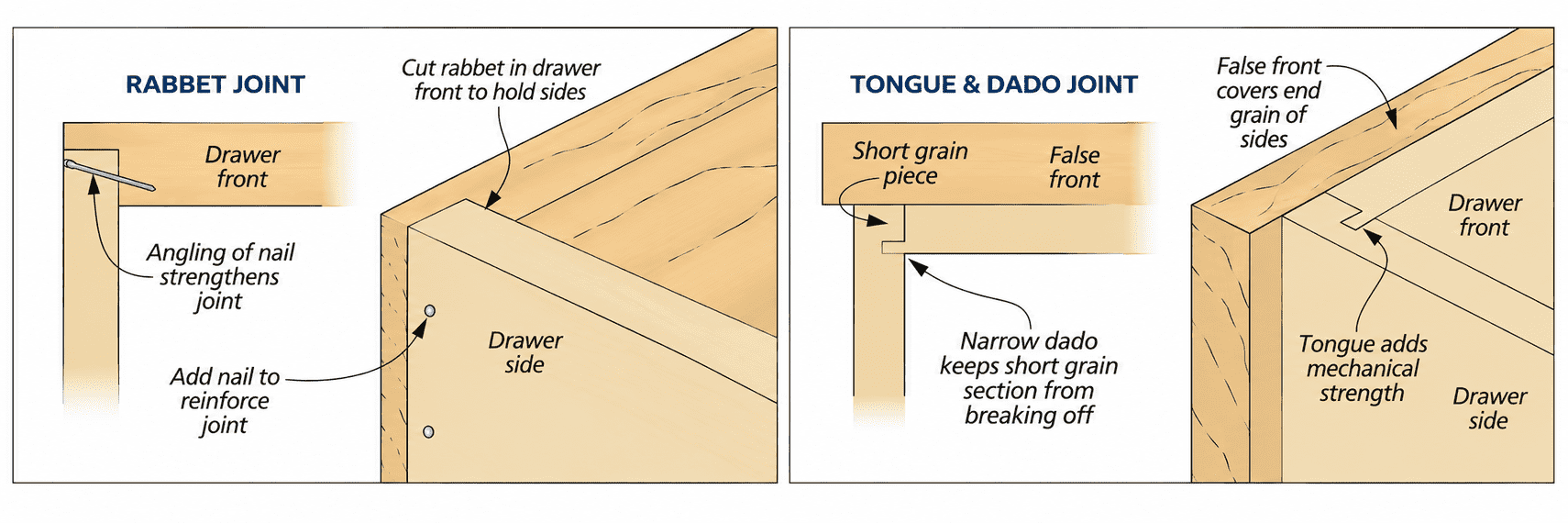
The tongue on the drawer front fits into a dado in the side. This helps resist the forces placed on the front as the drawer is opened.
There's an aesthetic consideration, however: the ends of the drawer sides remain visible at the front.
That's not necessarily a problem because this construction works particularly well when you're planning to install a false front.
A false front covers the drawer box and gives you much more freedom over the final appearance. For example, the drawer box could be built from plywood or another practical material while a hardwood false front matches the surrounding case.
Edge treatments on the false front can then become part of the furniture design.
The downside is additional material, weight, and another component to fit and install. But for projects designed around false drawer fronts, tongue-and-dado construction makes a practical middle ground between a simple rabbet and a more involved locking joint.
3. Locking Rabbet: Strong, Clean Drawer Joinery
The locking rabbet joint combines some of the advantages of the first two approaches.
Instead of simply overlapping the drawer side, the front and side interlock. A tongue fits into a dado while a lip on the drawer front covers the end of the side.
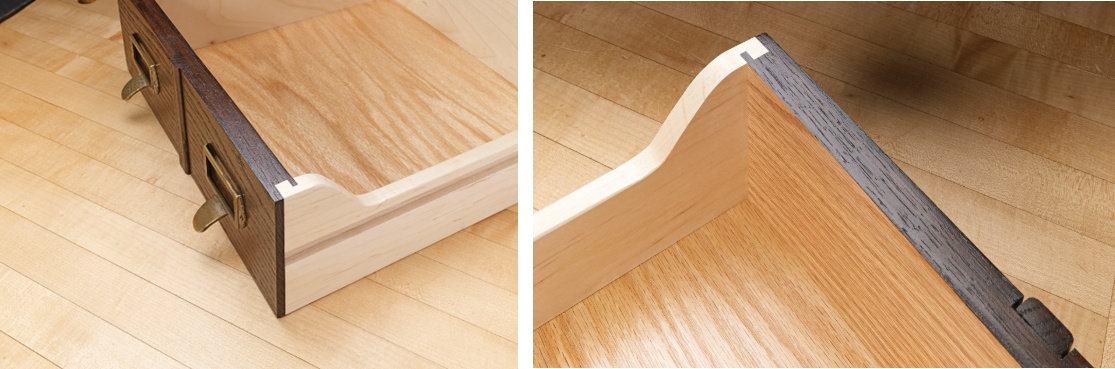
The result is an attractive joint with a mechanical connection between the front and side while concealing the end of the drawer side.
That makes the locking rabbet especially useful for drawers that don't receive a separate false front.
Its disadvantage is setup. The joint requires several accurately located cuts, so expect to spend some time making test cuts and adjusting the setup.
The payoff comes when you're building several drawers. Once everything is dialed in, you can repeat the same cuts across all of the drawer parts.
How to Lay Out a Locking Rabbet Drawer Joint
The example shown here uses a 3⁄4"-thick drawer front with 1⁄2"-thick sides.

There are two important proportions to keep in mind.
First, the tongue and dado extend through half the thickness of the drawer side. This leaves enough material in the tongue to keep it from becoming overly fragile.
Second, the drawer front should be at least 1⁄2" thick for this particular joint. Going thinner leaves less material in the tongue and front lip.
Those proportions create the interlocking geometry that makes the joint work.
How to Cut a Locking Rabbet Joint at the Table Saw
You can make a locking rabbet at either the table saw or router table. The basic geometry is the same, but the table saw provides an efficient setup when you're building several drawers.
The sequence matters.
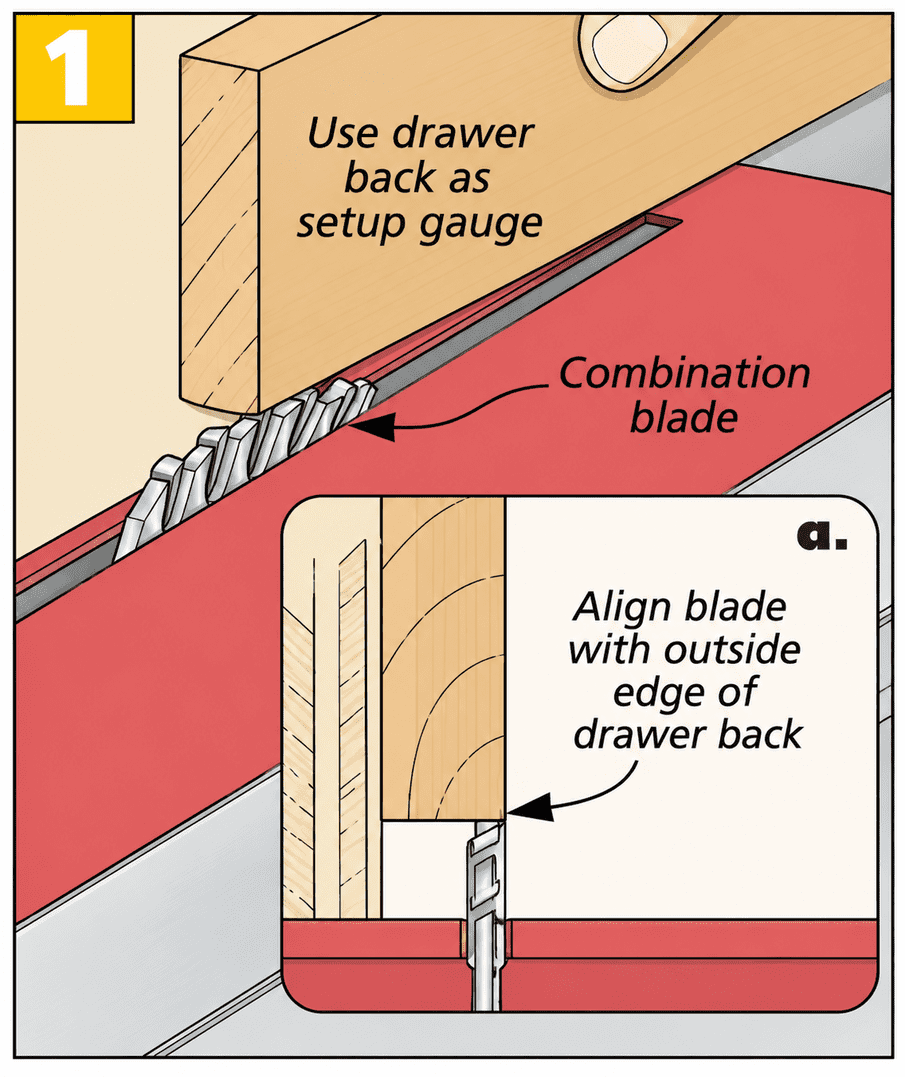
Step 1: Set Up the First Cut
Use the drawer back as a setup gauge. Place it against the rip fence and adjust the fence until the outside edge of the drawer back aligns with the outside edge of the saw blade. This establishes the position for cutting the dadoes in the drawer sides.
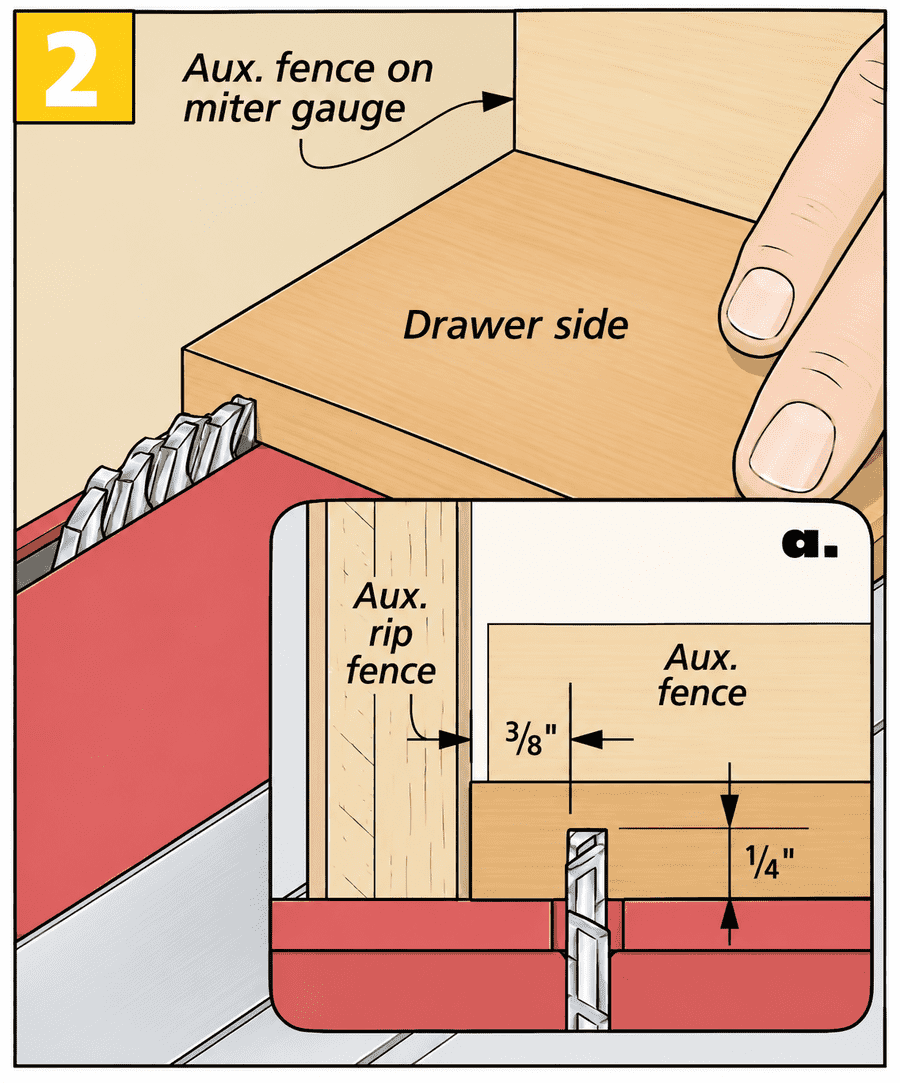
Step 2: Cut the Dadoes in the Drawer Sides
With the fence set, cut the dado at the front end of each drawer side. Use an auxiliary fence on the miter gauge to support the workpiece and help prevent chipout. These dadoes will accept the tongues on the drawer front.
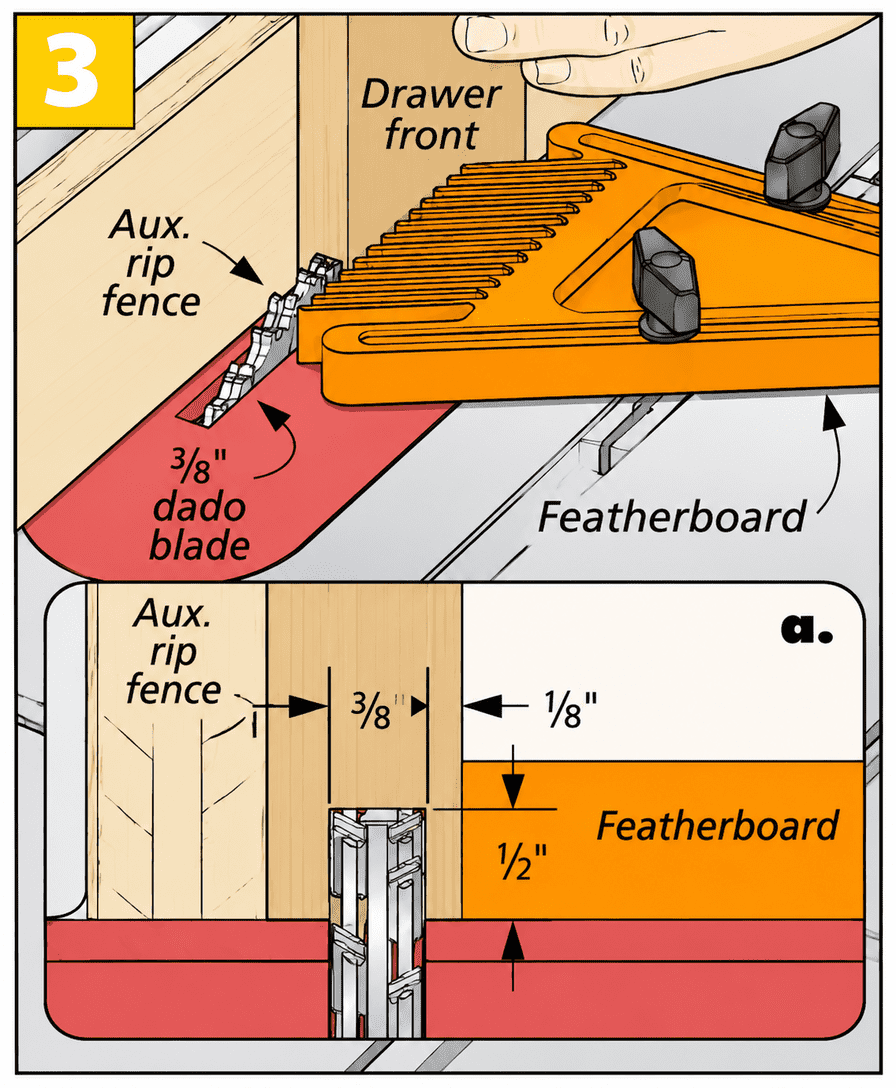
Step 3: Cut the Slot in the Drawer Front
Switch to the dado blade and stand the drawer front vertically against the auxiliary rip fence. Cut the narrow slot that creates the small lip at the end of the drawer front. A featherboard helps keep the workpiece firmly against the fence throughout the cut.
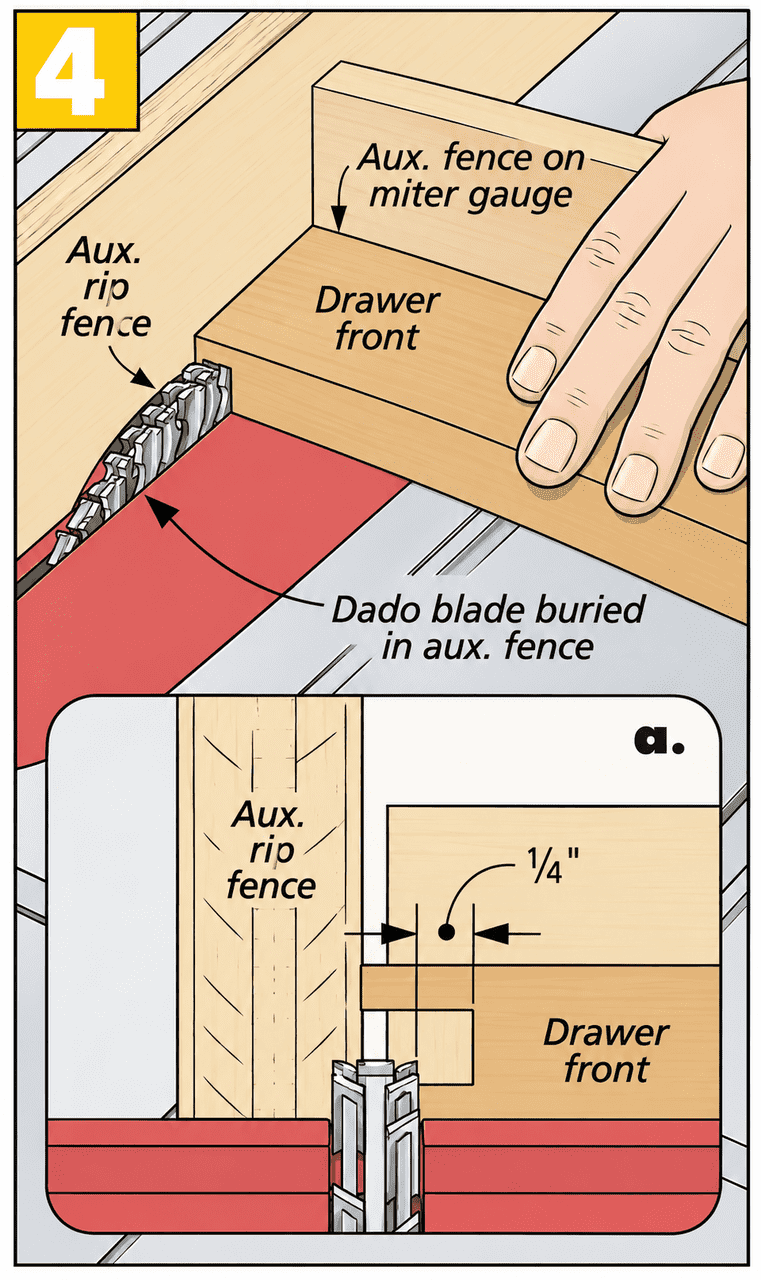
Step 4: Form the Tongues on the Drawer Front
Now lay the drawer front flat and partially bury the dado blade in an auxiliary rip fence. Make a pass along each end to remove the waste and form the tongue. Sneak up on the fit until the tongue slips snugly into the dadoes in the drawer sides.
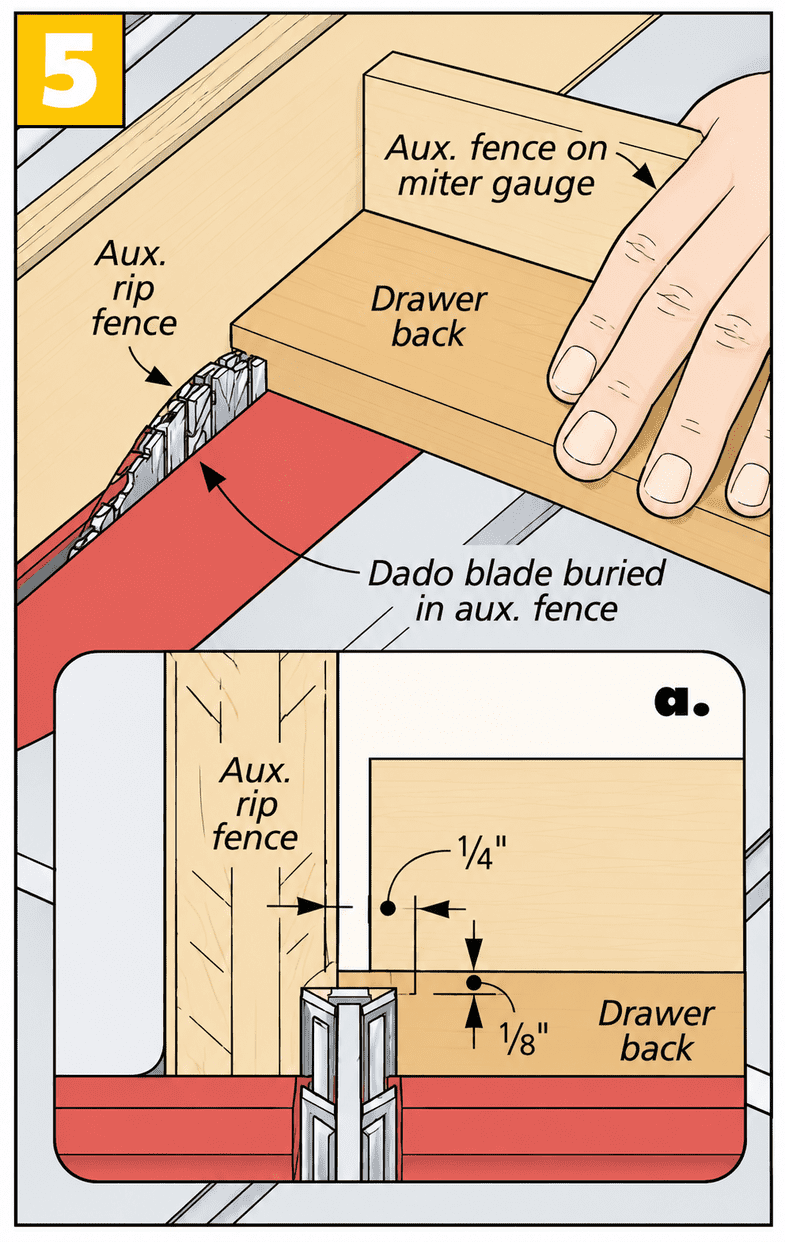
Step 5: Create the Tongues on the Drawer Back
The drawer back uses a simpler version of the joint. With the dado blade still partially buried in the auxiliary fence, rabbet each end of the drawer back to form tongues that fit the dadoes in the sides.
Woodsmith Tip: Save Your Setup Pieces. When you're making several drawers, keep the test pieces used to establish the final fit. They're useful references if you need to recreate the setup later.
Keep the Drawer Back Simple
The drawer back isn't subjected to the same pulling forces as the front, so its joinery can be simpler.
For the construction shown here, cut rabbets in the back to form tongues that fit into the dadoes in the drawer sides.
This gives you an easy-to-assemble connection without adding unnecessary complexity.
Add the Drawer Bottom Groove
With the corner joinery complete, cut the grooves for the plywood drawer bottom.
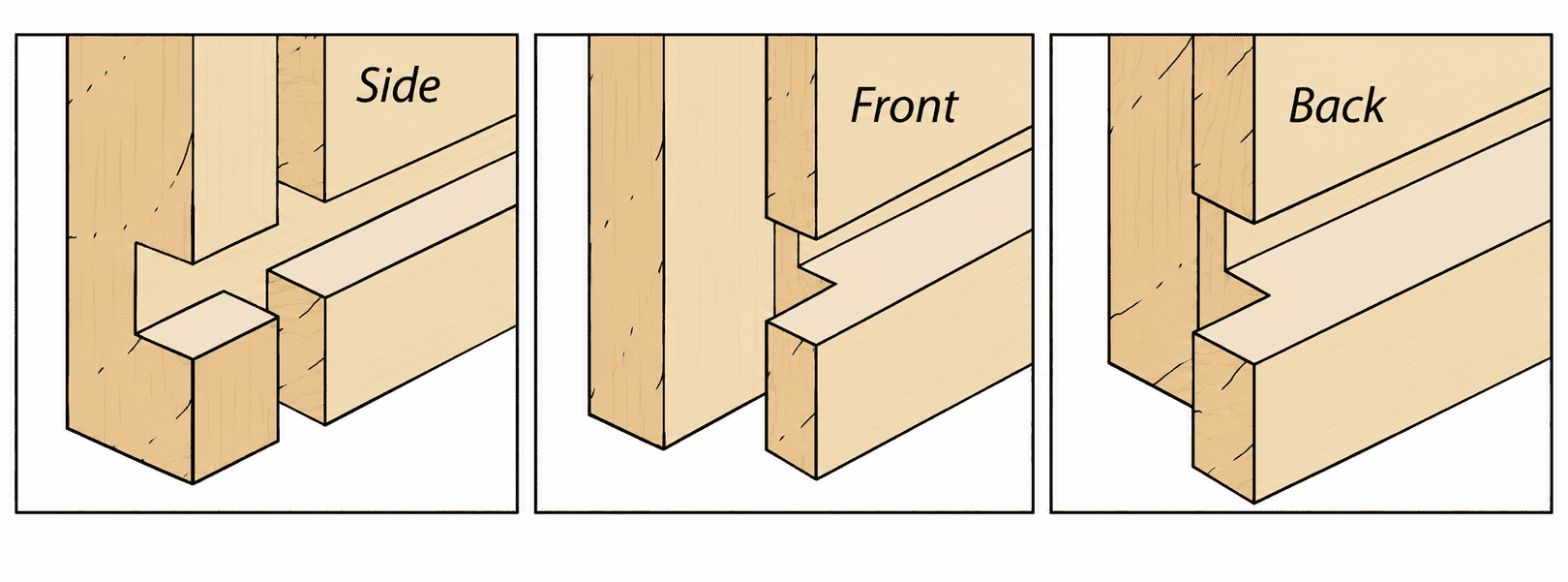
For this drawer, the grooves are 1⁄4" deep and located 1⁄4" above the bottom edge.
The grooves intersect portions of the corner joints, but this doesn't interfere with the construction shown.
Because plywood thickness can vary, start with a narrow cut and sneak up on the fit. The goal is a groove that accepts the plywood bottom without requiring excessive force.
Once the grooves are finished, cut the bottom panel to size and you're ready for assembly.
Which Drawer Joint Should You Use?
There isn't one drawer joint that's right for every woodworking project.
If speed and simplicity matter most, a reinforced rabbet joint gets a utility drawer together quickly.
If you're planning to install a false drawer front, tongue-and-dado construction provides a useful mechanical joint while keeping the drawer box straightforward.
And when you want the drawer front itself to provide the finished appearance, a locking rabbet offers an interlocking connection that also conceals the ends of the drawer sides.
The locking rabbet takes a little longer to set up, but that's time well spent when you're building a bank of drawers. Once the table saw is dialed in, you can work through the parts assembly-line style and end up with strong, consistent drawer boxes.
Build Better Drawers from the Start
Good drawer joinery is only part of the equation. From sizing the parts and cutting consistent grooves to keeping the box square during assembly, a few simple techniques can make drawer construction faster and more accurate. Check out these 8 practical tips for building better drawers.
GET 8 DRAWER-BUILDING TIPS → How to Build Drawers: 8 Tips for Square, Accurate Results


