


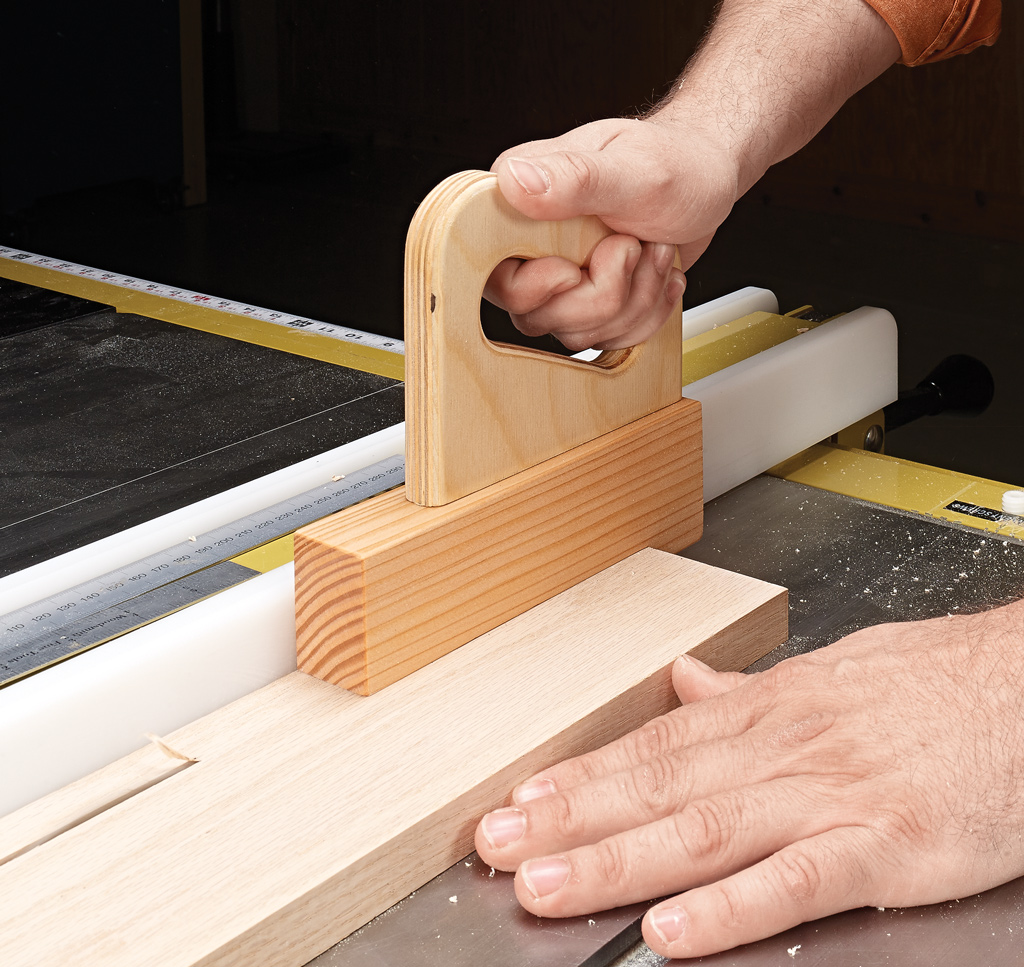
DIY Table Saw Push Block with a Replaceable Base
A good push block is one of the most useful accessories to keep near your table saw. It helps you maintain control of a workpiece while keeping your hands away from the blade, especially when ripping narrow stock.
But push blocks don't last forever. Over time, the bottom can become worn or damaged from contact with the saw blade.
This shop-made table saw push block solves that problem with a simple two-piece design. It features a comfortable handle and a replaceable base connected by a sliding dovetail.
When the base becomes worn, you can simply replace it without making an entirely new push block.
A Better Push Block Design for the Table Saw
The idea behind this push block is simple: Separate the part you hold from the part that eventually wears out.
The handle is designed for comfort and long-term use, while the base is made to be replaced as needed.
The two pieces are connected with a sliding dovetail joint.
A dovetail groove runs along the top of the base, while a matching dovetail is formed on the bottom of the handle.
This creates a secure connection that keeps the two parts aligned during use.
A small spot of hot glue helps hold the base in position while still allowing it to be replaced when necessary.

Make the Replaceable Push Block Base
I like to start by making several bases at once. That way, replacements are ready whenever the existing base becomes worn.
Each base has a centered dovetail groove that accepts the handle.
The groove needs to be sized to fit the matching dovetail on the handle, allowing the two pieces to slide together without excessive looseness.
Follow the dimensions in the drawing to lay out and cut the groove.
Making multiple bases with the same setup helps ensure that each one will fit the handle consistently.

Shape a Comfortable Push Block Handle
The handle is designed with a grip similar to that of a traditional handsaw.
This shape provides a comfortable way to hold and guide the push block while maintaining downward pressure on the workpiece.
After laying out the handle profile, cut it to shape and smooth the edges for a comfortable grip.
Pay particular attention to the areas where your fingers wrap around the handle.
A well-shaped handle makes the push block easier to control during repeated use.

Cut the Sliding Dovetail on the Handle
The final woodworking step is forming the matching dovetail on the bottom of the handle.
I cut this at the router table, carefully adjusting the setup until the dovetail fits the groove in the base.
The goal is a snug sliding fit.
The handle should slide into the base without requiring excessive force, but the connection shouldn't be loose.
Take light cuts and test the fit as you go. It's easier to remove a little more material than to correct a dovetail that's been cut too small.

Assemble the Push Block
With the dovetail completed, slide the handle into the groove in the replaceable base.
A small spot of hot glue helps keep the two pieces together.
When the base becomes worn or damaged, the glue connection can be released and a replacement base installed.
Since the bases are easy to make, keeping a few extras on hand means you'll always have a fresh one ready to go.
Using a Push Block Safely
A push block helps maintain control of stock during table saw operations, but it isn't a substitute for proper safety equipment and cutting techniques.
Use the blade guard, riving knife, and other appropriate safety devices whenever the operation allows.
For narrow rip cuts, make sure the push block provides secure control of the workpiece throughout the cut. A suitable push block design should maintain positive contact with the stock and provide a safe path for your hands.
The replaceable base is intended to be a sacrificial component, but blade contact should be limited to what the specific setup safely allows.
Inspect the base and sliding dovetail before each use. Replace damaged parts and make sure the handle is securely attached.
A Handy Table Saw Accessory That Lasts
This simple push block combines a comfortable grip with a practical replaceable base.
The sliding dovetail makes it easy to swap out a worn base, and making several replacements at once means you won't need to stop and build a new push block every time the bottom becomes damaged.
It's a useful DIY table saw accessory that can make routine cutting operations more convenient while helping you maintain control of the workpiece.
How to Make a Table Saw Push Block from Scrap Wood

Looking for another simple way to improve control at your table saw? Learn how to make a sturdy, comfortable push block using scrap wood you probably already have in your shop. This practical safety accessory features an easy-to-grip handle and replaceable parts, making it a useful addition to your collection of table saw jigs and accessories. It's a quick, inexpensive project that helps keep your hands away from the blade while maintaining control of the workpiece.
LEARN MORE → How to Make a Table Saw Push Block


