


The bottom of a table or chair leg is a vulnerable spot on outdoor furniture. The exposed end grain can wick up moisture, especially when the furniture sits on a damp deck, patio, or other wet surface.
That repeated exposure can eventually contribute to decay.
Reader Cliff Moore of Jacksonville, North Carolina, picked up a simple solution from building plywood boats. On a boat, exposed plywood edges and seams need to be sealed to prevent water from migrating into the plies. Cliff applies the same basic idea to outdoor furniture by sealing the bottoms of the legs with epoxy.
Create an Epoxy Barrier
The process only takes a few steps.
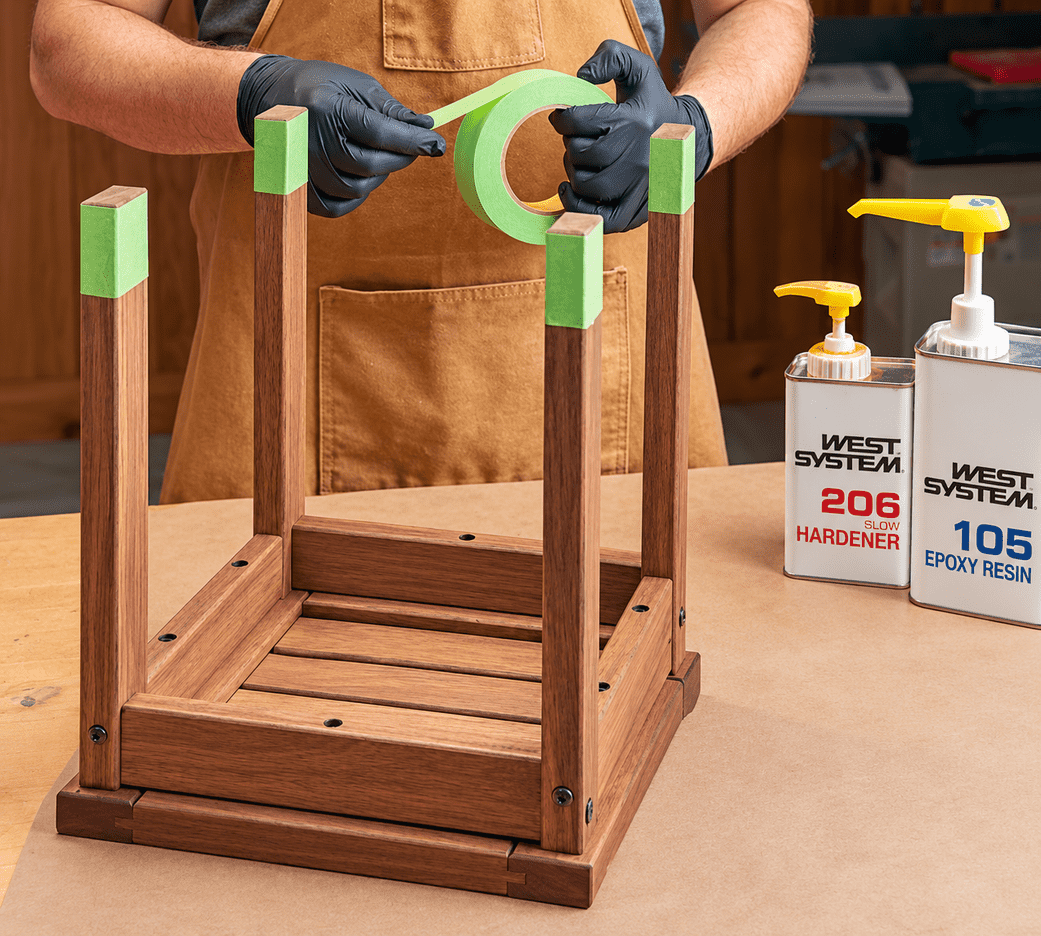
Wrap painter's tape tightly around the bottom of each leg, extending it slightly beyond the end. The tape creates a shallow reservoir that helps contain the epoxy.
Mix a thick batch of epoxy and apply it to the exposed end grain.

Allow the epoxy to cure before removing the tape. Then sand the edges of the epoxy flush with the sides of the leg.
The hardened epoxy creates a barrier between the exposed end grain and wet surfaces, helping prevent moisture from being drawn into the wood.
Woodsmith Tip: Do this before applying the final finish to a new piece of outdoor furniture. It's much easier to seal the feet while you still have easy access to every leg. It's a small extra step, but for furniture that's going to spend its life outdoors, protecting these vulnerable end-grain surfaces can help keep moisture from gaining an easy foothold.
Tip submitted by Cliff Moore, Jacksonville, North Carolina
RELATED ARTICLE: How to Use Epoxy for Woodworking


