


Toggling Miter Fence
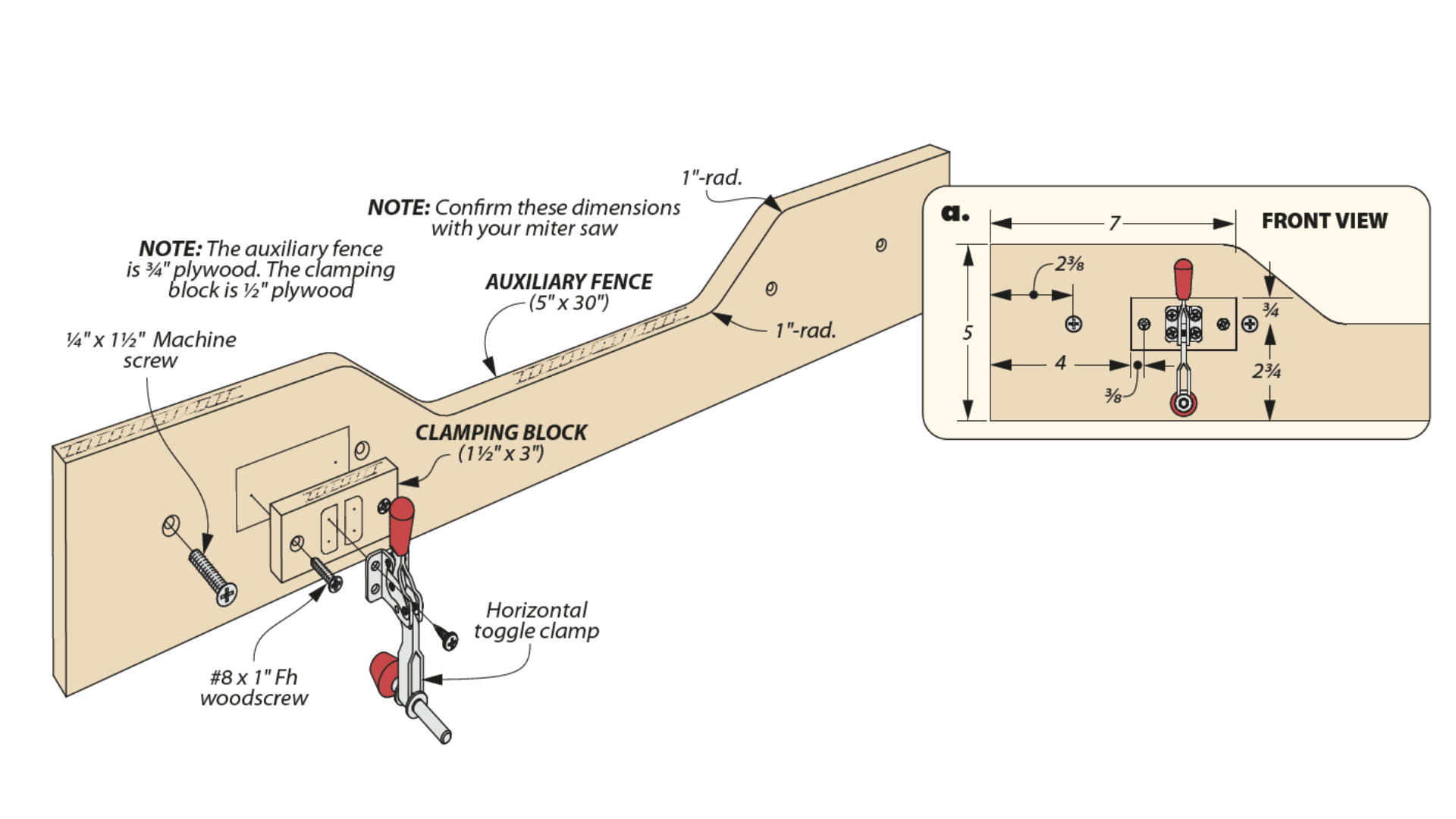
 When cutting miters on small pieces (like trim) it can be difficult to get a good hold without the part moving slightly — resulting in an imperfect cut. To fix this, I put together the fence you see here, with a simple toggle clamp attached to hold the workpiece. -Dan Martin,Galena, Ohio
Arc-Striking Bow
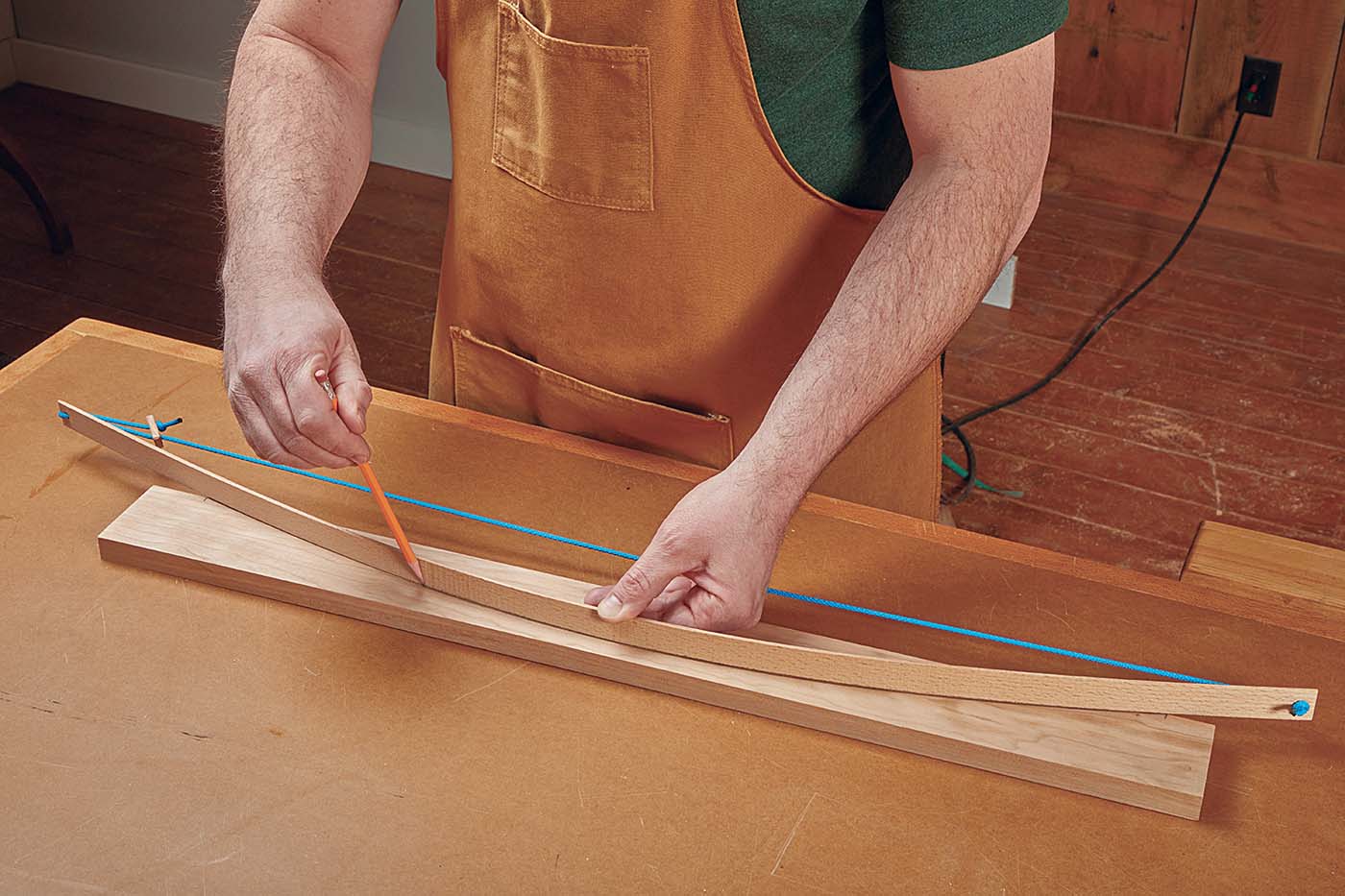
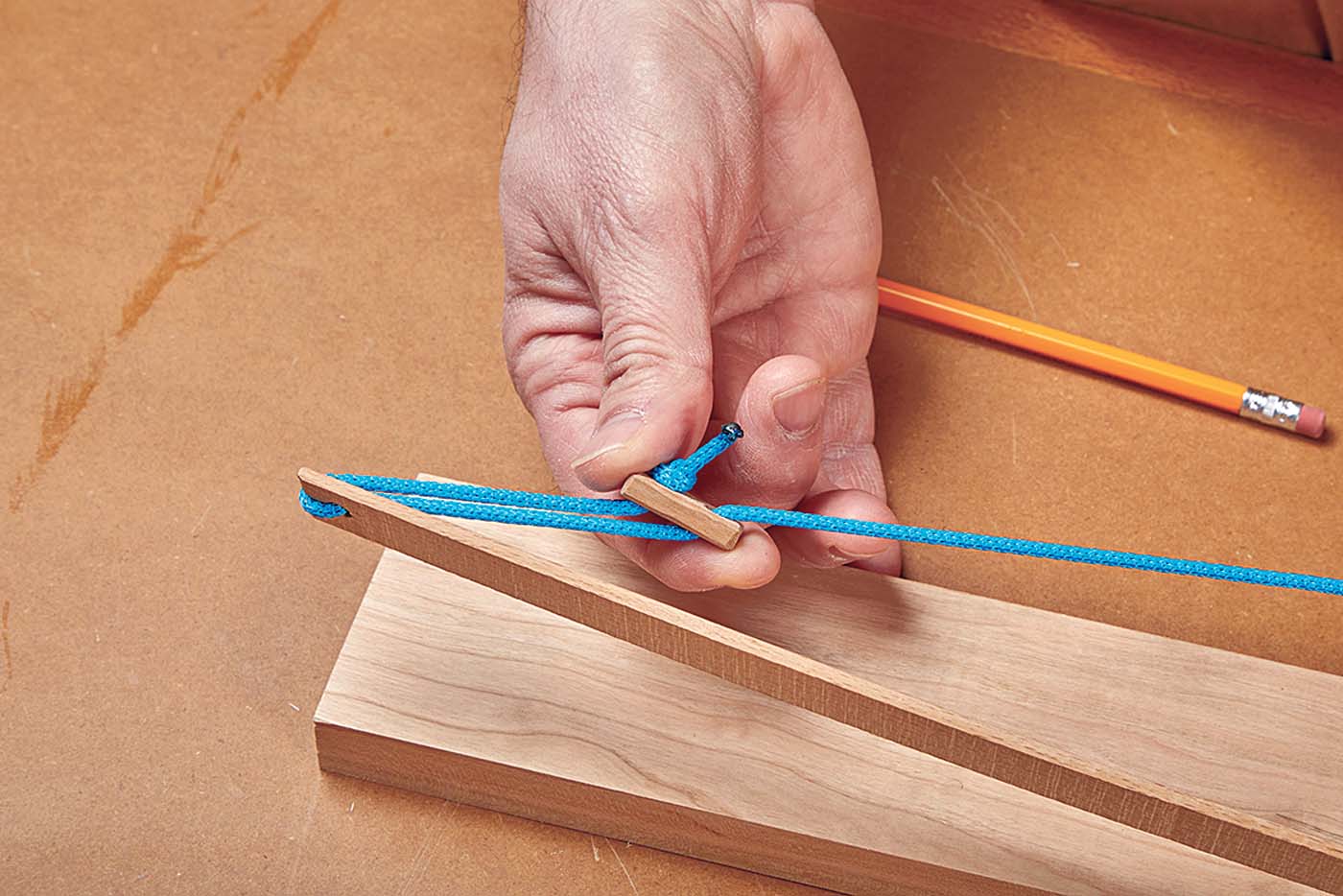
Laying out curves presents a unique challenge. Small curves are easy with a compass, and a trammel works well for medium-sized ones, but for long arcs I use the “bow” you see above. A long, thin piece of wood serves as the body. A length of cord feeds through holes at either end, pulling the bow to the desired arc. I also added a cord lock, which was just a small piece with two holes drilled in it (left photo). This holds the cord, maintaining the arc while I scribe it. -Phil Huber, Urbandale, Iowa
 |
 |
Chap-Free Glue.
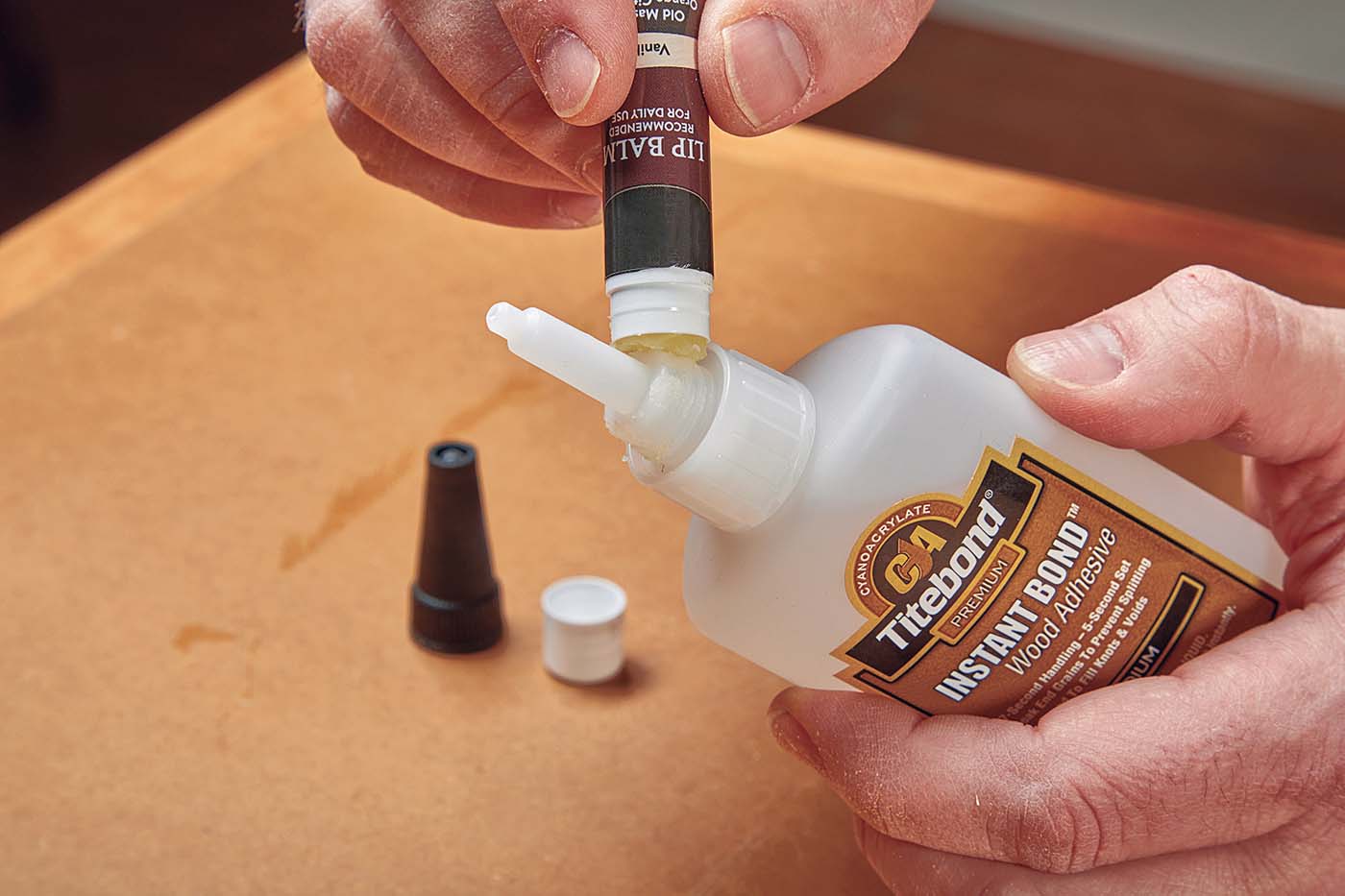
Max Doyle, Hazelton, IA came up with an easy way to keep the lids from sticking on his bottles of CA glue. A little wax (or in this case lip balm) on the threads will keep any excess glue from sealing the bottle.
Precision Bit Height
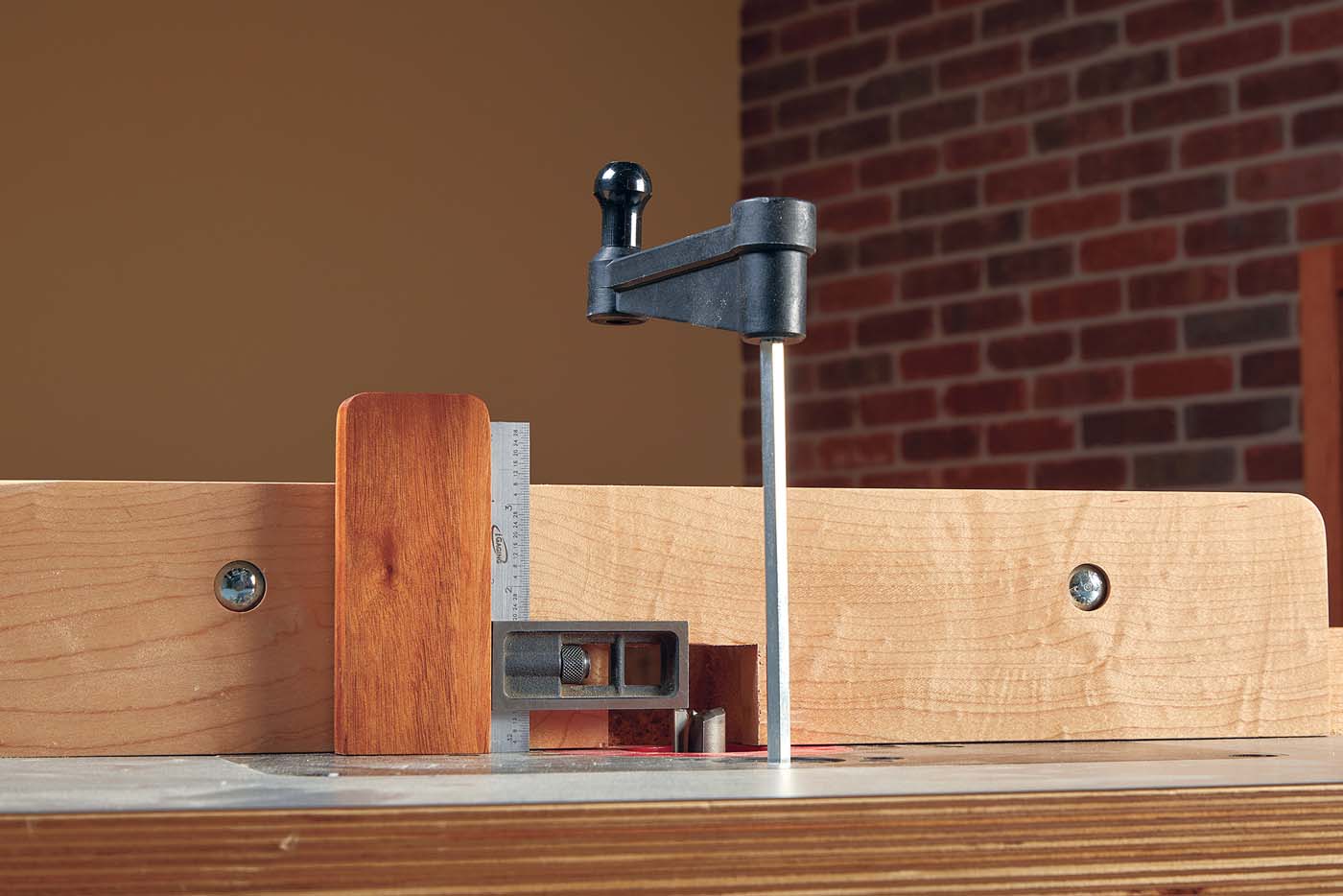
If you have a double square, then there’s a simple and reliable way to set the height of your bit at the router table. It begins with a hardwood block and a magnet. I drilled a hole on the edge of the block, then cut a groove along that edge to fit the ruler of the square.
After gluing the magnet in the hole, you’ll have a holder to turn a square into a setup gauge. From there, set the square to the desired height. You can then place the square and block beside the bit and adjust as needed. The block keeps the square parallel to the table so you can be sure that your bit will be at the precise height you’re aiming for. -Jeffrey Fiore, West Chester, Pennsylvania
 |
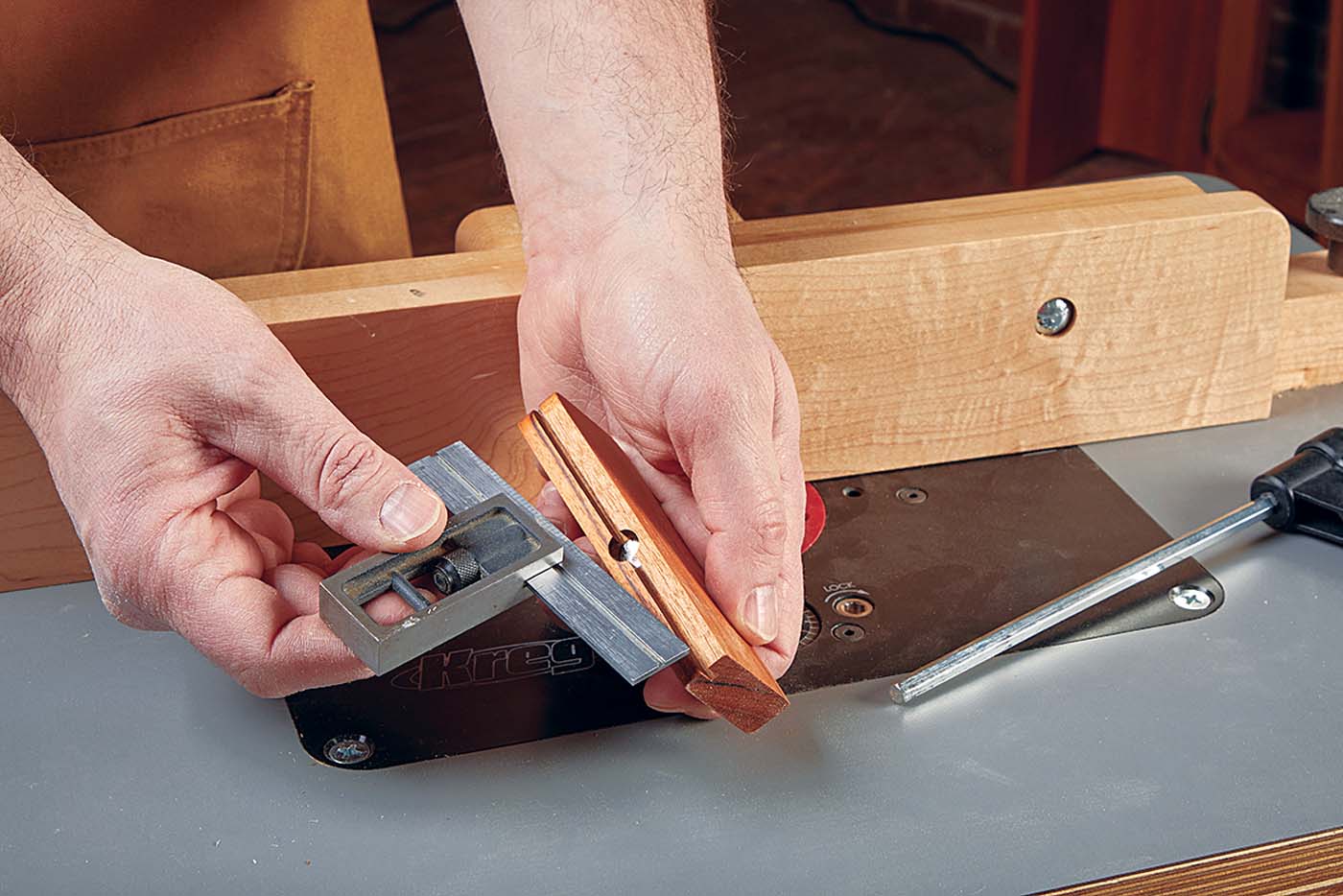 |
| A magnet inset in the block will hold the square in its groove while you focus on the bit. |