


The table saw is one of the most-used machines in my shop. From dimensioning lumber and breaking down project parts to cutting joinery, it handles a wide range of jobs. But regardless of how accurate your table saw is, the blade has a major impact on the quality of the cut.
That makes choosing the right blade important. Grizzly offers its Pro Series as a more affordable option and its Extreme Series as a step up in construction, carbide, and price. I had a chance to put blades from both series to work to see what those differences mean at the table saw.

Grizzly Pro Series Table Saw Blades
The Pro Series covers the basic blade configurations you'd expect for general woodworking. At the time of our original review, prices ranged from about $30 for the ripping and combination blades to $40 for the crosscut blade. Since prices change, I'd avoid making those numbers a major part of the updated article beyond noting them as the prices when tested.
The rip blade has 24 teeth and a thin 5/64" kerf. Fewer teeth and the ripping configuration make it suited to cutting along the grain, where efficient chip removal is important.
The crosscut blade has 80 teeth, while the combination blade has 60 teeth and falls between the dedicated ripping and crosscutting options. The Pro blades use carbide teeth, and the crosscut blade shown here uses the familiar alternate-top-bevel, or ATB, tooth geometry.
Overall, my impression of the Pro Series was pretty straightforward: These are conventional table saw blades that did their jobs well without requiring the investment of Grizzly's premium line.
Grizzly Extreme Series Table Saw Blades

The Extreme Series is Grizzly's higher-end option. When we originally reviewed them, the blades we looked at ranged from roughly $60 to $90, depending on the blade. But the difference isn't simply the name printed on the side.
Pick up a Pro and Extreme blade and one of the first things you'll notice is the weight. The Extreme blades are noticeably heavier. They're made from thicker steel, which is intended to provide greater stability and durability.
There are differences in the carbide as well. According to the specifications available for the blades we tested, the Pro Series used C4 carbide, while the Extreme blades used C9 carbide. The Extreme Series carbide is intended to combine wear resistance with greater toughness, helping the cutting edges resist chipping during demanding use.
Those construction differences are part of what you're paying for when stepping up from the Pro to the Extreme Series.
Pro vs. Extreme Series: What's Different?
Here's how the major differences in the blades we reviewed break down.
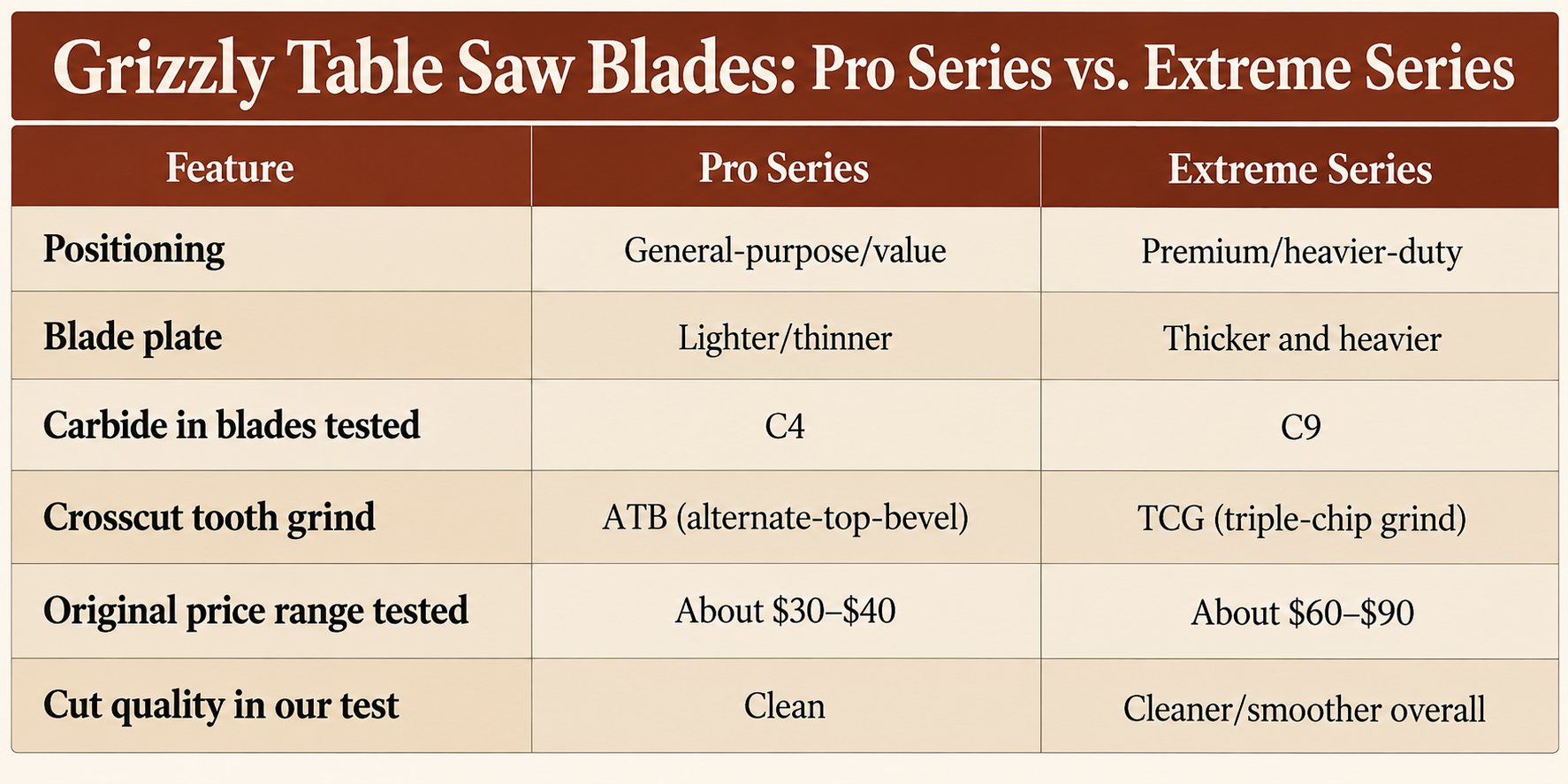
The question, of course, is whether those differences translate into noticeably different results at the table saw.
ATB vs. TCG Crosscut Blade Teeth
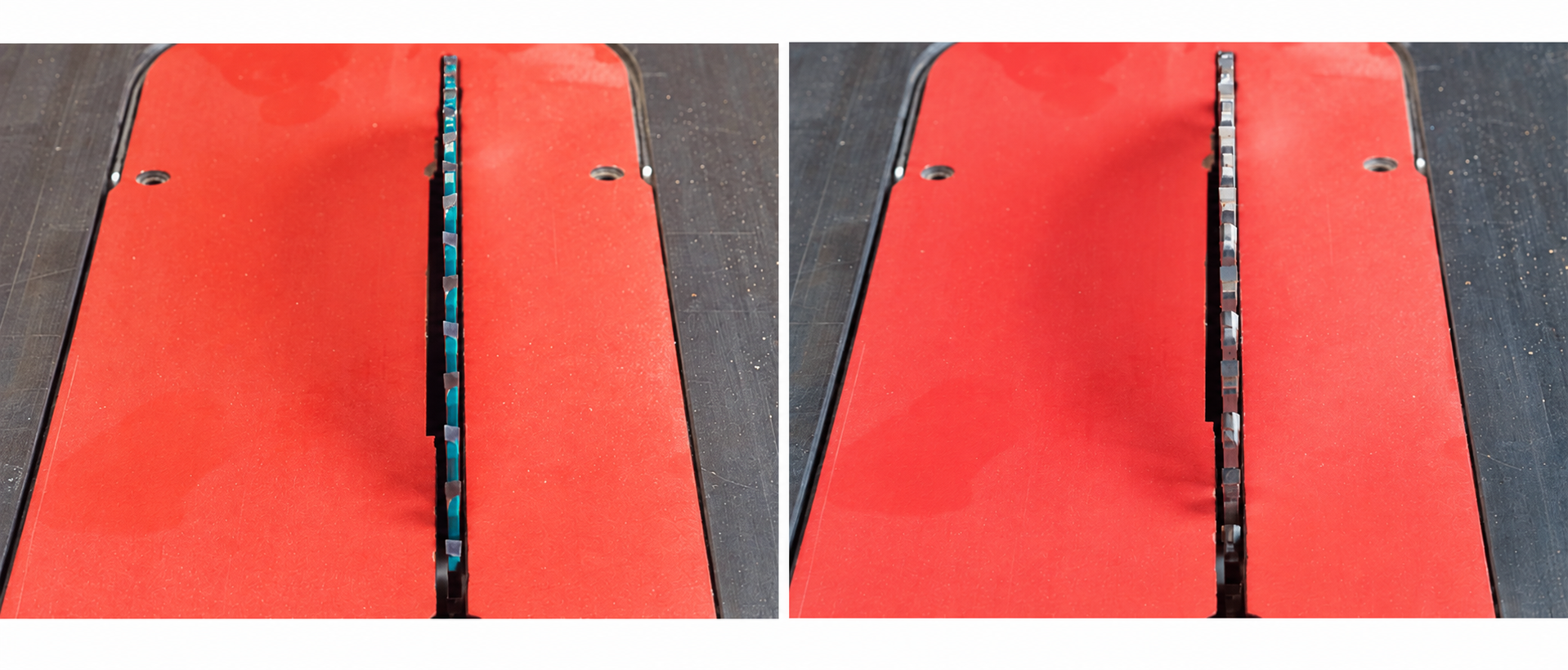
The Pro crosscut blade we tested uses an alternate-top-bevel (ATB) grind, while the Extreme crosscut blade uses a triple-chip grind (TCG).
Another important difference between the crosscut blades we tested is the tooth geometry.
The Pro crosscut blade has an alternate-top-bevel (ATB) grind. As the name suggests, the bevel alternates from one tooth to the next. It's a common tooth configuration on woodworking blades.
The Extreme crosscut blade uses a triple-chip grind (TCG). In this arrangement, different tooth profiles alternate around the blade. The taller, chamfered teeth remove material through the center of the kerf, while the following teeth clean up the remaining material.
The goal is a smooth, controlled cut, and in our testing we could see a difference between the two blades.
Crosscut Performance: Both Clean, But Not Identical
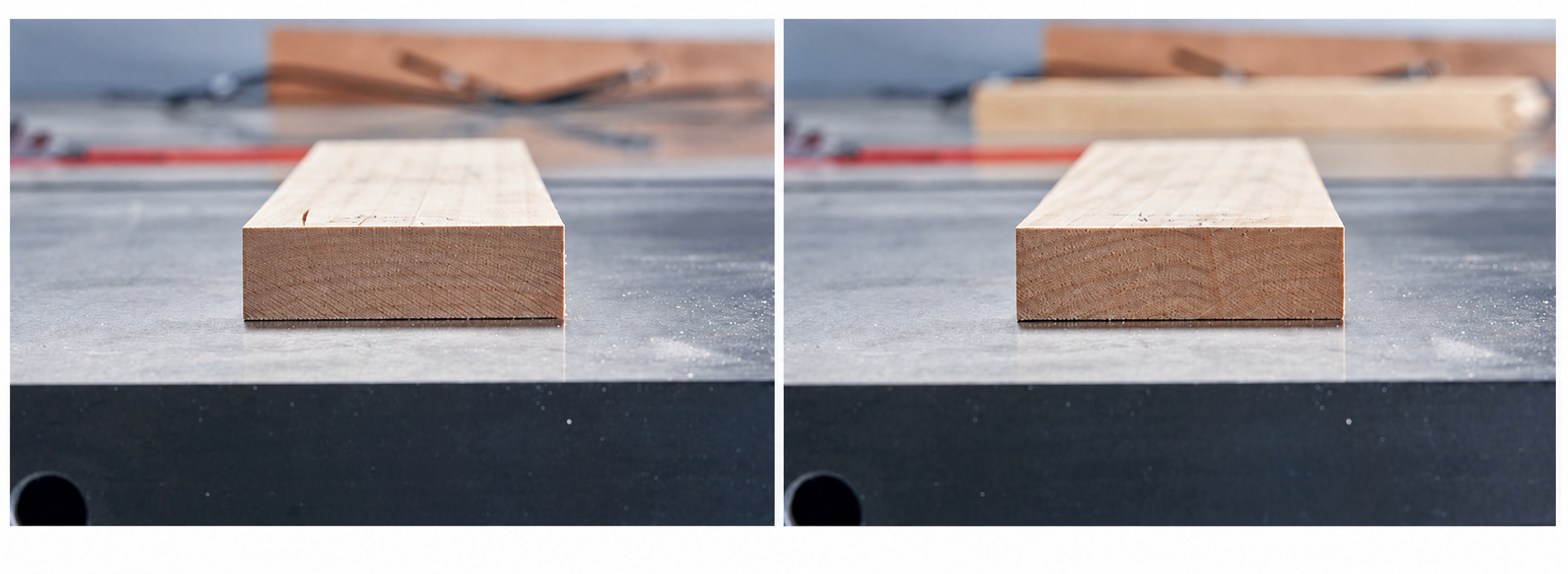
Both crosscut blades produced clean cuts in our test, but the surface left by the Extreme Series blade was noticeably smoother.
With fresh blades right out of the package, both series performed well. That's worth emphasizing because we're not comparing a new blade against one that's already seen months of use.
On the crosscuts, both blades left clean surfaces. However, the difference between them was visible and noticeable to the touch. The Extreme Series crosscut blade produced the smoother surface in our test.
That doesn't make the Pro blade a poor performer. Rather, it shows where some of the additional cost of the Extreme blade may pay off when cut quality is the priority.
Rip-Cut Performance
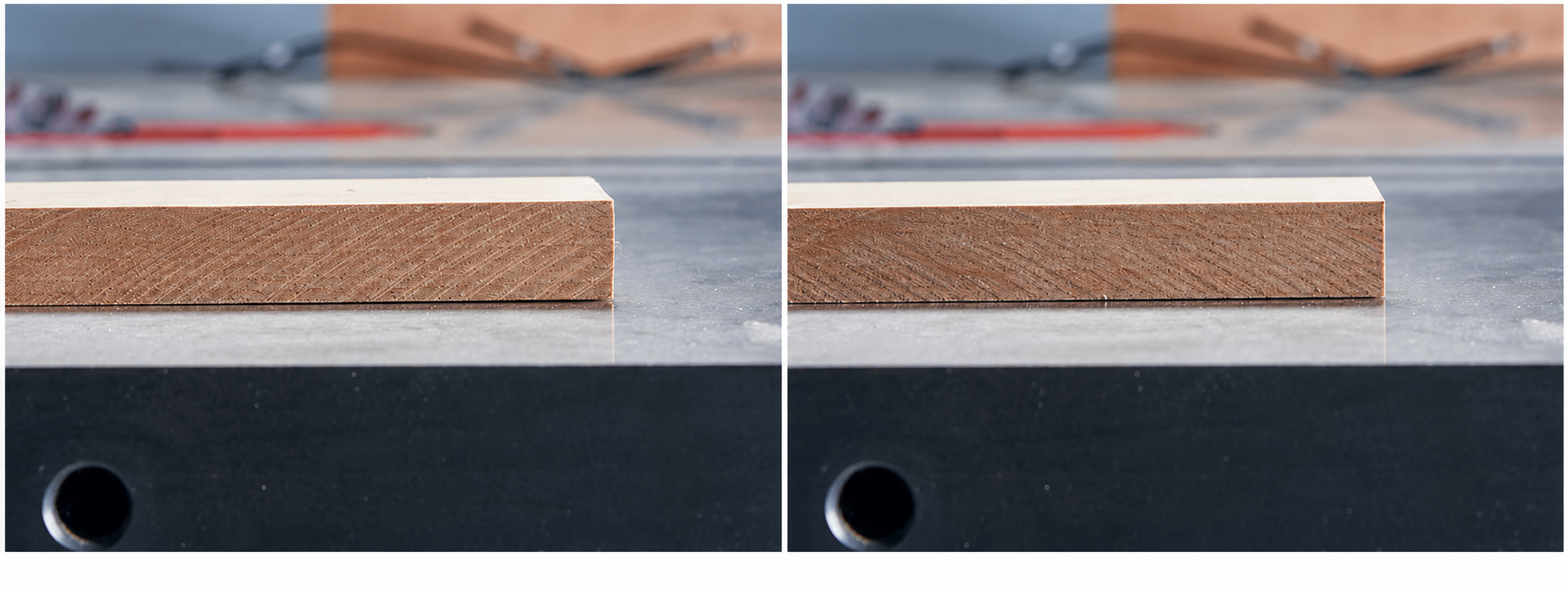
The difference between the two rip cuts was less pronounced, although the Extreme Series blade left the cleaner edge in our test.
We also compared the blades on rip cuts. Here, the difference wasn't as dramatic as it was with the crosscut blades.
Both produced good results, but the Extreme Series blade left a somewhat cleaner edge. Depending on the work you're doing, that difference could reduce the amount of cleanup needed before moving on to joinery, assembly, or finishing.
What About Long-Term Blade Life?
This is where a short-term blade test has an important limitation. All of these blades were new when we tested them, so each was sharp and cutting under ideal conditions.
The thicker plate and tougher carbide used on the Extreme blades suggest they're designed with longer service life in mind. At the time of our test, Grizzly claimed that the Extreme Series offered nearly twice the durability of the Pro Series. That's a manufacturer claim rather than something our initial cutting test could verify.
Long-term durability would require putting both blade series through considerably more lumber and tracking how well they maintained their cutting edges over time. So I wouldn't use the original article's “they'll be worth their cost and more” conclusion in the updated version. We didn't yet have the long-term testing to establish that.
Which Grizzly Table Saw Blade Makes Sense for Your Shop?
Based on our hands-on testing, the biggest decision comes down to what you expect from the blade.
The Pro Series delivered clean cuts and covers the ripping, crosscutting, and general-purpose needs you'd expect from everyday woodworking blades. For a home shop where you're looking for solid performance without moving into a premium blade, that's where the series fits.
The Extreme Series adds a heavier blade plate, different carbide, and—in the crosscut blade we tested—a different tooth grind. It also produced the smoother crosscuts and somewhat cleaner rip cuts in our testing. Whether those improvements justify the additional cost depends on how frequently you use your table saw and how important minimizing cleanup after the cut is to your work.
What we can say from this test is that both blade series cut well when new, while the Extreme Series produced the better surface in our side-by-side cuts. The unanswered question from our initial test is how large the difference becomes after months of use.
Learn More About Choosing a Table Saw Blade
Blade quality is only part of the equation. Tooth count, tooth geometry, kerf, and whether you're ripping, crosscutting, or cutting sheet goods all affect which blade is best suited to the job.
I'd finish this review with an internal kick to your broader table saw blade guide:
LEARN MORE: How to Choose the Right Table Saw Blade →


