



Our Top Picks
Our Favorite Reciprocating Saw for 2024
Best Overall Reciprocating Saw

The DeWalt 20V MAX Reciprocating Saw is a truly impressive tool for a variety of jobs. The 4-position blade clamp allows for flush cutting and an array of positional versatility, meaning the user can make the most of their saw for a variety of tasks. With a 1-1/8-inch stroke length, the saw is able to cut quickly and efficiently at up to 3,000 strokes per minute. The variable speed trigger adds an extra level of control by allowing the user to adjust speed as needed – this helps to protect the blades and extend their life. An adjustable shoe also helps with depth-of-cut control and adds to the versatility of this saw.
On top of being a powerful tool that can handle a variety of tasks, it’s also very comfortable to use. The rubber grip handle delivers excellent control and comfort while in use. Plus, the double oil seal shaft helps resist wear and tear and increases the overall durability of this product. In conclusion, the DeWalt MAX Reciprocating Saw is perfect for those looking for a powerful, versatile, and comfortable saw that can handle a multitude of tasks.
Pros
- Switch the blade 90 degrees to get in tight spots
- No frills and cuts like a DeWalt should
- Easy to use and provides plenty of power
- Useful for multiple tasks and cutting tree roots
Cons
- Tool only; battery not included
- Need amps of 4.0Ah or higher to actually utilize the tool’s full potential
- Amazon: DeWalt 20V MAX 5.0Ah Batteries
Best Demolition Reciprocating Saw

The Makita 18V Recipro Saw is a powerful and versatile tool that will make any job easier. The brushless motor produces up to 0-2, 300 (low) & 0-3, 000 (high) strokes per minute, and with a 1-1/4″ stroke length it can make faster cuts than ever before. The unique “Tool-less” Blade change system allows for quick installation and removal of blades, allowing you to tackle jobs quickly and get on to the next one. The variable speed trigger provides added convenience while the compact design makes it easy to handle and the lightweight 8.2 lbs. Means less fatigue for the user. It also comes with a 6″ 6TPI Recipro saw blade – so you have all of the tools you need to get started. In conclusion, this is a great tool for any job and will definitely give you an edge in getting tasks done quickly and efficiently.
Pros
- Trusted Makita name that provides the right quality
- Used by professionals and DIYers alike
- Lightweight and compact design
Cons
- Also doesn’t include batteries in the set
- Black grip reported to slide off by some users
Most Durable Reciprocating Saw

The Milwaukee Sawzall with Quik Lok Blade Clamp and All Metal Gearbox is an ideal tool for tackling a variety of tasks. Offering superior efficiency, enhanced safety features, and reliable construction, this saw is the perfect choice for jobs that require precise cutting.
One of the most useful features of this saw is its Quik Lok Blade Clamp. This enables users to quickly switch between blades—mechanical latches make opening and closing a breeze. Plus, when using heavier blades with this tool, the counterbalance mechanism helps reduce vibrations, allowing for more accurate and consistent cuts.
This metal gearbox is designed to protect the internal components should you drop it in the middle of a job. This feature ensures the tool can keep working long after other tools would have faltered. Furthermore, Redlink intelligence makes sure the tool’s working safely and efficiently by enabling cross-platform communication with M18 batteries. This communication allows for a reduction in power draw, protecting the tool from overheating.
Pros
- Long-lasting and self-adjusting battery
- Metal build helps assist durability
- Very powerful cutting perforance
Cons
- Like others, does not come with batteries included
- Heavy-duty build makes this saw the heaviest on our list
Fastest Cutting Reciprocating Saw

The RYOBI ONE+ Reciprocating Saw is an ideal tool for the job site or any DIY project. Thanks to its powerful 18V motor and variable speed trigger, this saw can make over 145 cuts per charge while delivering 3,400 SPM and a 1-in. stroke length. This makes it easy to tackle even the toughest of cutting jobs.
For added convenience, there’s also an easy blade release lever for quick blade changes. This allows you to switch between blades without having to waste time on cumbersome blade replacement processes. As a result, you can work more efficiently in less time.
Another great feature of this saw is its comfortable ergonomic design. The handle has been designed with rubberized over mold for extra grip and comfort, so you can use the saw for longer periods of time without experiencing fatigue or discomfort. On top of that, it also comes with an integrated bar for attaching a lanyard to help reduce user fatigue and strain on your wrist.
Pros
- Far less expensive than many options
- Tool-free blade changing
- Easy to get between tight spaces
- Lightweight and portable
Cons
- This specific package is the tool only
- Not suitable for heavier materials and tougher jobs
Best Value Reciprocating Saw

You can cut different materials with this 20V cordless reciprocating saw. It is equipped with a different speed trigger to provide a cutting power of up to 30,000 SPM. This device is very compact, lightweight, and safe as it has a built-in electrical brake. The initial battery voltage is 20 volts whereas the minimal voltage is 18 volts.
Pros
- Easily change the blade without the need for any extra tools
- Pivoting blade shoes improve stability and give you more control over
- Interchangeable cordless battery
Cons
- Battery life is not very good

You will get two functions with this one saw. You can turn the reciprocating saw into a jigsaw and back to reciprocating. The changing of the saw will be done with a push of a button and a pivot of the head. The circular motion of the blade makes the cutting much better. When needed, you can easily change the blades without the need for any other tool. Moreover, it can easily cut different materials like copper, thin steel, PVC, pipe, fiberglass, and much more.
Pros
- Dust blower will help you to keep your working space clean
- Weighs less than 5lbs
- Any standard or t-shank saw blades will perfectly work well in this tool
Cons
- Battery timing is not very good

This 20V cordless reciprocating saw provides your high-performance drivetrain. You will get a 1-inch stroke length and 0 to 3000 SPM for better cutting. It is lightweight with a mere weight of 4lb and it is compact enough to reach all the tight spaces. Moreover, the tool-free blade release allows you to change the blades without the need of any additional tools.
Pros
- Has a variable speed trigger
- Pivoting shoes will help in keeping constant contact with the material
- Contoured over-molded handle to further improve the comfort
Cons
- Not suitable for people who need more power for extreme cutting activities
Buyer's Guide to Finding the Right Reciprocating Saw
A reciprocating saw is very popular in performing different jobs like remodeling, plumbing, construction, demolition work, and much more. It is ideal for rough cuts or tasks related to different materials which include cast iron, ceramic, plastic, and many more. You can easily use it in tight spaces and small corners without any worry! More importantly, the best reciprocating saw has a compact design and is lightweight, which helps with handling. Once you go out to buy one, you will see different models and designs. To pick the best one for your use, you have to be aware of some important features and your use. To know all, consider reading the following buyer’s guide.
What are Different Types of Reciprocating Saws Available?
Mainly, there are two types that you need to know about:
Corded
A corded reciprocating saw will perform best when you need to make powerful and quick cuts. You can use it for a longer time and this will effectively cut the materials. It is also very easy to handle as there is no weight of batteries. “My go-to recommendation for professionals is to get a corded reciprocating saw. This will allow you to work all day without interruptions,” says Goodell David, founder of WoodWorking Clarity. But remember that it might not be suitable for some jobs due to its limited movement. When buying, go for corded reciprocating saws that come with a rubber cord instead of a plastic cord.
Cordless
If you have to continuously change your position while working, then cordless reciprocating saws are going to be the best option for you! No need to plug the device into any power outlet as it is operated with batteries. Always pick a lithium-ion battery to use for longer battery life. You can easily make tough cuts at any place without the need for a power cord. However, the saw will lose power once the battery runs low.
What Types of Motors are Available in Reciprocating Saws?
Without the presence of a motor, no saw is going to do the work. The motor is powered by a source. In the case of a corded saw, it gets power from a power outlet. However, in the case of cordless, the power arrives from the battery pack inside the device. Below are the two types of motors which you will see:
Brushless
This type of reciprocating saw does not have carbon brushes instead there are small electronic circuit boards that are responsible for the delivery of energy. This is a powerful motor and will reduce unnecessary friction which ensures the constant flow of energy.
Brushed
This is the standard and basic form of reciprocating saws. It has two main parts known as commutators and brushes. Similar to other tools, carbon brushes will get damaged due to frequent usage.
What to Look for in a Reciprocating Saw
When buying one for yourself, look out for the following key features:
Stroke length
It is not the exact blade length but tells how far a blade will move for cutting in a back-and-forth position. Note that the longer stroke length will cut the material easily. Usually, it ranges from 0.75 inches to 1.25 inches. However, in some reciprocating saw models, you can adjust the stroke length for better adaptability. Cutting speeds in a reciprocating saw varies from around 2,600 to 3,300 strokes per minute.
Speed
The number of strokes that a reciprocating saw can make per minute is called the speed. The higher speed of the saw the more quickly the blades move back and forth, cutting through material faster. Note that a casual user doesn’t need much speed for an occasional job but professional or regular users have to pick a high-seed saw for the usage.
Variable speed control
This feature is going to control the speed of your saw for improving consistency and precision. It will allow the user to adjust and select the speed level as per the material being cut.
Some other features which you should look at when buying the reciprocating saw are auto-stop, anti-vibration, carry case, tool-free blade change, orbital action, saw blade designs, blade clamp, and much more. Some of them also come with built-in electric brakes.
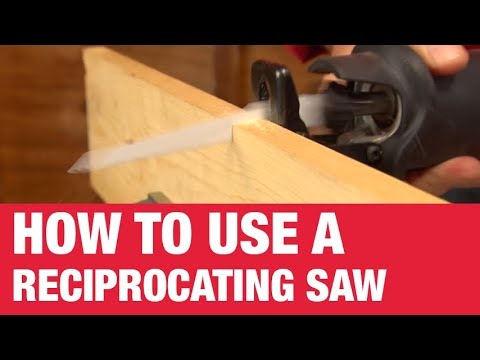
How to use a Reciprocating Saw
A reciprocating saw is commonly used by construction workers for demolition and remodeling. To know more about ways to use this powerful tool, check the video from Ace Hardware.
Typical Price Tags of Reciprocating Saws
To buy the best reciprocating saw, you have to pay a price between $49 to $150 (most likely without batteries). The price variation is due to the features you are going to get in your device like auto-stop, tool-free blade change, anti-vibration, and much more. To get better value for your money, check out the great deals when buying a kit that includes a carry case, different blades, chargers, and batteries.
Common Reciprocating Saw Questions
How strong of a saw should I buy?
A person will have to use different power levels which range from 5 to 15 amps. If you are professionals or have any heavy-duty work, you should consider buying a saw with the power of more than 10 amps to do your work.
How does a reciprocating saw work?
The tool has a switch button. You have to press the safety lock button for releasing the saw before you turn it on. Press the on/off switch for keeping the tool in working mode. Once the work is done, turn it off by releasing the trigger.
How to pick the best blade for work?
The selection of blades will be dependent on the material you want to cut. For instance, to cut wood, you will use a blade with 3-11 TPI. In the case of cutting denser metals, you will use blades with 12 to 18 TPI.
What is a reciprocating saw good for?
A Reciprocating Saw is a handheld saw commonly used for any type of demolition or remodeling. You can use it to cut through many types of materials such as wood, metal, PVC, and nails.
Can you cut straight with a reciprocating saw?
A reciprocating saw can make both horizontal and vertical cuts. Careful handling is key to making more precise cuts; you may want to check out other power tools if you're looking for straighter lines.


