



Our Top Picks
Top Marking Gauges on Amazon in 2024
Best Overall Marking Gauge

The Fstop Labs Marking Gauge Woodworking Tool Set is a great tool for woodworkers. It comes with two parts: a Dovetail Marking Jig and a Wheel Marking Gauge.
The dovetail marking jig is made from high-quality aluminum and is easy to use. It has four types of proportions marked that are perfect for both softwood and hardwood dovetails. The jig is accurate and suitable for all types of wood.
A wheel marking gauge is an essential gadget when marking out precision joinery. It’s fast and easy to operate with knobs that make adjustments easier and quicker. The 8-inch Precision-ground steel rod is graduated in 1 mm/ 1/25 inch increments for easy reference, ensuring accuracy when adjusting the gauge.
Overall, this marking gauge offers a great solution for all your woodworking needs. It helps you make accurate measurements and adjustments quickly and easily. Plus, it can be used as a depth gauge too! The time saved when working on wood projects makes this specific gauge our top pick.
Pros
- Perfect weight in your hands
- Clearly able to make-out measurements
- The circular gold fence portion is slightly larger, providing more precision
Cons
- The orange bar in the back extends fairly far, making it difficult to match up the mark on the endgrain of the board
Runner-Up

This high-end wheel marking gauge can help you draw down lines parallel to a flat wood surface with maximum precision and show exactly where wood needs to be cut, saving you time on your woodworking projects. The two additional hardened Steel wheel cutters that come with your order offer a lot of value to your purchase.
Pros
- Make line marks with precision with this gauge.
- This handy marking gauge wheel will make your woodworking cutting much easier.
- It helps you eliminate the possibility of swaying lines and perform your duties more quickly and easily.
Cons
- Even the softest woods will not be effectively marked with this.
Contender

This marking gauge for wheels tool allows you to produce precise hairline layout markings with and against the wood grain. The single Bevel edge wheel scribes a thin line without ripping the wood fibers and does not wander with the grain of the wood: knurled lock nut and finely machined solid-brass body. For convenient reference, the shaft is graded in 1 mm / 1/32 inch intervals. As a depth gauge, this can be useful. It’s ideal for recording measurements quickly.
Pros
- For safety and simple vertical storage, the wheel retracts into the face of the gauge.
- The gauge is made to be operated with one hand and has a balanced feel.
Cons
- This gauge has a dull blade.
Honorable Mention

This wheel marking gauge is an essential marking and cutting tool that will assist you in laying out lines parallel to a flat wood surface with maximum precision and indicate where wood needs to be cut. The 1.5-inch solid brass face slides across the work piece’s edge for smooth marking that is aligned with or against the wood grains. When not in use, the cutter head retracts into the countersink in the head to protect it.
Pros
- Adjustments are made faster and easier with the quick turn of the locking adjustment knob and tail.
- A solid brass surface can glide against the workpiece edge for smooth labeling consistent with or against wood grains.
- Up to 6 inches or 150 mm, the laser imprinted graduation marks on the bar are offered in both metric and imperial versions.
Cons
- There is no micro adjuster on the face.

This brass wheel marking gauge has an imprinted graduated ruler that provides both metric and imperial measurement values to ensure exact marks. Due to its high solid brass body and hardened steel cutter, this marking wheel gauge is meant to endure a lifetime, unlike other gauges that quickly warp or shatter. A micro-adjustable fence with two thumbscrews is included with the marking gauge wheel, making it easy to take measurements with pinpoint accuracy.
Pros
- This gauge is fitted with the micro adjuster to take correct measurements.
- Features a nylon screw for regulating the shaft sliding resistance.
Cons
- The ruler on the gauge is inaccurate.

When it comes to precise joinery, marking and cutting gauges are essential. The 1.625″ diameter solid brass micro features an adjustable locking head. This gauge has a tail and a knurled adjusting knob. The hardened 3/8″ diameter circular cutter cuts through the wood grain with ease. 2 more cutters are included with this gauge. A recessed 7″ by 5/16″ diameter hardened steel bar keeps the head from spinning during adjustments.
Pros
- When not in use, the cutter head retraces into the countersink in the head to protect it.
- Out of the box, the blade is sharp enough to make regular markings.
Cons
- The locking knobs do not hold positions.

This gauge is constructed of solid aluminum billet and anodized, and it features CNC aluminum processing. It’s both light and tough. It may be used to properly label the slope of softwood and hardwood, thanks to dovetail marking. The 8-inch precision-ground steel rod may be used as a depth gauge and for reporting measurements promptly. This gauge may be a valuable tool for beginners or experienced professional woodworkers, making a great present for carpenters.
Pros
- The surface of the blades is vacuum heat-treated to be sharper, harder, and more durable.
- This gauge offers a pencil marking function.
- The knurled knob allows for precise adjustment, and it glides along the edge of the workpiece.
Cons
- Some customers complain about missing pieces.

This gauge is made up of extra solid, durable, and rust-resistant premium ebony and refined brass. This gauge has a long life span and is light enough to be carried anywhere. It has a long service life. With its excellent polishing method and smooth surface, this woodworking marking gauge will not injure you while in use and will help you do the task quickly. Having marking nails with a sharp tip and smart fixation, your product will be more durable and precise, thanks to the screw. There are two nail modes available.
Pros
- The fixation screw can firmly lock, provides stable operation, and provides you with a sturdy job.
- This gauge has a long life lifetime and may be used for a long time, saving you money.
Cons
- This gauge is a bit overpriced for the quality it offers.
Best Marking Gauges Buying Guide
When setting out your furniture joints, marking gauges are utilized to draw exact reference lines. And because woodworking gauges are so crucial in making your joints fit properly, you’ll want to get them right. On the market, there are just too many poor marking gauges. So, we’d like to assist you in determining which marking gauges are the most cost-effective.
How to Use a Marking Gauge?
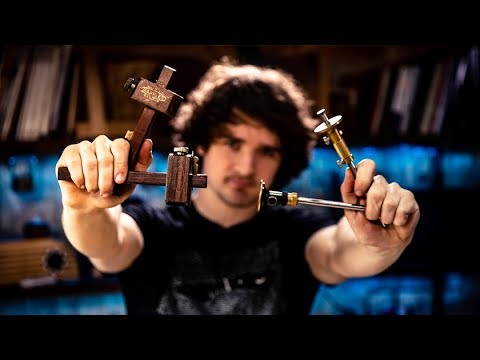
If you are a woodworker, you will probably be well aware of the technicalities involved in using the marking gauge. However, if you are a newbie or trying it for the first time, the following tips from Matt Estlea will be a huge timesaver.
What Are the Different Types of Marking Gauges Available in the Market?
This guide will cover three different marking gauges: traditional marking gauges, cutting gauges, and wheel marking gauges.
Traditional marking gauges
Traditional marking gauges use a pin to score the surface of your workpiece. They are simple, inexpensive, long-lasting, and simple to locate. For such a low expense, a single combination marking gauge covers such a wide range of joinery tasks that you have no reason not to have one.
A cutting gauge
A cutting gauge is a marking gauge that uses a knife instead of a pin. These provide cleaner cuts with practically no tear-out, but they are generally more costly and more difficult to operate. Cutting gauges for mortising is also obtainable.
A wheel marking gauge
A wheel marking gauge, which employs a metal rod and ring, is a modern design. They have a circular cutting edge that gives them a cutting gauge-like finish. Wheel marking gauges are more costly, but they cut exceptionally clear lines since the smooth metal slides across almost any surface with ease.
Do You Really Need a Marking Gauge?
You must have at least one marking gauge if you want to undertake any sort of carpentry using hand tools. Although power tool-focused builders may be able to get by without one, it is still a valuable asset to any toolbox. Furthermore, they are so affordable. Obviously, an extremely digital marking gauge may set you back more than $120, but for woodworking, a modest $10 one would suffice. We suggest keeping at least two (and as many as five) marking gauges at your workbench if you want to get more serious about working with hand tools. One standard marking gauge and one mortising gauge are the absolute minima.
Why? Because after you have set a marking gauge to accomplish a certain task for your piece, you’ll want to maintain it there until you are done. Consistently re-measuring and adjusting your gauge reduces the tool’s usability and raises the chances of making a mistake. Old marking gauges might also function well with a little adjustment if you don’t want to buy a new one. Although they have been much more of a collector’s item in recent times, so depending on the area, they could be impossible to obtain.
What Is the Common Material Used in Marking Gauges?
Marking gauges are often constructed of wood. There still are, although, marking gauges constructed from various materials. The following wood or material is commonly used for the foundation of marking gauges:
Maple and beech marking gauges
Beech and maple, both hardwoods, are the most commonly utilized woods because they are robust and can endure many wear and strain. Because of these characteristics, these woods are frequently utilized in tool manufacturing. The hue of beech wood is lighter than maple, but the components are otherwise quite comparable. Since maple is a North American hardwood, it is not as easily available in the UK as beech; hence maple gauges may be significantly more expensive to mark out.
Plastic marking gauges
There are marking gauges with a plastic body also. The major benefit of this tool is that it is less expensive than wooden models, which is beneficial if you need it for one project or occasional use. On the other hand, the plastic version is not as sturdy as wood and lacks the weight that aids in guiding the tool across the workpiece.
Rosewood marking gauges
Rosewood gauges are also used, which have a dark color scheme ranging from deep reds, browns to purples. Rosewood is an extremely uncommon wood, making it the most costly of the three, often nearly treble the price, yet many people believe it has the greatest appearance and polish. Rosewood not only has a beautiful appearance, but it also has a great resistance to rot and water damage that other woods lack. If you are a woodworker, the rosewood gauges are more of a luxury item to buy.
Aluminum
The frame of a wheel gauge is entirely made of metal. Aluminum is used for the body because it is lightweight, robust, and corrosion-resistant. The tool should not be too cumbersome so that the person can simply navigate it across the worktop.
Brass
Brass is used for the thumbscrew as well as the fence on most wooden marking out gauges. Brass is a sturdy yet inexpensive metal that contrasts nicely with the color of the wood. On the fence, brass panels are carried out to reduce the work surface and tools from marking and scratching one other.
Hardened steel
All marking out gauges include hardened steel pins and blades, which have been heated processed to make it harder and more wear-resistant. Steel is toughened by heating the desired area to a temperature of between 600 and 800 degrees Celsius. It is then quickly cooled by immersing it in cold water. The blade and pin of a marking out gauge must be powerful enough to carve a line through the wooden or occasionally metal work surface. Since the line thickens and becomes less precise as the tip of the blade or pin grows dull, the steel must be hard-wearing.
PEOPLE ALSO ASKED
Is it possible to use the same gauges for metalworking as well?
You will need special metalworking marking gauge if you want to use a marking gauge on metal. Standard woodworking pins and cutters may scratch soft metals such as aluminum, but they will struggle to scratch typical steel.
How many components are there in a marking gauge?
The basic marking gauge comprises four parts: an 8 to 12 inches long beam, a fence, a fence-locking device, and a marking pen. To establish the appropriate marking distance to the pin, the fence moves along the beam.
What set marking gauges apart from mortise gauges?
The fence on a marking gauge can be adjusted and secured along a beam. A single pin is used to scribe one line. A mortise gauge, on the other hand, contains two pins that allow it to scribe both sides of a mortise at the same time.


