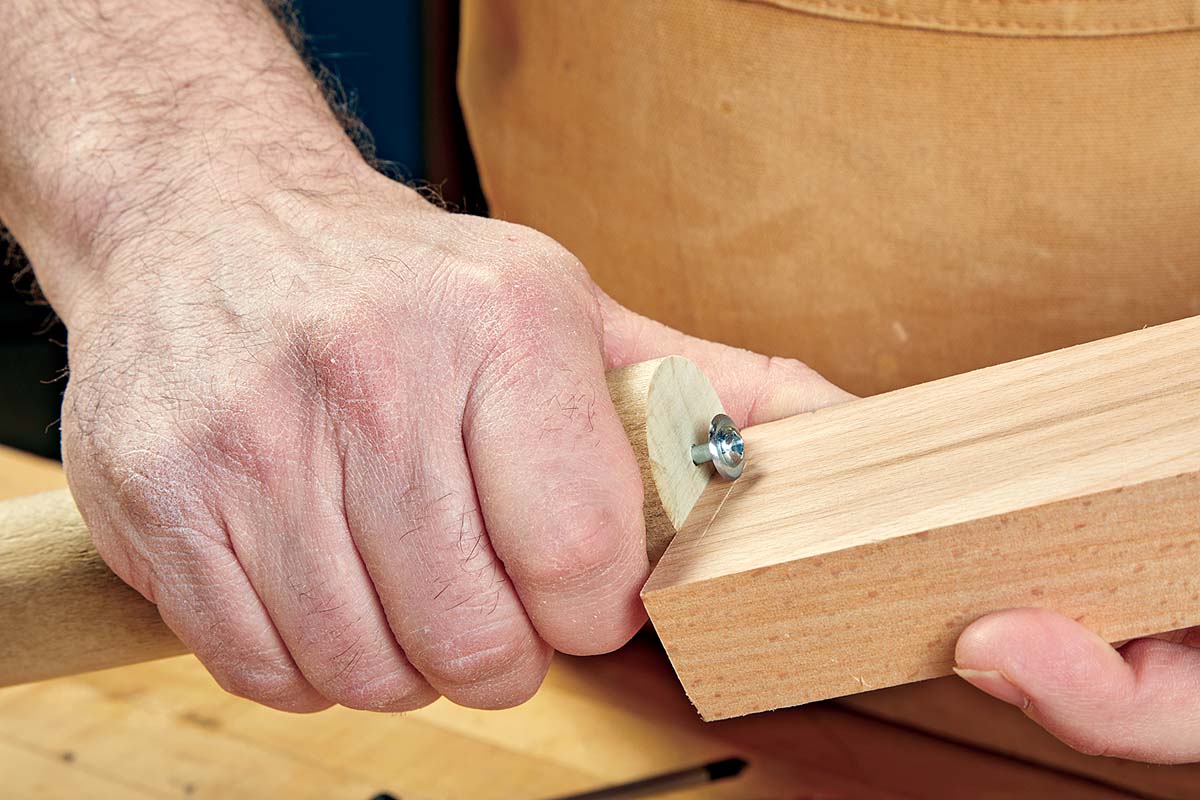



JessEm Pocket Mill Pro: An Easier Way to Make Loose Tenon Joints
I don't think I've ever completely outgrown my fascination with new toys. Somewhere along the way, toy cars and LEGOs gave way to power tools, hand planes, chisels, and all kinds of woodworking accessories. But the excitement of discovering a clever new tool hasn't changed.
That's exactly how I felt when Phil brought in the JessEm Pocket Mill Pro.
He let me borrow it for a while, and I have to admit, a little of that boyhood tool envy kicked in. The Pocket Mill Pro has an inventive design, it's surprisingly fun to use, and it makes several common woodworking operations more efficient.
What makes it especially interesting is that it cuts accurate mortises for loose tenon joinery using nothing more than a hand drill.
What Is the JessEm Pocket Mill Pro?
The Pocket Mill Pro is a mortising jig designed for loose tenon joinery.
Instead of cutting a traditional tenon on the end of one workpiece, you cut matching mortises in both mating pieces and connect them with a separate, or loose, tenon.
It's a technique many woodworkers associate with the Festool Domino joiner. But the Pocket Mill Pro approaches the process differently.
Rather than using a dedicated power tool, it guides a cutting bit driven by an ordinary hand drill.
The clever part is how the tool controls the cutting motion. A ratcheting carriage moves the bit across the mortise while gradually increasing the cutting depth.
The result is a controlled series of light cuts that produces a clean mortise without requiring a router or dedicated mortising machine.
Setting Up the Pocket Mill Pro
One of the first things I noticed was how straightforward the setup is.
The base of the mill has an adjustable locating guide that slides and locks to accommodate workpieces of different thicknesses.
Engraved reference marks identify the center and ends of the mortise, making it easy to align the tool with your layout lines.
Once the base is positioned and locked, the cutting carriage slides into place above it.

The Optional Pocket Mill Workstation
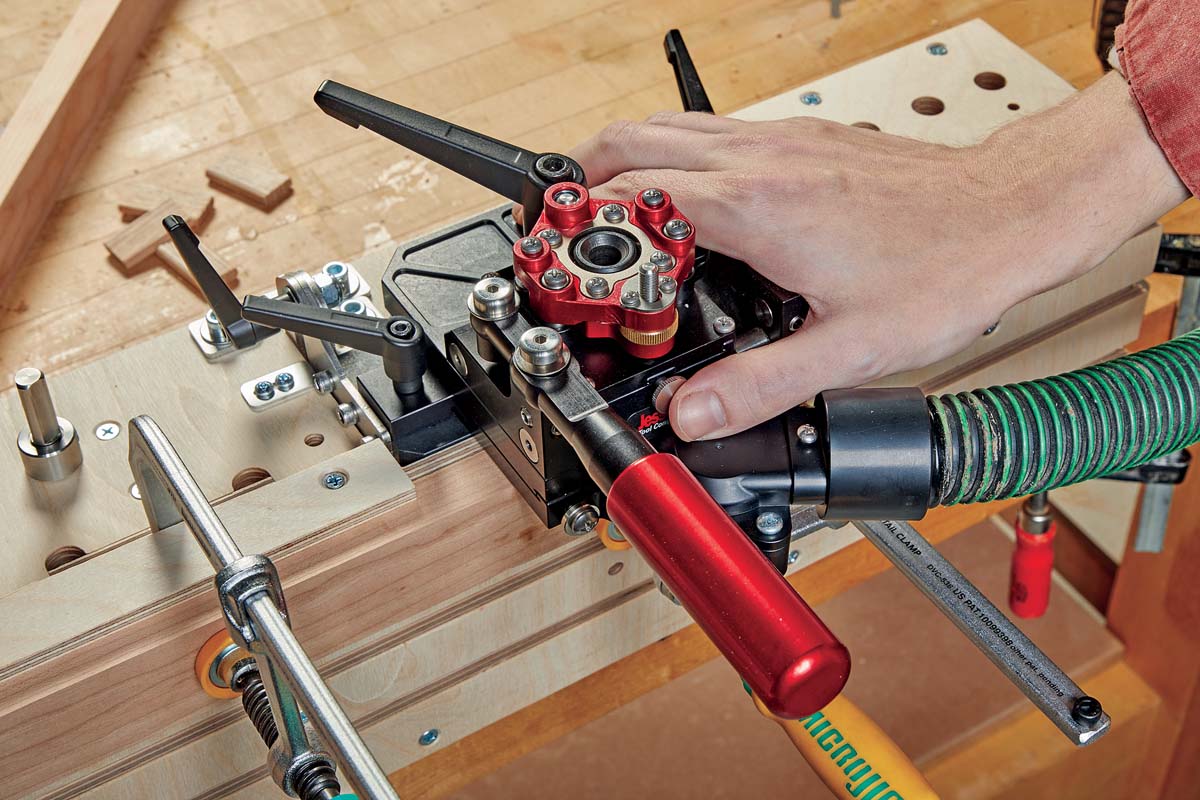
The mill can also be used with JessEm's plywood workstation, which is designed to work with Microjig dovetail track clamps.
The clamps secure the workpiece while the mill's base positions the cutter.
When I first saw the workstation, I was tempted to build my own. After looking more closely at its construction, though, I realized there was more to it than I initially thought.
Between the cost of Baltic birch plywood and the time involved in making one, the ready-made workstation started to look pretty reasonable.
And once everything is in place, using the mill with the workstation is intuitive.
The Clever Ratcheting Carriage
If there's one feature that makes the Pocket Mill Pro stand out, it's the ratcheting carriage.
When Phil first demonstrated it, there was a collective reaction of, "Oh, right. That makes sense."
It's one of those mechanisms that seems obvious once you see it in action.
The process starts by inserting the cutting bit into the drill guide. With the drill running, you move the carriage across the mortise using the lever.
As the carriage travels back and forth, the mechanism gradually lowers the drill guide, allowing the bit to remove a little more material with each pass.


Because the bit takes relatively light cuts, there's no need to force it through the wood.
The mechanism handles the cutting progression while you guide the drill and operate the lever.
It's a simple idea, but it's executed remarkably well.
Cutting Mortises with a Hand Drill
As someone who started in construction before moving into fine woodworking, I appreciate the idea of making accurate mortise-and-tenon joints with a tool as familiar as a hand drill.
At first, the concept seems a little unusual. But after using the Pocket Mill Pro, I found it to be an efficient way to cut mortises.
Special Cutting Bits
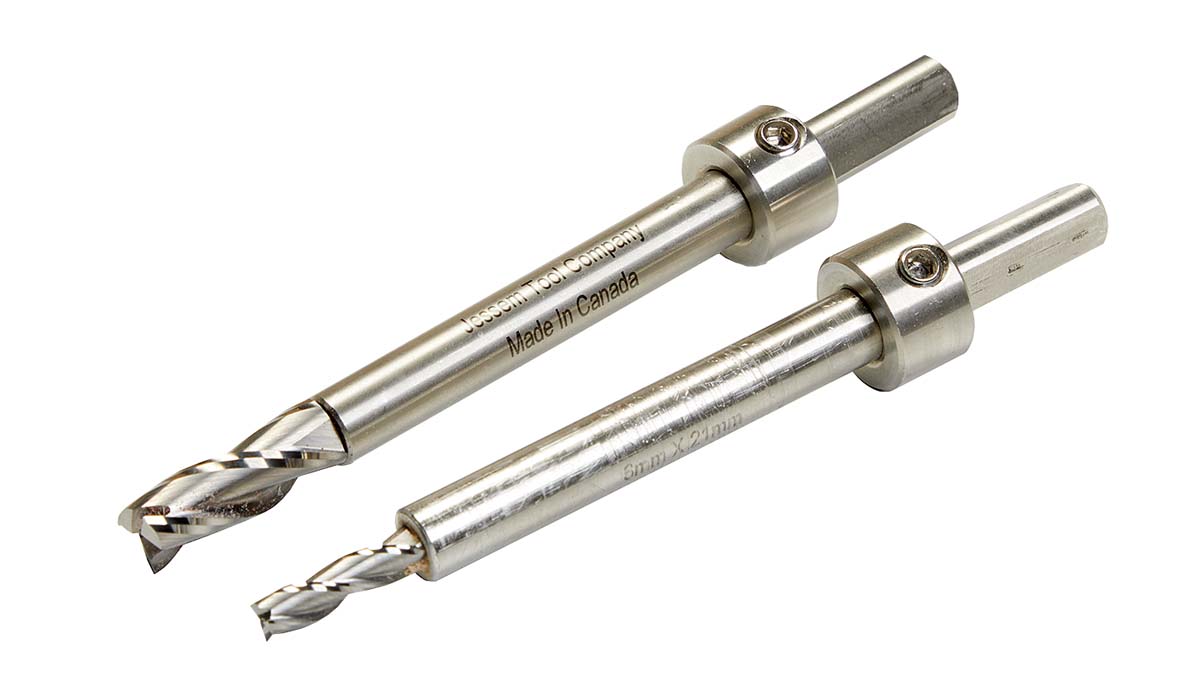
The Pocket Mill Pro comes with a 6mm end mill bit.
At a glance, it looks a little like an ordinary twist drill bit with a long stop collar. But the cutting edges are shaped more like those on a straight router bit.
That allows the bit to cut both downward and sideways as the carriage moves across the mortise.
The adjustable stop collar controls the cutting depth and can be repositioned using an Allen wrench.
A larger 10mm bit is also available for wider mortises.
Making the Cut
Once the mill is positioned and secured, insert the bit through the drill guide.
Start the drill and move the carriage lever back and forth.
As the carriage travels, the ratcheting mechanism gradually lowers the bit into the workpiece.
You don't need to apply much pressure. In fact, about the same amount of pressure you'd use to drive a screw into a pilot hole is sufficient.
Continue working the lever until the bit reaches the preset depth.

After completing the mortise, press the release button to return the drill guide to its starting position.
The action reminds me a little of the carriage return on an old typewriter.

Making Loose Tenon Joints in Different Workpieces
Another advantage of the Pocket Mill Pro is its flexibility.
With the workstation and dovetail track clamps, you can position the mill in different orientations to suit the workpiece.
For example, you can arrange the mill horizontally to cut mortises in the ends of longer boards.
This is particularly useful for making frame assemblies, where matching mortises need to be cut in the ends and edges of several parts.

Why Loose Tenon Joinery Works So Well
Loose tenons offer several advantages over traditional mortise-and-tenon joinery, especially when you're making multiple identical joints.
Instead of cutting a mortise in one part and shaping a matching tenon on another, you cut matching mortises in both pieces.
Then you connect them with a separate tenon.
That simplifies the layout and eliminates much of the fitting required with traditional tenons.
For frame construction, the process can be especially efficient. Once the mortise locations are established, you can cut a series of matching joints quickly and consistently.

Using Festool Domino Tenons
One feature I particularly like is that the Pocket Mill Pro can use compatible Festool Domino loose tenons.
You can certainly make your own loose tenon stock. One approach is to shape hardwood strips with a roundover bit to match the ends of the mortises.
But there's something to be said for the convenience of reaching for a bag of ready-made tenons.
It's one less operation to worry about when you're assembling a project.
A Shop-Made Stop Block Makes the Pocket Mill Pro Even Better
After spending some time with the mill, I found one improvement that makes it even more useful.
Along with the Pocket Mill Pro, Phil had included a simple shop-made stop block.
It's made from plywood and uses dovetail hardware like the fittings featured in Woodsmith Issue 268.
The hardware fits the workstation's dovetail tracks, allowing the stop to be positioned and secured wherever it's needed.
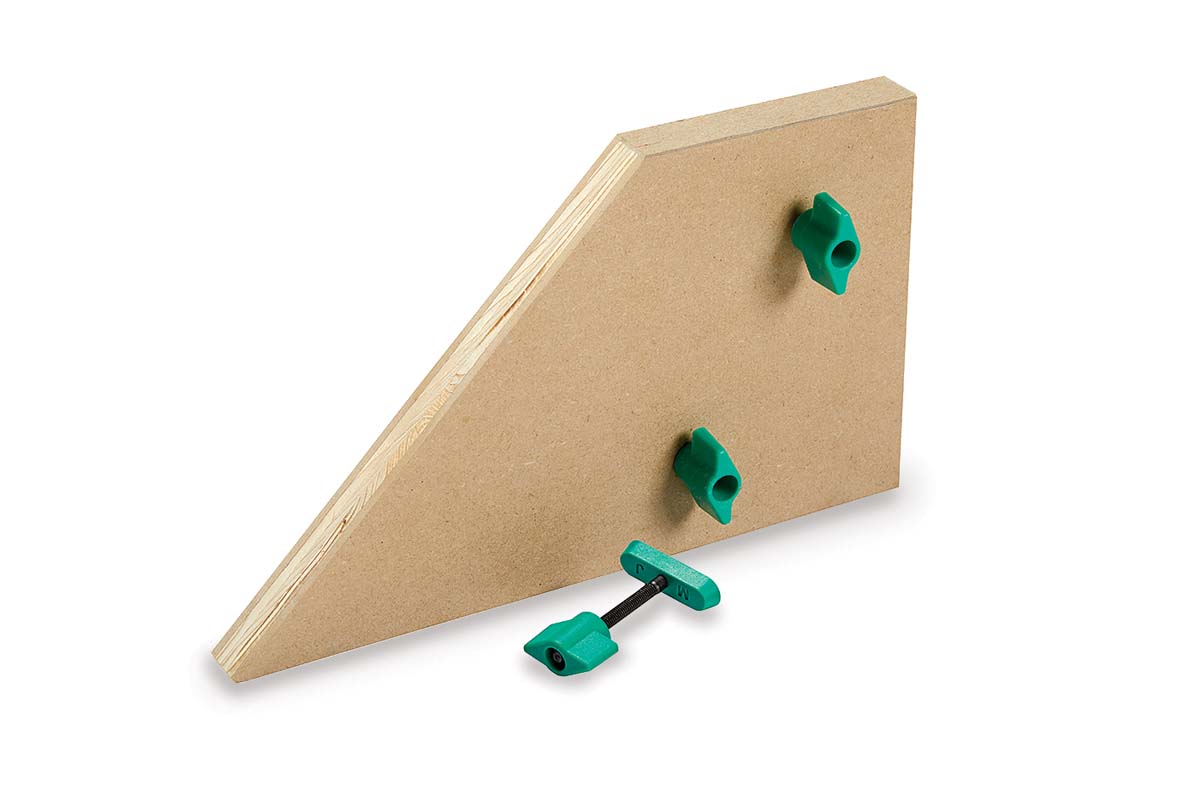
The biggest benefit is repeatability.
When you're cutting mortises in several matching parts, the stop allows you to position each workpiece consistently without laying out and adjusting every cut from scratch.
Phil also beveled one edge of the stop to 45°, making it useful for supporting mitered workpieces when cutting mortises for loose tenons in mitered corners.

It's a simple addition, but it makes a noticeable difference when you're working through a batch of parts.
Is the JessEm Pocket Mill Pro Worth Considering?
After spending some time with the Pocket Mill Pro, I came away impressed.
The ratcheting mechanism is clever, the setup is straightforward, and the ability to cut accurate mortises with a hand drill makes the tool particularly appealing.
I also like that it works with loose tenons and can be adapted to different workpiece orientations.
The optional workstation adds versatility, while a simple shop-made stop block makes repetitive work easier.
For woodworkers who want to explore loose tenon joinery without relying on a dedicated mortising machine, the Pocket Mill Pro is an interesting option.
And as far as new woodworking toys go, this is one I wouldn't mind keeping around the shop a little longer.