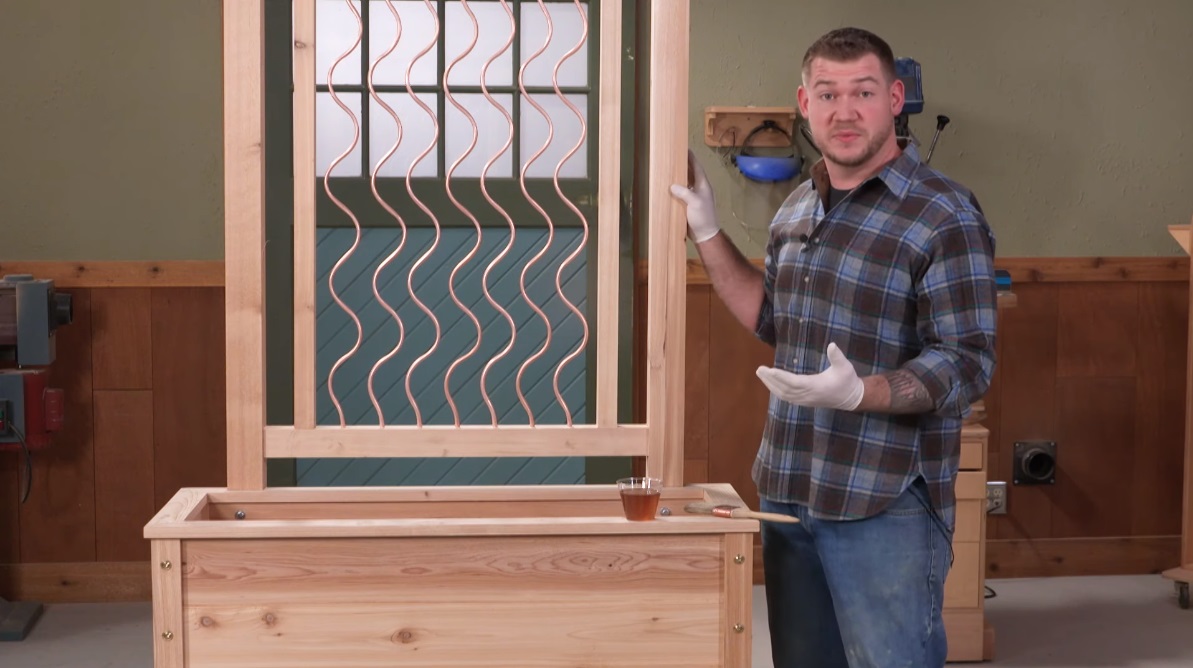


Almost every woodworking project starts with measuring and layout. Before you make a cut at the table saw, drill a hole, or start shaping a part, you need accurate lines to tell you exactly where the work should happen.
Fortunately, you don't need a drawer full of specialized measuring and marking tools to get started. With a carefully chosen collection of basic woodworking layout tools, you can handle everything from measuring project parts and marking square cuts to laying out precise joinery, angles, circles, and curves.
These are the seven layout tools I wouldn't want to be without.

1. Combination Square: The Everyday Layout Tool

If you're putting together your first set of woodworking layout tools, a high-quality 12" combination square should be near the top of the list. It's one of the most versatile measuring and marking tools you can own, and it's something you'll likely use on nearly every project.
The obvious jobs are marking accurate 90° and 45° lines, but that's only the beginning. The sliding blade can also be used for measuring, checking the depth of a mortise or dado, working as a short straightedge, or setting a consistent distance from the edge of a workpiece.
This is one tool where quality matters. A square that isn't actually square can introduce errors into every step that follows, so buy the best combination square your budget allows. Take care of it and a good one can last a lifetime.
2. Tape Measure: Fast Measurements for Larger Parts
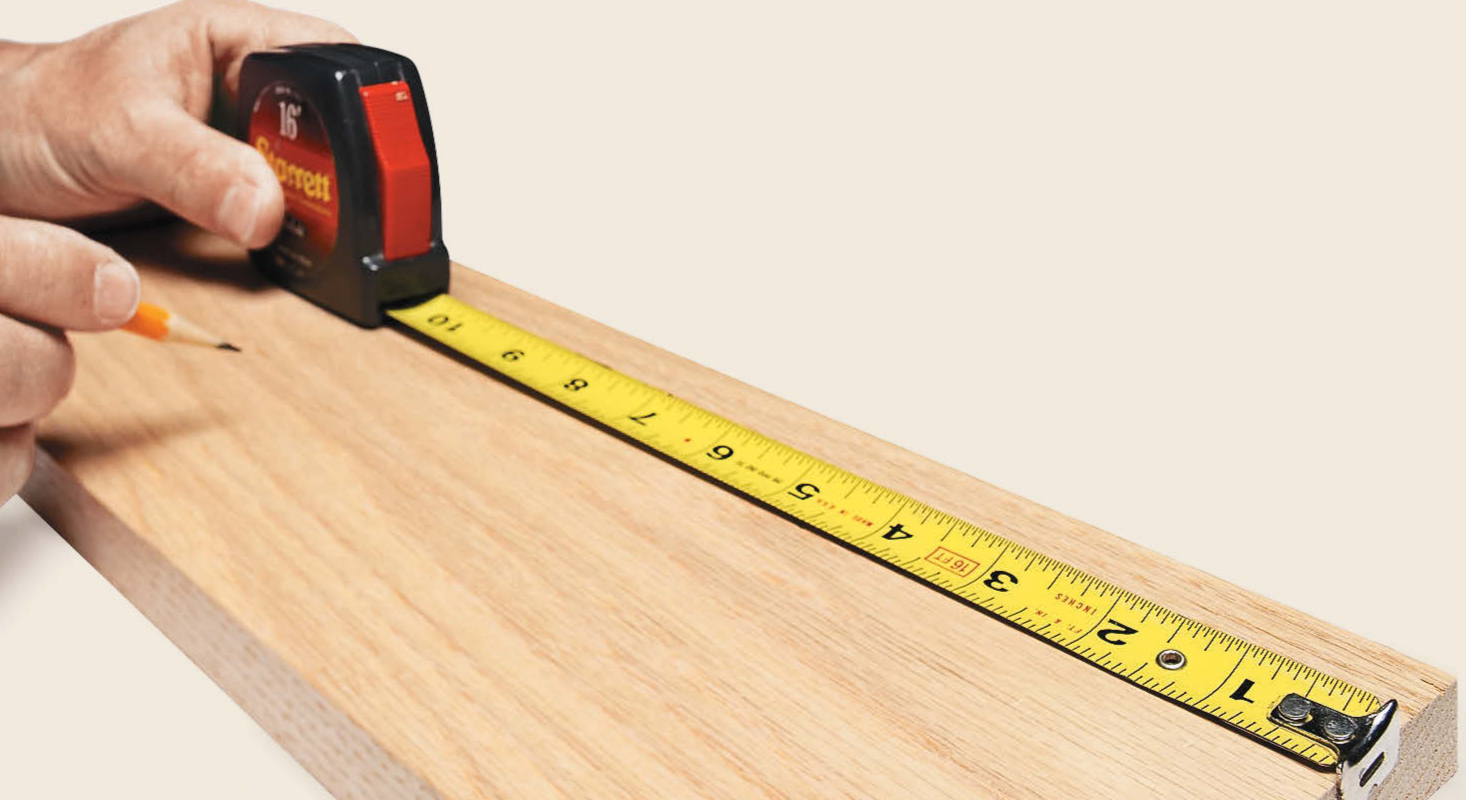
For quickly measuring larger project parts, it's hard to beat a steel tape measure. A 12' or 16' tape is plenty for most furniture and woodworking projects without becoming unnecessarily bulky.
Look for a tape with a 3/4"- or 1"-wide blade and fine, easy-to-read markings. The sliding hook at the end allows the tape to compensate for both inside and outside measurements, so it's important to keep that hook in good condition.
A tape measure is great for general sizing and rough layout, but I don't rely on it for every measurement. When I'm laying out small joinery where tiny differences matter, I'll usually switch to a more precise tool.
3. Steel Ruler: Precise Layout for Joinery

A 6" steel ruler with finely etched graduations is one of those small tools that's easy to overlook until you start carrying one. Its compact size and thin blade make it particularly useful when you're working on smaller parts or laying out joinery.
I use mine for dovetails, mortises, tenons, and other situations where I want an accurate measurement without the bulk of a tape measure or larger rule. Because the blade is thin, you can use it lying flat against the workpiece or turn it on edge to bring the graduations closer to the surface for an easier, more accurate reading.
It's small enough to keep in an apron pocket, which means it's usually within reach when you need it.
CHECK OUT THE WOODSMITH 6" STEEL RULE 3-PACK
4. Straightedge: Layout for Large Panels

Woodworking projects come in all sizes, and eventually you'll need to draw a straight line that's longer than your combination square. That's where a 36" or 48" straightedge earns its keep.
Its primary job is simple: Connect two measured points with a straight layout line. This is particularly useful when laying out plywood panels, tabletops, cabinet parts, and other large workpieces.
You don't necessarily need an expensive machinist-grade straightedge for this job. What matters is that the tool is straight, rigid, and long enough for the work you typically do.
5. Marking Knife: For Joinery That Needs Greater Precision

A sharp pencil is fine for a lot of woodworking layout. When I'm laying out joinery that needs to fit precisely, however, I often reach for a marking knife.
Unlike a pencil, which leaves a line with some width, a marking knife incises a thin, definite line into the wood. That leaves little question about exactly where the cut needs to be.
A marking knife is particularly useful when transferring dovetail pins from the tails or marking the shoulders of tenons and the cheeks of mortises. The shallow groove left behind can also provide a physical reference for a saw or help position a chisel when you're cleaning up and fine-tuning a joint.
This is one of the simplest ways to make the transition from general woodworking layout to more precise joinery layout.
RELATED WOODWORKING PLANS: MAKE YOUR OWN MARKING KNIFE
6. Compass: Accurate Circles & Curves

Not every woodworking project consists entirely of straight lines. Arcs, circles, and curved profiles can add a lot of visual interest to a project, and a compass gives you a quick and accurate way to lay them out.
I like the inexpensive spring-style compass shown here. The spring-loaded arms and screw adjustment make it easy to dial in a precise radius and hold that setting while drawing the curve. This particular style handles radii up to about 4-1/2", which covers a surprising number of everyday layout tasks.
If you regularly build projects with larger arcs or circles, consider adding a beam compass to your layout kit as well.
7. Bevel Gauge: Set & Transfer Angles

Whenever a project calls for an angle other than 90° or 45°, a sliding bevel gauge is one of the easiest ways to lay it out.
The blade pivots to virtually any angle and locks securely in position. Rather than measuring an angle numerically every time, you can set the bevel gauge directly from a project part, drawing, or another reference and then transfer that exact angle wherever it's needed.
I use a bevel gauge when laying out dovetails and other angled joinery, as well as when transferring an existing angle from one part to another. It's a simple tool, but it's much easier and often more reliable than trying to reproduce an angle from a numerical measurement.
Which Woodworking Layout Tools Should You Buy First?
If you're just getting started, you don't necessarily need to purchase all seven tools at once. A combination square, tape measure, and 6" steel ruler will cover a large percentage of everyday measuring and layout. From there, I'd add tools according to the kind of woodworking you're doing.
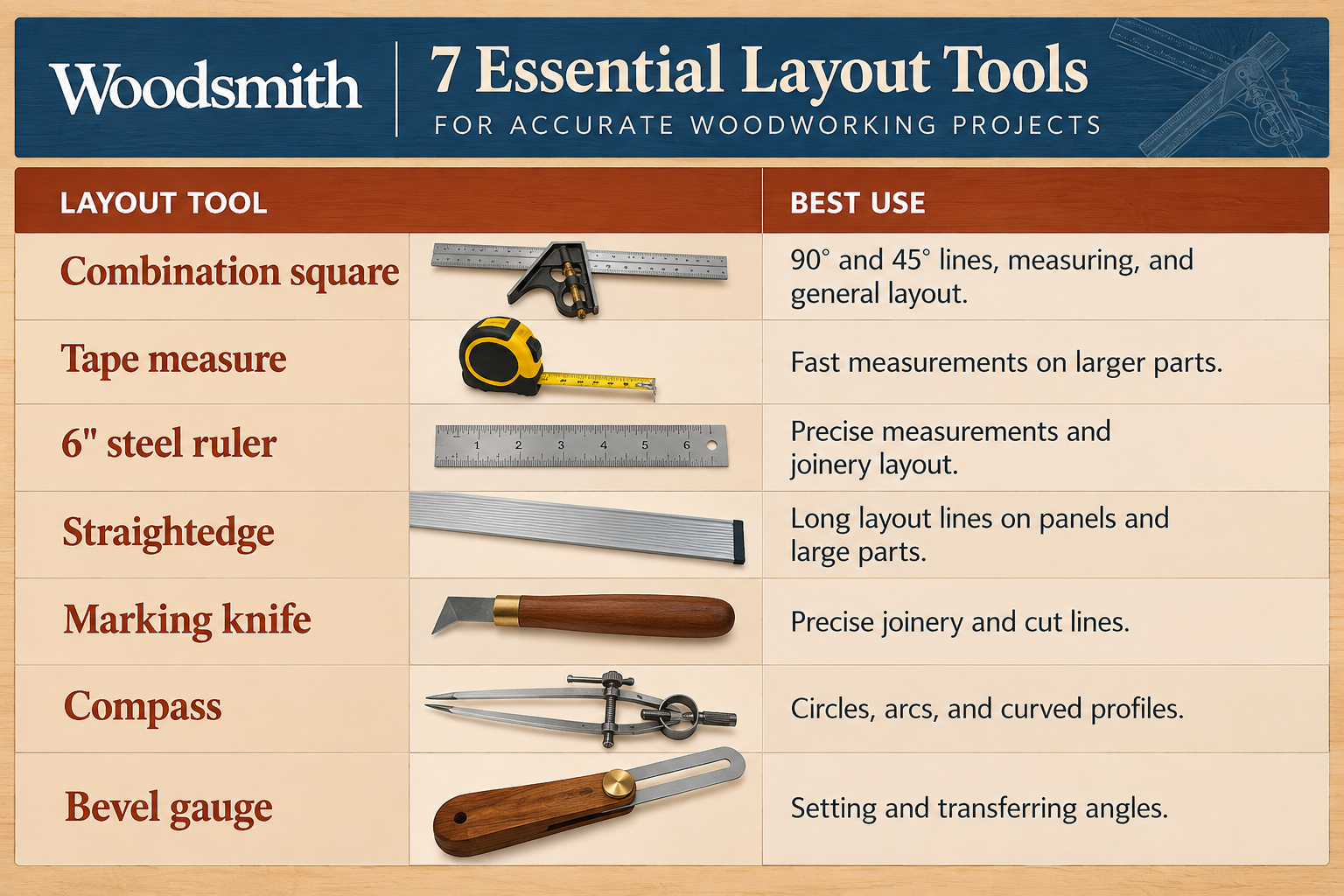
If you start cutting more joinery by hand, a marking knife quickly becomes more important. If you build cabinets or work with sheet goods, you'll appreciate having a long straightedge. And if your projects incorporate curves or angled parts, a compass and bevel gauge fill those gaps without requiring expensive specialty tools.
Accurate Woodworking Starts With Accurate Layout
Power tools get a lot of attention in a woodworking shop, but even the best table saw or drill press can only follow the layout you give it. Taking a little extra time to measure carefully and establish clear, accurate reference lines makes everything that follows easier.
You don't need dozens of specialized measuring tools to do that. A combination square, tape measure, steel ruler, straightedge, marking knife, compass, and bevel gauge make a compact layout kit capable of handling most everyday woodworking projects.
And unlike a lot of tools in the shop, they don't become obsolete. Buy good ones, learn how to use them accurately, and you'll likely be reaching for the same tools many projects — and many years — from now.
Build Out Your Essential Hand-Tool Kit
Good layout tools are only the beginning. If you’re new to woodworking — or you’ve mostly relied on power tools and want to add more hand-tool skills to your shop — we’ve put together a practical guide to the essential hand tools worth starting with.
Learn which chisels, hand planes, saws, and marking tools are the most useful, what each one does, and which tools you can wait to add until later.
RELATED ARTICLE: Essential Hand Tools for Woodworking — A Beginner’s Guide