

Router Table Sled for Perfect Cabinet Door Joinery
A router table is one of the most versatile tools for cutting accurate woodworking joints, especially when making frame-and-panel cabinet doors. But routing across the end grain of a narrow door rail can be challenging. Keeping the workpiece square to the bit while preventing tearout requires good support and control.
This shop-built router table sled solves both problems. With a sturdy base, reinforced fence, adjustable hold-down, and replaceable backing strip, it makes cutting clean, consistent cabinet door joints easier and more reliable.
In this Woodsmith Shop video, Bryan Nelson demonstrates the sled's key features, explains how to set it up, and shows how it produces smooth, accurate cuts when routing cabinet door rails.
Why Use a Router Table Sled for Cabinet Door Joinery?
When making cope-and-stick cabinet doors, the ends of the rails need to be routed accurately so they fit tightly against the stiles. Unfortunately, cutting across the grain creates two common problems.
First, the router bit can tear out wood fibers as it exits the back edge of the workpiece. Second, narrow rails can be difficult to hold square and secure while moving them past the bit.
A router table sled provides a stable platform that supports the workpiece throughout the cut. Instead of trying to guide a narrow rail by hand, you secure it to the sled and move the entire assembly past the router bit.
The result is better control, cleaner cuts, and more consistent joinery.
Features That Make This Router Table Jig Work
The sled combines several practical features that work together to improve accuracy and reduce tearout.
Replaceable MDF Backing Strip Prevents Tearout
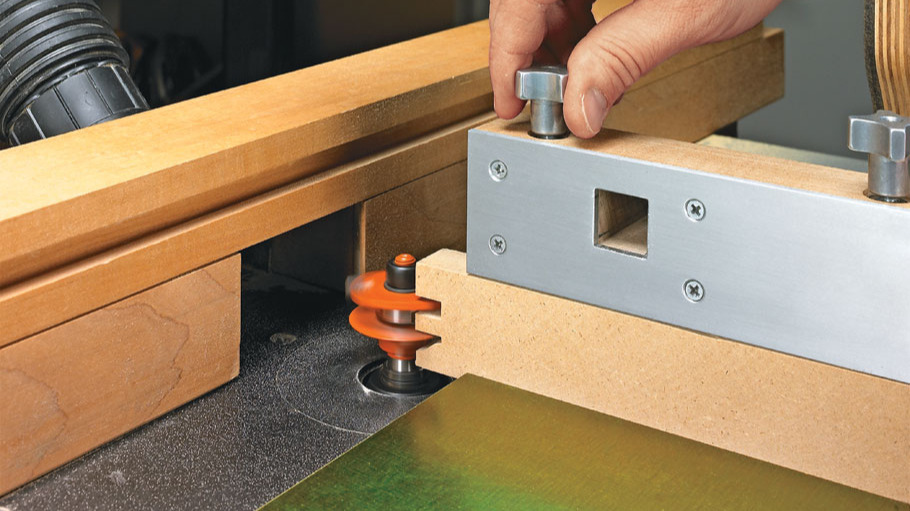
One of the most important features is the replaceable MDF backing strip positioned directly behind the workpiece.
As the router bit exits the cut, the backing strip supports the wood fibers along the back edge of the rail. This helps prevent the splintering and tearout that can occur when routing across the grain.
The backing strip can be replaced or repositioned whenever you change router bits, maintaining close support for different profiles.
Reinforced Fence and Adjustable Hold-Down
A hardwood fence reinforced with aluminum angle keeps the workpiece square to the router bit.
An adjustable hold-down locks the rail securely against the sled, even when working with narrow pieces. The hold-down slides in or out to accommodate different workpiece widths.
Together, these features help prevent shifting or twisting during the cut.
Smooth, Controlled Movement
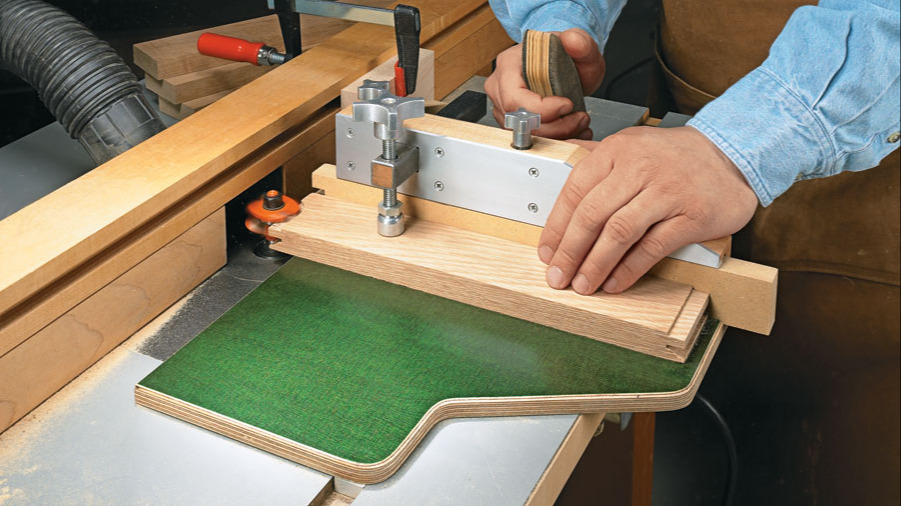
The plywood sled features a durable, low-friction top surface and an aluminum guide bar that rides in the router table's miter slot.
A handle at the rear allows you to guide the sled smoothly past the router bit while keeping your hands away from the cutter.
Setting Up the Sled for Clean, Repeatable Cuts
Setting up the sled starts with positioning the MDF backing strip against the router bit's bearing. This establishes a close-fitting support surface behind the workpiece.
Once the backing strip is secured, a stop block on the router table fence establishes a consistent position for the rails.
With the rail held firmly against the stop block and secured beneath the hold-down, the sled can be guided smoothly past the bit. Rotate the rail and repeat the process on the opposite end.
This setup makes it easy to rout multiple rails with matching profiles and consistent results.
The video above walks through the complete setup and demonstrates the cutting process.
Build Your Own Router Table Sled
A well-designed router table sled is a useful addition to any woodworking shop, particularly if you regularly build cabinet doors or other frame-and-panel projects.

This jig provides the support, control, and repeatability needed for clean end-grain routing while helping keep your hands safely away from the bit.
The complete Woodsmith woodworking plan includes step-by-step instructions and detailed drawings to help you build your own sled.
GET THE STEP-BY-STEP WOODWORKING PLANS → Build the Router Table Sled
Making Cabinet Doors with Rail and Stile Router Bits
A router table sled makes cutting accurate joints easier, but getting professional results starts with understanding your rail and stile router bits.
Learn how these matched cutters work together to create decorative profiles and tight-fitting cope-and-stick joints. We'll walk you through choosing the right bits, setting up your router table, preventing tearout, and assembling beautiful frame-and-panel cabinet doors.
LEARN RAIL & STILE ROUTER BIT TECHNIQUES → Master the Basics of Cabinet Door Joinery