


Basics of Building a Workbench: Choosing the Right Design
A good workbench can make almost every woodworking project easier. But before you start cutting lumber, there's an important question to answer: What kind of workbench is right for your shop?
For some woodworkers, the ideal bench is a traditional hardwood design with a thick top, heavy legs, and a full complement of vises. For others, a simple workbench built from construction lumber and sheet goods provides everything they need.
Both approaches can work well. The trick is deciding which features matter most for the way you build projects.
In the video below, the editors of Woodsmith Magazine take a look at two different workbench designs and explain the choices that go into creating a sturdy, practical workspace.
Start by Thinking About How You'll Use Your Workbench
Before choosing a workbench design, consider the kinds of woodworking you do most often.
If you spend a lot of time using hand planes, chisels, and handsaws, you'll appreciate a heavy bench that stays put and provides plenty of workholding options.
If your projects involve mostly power tools, assembly, and general shop tasks, a simpler bench with a large, flat worksurface may be a better fit.
Also consider the available space in your workshop. A large bench can be an asset, but not if it makes it difficult to move lumber or work around your other tools.
The best workbench isn't necessarily the biggest or most elaborate one. It's the bench that fits your woodworking.
Traditional Workbench or Weekend Build?
One of the biggest decisions is how much time and effort you want to invest in the bench itself.
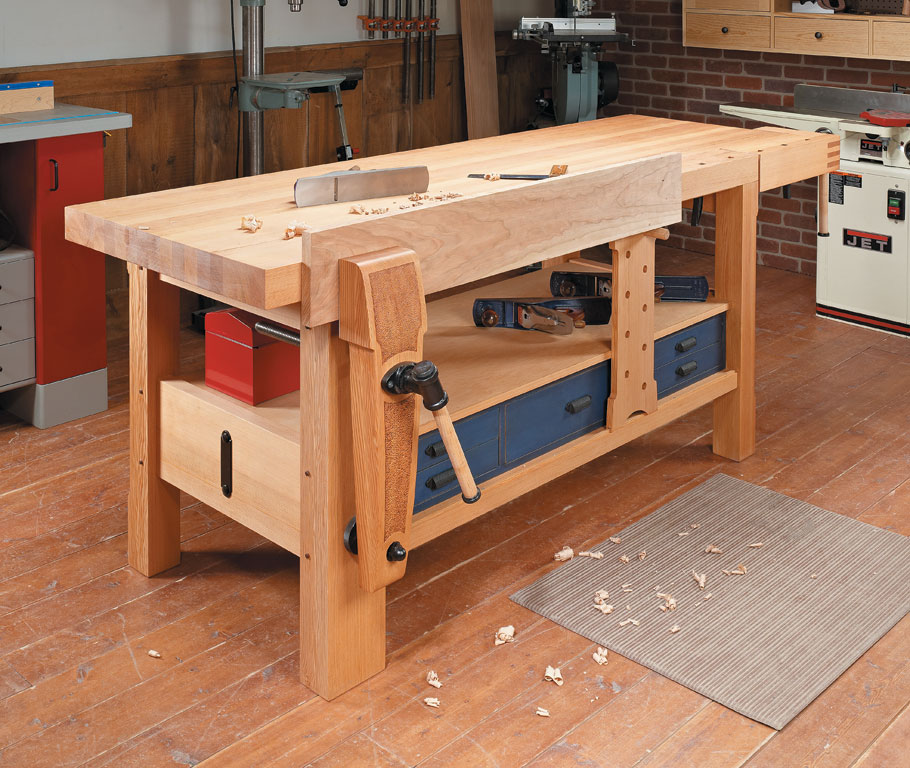
Traditional Hardwood Workbenches
A traditional workbench is often a woodworking project in its own right.
Heavy legs, substantial rails, and a thick hardwood top create a solid platform for hand-tool work and furniture construction.
Traditional joinery, such as mortise-and-tenon joints, helps create a rigid base that can stand up to years of use.
Building this type of bench takes more time and material, but the result can become a permanent fixture in your workshop.
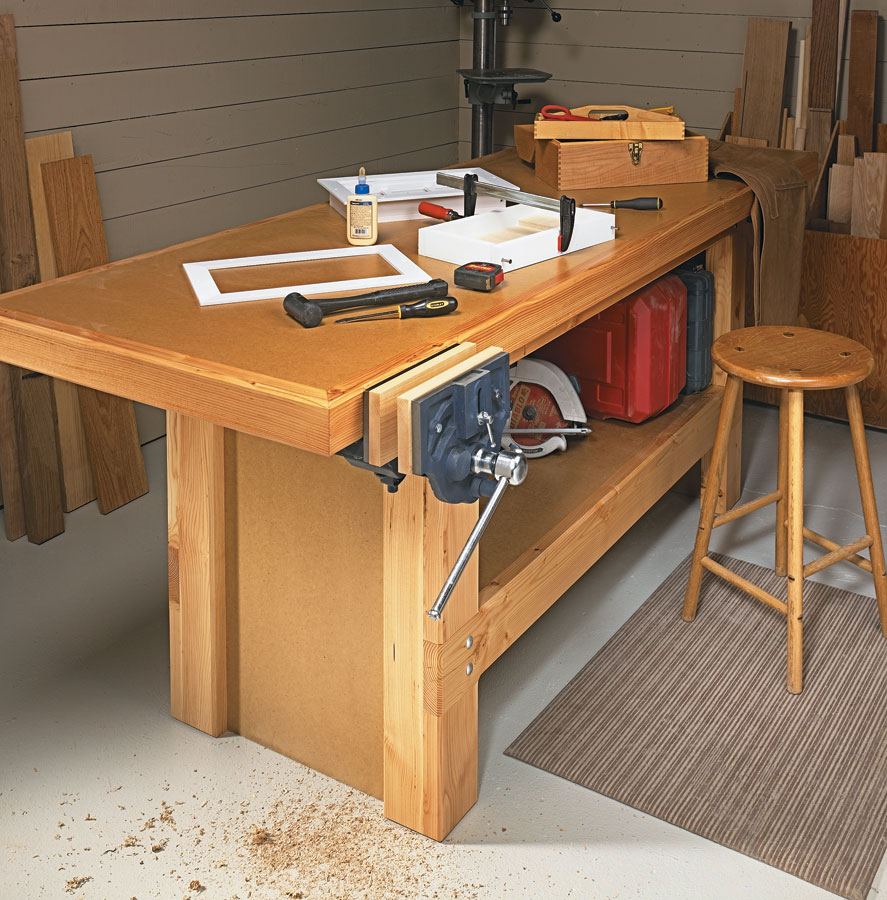
Simple Weekend Workbenches
You don't have to build an heirloom bench to get a useful worksurface.
A straightforward design using construction lumber, plywood, or MDF can provide excellent stability without complicated joinery.
Bolted connections and layered sheet goods simplify construction while keeping costs manageable.
This approach is especially appealing if you're setting up your first workshop or need a dependable bench without committing to a lengthy build.
Choose Workbench Materials That Fit Your Budget
Workbench materials affect the cost, weight, durability, and construction process.
A laminated hardwood top offers plenty of mass and can be resurfaced as it wears. It's a good choice for a bench that will see years of demanding use.
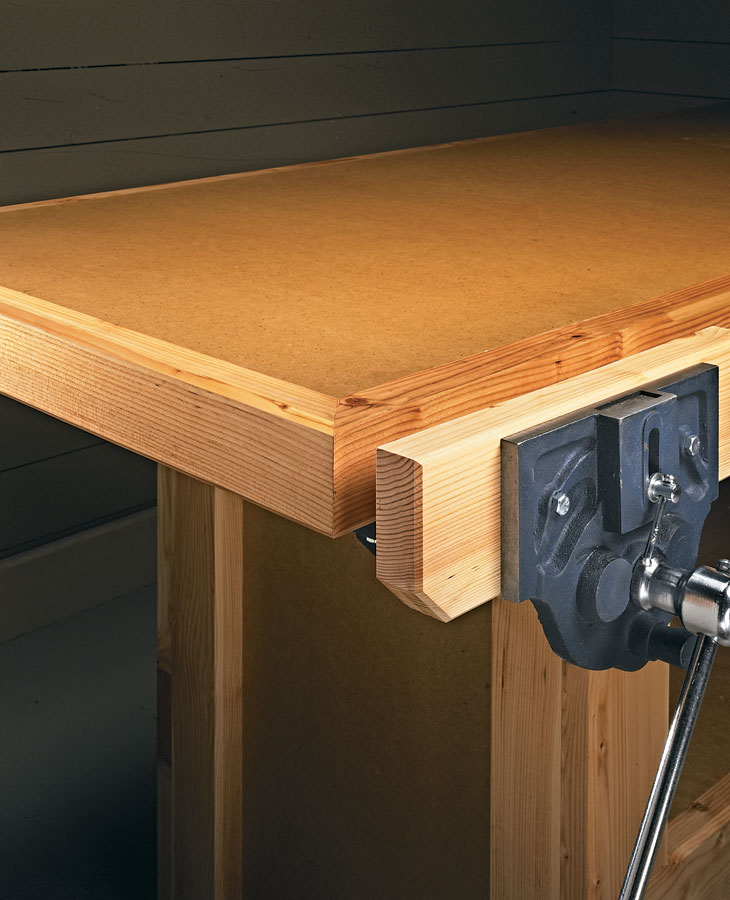
MDF is another practical option. Laminated layers create a thick, flat top that's well suited to assembly and general shop work.
For the base, both hardwood and construction lumber can provide the strength you need when the design includes adequate bracing and solid connections.
The important thing is to choose materials that make sense for your budget and the work you expect the bench to handle.
Plan Your Workholding Before You Build
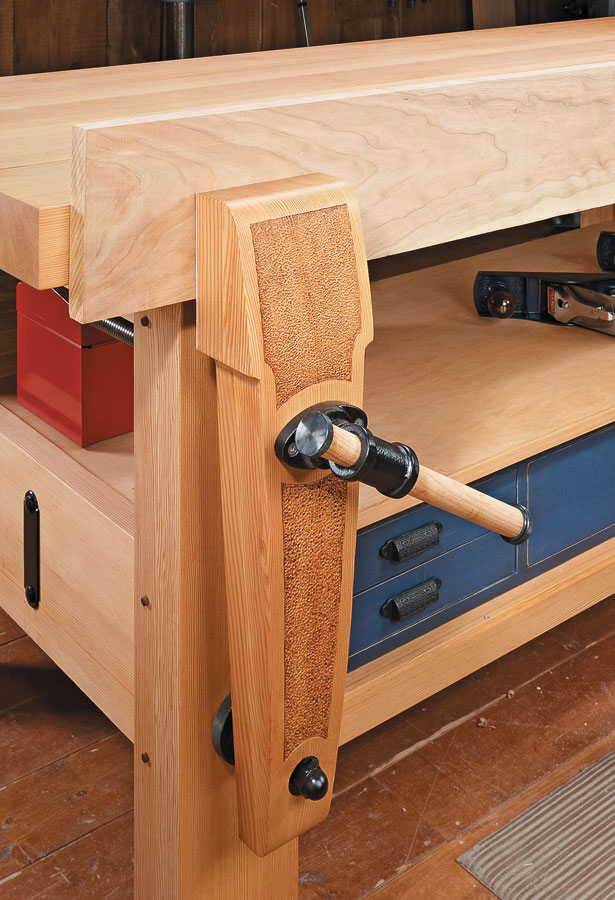
It's easy to focus on the size and appearance of a workbench while overlooking one of its most important features: how it holds your workpieces.
A bench vise makes it easier to secure boards for planing, sawing, and joinery.
Bench dogs expand your options by allowing you to hold longer workpieces flat against the top.
Before choosing a design, think about where you want the vise and how you'll use it. The location can affect how you work around the bench, and some vise installations require additional support built into the top or base.
Planning these details early is much easier than modifying the bench later.
Don't Overlook Workbench Storage
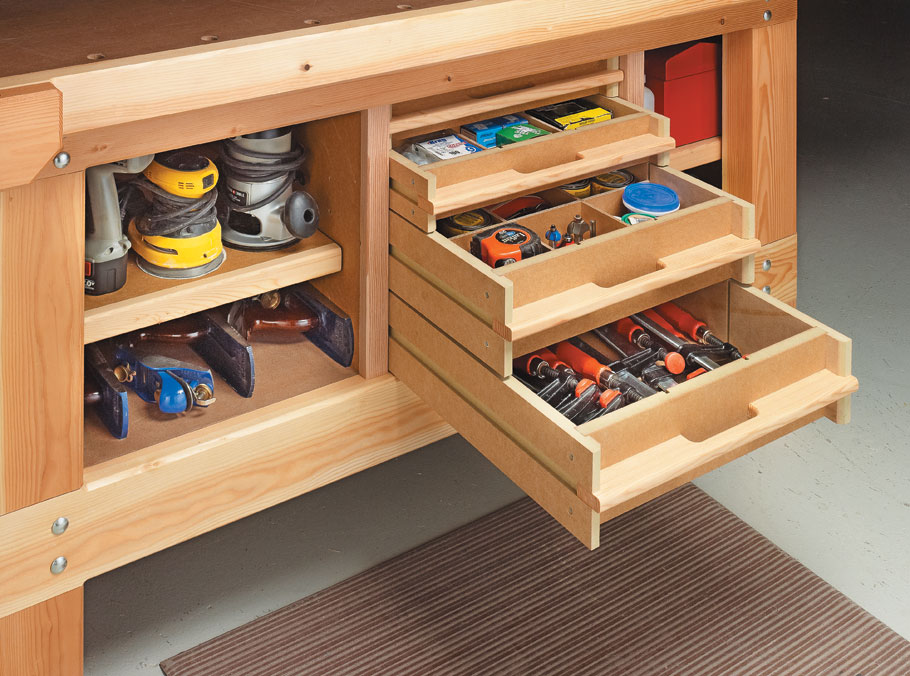
A workbench can also help keep your shop organized.
The area beneath the top is a natural place for a shelf, drawers, or a small storage cabinet.
An open shelf provides convenient storage for larger tools and accessories, while drawers keep smaller items organized and close at hand.
You don't need to add every storage feature immediately. A simple bench can be built first and upgraded later as your needs change.
Just make sure your storage arrangement doesn't interfere with the bench's workholding features or the way you use the space around it.
Build the Workbench That's Right for You
Whether you choose a traditional hardwood bench or a simple weekend design, the goal is the same: a sturdy, flat, dependable workspace that makes woodworking easier.
Think about the projects you build, the tools you use, and the space available in your shop. Then choose the materials, workholding features, and storage options that support those needs.
Watch the video above to see how the Woodsmith editors approach two different workbench designs and demonstrate the construction choices that make each one practical.
A little planning before you build can make a big difference in how well your workbench serves you for years to come.
Woodworking Workbench Plans
Every great woodworking shop needs a dependable workbench. Whether you're looking for a traditional, heirloom-quality bench or a simple DIY workbench you can build in a weekend, Woodsmith Plans has a design to fit your space, skills, and budget.
With detailed drawings and step-by-step instructions, you'll have everything you need to build a workbench that works as hard as you do.
EXPLORE WORKBENCH PLANS → Build the Perfect Workbench for Your Shop
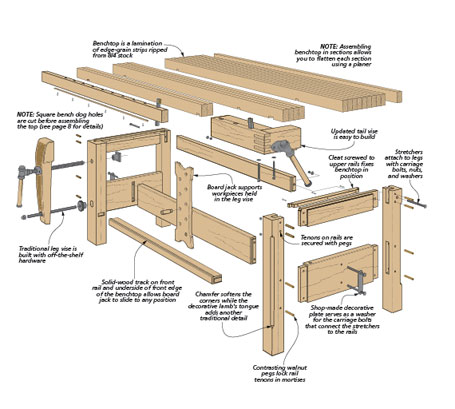
Explore our collection of woodworking workbench plans, featuring sturdy construction, practical workholding options, and clever storage solutions to help you make the most of your workshop.


