


Wax usually gets lumped in with furniture finishes and polishes. But keep a few different types of wax in your shop and you'll quickly discover that it's a surprisingly useful woodworking tool.
Wax can make screws easier to drive, help a hand plane glide across a board, protect cast-iron surfaces from rust, reduce friction on shop-made jigs, and even provide an easy-to-renew finish for your workbench.
The key is choosing the right wax for the job.
Three useful types to keep around are paraffin wax, paste wax, and beeswax. There's some overlap in what they can do, but each has characteristics that make it better suited to particular shop tasks.
Which Wax Should You Use in the Workshop?
Here's a quick way to think about the three.
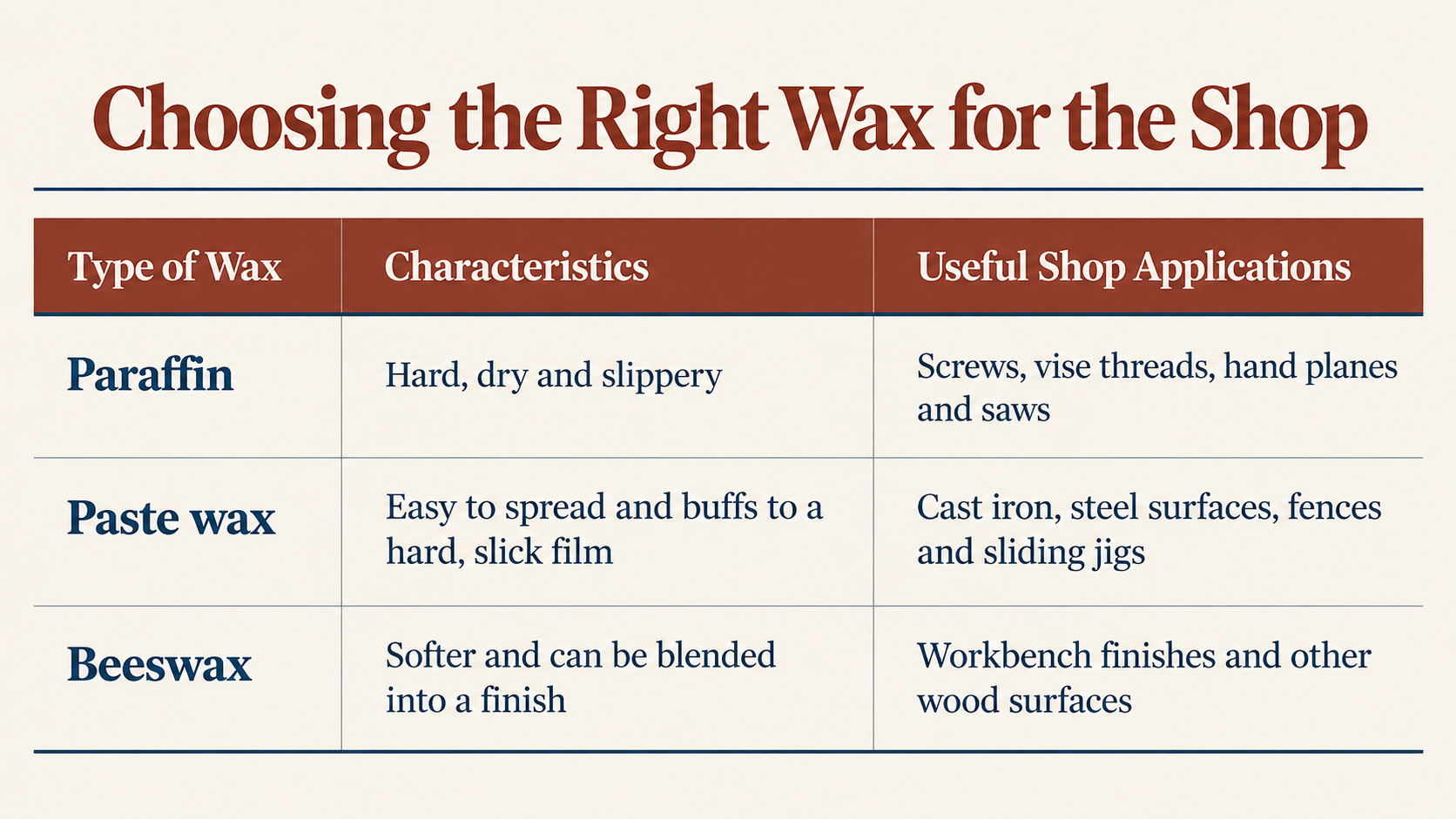
They're inexpensive and a small amount lasts a long time, so it makes sense to keep more than one type in the shop.
1. Use Paraffin Wax to Make Screws Easier to Drive
One of the simplest uses for paraffin wax is lubricating screws before driving them.
Paraffin — the familiar solid canning wax available at many grocery stores — forms a relatively hard, slippery film.

Rub the screw threads across the wax before driving the screw. The thin coating reduces friction as the threads enter the wood.
This can be particularly handy when driving larger screws or working in dense hardwood.
Woodsmith Tip: You don't need to bury the screw in wax. A quick pass over the threads is enough to leave a light coating.
2. Lubricate Workbench Vise Threads
Paraffin also works well on threaded mechanisms around the shop.
A good example is the adjustment screw on a workbench vise.

Rub a little wax along the threads, then run the vise in and out several times.
The movement distributes the wax along the screw and helps the mechanism operate more smoothly.
This same idea can be useful anywhere you have an appropriate exposed mechanical thread where a dry wax lubricant makes sense.
3. Make Hand Planes & Saws Glide More Easily
Sharpness isn't the only thing that affects how a hand tool feels in use. Friction matters, too.
Woodworkers have long used wax to reduce the friction between a tool and the workpiece. A few light scribbles of paraffin on the sole of a hand plane can make a noticeable difference.

There's no need to coat the entire sole. A few thin streaks are enough.
As you start planing, the wax spreads across the surface and helps the plane glide more easily over the workpiece.
The same principle can be applied to the sides of some hand saws. Again, use only a small amount.
Woodsmith Tip: Less Is More. When you're using wax as a lubricant, you usually don't need a visible layer. Start with a tiny amount and add more only if necessary.
4. Protect Cast-Iron Tools with Paste Wax
Rust is a constant concern with cast-iron and steel woodworking machinery, particularly in humid shops. This is where paste wax earns a permanent spot on the shelf.
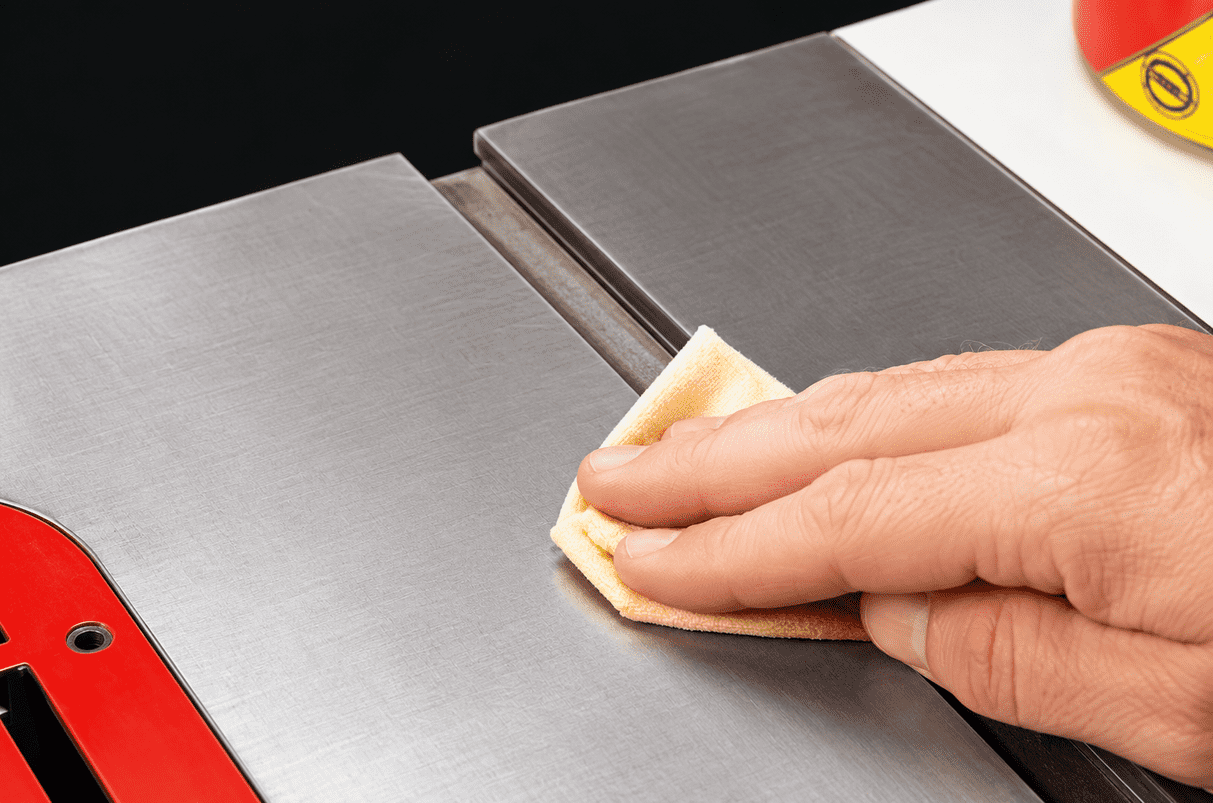
Apply a thin coat to clean cast-iron and steel surfaces, allow it to haze as directed by the manufacturer, and buff it thoroughly.
The wax leaves behind a thin protective film that helps isolate the metal from moisture.
It's useful on surfaces such as:
- Table saw tops
- Jointer beds
- Band saw tables
- Drill press tables
- Machine fences
And there's a second benefit.
A properly buffed surface is slicker, allowing boards to slide across a machine table with less resistance.
That can make feeding a long board across a table saw or jointer noticeably easier.
RELATED ARTICLE: How to Restore a Cast Iron Table Saw Top
Reapply Wax as the Protection Wears Away
Wax isn't a permanent rust barrier. Normal shop use gradually wears the coating away, so inspect your machine surfaces periodically and apply another thin coat when necessary.
If your shop is particularly humid, you'll probably need to pay closer attention to exposed cast iron.
5. Make Woodworking Jigs Slide More Smoothly
Paste wax isn't limited to metal surfaces. A thin, thoroughly buffed coat can also reduce friction on the sliding surfaces of woodworking jigs and fixtures.

For example, it can be useful on the bottom of a jig that needs to move smoothly across a machine table.
Apply only enough wax to create a slick surface, then buff away the excess.
For jigs that rely on free movement, reducing friction can make them easier and more predictable to operate.
Woodsmith Tip: Keep Wax Away from Glue Surfaces. Be deliberate about where you apply wax. Wax can interfere with adhesion and some finishing operations, so avoid getting it on surfaces that will later need to be glued or finished.
Bonus: Make an Oil & Beeswax Workbench Finish
Beeswax is softer than paraffin and the film can become tacky if it's applied too heavily. But blended with oil and solvent, it makes an easy-to-renew workbench finish.

The mixture used here combines: 1 part beeswax + 1 part boiled linseed oil + 1 part mineral spirits
If the mixture is too thick to apply easily, a little additional mineral spirits can thin it.
Wipe a wet coat onto the bench, allow it to soak into the wood briefly, and then buff away the excess to produce a soft sheen.
The oil helps seal the wood against spills, while the wax creates a surface that makes dried glue easier to remove.
And because the finish is easy to renew, normal workbench wear isn't a major concern.
Woodsmith Safety Note: Boiled linseed oil requires special care because oil-soaked rags can self-heat and ignite. Follow the manufacturer's instructions for handling and disposing of used applicators. Mineral spirits are also flammable and produce vapors, so keep the mixture away from ignition sources and use it with appropriate ventilation.
RELATED ARTICLE: The Best Finish for a Workbench
Wax Is a Handy Tool to Keep Around the Shop
For something so simple, wax can solve a surprising number of everyday woodworking problems. Keep paraffin nearby for screws, threaded mechanisms, hand planes, and other situations where you want a hard, slippery lubricant.
Reach for paste wax when you want to protect cast-iron machinery or reduce friction on machine tables and sliding jigs.
And beeswax earns its place when you want a softer wax or an ingredient in an easy-to-renew wood finish.
None of these jobs requires much wax. A light application is usually all it takes to make tools work a little more smoothly and shop surfaces easier to maintain.
RELATED ARTICLE: Hot to Use Wax to Finish Wood Furniture


