


Building a woodworking bench is a considerable investment in time and materials. So choosing the best finish for your workbench deserves more thought than simply reaching for whatever finish happens to be on the shelf.
A workbench isn't furniture. Its top gets cut, scratched, dented, stained with glue, and subjected to constant wear. At the same time, the surface needs enough grip to keep a workpiece from sliding around while you're planing, sanding, or assembling a project.
That means the finish that provides the most protection isn't necessarily the best choice.
What Makes a Good Workbench Finish?
For most woodworking benches, I look for three things:
Protection. The finish should provide some resistance to glue, spills, dirt, and everyday shop grime.
A practical working surface. You don't want a finish that makes the benchtop unnecessarily slick.
Easy maintenance. A workbench is going to get damaged. Rather than trying to prevent every scratch and dent, it makes sense to choose a finish that's easy to renew or repair.
Appearance matters, too. A good workbench can be a centerpiece of the shop. But for the top, I'd put usability and repairability ahead of achieving a furniture-like finish.
With those goals in mind, there are several options worth considering.
Film Finishes: Maximum Surface Protection
A traditional film-building finish, such as varnish, provides excellent protection.
Once cured, a film finish creates a barrier over the wood that offers good resistance to spills, dirt, and minor abrasion. It can also give a carefully built workbench a polished, furniture-like appearance.

But that protection comes with a couple of disadvantages on a benchtop.
First, a hard, smooth finish can make the work surface slicker. That's not necessarily what you want when you're trying to keep a board stationary while working on it.
The larger issue is maintenance. Eventually the top will be scratched, cut, dented, or otherwise damaged. Repairing a built-up film can require more surface preparation than simply renewing an oil or wax finish.
Where a Film Finish Makes Sense: The base of the workbench is a different story. It doesn't receive the same abuse as the top, so a durable film finish can be an excellent choice. It protects the legs and stretchers from dirt and spills while keeping the base looking good.
There's no rule saying the entire bench has to receive the same finish.
Oil Finishes: Simple and Easy to Renew
One of the traditional approaches to finishing a workbench is an oil finish such as boiled linseed oil or tung oil.
Application is straightforward. Apply the oil according to its manufacturer's directions, allow it to penetrate, and remove the excess as directed.
Rather than building a thick film over the surface, an oil finish leaves the benchtop with a more natural feel.
The biggest advantage for a workbench is maintenance.
When the surface starts looking worn, it can usually be cleaned, lightly scraped or sanded as necessary, and renewed with another coat. Small areas can also be touched up without necessarily refinishing the entire bench.
The Tradeoffs of an Oil Finish. Oil doesn't provide the same surface protection as a film-building finish. A working bench will still accumulate scratches, dents, stains, and grime.
Drying and curing times can also be considerably longer depending on the product and shop conditions.
But that isn't necessarily a drawback if your priority is a work surface that's easy to maintain rather than one that always looks pristine.
Woodsmith Tip: Dispose of Oily Rags Safely! Rags containing drying oils such as linseed oil can self-heat and present a fire hazard if they're wadded up or piled together. Follow the finish manufacturer's instructions for handling and disposal of used applicators and rags.
Oil and Wax: A Traditional Workbench Finish
Another traditional option combines an oil finish with wax.
This approach provides the easy renewal associated with oil while the wax adds another layer of protection to the working surface.

Wax is particularly useful on a workbench because it can help prevent glue squeeze-out from bonding aggressively to the benchtop. It also provides some resistance to dirt and minor wear.
Like an oil finish, an oil-and-wax surface can be renewed as the bench ages instead of requiring a complete refinishing job every time the top gets scratched.
For a working bench, that repairability is a significant advantage.
Can You Leave a Workbench Unfinished?
Absolutely! An unfinished workbench isn't necessarily an unfinished project. For a bench that's going to see rough use, leaving the top bare can be a perfectly practical choice.
There's nothing to peel, chip, or repair. Scratches and dents simply become part of the bench.
Over time, an unfinished wood top will darken, pick up stains, and develop the patina that comes with use.
The disadvantage, of course, is that bare wood provides little resistance to spills, glue, and dirt. Whether that's important depends on how you use the bench.
For a utility bench in a garage or barn, leaving it unfinished may make more sense than spending a lot of time creating a surface that's destined to be heavily worn.
What's the Best Finish for a Workbench?
There's no single finish that's best for every woodworking bench.
The decision becomes easier if you think about how the bench will actually be used.
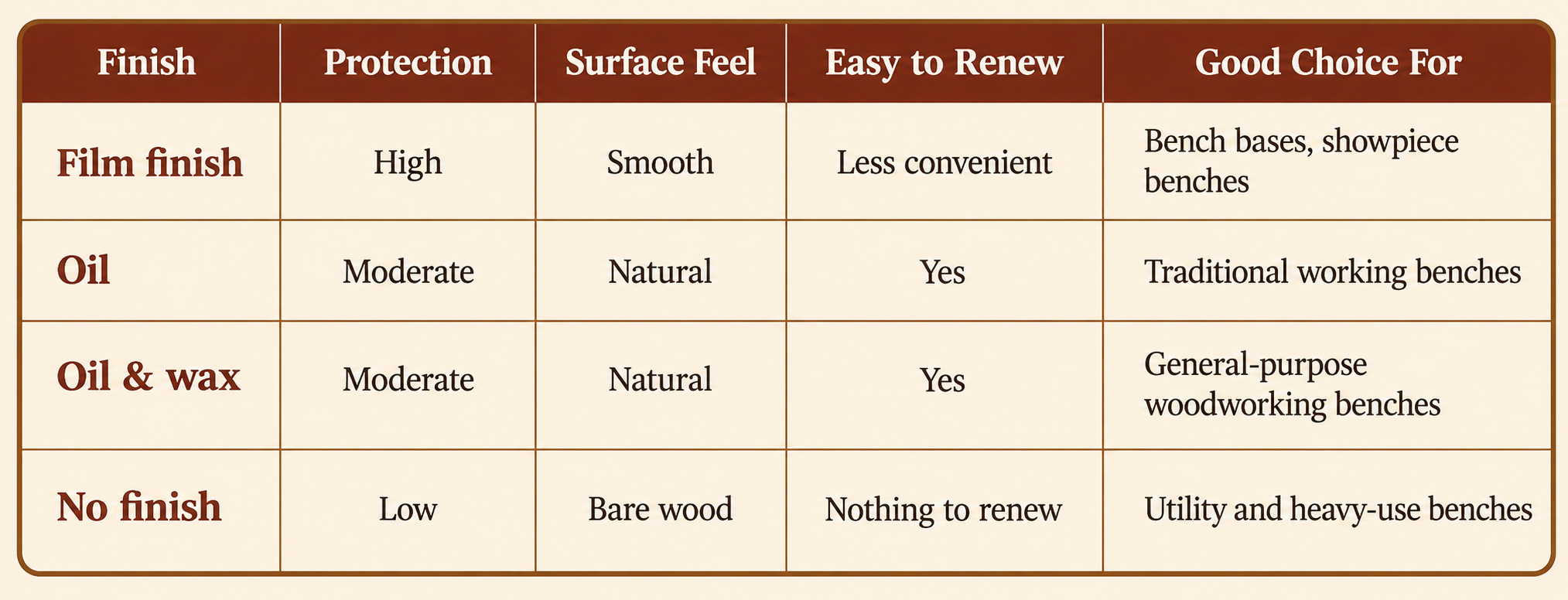
For a working benchtop, I'd prioritize grip, easy maintenance, and repairability over maximum protection.
That's why a simple oil or oil-and-wax treatment has traditionally been such an appealing option. The bench won't remain flawless—but a workbench isn't supposed to. When it gets scratched or worn, you can clean it up and renew the surface without treating every mark like damage to a piece of furniture.
Traditional Woodsmith Oil & Beeswax Workbench Finish
The original Woodsmith method for this article used a homemade mixture of equal amounts of beeswax, turpentine, and boiled linseed oil. I'd retain this section because it's part of the original technique, but present it as a traditional Woodsmith formula rather than suggesting it's the only or necessarily preferred modern option.
Step 1: Prepare the Beeswax
Shave the beeswax into small pieces and place the shavings in a suitable container.

Step 2: Add the Turpentine
The original formula calls for adding an equal amount of turpentine and allowing the mixture to sit until the beeswax dissolves.

Step 3: Add the Boiled Linseed Oil
Once the wax is dissolved, the original recipe calls for adding an equal amount of boiled linseed oil.

Finish Safety: Turpentine and other finishing solvents produce flammable vapors and require appropriate ventilation and handling. Drying oils can also cause oil-soaked rags to self-heat and ignite. Read and follow the safety and disposal instructions for each product you're using. Keep the mixture and application materials away from heat, sparks, and flame.
For readers who don't want to mix a solvent-based finish themselves, a commercially prepared oil-and-wax woodworking finish is a simpler alternative.
Ready to Build Your Own Workbench?
If you’re thinking about what finish to put on a workbench, maybe it’s time to build the bench, too. Our Just-Right Workbench is designed to pack the features of a full-size woodworking bench into a more compact footprint. At just 56" long, it features a thick maple top, sturdy cherry base, traditional workholding, and plenty of versatility for everyday woodworking.
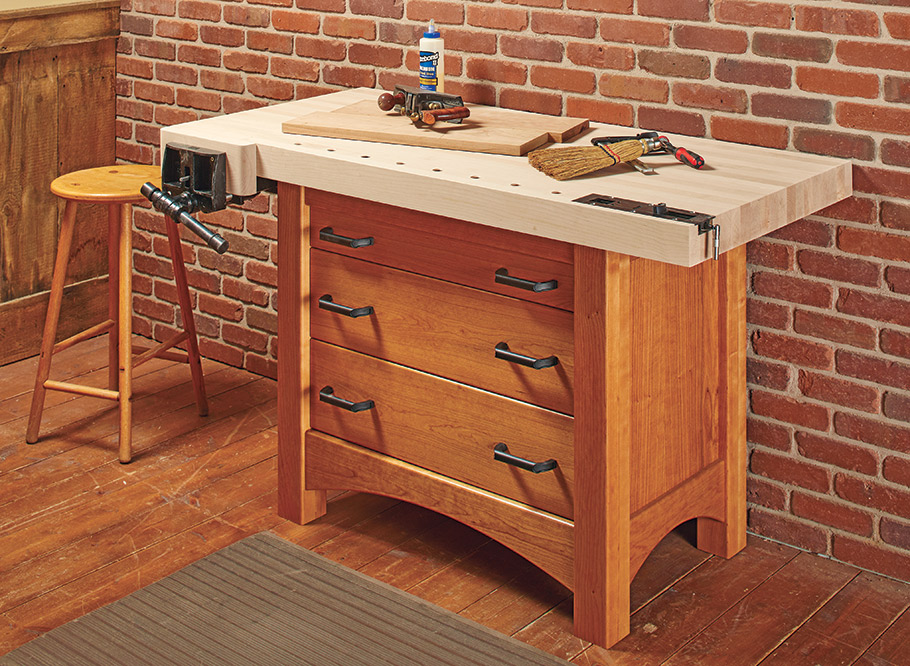
Get the step-by-step plans and build the Just-Right Workbench for your shop from WoodsmithPlans.com.


