


Shop-Made Workbench Stop System: Adjustable Workholding Without Bench Dogs
One of the keys to accurate woodworking is keeping your workpiece securely in place. Whether you're planing, sanding, or working with hand tools, it's much easier to concentrate on the task when you're not struggling to hold onto the board.
Traditional bench dogs are a great solution, but they aren't practical for every workbench.
My workbench has a hardboard-covered hollow-core door for a top. It's lightweight, inexpensive, and provides a large work surface, but the thin skins of the door aren't sturdy enough to support conventional bench dogs under pressure.
To solve that problem, I built a removable workbench stop system that I call my dog team.
It uses a pair of notched arms and adjustable stop blocks to hold workpieces flat on the benchtop. And because the system attaches to the end of the bench, there's no need to drill holes through the work surface.
How the Adjustable Workbench Stops Work
The system consists of two notched arms attached to cleats that fit over the end of the workbench.
Adjustable stop blocks engage the notches along the arms, allowing you to position the stops wherever they're needed.
The clever part is how quickly you can make an adjustment.
Simply turn a stop block to release it from its notch, slide it to a new position, and turn it back to engage the arm.
This makes it easy to accommodate workpieces of different lengths without moving clamps or rearranging the setup.
Once the stops are positioned, the workpiece is secured between the stops and the bench vise.
The result is a simple, adjustable workholding system that keeps the board flat on the benchtop.
Build the Notched Arms and Stop Blocks

The construction is straightforward, and the arms can be made to whatever length works best for your bench.
Make the Notched Arms
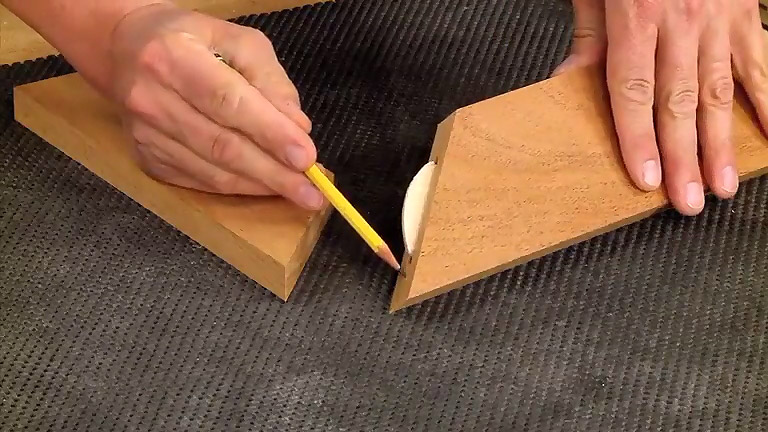
Start by laying out a series of evenly spaced holes along each arm.
Drill the holes first to form the rounded ends of the notches.
Then use a band saw to cut away the waste and shape the notches along the edge of each arm.
After cutting the arms to their final shape, smooth the edges and fasten them to the cleats that fit over the end of the workbench.
Assemble the Adjustable Stop Blocks
The stop blocks are made from hardwood and hardboard pieces joined with screws.
The blocks are designed to engage the notches in the arms while allowing you to reposition them with a quick turn.
Make sure the blocks move freely enough to adjust but fit securely when engaged.
Secure a Workpiece for Planing or Sanding
Using the stop system is simple.
Place the workpiece flat on the bench and position the adjustable blocks against one end.
Turn the blocks into their locking positions so they engage the notched arms.
Then tighten the bench vise against the opposite end of the workpiece to hold it in place.
Apply only enough pressure to secure the board. The stops and bench attachment need to resist the working forces without shifting, and excessive vise pressure can damage a lightweight benchtop or the stop assembly.
With the workpiece secured, you can concentrate on planing, sanding, or other hand-tool operations instead of holding the board in place.
A Removable Workholding Solution for Almost Any Bench
One of the biggest advantages of this workbench stop system is its versatility.
The arms can be made longer or shorter to suit the size of your bench and the workpieces you typically handle.
And because the system is removable, you can take it off whenever you need the full benchtop for assembly or other projects.
It's especially useful for lightweight workbenches, hollow-core door tops, or any bench where drilling traditional dog holes isn't practical.
With a few pieces of hardwood, some hardboard, and a handful of screws, you can add a flexible workholding system that makes everyday woodworking tasks easier and more accurate.
More Woodworking Tips & Tricks
Keeping a workpiece securely in place makes almost every woodworking task easier. Discover more clever shop-made clamps, bench accessories, and workholding techniques that help you work safely and accurately.
From simple jigs to handy workshop upgrades, these practical Woodsmith tips can help you get more from your tools and workbench.
EXPLORE MORE WOODWORKING TIPS → Practical Workholding Solutions for Your Workshop