


Pocket Hole Joinery for Easy Frame-and-Panel Cabinet Construction
Traditional frame-and-panel cabinet construction often relies on grooves, tongues, and tenons to hold everything together. While these joints work well, there's a simpler approach that can save time without sacrificing a clean, professional appearance.
By combining pocket screws with a little glue, you can assemble cabinet frames quickly while keeping the fasteners completely hidden in the finished project. The secret is planning the assembly sequence so the pocket holes end up concealed by other cabinet components.
Simplify Frame-and-Panel Joinery with Pocket Screws
Start with a plywood panel cut to size. A shallow rabbet around its perimeter creates an attractive shadow line and helps disguise minor differences in alignment between the panel and surrounding frame.
Next, cut the upper and lower rails to match the panel width. Drill pocket holes along the rails so they can be fastened directly to the plywood panel.
The important detail is the location of the pocket holes. By positioning them where the cabinet top and bottom will eventually cover them, the screws remain hidden after assembly.
Plan Your Assembly to Hide Pocket Holes
After attaching the rails to the panel, use the assembly to determine the length of the stiles.
Drill pocket holes along the stiles to secure them to the rails and panel. These holes may be visible along the edges during assembly, but they'll be concealed by the cabinet's face frame later.
Even narrow rails can accommodate pocket screws. Depending on the rail width, the pocket hole may break through both the edge and face of the workpiece. As long as the joint is properly designed and the fastener has adequate material to hold, this can still provide a practical connection.
Apply a thin bead of glue to the mating surfaces before fastening the parts together, avoiding excess squeeze-out.
Faster Cabinet Assembly with Clean Results
Pocket hole joinery is a practical alternative when you want to simplify cabinet construction without spending extra time cutting traditional joinery.
With a little planning, you can create sturdy frame-and-panel assemblies, keep the screws out of sight, and give your finished cabinet a clean appearance.
It's a useful technique for small cabinets, shop furniture, and other woodworking projects where quick, accurate assembly is a priority.
More Ways to Use Pocket Hole Joinery
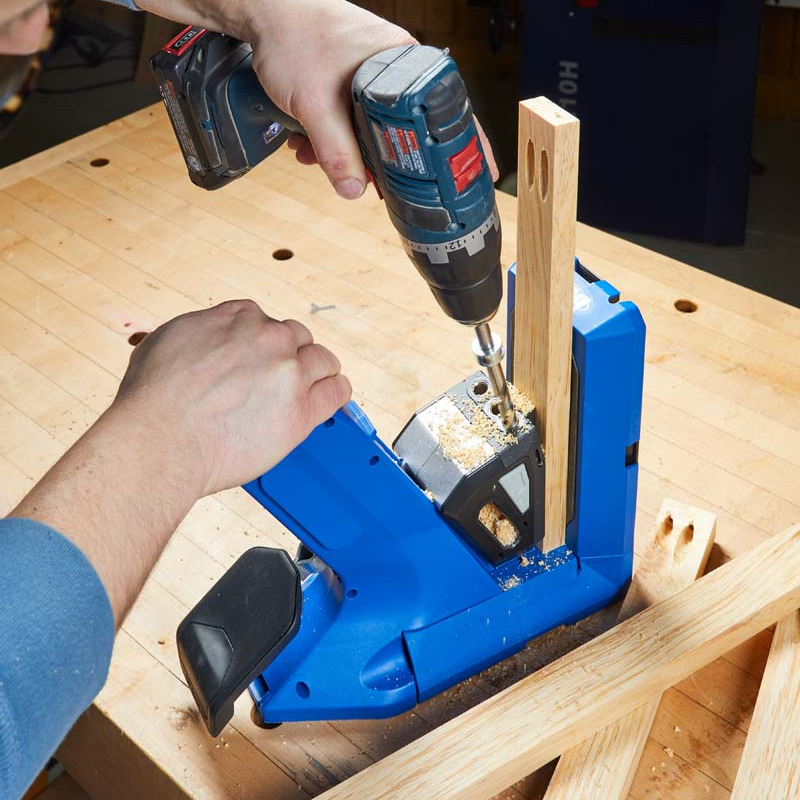
Pocket screws aren't just for assembling cabinet frames. This simple, versatile joinery method can make a wide range of woodworking projects easier and faster to build. Explore six practical ways to use pocket hole joinery, along with helpful tips for creating strong, accurate joints in furniture, cabinets, and shop projects.
READ MORE → Pocket Hole Joinery Guide — 6 Practical Woodworking Uses


