



5 Table Edge Profiles to Improve Your Woodworking Projects
The tabletop is often the first thing people notice about a piece of furniture. While choosing attractive wood and the right finish makes a difference, the edge profile also plays an important role in the overall appearance of the table.
A well-chosen tabletop edge treatment can complement the furniture's style, soften sharp corners, and make the top more comfortable to use. Best of all, you don't need expensive specialty router bits to create an attractive profile.
These five classic table edge profiles are easy to make with common router bits or simple table saw cuts. Each offers a different look, making it easy to find one that suits your next woodworking project.
Why Table Edge Profiles Matter
A tabletop edge profile does more than add a decorative detail. It also affects how the table looks and feels.
On dining tables, desks, and side tables, a softened edge is more comfortable for hands and arms. Removing sharp corners also helps reduce the chance of minor chips and damage during everyday use.
The profile can also change the visual weight of a tabletop. A rounded edge creates a softer appearance, while a bevel or cove cut along the underside can make a thick top look thinner and lighter.
The key is choosing a profile that complements the overall design rather than competing with it.
1. Bullnose Edge Profile: A Classic Rounded Edge
The bullnose is one of the most versatile tabletop edge profiles. Its smooth, rounded shape softens the entire edge of the tabletop and works well with both traditional and contemporary furniture.
You can change the appearance of a bullnose by adjusting the size of the curve. A gentle radius creates a subtle edge treatment, while a full half-round produces a more pronounced profile.

How to Make a Bullnose Edge
A bullnose profile can be shaped using a roundover router bit.
For a full bullnose, use a roundover bit with a radius equal to half the tabletop thickness and rout both the top and bottom edges. Smaller-radius bits create a more subtle profile with a flat section between the curves.
The smooth shape is especially effective on tables with straight legs and rails, where it adds a little contrast without distracting from the design.
Best for: Dining tables, coffee tables, desks, and furniture with clean, simple lines.
2. Cove Edge Profile: Make a Thick Tabletop Look Lighter
A cove profile features a smooth, concave curve that creates a subtle decorative detail.
While many tabletop profiles are cut along the upper edge, a cove can be especially effective when routed along the underside.
This removes some of the visual bulk from the tabletop, making it appear thinner when viewed from above.
The clean, flowing curve works particularly well on contemporary furniture and tables with slender legs or delicate frames.

How to Make a Cove Edge
Use a cove router bit to shape the underside of the tabletop.
The size and depth of the cove determine how dramatic the finished profile appears. A shallow cove creates a subtle shadow line, while a larger curve gives the top a more sculpted appearance.
Best for: Contemporary tables, Asian-inspired furniture, accent tables, and projects with lightweight designs.
3. Thumbnail Edge Profile: A Traditional Decorative Detail
A thumbnail profile is a variation of a roundover that combines a rounded edge with a small shoulder.
The curve softens the edge, while the shoulder creates a subtle shadow line that adds definition to the tabletop.
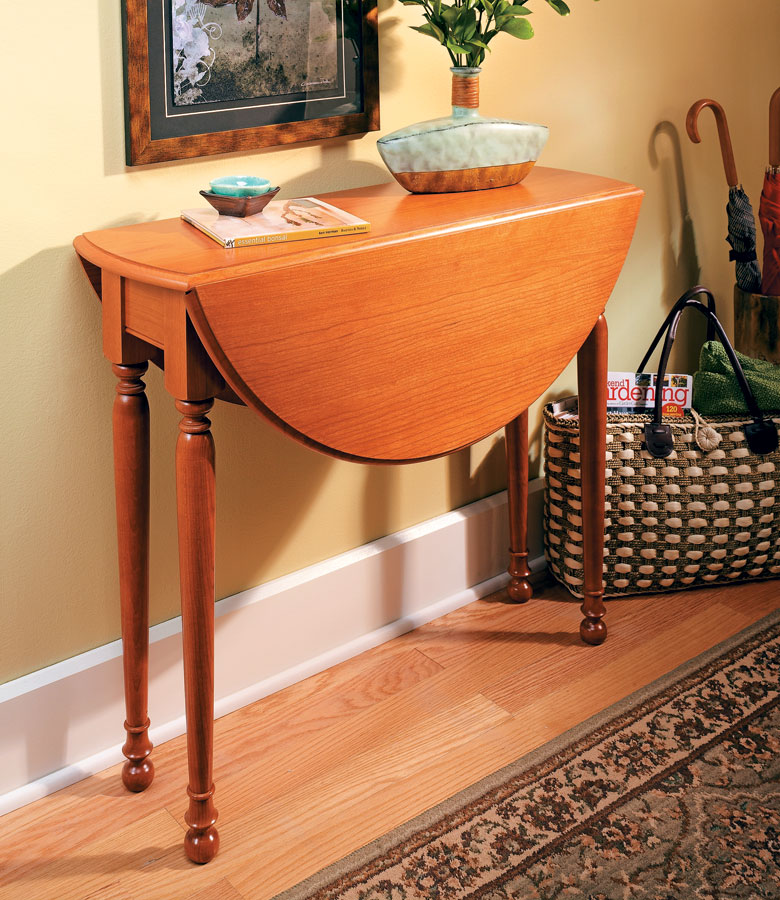
This traditional profile looks especially good on country-style furniture, drop-leaf tables, and other classic designs.

How to Make a Thumbnail Edge
A thumbnail profile can be created with a roundover router bit by adjusting the cutting depth to leave a small shoulder.
The shoulder provides a crisp transition between the flat tabletop and the rounded edge.
One particularly useful application is on drop-leaf tables. A thumbnail profile on the fixed tabletop can be paired with a matching cove on the folding leaves to create a rule joint.
This joint allows the leaves to pivot while maintaining an attractive transition between the adjoining surfaces.
Best for: Traditional furniture, country-style tables, and drop-leaf table projects.
4. Beveled Edge Profile: A Clean Craftsman-Style Look
A bevel creates a straight, angled surface along the edge of a tabletop.
Wide bevels and chamfers are common details in Craftsman-style and Arts & Crafts furniture. Their crisp lines complement the straightforward construction and geometric proportions of these designs.
A bevel cut along the underside of a tabletop can also make a thick top appear lighter without sacrificing the substantial appearance of the furniture.
How to Cut a Beveled Table Edge
A wide bevel can be cut at the table saw by tilting the blade to the desired angle.
The width and angle of the bevel determine the finished appearance. A narrow bevel creates a subtle detail, while a wide bevel produces a more pronounced, tapered look.
For large tabletops, make sure the workpiece is adequately supported throughout the cut.
Best for: Craftsman-style furniture, Arts & Crafts tables, contemporary designs, and thick tabletops.

5. Ogee Edge Profile: Add Traditional Elegance
An ogee profile features an S-shaped curve that combines a convex and concave section.
This flowing shape is a classic choice for traditional furniture, especially tables with decorative legs, moldings, or other detailed elements.
The ogee can be used by itself for a subtle decorative edge or combined with applied moldings to create a more elaborate, built-up appearance.
How to Make an Ogee Edge
An ogee router bit creates the distinctive S-shaped profile in a single routing operation.
The size of the bit and the cutting depth determine how prominent the profile will be.
For an understated look, choose a smaller ogee that complements the tabletop thickness. Larger profiles work well on formal furniture where decorative details are part of the overall design.
Best for: Traditional tables, formal furniture, and projects with decorative moldings.

How to Choose the Right Table Edge Profile
When selecting an edge treatment, consider the style of the table, the thickness of the top, and how the furniture will be used.
A bullnose or thumbnail profile is a good choice when comfort is important. Cove and bevel profiles can make thick tabletops appear lighter, while an ogee adds decorative detail to traditional furniture.
It's also worth making a few test cuts on scrap material before routing the finished tabletop. This allows you to compare profiles and fine-tune the router bit depth.
For the best results, use a sharp bit, make multiple passes when removing a lot of material, and take care when routing across end grain to minimize tearout.
Give Your Next Table a Custom Edge
A carefully chosen edge profile is a small detail that can make a big difference in a finished woodworking project.
Whether you prefer the smooth curves of a bullnose, the clean lines of a bevel, or the traditional appearance of an ogee, these five time-tested profiles offer plenty of options.
With a few common router bits and basic table saw techniques, you can create attractive, comfortable tabletop edges that complement the style of your next furniture project.
Explore More Furniture Woodworking Plans
Ready to put your woodworking skills to work? From classic coffee tables and elegant dining tables to desks, bookcases, and accent furniture, WoodsmithPlans.com offers a wide selection of furniture projects for every skill level. Explore detailed, step-by-step woodworking plans featuring beautiful designs, practical joinery techniques, and custom details that will help you create furniture you'll be proud to display for years to come.
SEE MORE → Explore Furniture Woodworking Plans


