


Sometimes a useful woodworking accessory is already sitting in your toolbox—or waiting to be discovered at the hardware store. A card scraper sharpening guide can help create consistent chamfers, cling wrap can save time cleaning clamps, and inexpensive keyway stock can serve as a set of machine setup blocks.
In this collection of Woodsmith Quick Tips, four readers share clever ways to get more from everyday tools and materials.
1. Use a Card Scraper Sharpening Guide to Chamfer Thin Parts
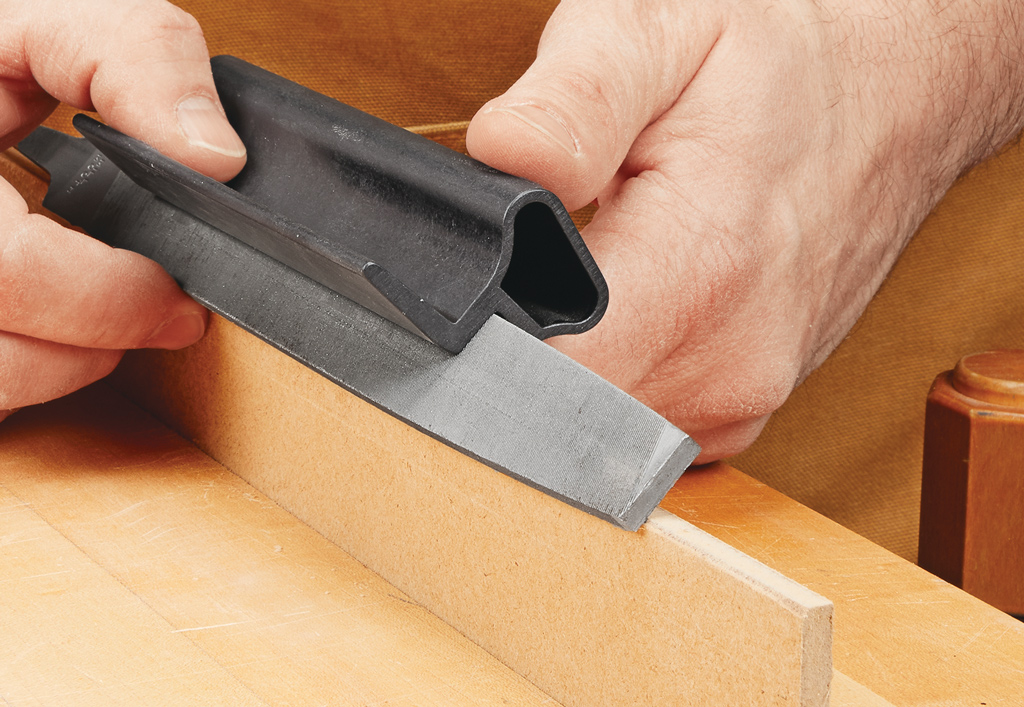
Adding a small chamfer to a workpiece can soften a sharp edge and give a project a more finished appearance. But creating a consistent chamfer on a thin part can be awkward, especially when the piece is too small to handle comfortably with a hand plane.
Jared Huber of Appleton, Wisconsin, found a new use for his card scraper sharpening guide.
The guide has a 45° fence that normally helps position a file when preparing a card scraper. Jared realized that the same fence could register against the edge of a thin workpiece.
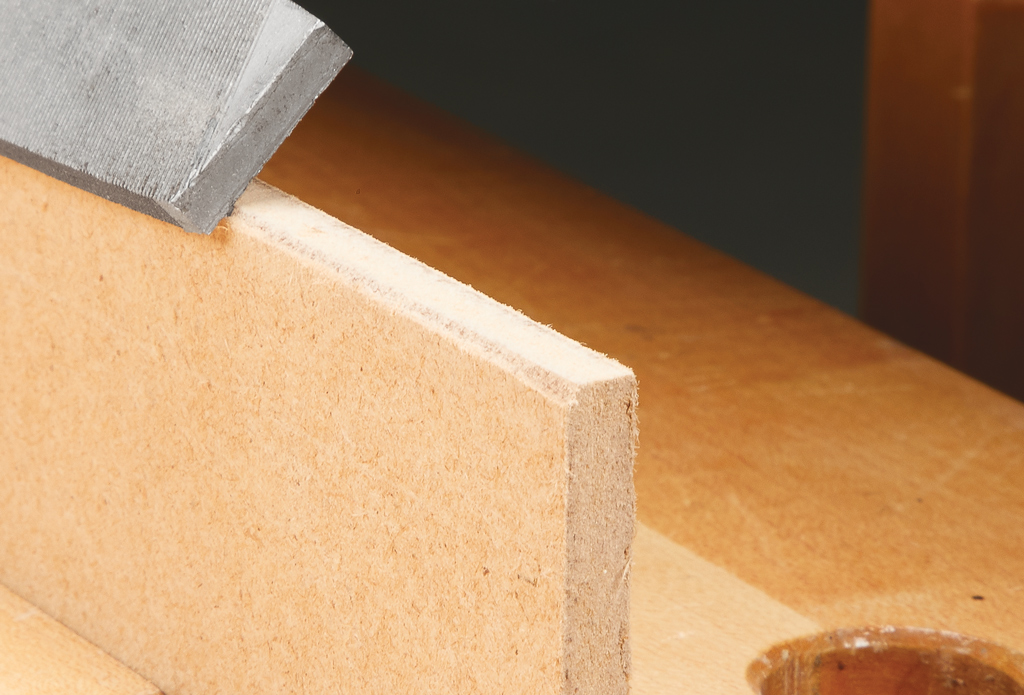
By running the guide along the edge, he uses the file to remove material at a consistent angle. The fence helps maintain the 45° orientation, while the file leaves a smooth surface.
It's a clever way to repurpose a sharpening accessory for small chamfering jobs.
Woodsmith Tip: Secure the workpiece before filing and use light, controlled strokes. For a uniform chamfer, make repeated passes rather than trying to remove too much material at once.
Shop tip submitted by Jared Huber, Appleton, Wisconsin.
2. Keep Beeswax Handy for Screws, Hand Planes & Finishing
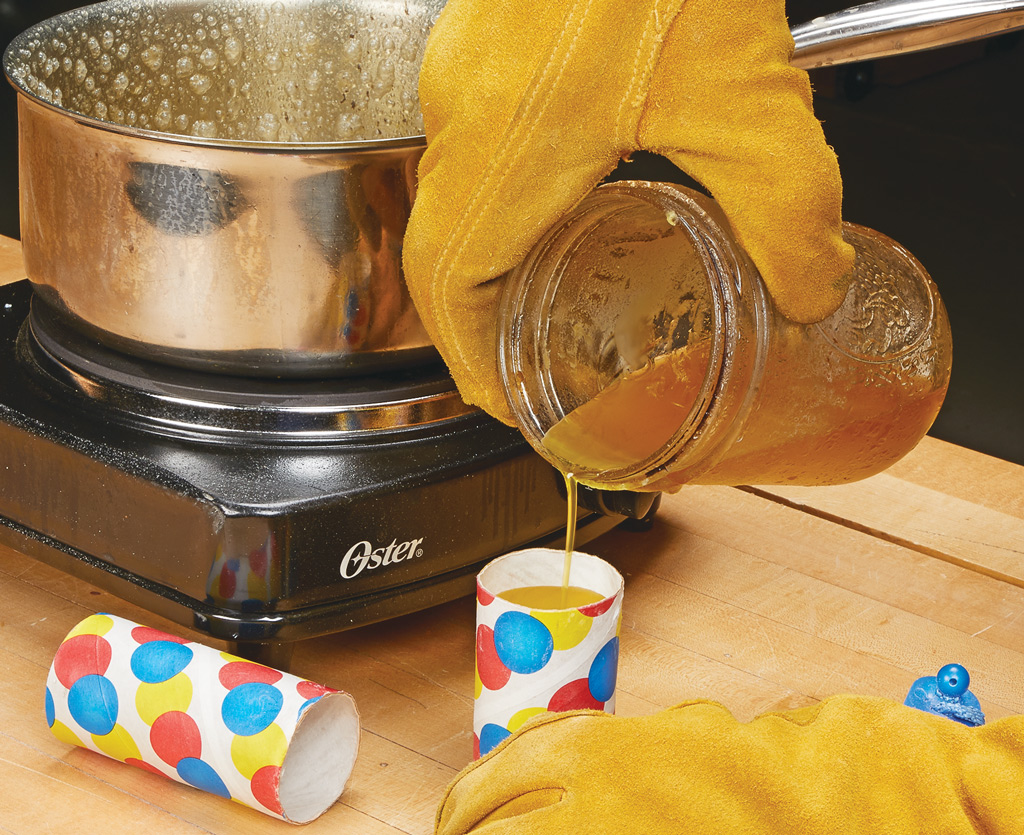
Beeswax is one of those simple materials that comes in handy for several different woodworking tasks.
Keven Bell of Jasper, Missouri, uses it to lubricate screws, apply a wax finish, and reduce friction on the soles of his hand planes.
Keeping the wax in a convenient push-up container makes it easy to apply without handling the entire block.
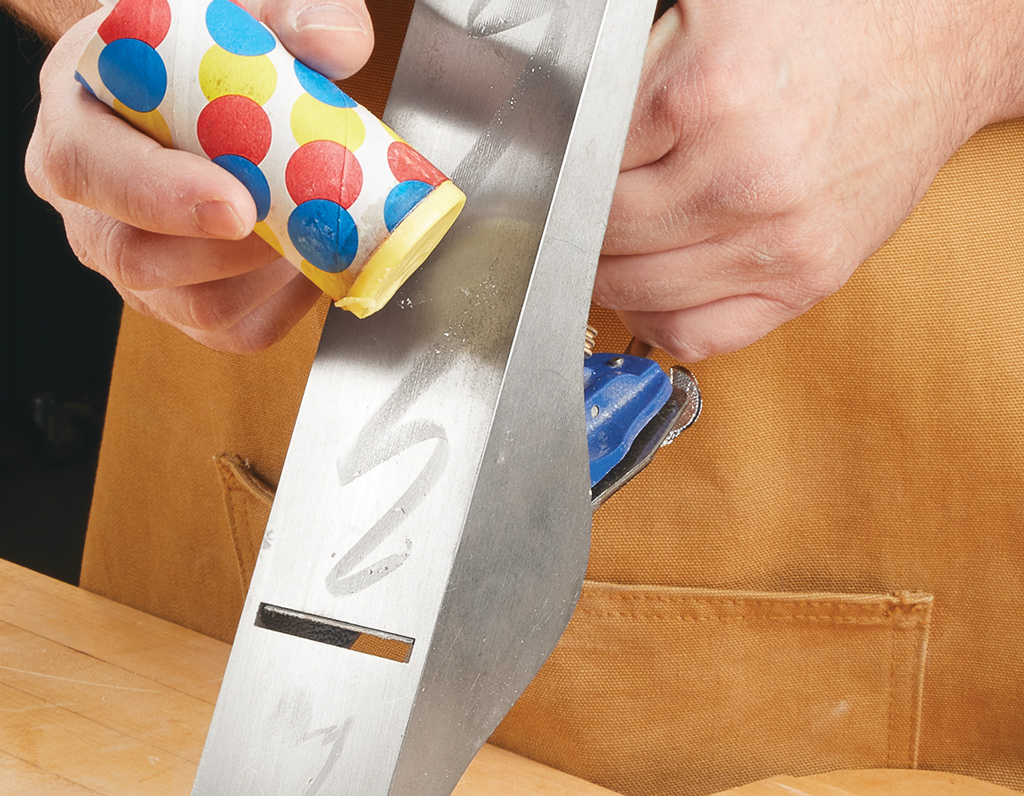
A little wax on a screw's threads can help it drive more easily into hardwood. Applied sparingly to a hand plane sole, it can also help the plane glide across a board with less resistance.
The push-up container keeps the wax close at hand and makes it easy to apply only where it's needed.
Woodsmith Tip: Use wax sparingly and keep it off surfaces that will be glued or finished later. Wax contamination can interfere with glue adhesion and some finishes. If using beeswax as a finish, choose an application method appropriate for the project.
Shop tip submitted by Keven Bell, Jasper, Missouri.
3. Protect Pipe Clamps from Dried Glue with Cling Wrap
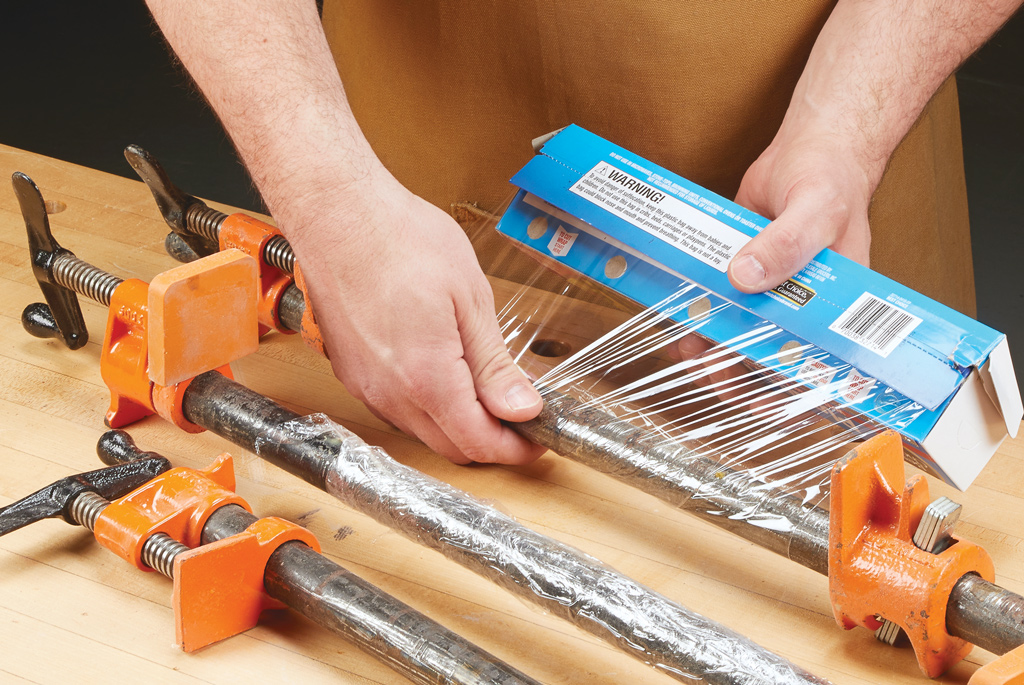
Pipe clamps are useful for assembling large woodworking projects, but cleaning dried glue from the pipes afterward can be a chore.
Beth Reik of Godley, Texas, tried several ways to protect her clamps before settling on a simple solution: cling wrap.
Before starting a glue-up, she wraps the exposed pipe with plastic film. The wrap acts as a barrier between the pipe and any glue squeeze-out.
Once the glue-up is complete, she can peel away the wrap and discard it rather than scraping dried glue from the metal.
It's a quick, inexpensive way to reduce cleanup and keep pipe clamps ready for the next project.
Woodsmith Tip: Apply the wrap where glue is likely to drip, but keep it clear of the clamp's sliding mechanism and threads. Remove the plastic after the glue-up, and check the pipe for any glue that may have reached the metal.
Shop tip submitted by Beth Reik, Godley, Texas.
4. Use Steel Keyway Stock as Affordable Machine Setup Blocks
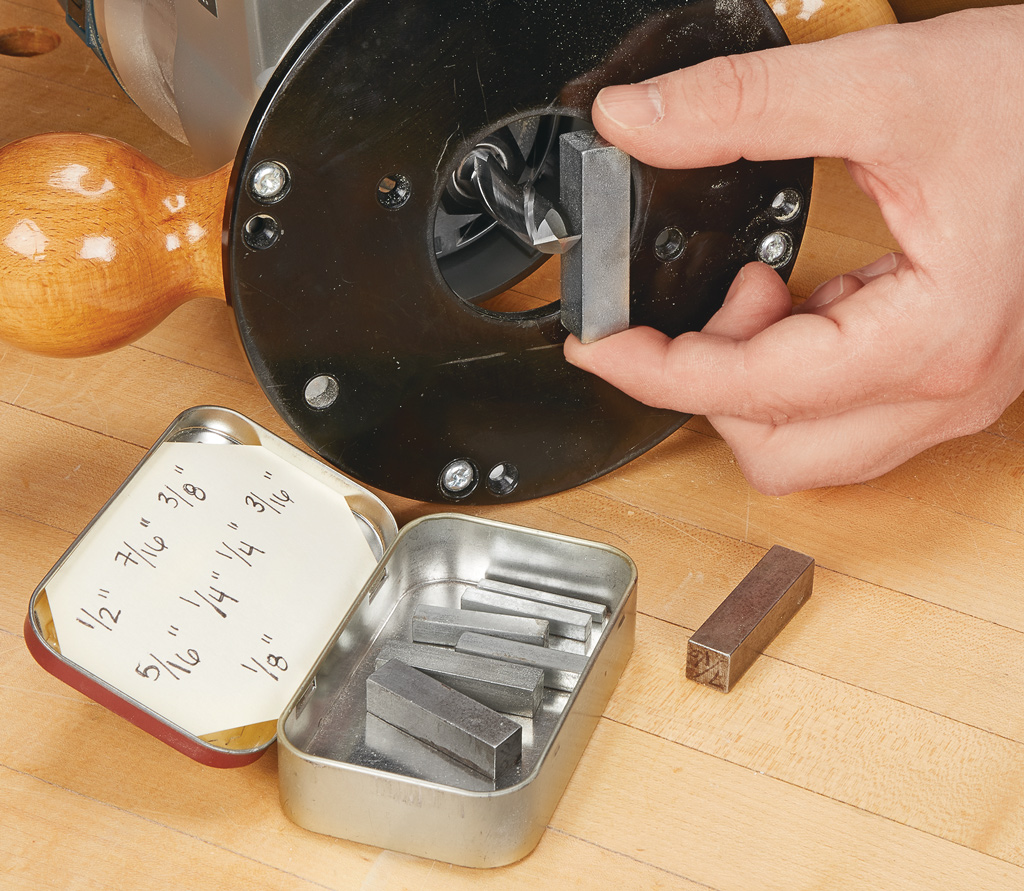
Setup blocks make it easier to establish repeatable dimensions when adjusting woodworking machinery. They're especially handy for setting a fence position or checking a height without repeatedly measuring with a ruler.
Adam Lane of Dickson, Oregon, found an inexpensive alternative while browsing his local hardware store.
He noticed that steel keyway stock, which is sold for machinery applications, comes in a variety of sizes and is often available in short lengths.
The accurately sized stock makes a convenient reference for shop setups. Adam keeps several pieces in a small tin so they're ready whenever he needs them.
It's a practical way to assemble a useful collection of setup blocks without purchasing a dedicated set.
Woodsmith Tip: Check the actual dimensions of each piece before relying on it for a precision setup. Remove any burrs, keep the pieces clean, and make adjustments with the machine powered off. Avoid placing loose steel blocks near a cutter or blade when the machine is running.
Shop tip submitted by Adam Lane, Dickson, Oregon.
Simple Woodworking Upgrades That Save Time
These four reader-submitted tips demonstrate how everyday materials and familiar tools can take on new jobs. A sharpening guide helps create consistent chamfers, beeswax provides convenient lubrication, cling wrap protects pipe clamps from glue, and keyway stock serves as an affordable set of machine setup blocks.
They're small improvements that can make a difference the next time you're shaping an edge, assembling a project, or setting up a machine.


