

Think about a time you gave (or got) directions to get across town — back in the days before a maps app. The kind of instruction you give depends on the mode of travel: bike, bus, car, or walking. You may want to point out landmarks to see and hazards to avoid. Each decision influences the following options.
Learning about, and teaching, woodworking is the same. There are a lot of paths to consider in terms of tools, techniques, materials, and more. The possibilities can feel exciting and bewildering all at once.
This is the reason “setting up shop” articles and videos are so interesting, even for those with a well-equipped workshop. Curious folk want to see how other woodworkers practice the craft. Others want to nod in agreement with familiar choices or shake their heads at “wrong” decisions.
Let’s consider setting up a workshop like looking at a map of a city. We can look at a variety of routes. But nothing happens until we step out on the road. I invite you to follow me as I describe the outlines of an approach to setting up a home workshop. It’s a reflection based on my home workshop. In particular I’ll show how one tool — a band saw — creates a versatile and fun place to work.
BAND SAW CAPABILITIES
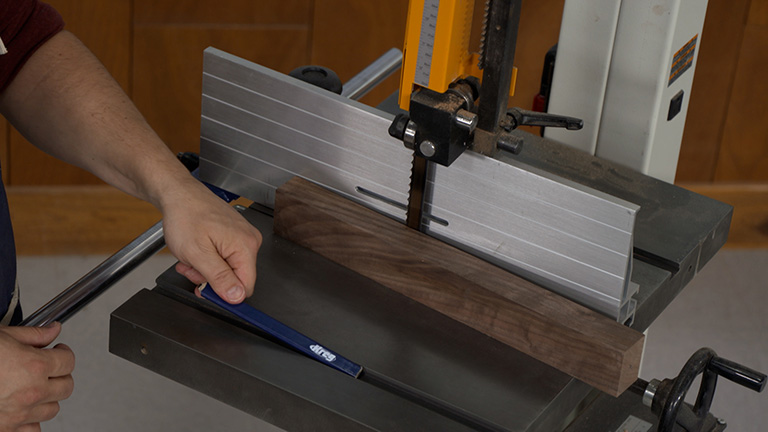
 A 1/2" blade tracks a straight line so that you can make smooth, straight cuts together with a rip fence. A push stick helps with making narrow cuts safely.
 This crosscut sled is sized for small workpieces. The base of the sled supports the part and prevents tearout on the bottom face. A stop block allows you to make multiple, identical parts.
 This band saw cuts stock up to 6" thick. This means you can cut thin parts from heavy planks, slice thin veneers, or transform firewood into prized material for special projects.
 Set up a stop block on your rip fence to cut tenons to length. With good visibility and excellent control of the workpiece, you can also make lap joints and tight-fitting dovetails.
Cutting large pieces of wood into small pieces is a fundamental operation in a workshop. The band saw is my primary cutting machine and there are several characteristics that makes it a centerpiece. My shop occupies the back of my garage. Like all shops, space is at a premium. My vintage Delta 14" saw takes a small amount of space. It’s also easy enough to move around to accommodate large workpieces.
SAFETY & SOUND.
The blade travels around the wheels, passing down through the table. This downward action provides stability during a cut. The blade is thin so it doesn’t require much power to work effectively. This means a small, quiet motor is all that’s needed. (Though wearing hearing protection is always a good idea when using power tools.)
MULITPURPOSE CUTTER.
In my experience, many people consider a band saw as little more than a glorified scroll saw for cutting curves. But, the photos above show a few of the ways a band saw is key to building furniture and other kinds of projects.
At the beginning of a project, I use the band saw to break down roughsawn boards into smaller, more manageable pieces. The narrow blade coupled with the downward cutting action deftly cuts around defects. You can also establish a straight edge freehand so that project parts follow the grain.
Fitted with a rip fence (every band saw needs a rip fence), you’ll easily rip parts to width, as shown in the upper left photo. I made a small crosscut sled for cutting parts to length as well, as in the upper right photo.
THICK TO THIN.
One type of ripping, called resawing, is used to take thick stock and turn it into thinner boards. Think of it like a sawmill. The near left photo above shows one type of resawing: creating your own veneer. I use the saw to rough cut blanks for carved bowls and spoons, as well.
JOINERY TOO.
The near right photo shows cutting tenons. Half laps and bridle joints are related tasks that a band saw easily handles. Creative Director Chris Fitch uses a technique for cutting dovetails that’s amazing.
SUPPORTING CAST
No one tool can do it all. In spite of my enthusiasm for the band saw, I find that its capabilities require other tools in order to really shine. Every super hero needs a sidekick or two. I think these few tools help you get the most out of your band saw. I’ll rank them in my order of preference. Of course you’ll need other tools. These are just the big rocks you can fill in around.
THICKNESS PLANER.
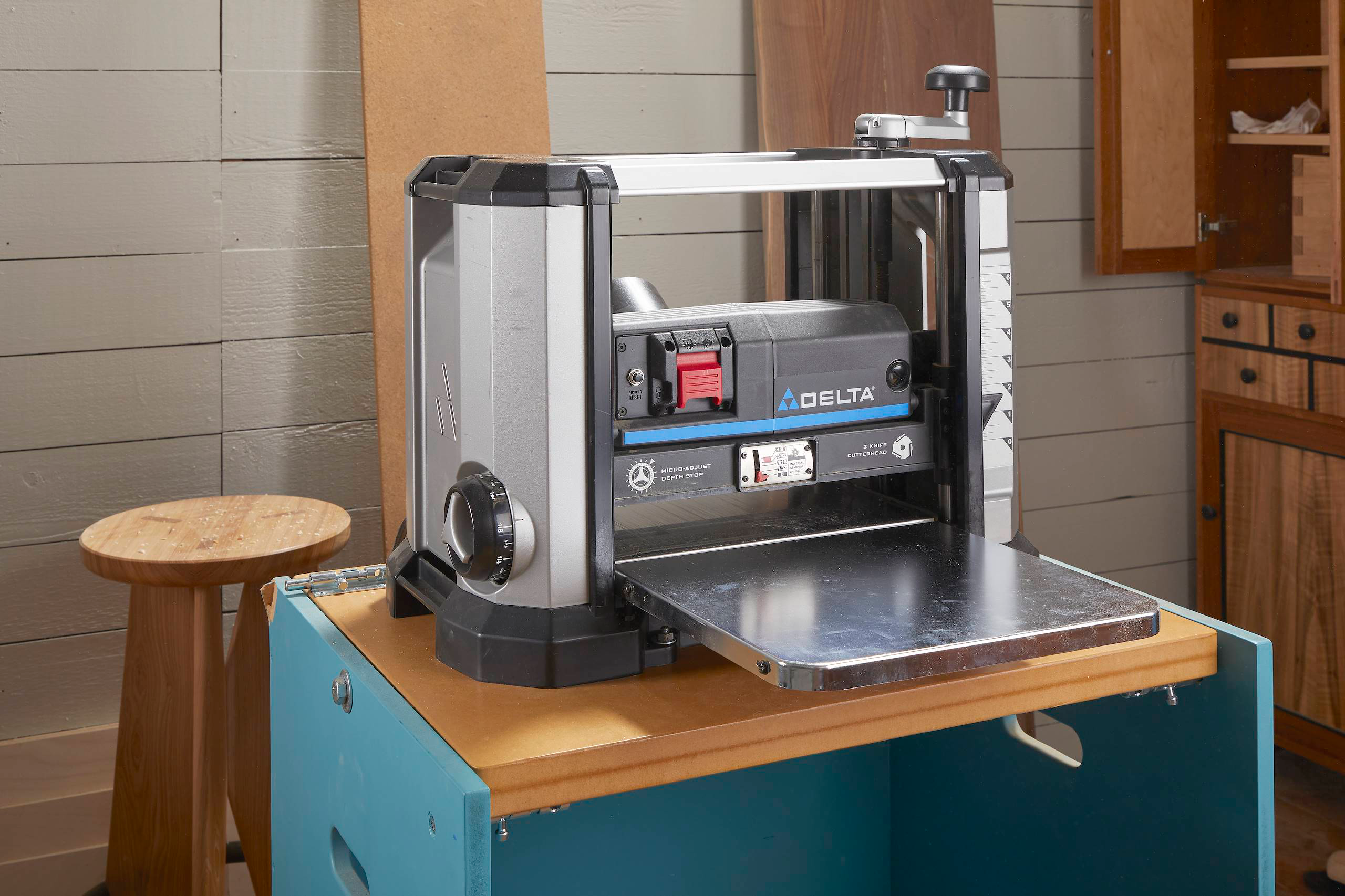
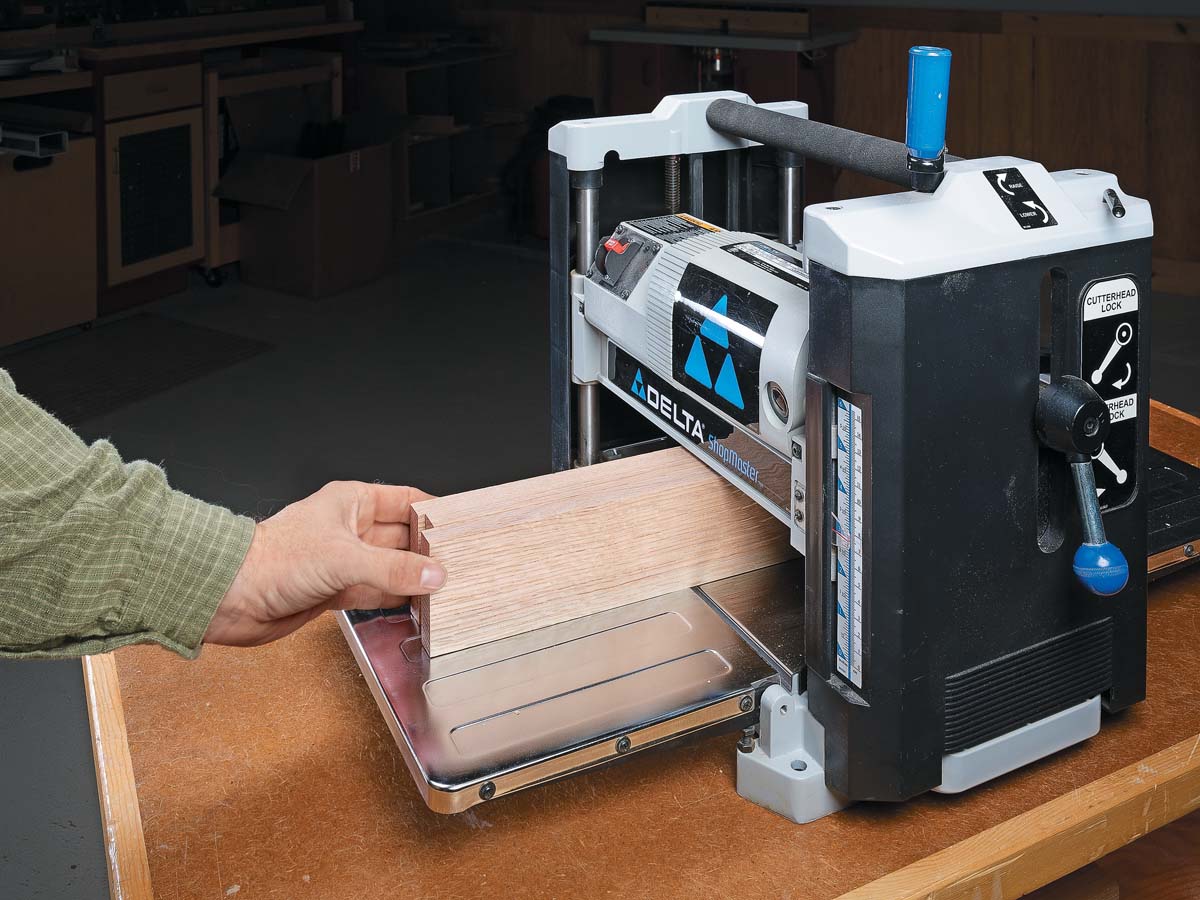
 A thickness planer can grind through wood to make thin stock. However, you’ll waste less material by cutting it first then refining the pieces at the planer.
Early in my woodworking, I considered a planer (shown above) as the primary tool for creating custom-sized stock. Its ability to chew through boards like a beaver is something of a marvel.
My only issue is that you end up turning a lot of expensive wood into gerbil bedding. When paired with a band saw, I see a thickness planer’s main role is as a smoothing and flattening tool. Rewsawing thick boards creates (at least) two thinner, and still usable, pieces. The process converts only a small amount of wood into sawdust.
From there you can send the project pieces through the planer. This removes the blade marks and brings the piece to its final and consistent thickness. The upper right photos show how you can do this on both faces and edges.
ROUTER TABLE.
Combination tools are appealing to me. Packing in features can save both space and money. That impulse can also lead to silly uses that fall into the “just because you can, doesn’t mean you should” category.
I mentioned earlier that a band saw can cut a variety of joinery. However, I don’t consider it my primary joinery tool. That title belongs to my router table (photos at left). This powerful, accurate machine does a much better job at all the joints I mentioned before. It can also cut joints that aren’t possible with a band saw: dadoes, grooves, box joints, just to name a few.
This partnership allows me to have dedicated stations for cutting and joining set up at the same time. It also takes the best advantage of the capabilities of each machine.
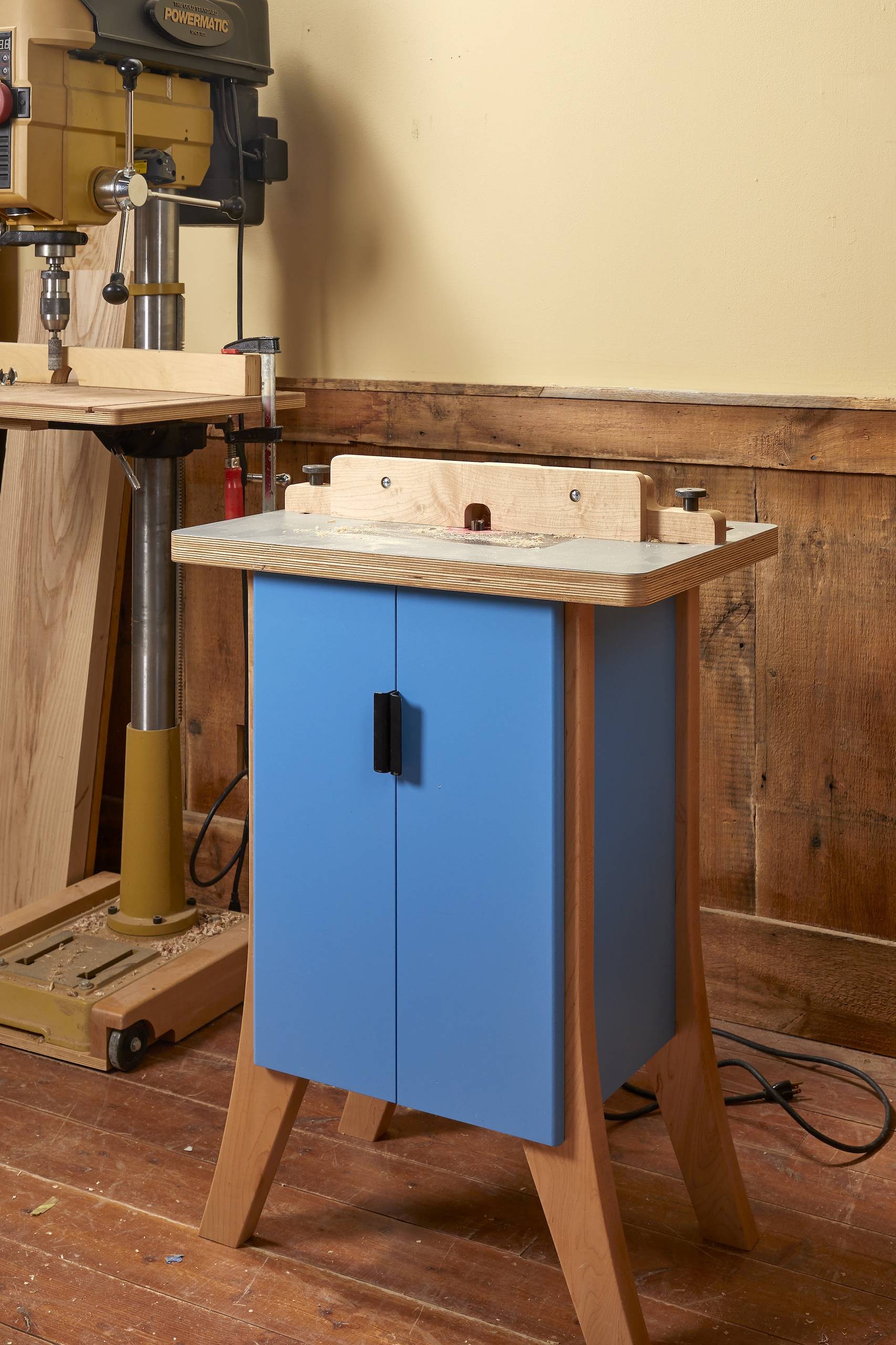
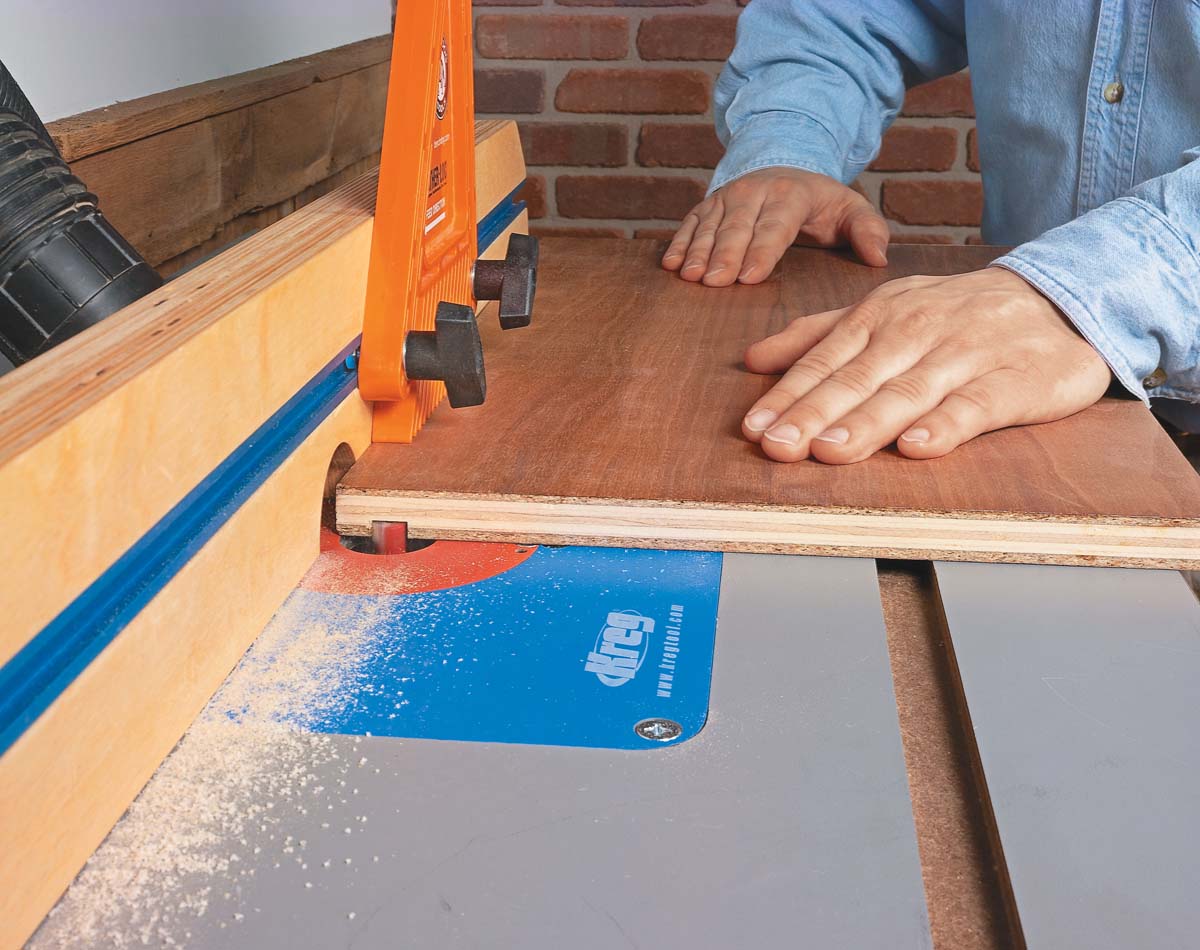
 Shaping profiles is only one role a router table fills. Most of the time, I use mine for joinery. Straight bits cut crisp, flat dadoes and grooves. And the large table holds joint-specific jigs like the box joint jigs at lower right.
DRILL PRESS.
This third tool might seem an odd part of the team. A drill press on its own is a versatile tool, as in the photos at right. Don’t be distracted by its hole-drilling reputation. Yet again, let’s look at in light of the hero.
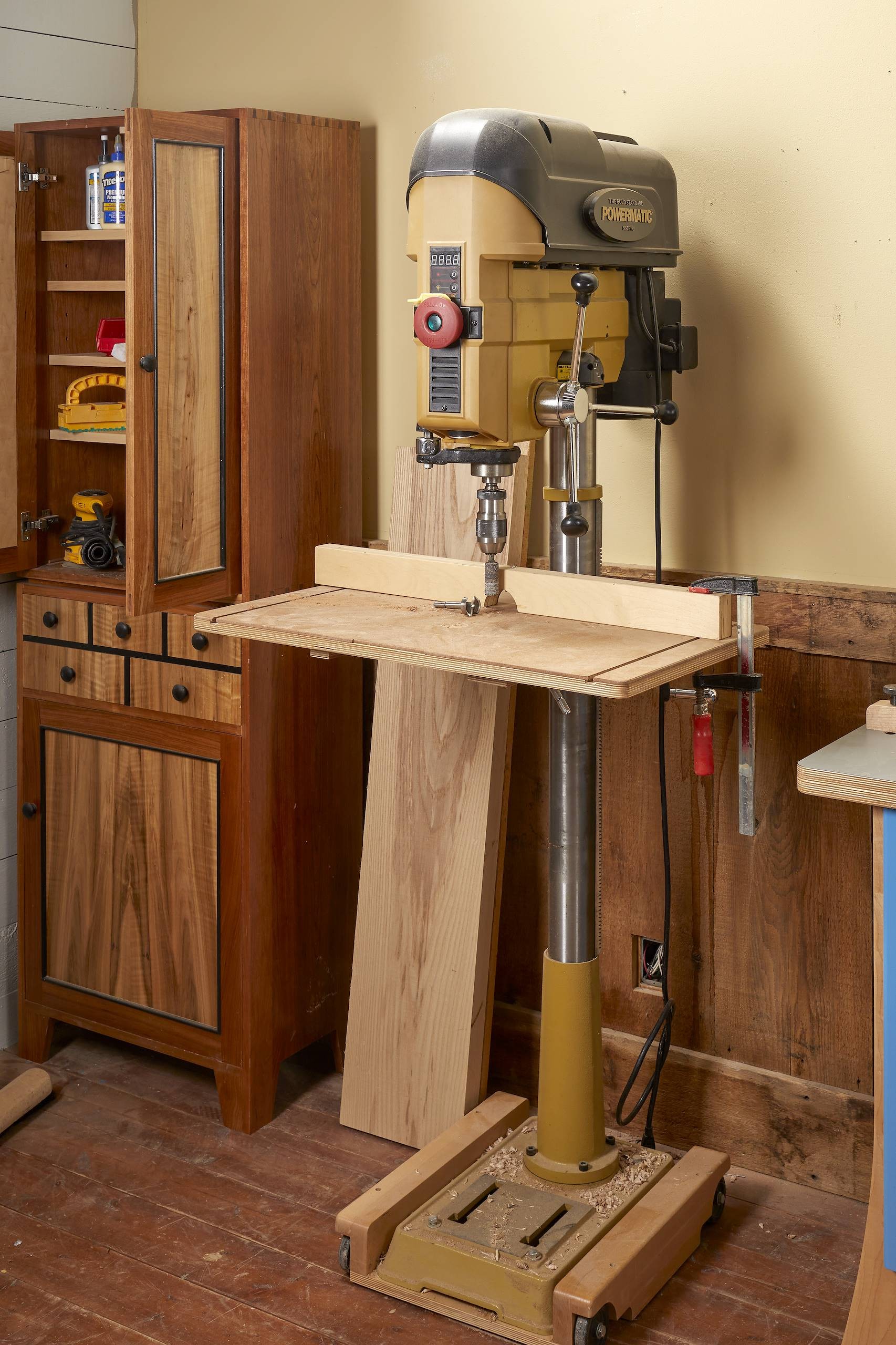
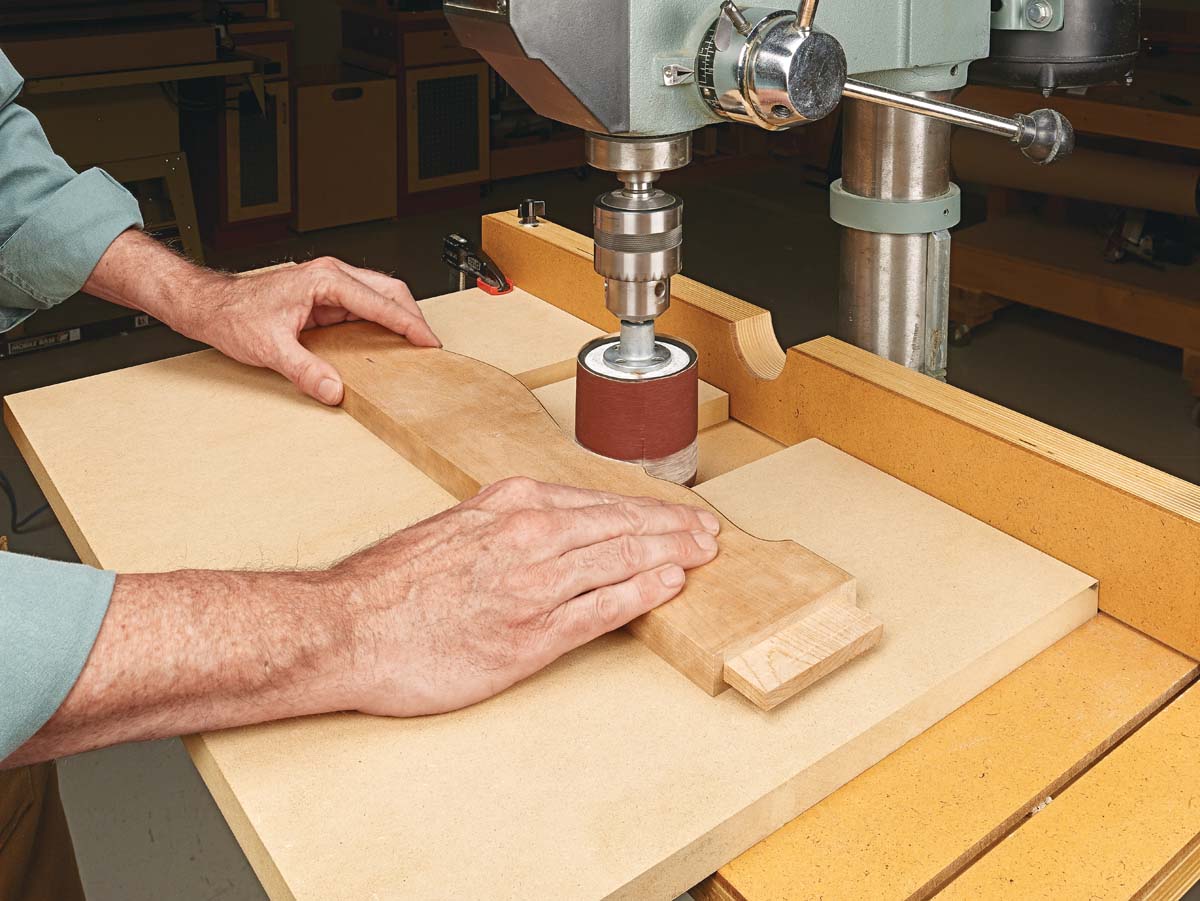
 It’s natural to think of a drill press as a hole-making machine. When you install a sanding drum, you can refine and smooth curves cut on a band saw. You can also use Forstner bits to shape tight curves instead of trying to cut them.
A band saw can cut curves like a figure skater on ice, but it leaves blade marks. A drill press fitted with a sanding drum allows you to erase those blade marks and refine edges. I’ll even turn to my drill press for shaping tight curves before I consider the band saw. A Forstner bit makes smooth, precise inside radii far better than my curve-cutting skills, no extra sanding needed.
HAND PLANE.
Big machines draw your eye in a workshop. Smaller tools can provide just as much benefit. In my woodworking, I’ve come to appreciate the tactile delight of using hand tools for a lot of woodworking tasks, and several come to mind when thinking about a band saw. There’s one that stands out most: a hand plane.
I’m showing my vintage jointer plane in the lower right photo. I use it like a relief pitcher. After the band saw does its work, the hand plane warms up to strike out blade marks and straighten rough cut edges with a few, well-placed swipes.
This gives me glue-ready edges. The lower left photos show other hand planes in action. A shorter jack plane or a smoothing plane can clean up the face of a workpiece to prepare it for another resawing pass.
I’ll taper table legs and other parts with a band saw, then use a hand plane to work down to the line. In a similar vein, you can cut odd-angle miters at the band saw, then smooth and refine the surface with a block plane.
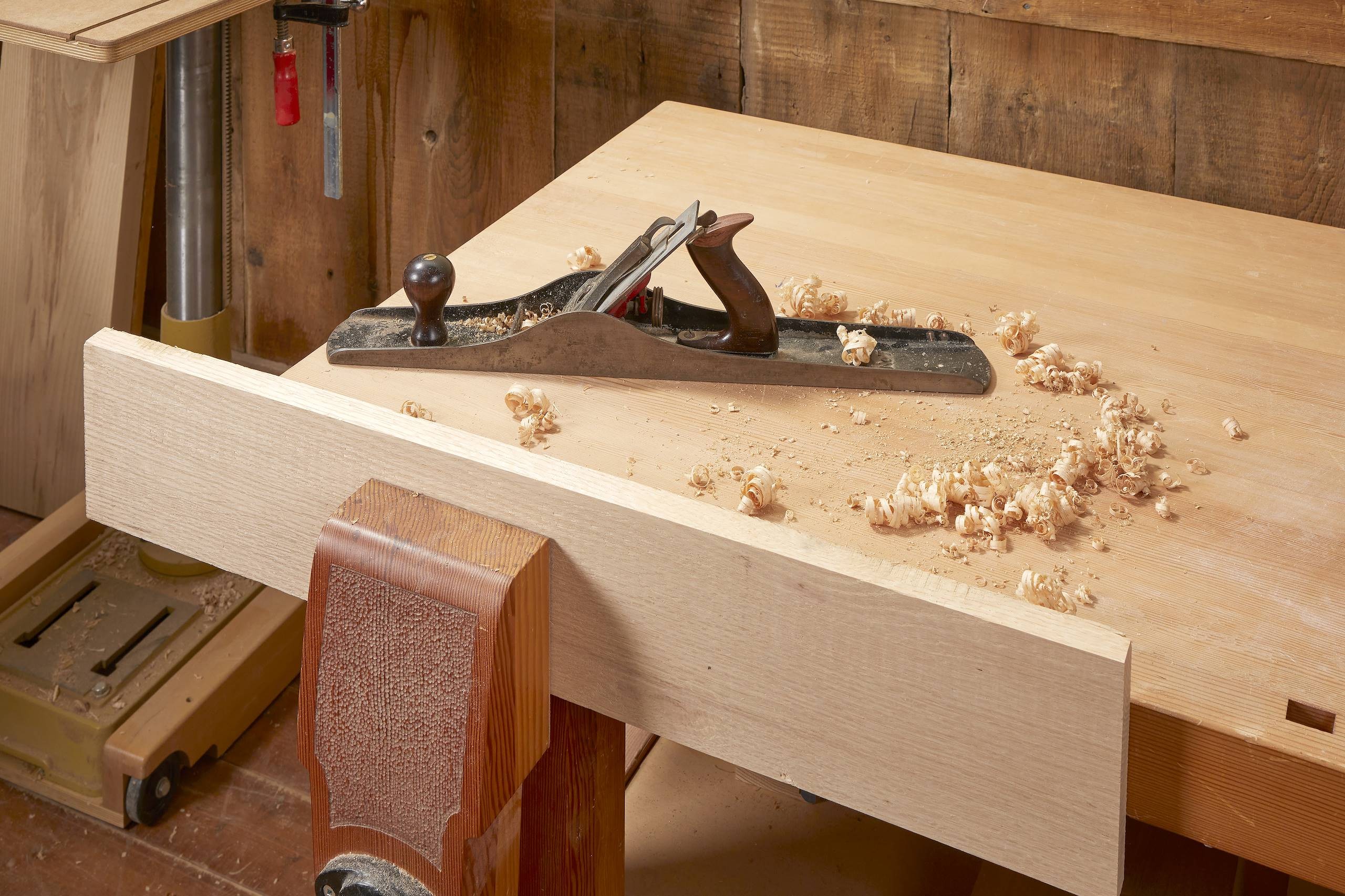
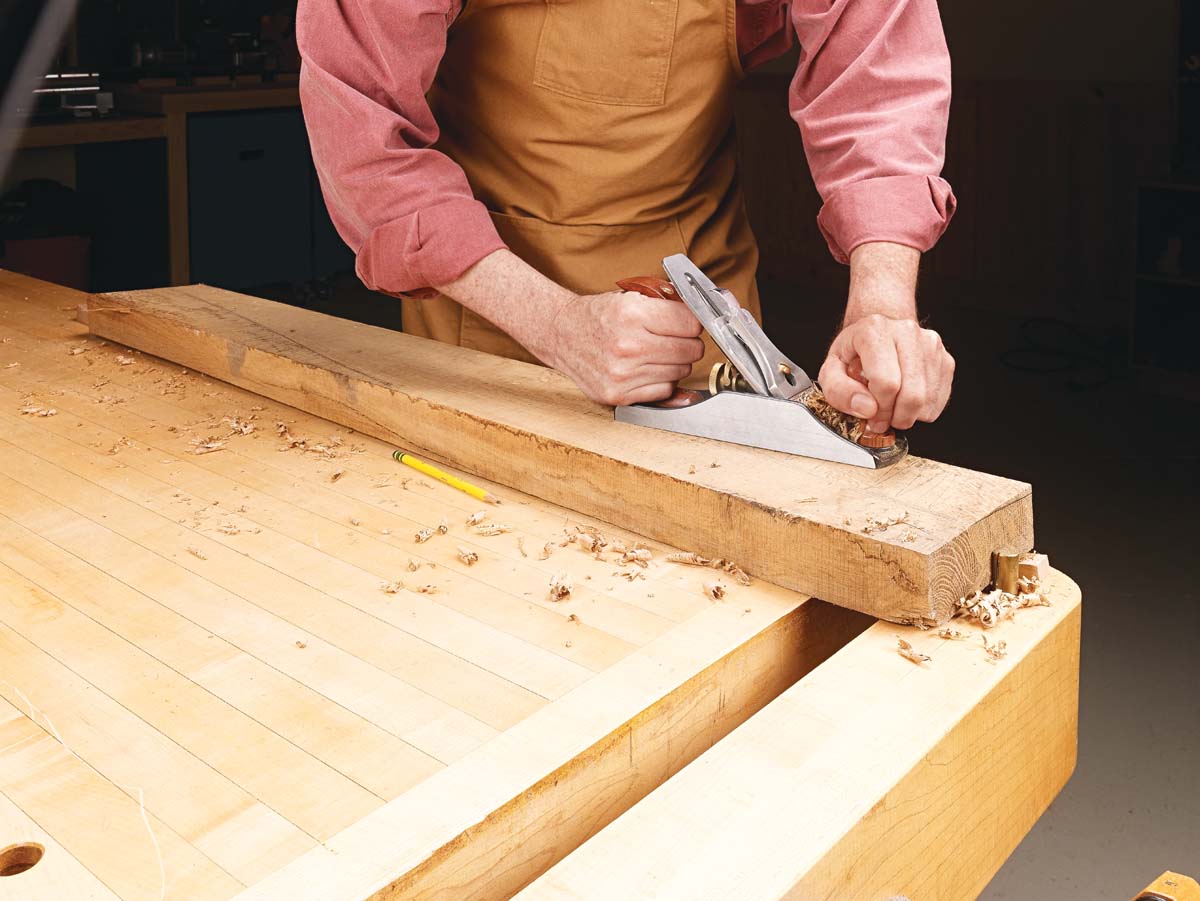
 My jointer plane has a long sole that makes it easy to straighten and clean up band sawn cuts. You may consider using a smaller smoothing plane to tackle faces or a jack plane for edges.
CLOSING THOUGHTS.
I’ve made my case. You can see how vital a role a band saw plays in the dance of building projects. And I fully realize there are several other ways of outfitting a shop. More than anything, I hope to give you another way of looking your tools, not as standalone machines, but how they relate to each other. While I’d love to convince you that a band saw is essential, it’s really the woodworker that makes the tools soar.