


You can build a beautiful project, get the joinery just right, and carefully prepare every surface — only to run into trouble when it's time to apply the finish.
Brush marks, bubbles, lint, and uneven coverage aren't always problems with the finish itself. Sometimes, the applicator is the culprit.
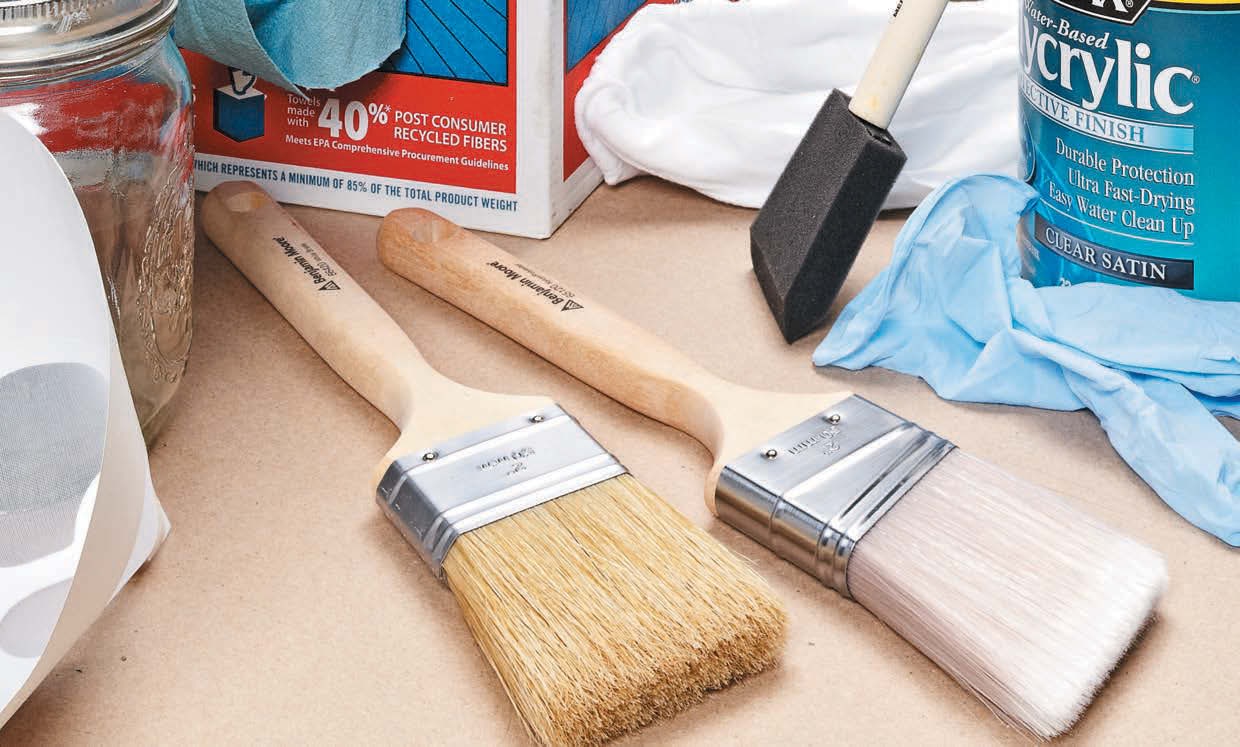
The key is matching the applicator to the finish you're using. Natural and synthetic bristle brushes, foam brushes, wiping rags, paper shop towels, and pad applicators all have a place in the finishing cabinet. Knowing when to reach for each one can make applying a smooth finish much easier.
What's the Best Applicator for Wood Finish?
There's no single applicator that's best for every finish.
The first thing to consider is whether you're applying an oil-based or water-based finish. From there, think about the size and shape of the project, how heavy a coat you need to apply, and whether the finish is intended to be brushed or wiped.
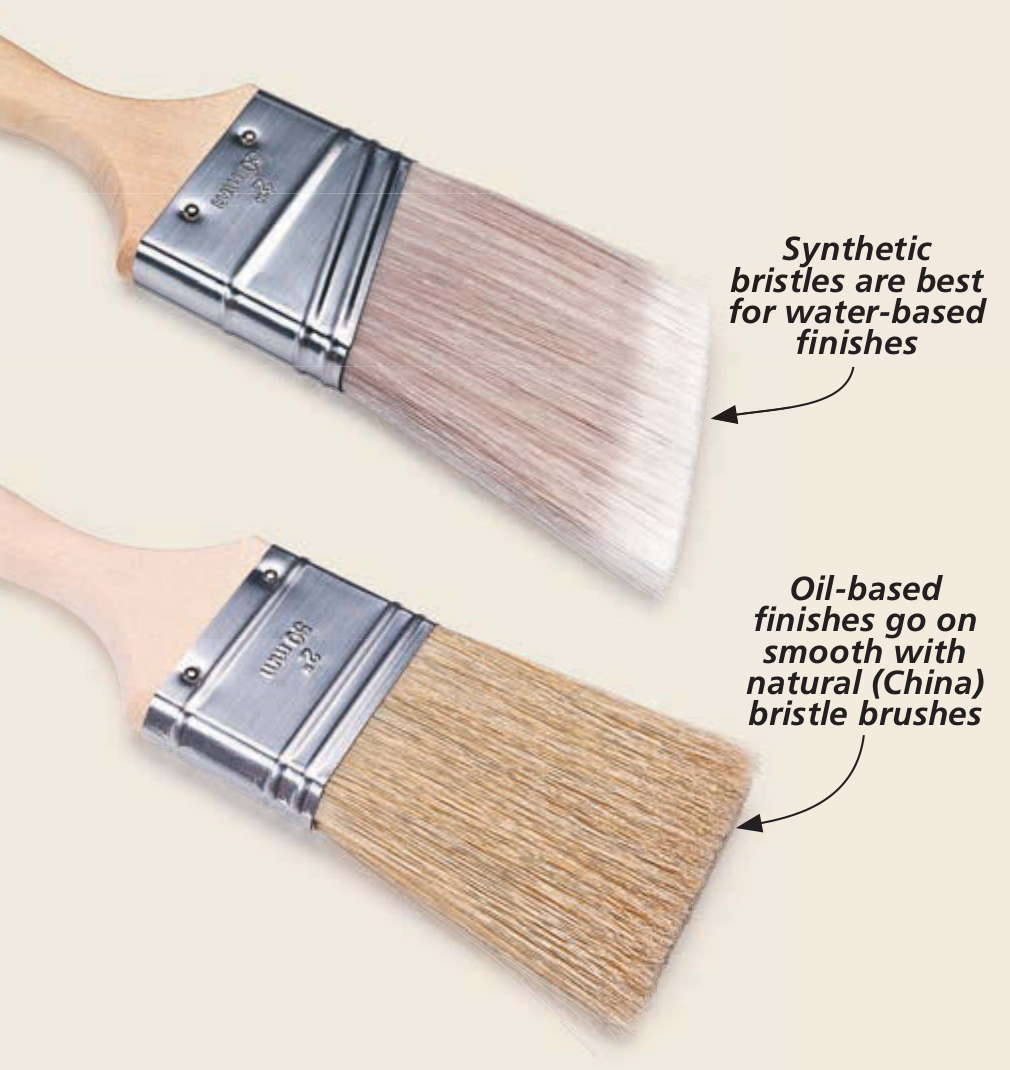
For many finishes, a quality brush is still one of the most effective choices. But even then, you need to select the right type of bristle.
Natural-Bristle Brushes for Oil-Based Finishes
A natural-bristle brush is a good choice for applying oil-based varnish, polyurethane, and alkyd paint.
Often called China bristle brushes, these brushes are traditionally made from hog bristles. The natural bristles have split ends, or flags, that help hold finish and lay it onto the surface smoothly.
Because the bristles hold a generous amount of finish, you can also cover more surface between trips to the can.
Natural-bristle brushes aren't a good choice for water-based finishes, however. Natural fibers absorb water and become soft and limp, making it difficult to maintain a smooth, controlled application.
For water-based finishes, switch to synthetic bristles.
Synthetic Brushes for Water-Based Finishes
When applying a water-based finish, such as water-based polyurethane or latex paint, reach for a synthetic-bristle brush.
Nylon is a common choice. Quality synthetic brushes are manufactured with flagged ends that help them lay down a smooth coat much like natural bristles do with oil-based finishes. Some synthetic brushes also have tapered or shaped bristles designed to improve control and leave a smoother surface.
Most importantly, synthetic fibers don't absorb water and go limp the way natural bristles can.
Woodsmith Tip: Match the Brush to the Finish.
As a simple starting point:
Oil-based finish → Natural-bristle brush
Water-based finish → Synthetic-bristle brush
Then check the finish manufacturer's application recommendations before you start.
When to Use a Disposable Brush
Not every finishing job calls for your best brush.
Disposable bristle brushes are handy for small parts, touch-ups, and areas that need finish before assembly. They're inexpensive, convenient, and eliminate most of the cleanup.
For example, they're useful for applying finish to small items such as wooden drawer knobs.
The tradeoff is capacity. An inexpensive disposable brush is usually thinner than a quality finishing brush and doesn't hold nearly as much finish. That means more dipping and extra work when covering a large surface.
Save them for small jobs where convenience matters more than speed.
Foam Brushes for Wood Finish
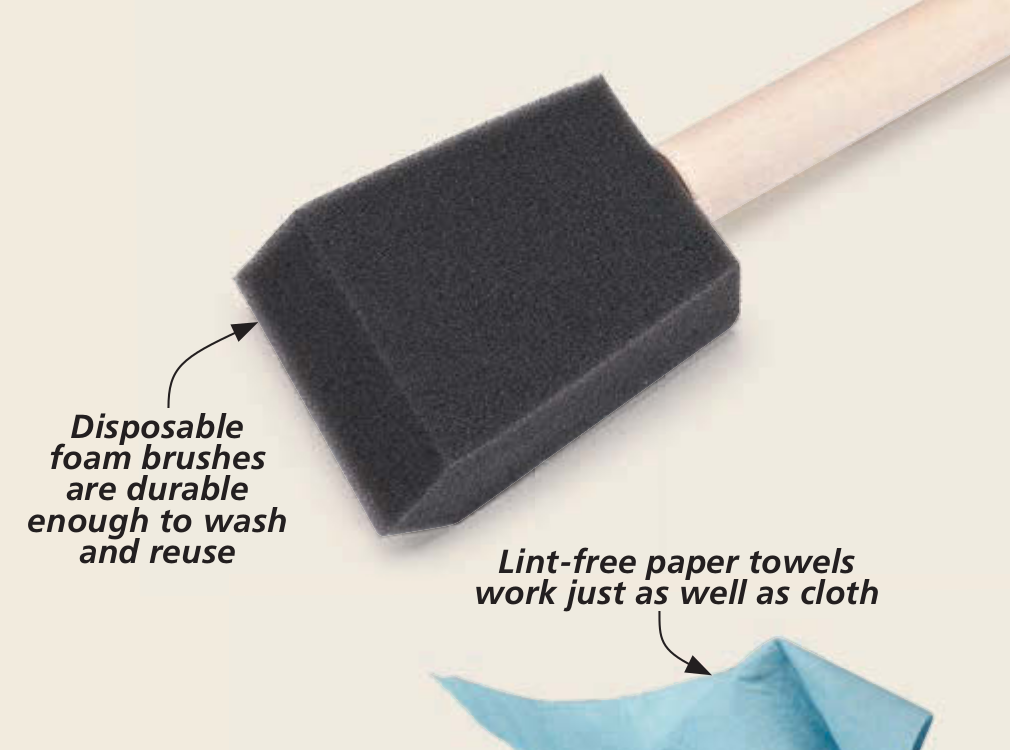
Another inexpensive option is a disposable foam brush.
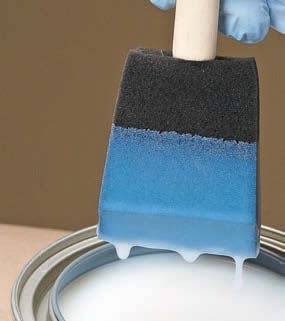
Foam brushes can work well with water-based finishes and some oil-based products. They're especially handy when you want a smooth application without cleaning a bristle brush afterward.
There are a couple of limitations to keep in mind.
First, don't assume a foam applicator is compatible with every finish. Some solvents found in finishes such as shellac and lacquer can damage the foam.
Second, foam brushes can introduce bubbles into the finish if they're handled aggressively.
One common mistake is scraping the foam brush against the rim of the container to remove excess finish. Instead, dip the brush into the finish and allow the excess to drain off naturally before moving to the workpiece.
That helps minimize bubbles before the finish ever reaches the wood.
Wiping Finish with a Rag
If you want to avoid brush marks altogether, a rag can be an excellent applicator.
A cloth works especially well with wiping finishes and many oil-based finishes. Rather than laying down one relatively heavy coat, you can wipe on several thin, even coats.
Thin applications tend to level easily and dry relatively quickly.
For the applicator, use a clean, lint-free cotton cloth. Cotton jersey and old T-shirt material are good choices because they're absorbent, soft, and less likely to leave lint embedded in the finish.
Woodsmith Tip: Fold the Rag into a Pad. Rather than working with a loose handful of cloth, fold the material into a small pad with a smooth face. It gives you better control and makes it easier to apply a thin, consistent coat.
Paper Shop Towels Can Work, Too
Heavy-duty paper shop towels provide another convenient option for wiping on finish. They're designed to stay together better than ordinary kitchen paper towels and can be used much like a cloth rag.
They aren't as durable as cotton, so replace the towel as soon as it begins to break down or tear. You don't want pieces of paper or loose fibers ending up in a wet finish.
For small projects and quick applications, the convenience can make them worth keeping with your finishing supplies.

Pad Applicators for Large, Smooth Surfaces
There's another applicator that's worth considering, particularly when you're finishing a broad, flat surface.
A pad applicator combines some of the characteristics of a foam applicator and a bristle brush.
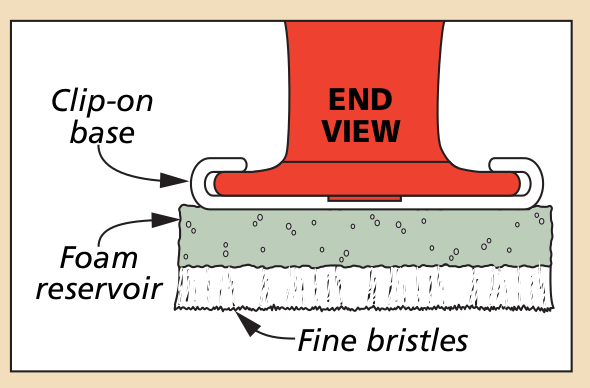
The sponge portion holds the finish while short synthetic fibers distribute it across the surface. This allows you to cover a relatively large area while still laying down a smooth coat. Smaller trim pads can be useful for working in confined areas.
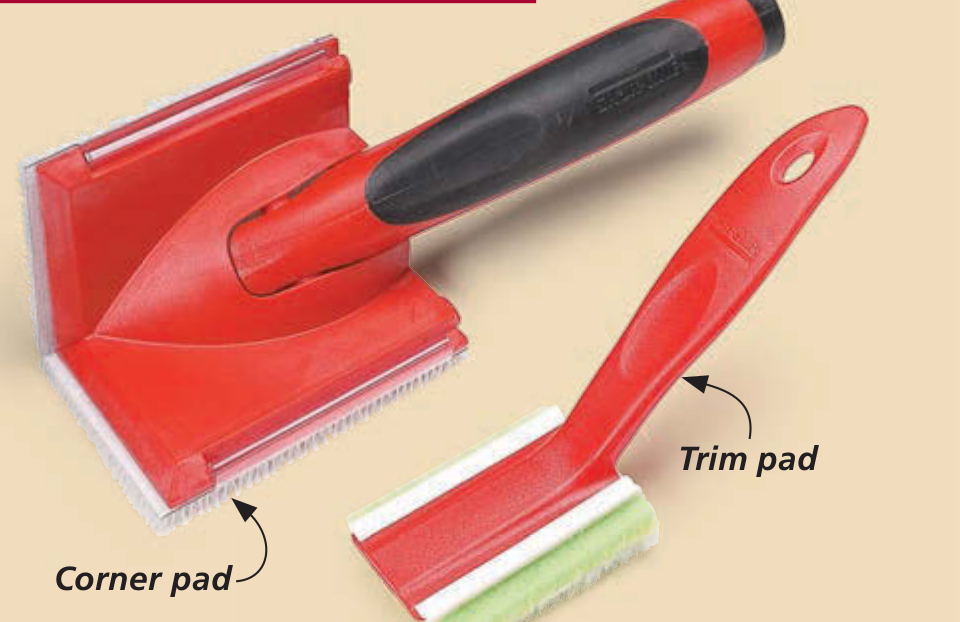
Pad applicators are available in several shapes, so you can select one that suits the size and shape of the project.
Wood Finish Applicator Quick Guide
When you're standing at the finishing bench deciding what to use, these guidelines provide a good starting point:

The finish manufacturer's directions should always take priority when they specify a particular application method.
Clean and Store Your Finishing Brushes
A quality finishing brush can last a long time if you take care of it.
Follow the finish manufacturer's cleanup recommendations. In general, the appropriate solvent is used for compatible oil-based finishes, while many water-based finishes clean up with soap and water.
Work the cleaner thoroughly through the bristles until all traces of finish are gone.
After cleaning a good brush, reshape the bristles and store it properly. If you still have the original brush keeper or package, it's a good way to protect the bristles and help maintain their shape between uses.
Safely Dispose of Oil-Soaked Rags
There's one finishing habit that's much more important than avoiding brush marks: Don't leave oil-soaked rags crumpled in a pile.
Rags containing drying oils and some oil-based finishing products can generate heat as the finish cures, creating a fire hazard.
Follow the disposal instructions on the finishing product you're using. Don't toss wet finishing rags into an ordinary trash can or leave them bunched together on the workbench.
When appropriate for the product and your local disposal requirements, spread used rags out individually in a safe location away from combustible materials so heat can't build up while they dry.
It's a simple precaution that should be part of every finishing routine.
Better Finishes Start with the Right Applicator
Getting a smooth finish isn't only about choosing the right product. How you put it on matters, too.
Use natural bristles where they're best suited, switch to synthetic bristles for water-based products, and consider foam brushes or disposable brushes for smaller jobs. For wiping finishes, a clean cotton rag may be all the applicator you need.
Match the tool to the finish before you open the can, and you're already one step closer to a smooth, professional-looking result.
Not Sure Which Wood Finish to Use?
Choosing the applicator comes after choosing the finish. If you're deciding between oil, shellac, varnish, polyurethane, or other options, our complete guide explains the differences and helps you match the finish to the project.
EXPLORE WOOD FINISH OPTIONS → Best Wood Finish: How to Choose the Right Finish for Any Project


