



Comparing the Top Bench Vises of 2024
Best Overall

When it comes to the best bench vises in 2023, Yost has various options available for both home and professional use. One of them is this multifunctional bench vise that can be purchased in an array of sizes from 4.5″ up to 8″. Made from high-quality cast iron and steel, this tool can withstand high clamping pressure, to securely hold down your workpieces.
Pros
- 360-degree swivel base for more control
- Wide jaw opening and width fits most workpieces
- cast iron and steel build for durability
Cons
- Might not be ideal for heavy use
Key Features
Made from heavy-duty machined steel and cast iron, this bench vise features a pipe and bench combination design, letting you use it in a variety of ways to hold items of different materials. It features a 360-degree swivel base and a torque rating of 73 foot-pounds, making it an extremely durable and versatile tool to have in your workshop. The bench vise comes in different dimensions, making it easy to secure workpieces of most sizes; the smallest one has a jaw opening of 4 inches, a jaw width of 4.5 inches, and a throat depth of 2.62 inches.
Runner Up

Made from forged iron, this bench vise is one of the strongest and most durable you can hope to buy. It can last for years with minimal wear and tear, providing the strength and grip you need. The square design fits perfectly under any table, and the toe-in top jaw makes sure that the workpiece is firmly clamped inside.
Pros
- Relatively inexpensive, great option for amateur woodworkers
- Compact-sized for easy storage
- Forged iron construction for durability
Cons
- Not ideal to hold bigger workpieces
Key Features
Ideal for woodworking projects and DIY jobs around the home, this bench vise features a square body seating for simple under-bench installation. Its compact size helps with easy storage and also places it at the lower end of the price spectrum. The 4.5-inch jaw capacity is great for light to medium workload, however, this bench vise isn’t suited for heavy-duty tasks.
Honorable Mention

Wilton is another reliable brand that offers some of the best heavy-duty bench vises in the market. With its 4″ jaw opening and double lockdown swivel base, this bench vise is highly reliable and versatile enough to be used in a lot of different ways, depending on the work you’re doing. The bench vise has a lifetime warranty which makes it a durable tool to invest in.
Pros
- Lifetime warranty
- Double lockdown mechanism to keep workpieces secure
- 360-degree swivel base for more control
Cons
- The jaws can be a little difficult to open
Key Features
Constructed with high-strength steel, this heavy-duty bench vise is built to last. It can be used again and again with various items and materials, never showing a single sign of weakness. This tool is built for more rugged use and has a maximum opening capacity of 3 inches. The bench vise has a large anvil and a double lockdown mechanism to keep your workpiece secure for more precision. Its high-quality steel construction is backed by a lifetime warranty in case of breakage.
Contender

Offering extraordinary power and grip strength, this bench vise has serrated jaws that keep all your workpieces securely locked in place for precise filing and sawing. the swivel base rotates in all directions once it’s securely mounted on the stand.
Pros
- Quick-release spindle and screw
- Durable cast iron construction
- 360-degree swivel base rotates in all directions
Cons
- Not ideal to hold bigger workpieces
Key Features
HFS offers a variety of bench vise models for both home and professional use. This particular model is made of cast iron, which makes it strong enough to last a lifetime. The anvil forged, 360 swivel desktop clamp features a double locking base and hardened steel jaws, making it great for heavy-duty work. The 4-inch jaw opening ensures that it can hold workpieces of most sizes. The spindle and screw are designed to release the materials quickly for more efficient work.
Also Consider

The serrated steel jaws of this bench vise give it one of the strongest grips of any model on the market and help to ensure that any workpieces you’re using won’t slip or slide as you work on them.
Pros
- Replaceable steel jaws provide a non-slip grip
- 120-degree swivel base for easy adjustment
- Durable cast iron construction
Cons
- The instructions in the paper diagram can be confusing to read
Key Features
Available in three different size variants from 4″ up to 8″, this 120-degree swivel bench vise offers 30,000 psi of tensile strength, ready to grip tightly and firmly onto workpieces of most sizes. The bench vise is made of cast iron which enables it to withstand more pressure without breaking. Like most reliable brands, Tekton offers a lifetime warranty with its product, although you might not be needing it, judging from customer reviews.
Buyer's Guide for Finding a First-Rate Bench Vise
Go into any woodworking shop in the world, and you will see a bench vise. In fact, you’ll probably find one on every workbench on the floor. These nifty devices are a carpenter’s best friend when they’re crafting pretty much anything. Bench vises are like an extra pair of hands when you need to keep a piece of wood in place. Bench vises are also extremely popular in the mechanic industry. But do you know anything about buying them? We’ve put together this handy guide to help you know what to look out for when shopping for a bench vise.
What Is a Bench Vise?
A bench vise, also known as a woodworking vise, is a piece of mechanical equipment used to fix an object in place, ready to be worked on. Woodworking vises are built with two parallel jaws that lock a piece of wood or metal sheet, so it cannot move. You are most likely to find these apparatuses in a carpenter’s workshop or a garage or factory.
Which Type of Bench Vise Do I Need?
There are lots of different bench vises for different workplace environments. For example, plumbers will use a pipe bench vise that features specially-designed jaws to hold PVC or metal pipes. These are available with chains or yoke.
There are also metalworking and woodworking bench vises (usually heavy- or medium-duty) that have their own applications relating to those specific industries – although some woodworking vises can be used in metalwork as well.
How Can You Stay Safe When Using a Bench Vise?
Obviously, worker safety is of paramount importance when using a woodworking vise. If you plan to buy one, you will do well if you follow certain procedures to ensure you do not harm yourself in the process.
Always cover your face
This is the general rule of thumb for any job you do in your workshop. Make sure you cover your face (including your eyes) with safety glasses and a shield. Nobody wants to go to the emergency room with a piece of plywood stuck in their cheek.
Double-check the bench vise is secure
Even if you have already checked, it’s a good idea to make sure the bench vise is secured to the table, and all the bolts are in the right place, especially if somebody else uses your workshop as well.
Keep the stationary jaw beyond the end of the workbench
You do not want any long pieces of wood interfering with your task. That is why you should ensure the stationary jaw of the woodworking vise is kept over the edge of your work table, off to one side so you are free to work on the other side of the vise. Also, you should always check that your table can take the strain of the bench vise and whatever you are working on. However, most quality workbenches should have no problem with any carpentry or mechanic tasks.
Don’t give the bench vise more than it can handle
Depending on the bench vise, it will only work properly if you ensure the material size is compatible. In other words, don’t try to clamp an entire door with a $20 bench vise.
Always check the clamping
It’s a good idea to check the vise’s clamping on your workbench before diving straight into your material. If the clamp is faulty, you could injure yourself or ruin the material and have to start again. Make sure to allow the vice to securely clamp onto as much surface area as is safely possible.
Do not widen the jaws more than necessary
Woodworking vises are designed to widen to a certain length. If you try to extend them further for a thick piece of material, you risk damaging the vise or hurting yourself. The opposite is also true: do not tighten the bench vise more than necessary.
What Should I Consider Before Buying a Bench Vise?
There are several factors to take into account when purchasing a woodworking vise. Some of them include:
Required jobs
Many industries benefit from a bench vise in the workplace. Carpenters, welders, and machinists require a heavy-duty model to handle a lot of materials and tasks. If you buy a bench vise for home use, you do not need more than a 4 or 5-inch tool for DIY jobs. The inches denote the jaw length from end to end.
Throat depth
The throat of a bench vise is the distance from the top of the slide to the top of the jaws. If a bench vise has a long throat, it can hold large workpieces without any hassle. Before making a purchase, unwind the bench vise as far as it will go to ensure it can cope with the required tasks.
Overall construction
No two woodworking vise models are the same. If you compare them side by side, they may look similar, but one may feel much heftier than the other. If you need a bench vise that can take a beating when working on a workpiece, you want to invest in one that is well-constructed. You may also want to consider if your workbench is sturdy enough to support one of the heavier bench vise models.
How Much Do Bench Vises Cost?
Woodworking vises vary in price depending on their usage, construction, and design. If you require a bench vise for small DIY jobs around the home, you can find them for as little as $30, sometimes even less. However, industry-standard bench vises are going to cost extra.
You can expect to pay up to $600 for the very best vises on the market. Typically, the most popular woodworking vise will be priced between $50 – $150. No matter your price point, you will be able to find a bench vise that should serve you well.
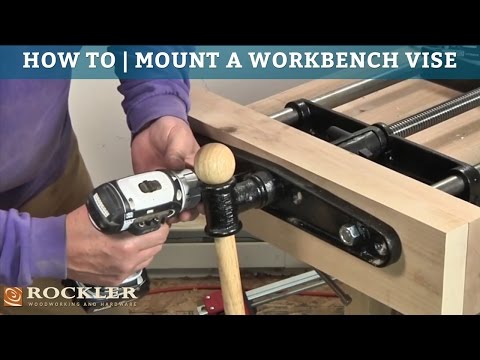
Installing a Bench Vise
To learn about how to use a bench vise, view this tutorial from Rockler Woodworking and Hardware:
People Also Asked
Can I attach a bench vise onto any table?
Bench vises are designed for workbenches that are strong enough to take the weight of both the vise and the workpiece. Generic tables are not built with the adequate support required for these sorts of jobs, but if you have no alternative, make sure you do plenty of checks to ensure there is no risk of damaging the vise, the surface, or yourself.
How big should my bench vise be?
The size of the bench vise depends on how you plan to use it. If you are only doing DIY projects, you can use a small, lightweight vise. For more industrial jobs, you’ll need a bigger vise that can handle more heavy-duty tasks.
How should I maintain a bench vise?
The maintenance of your bench vise is crucial for its longevity. Besides wiping the tool clean after every use, you can also remove the slide every once in a while to grease the spindle for easy tightening and releasing.


