


Paste wax is one of the simplest finishing products to apply, but understanding where it fits into a finishing schedule makes a big difference.
Wax isn't a substitute for a tough film finish. It doesn't provide the scratch, moisture, or heat resistance you'd expect from varnish or other protective finishes.
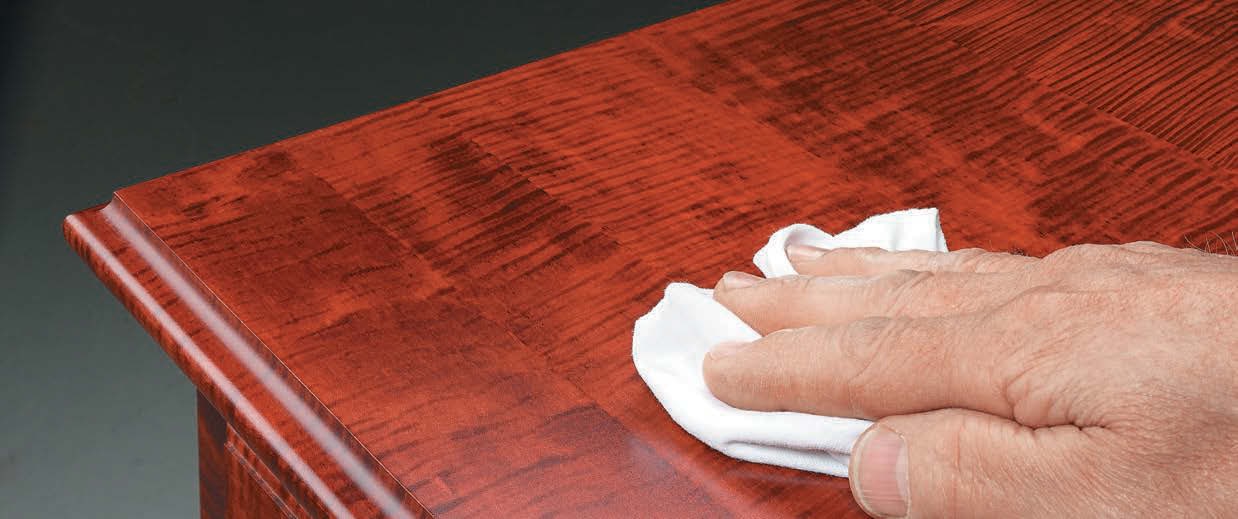
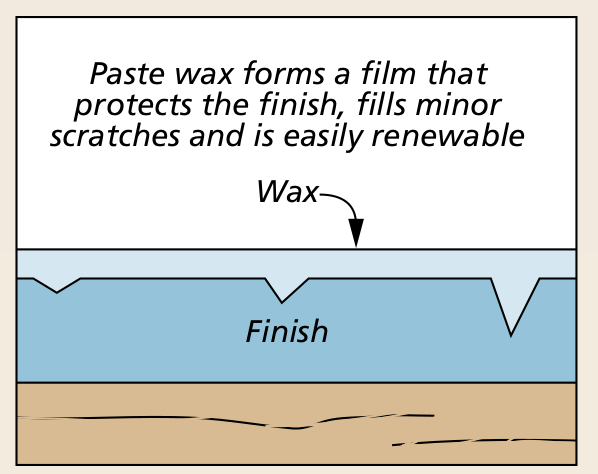
Instead, paste wax excels as a thin, renewable layer over an existing finish. It can add a consistent sheen, improve the feel of a surface, revive a dull finish, and take some of the everyday wear that would otherwise affect the finish underneath.
And when the wax starts looking worn, renewing it is relatively easy.
RELATED PROJECT: Queen Anne Lowboy
What Does Paste Wax Do?
The biggest benefit of paste wax isn't heavy-duty protection. Think of wax as a first line of defense for the finish underneath it.
The thin wax layer receives some of the handling and minor wear that would otherwise occur directly on the finish. And unlike the underlying finish, that wax layer can be renewed.
Paste wax can also change the appearance of a finished surface. Applied over a new finish, it can help create a more consistent sheen. Depending on the wax and how it's buffed, it can also increase the gloss.
On an older piece, a fresh application can revive a surface that's beginning to look dull.
Can Paste Wax Be Used as a Wood Finish?
Paste wax has limited usefulness as a stand-alone furniture finish. It doesn't create the hard, scratch-resistant film of a varnish, and its resistance to moisture and heat is relatively low.
For that reason, paste wax makes the most sense when you want to:
- Add a renewable layer over an existing finish
- Even out the sheen of a finished surface
- Increase the luster of a finish
- Refresh an older finish
- Add color or an antiqued appearance with tinted wax
For a piece that needs substantial protection from moisture, heat, abrasion, or heavy use, wax alone isn't the best choice.
RELATED ARTICLE: How to Choose the Best Wood Finish for Your Project
Using Paste Wax to Revive an Old Finish
One of the easiest ways to use paste wax is to refresh furniture that's beginning to look dull. A thin coat followed by thorough buffing can restore some of the sheen and improve the appearance of an older finish.
There's one important consideration if the piece has already been waxed. Old wax buildup may need to be removed before applying a fresh coat. A clean surface gives you a better foundation for an even application.
Mineral spirits or naphtha can be used to remove old wax where they're appropriate for the existing finish. Work with adequate ventilation, keep solvents away from ignition sources, and test an inconspicuous area before treating the entire piece.
Clear vs. Tinted Paste Wax
Most paste wax is essentially clear, but tinted wax gives you another finishing option.
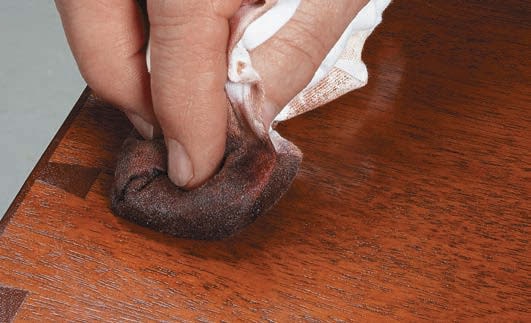
Tinted wax can be used almost like a light glaze. It adds subtle color and can help create an antiqued appearance.
It can also be useful on open-grained woods such as oak, walnut, and mahogany. Clear wax can sometimes leave noticeable light-colored residue in deep pores. A compatible tinted wax makes that residue less conspicuous while adding color to the surface.
Tinted wax can also help make shallow scratches in an existing finish less noticeable. As with any coloring product, test the wax on a sample or inconspicuous area first. The effect will depend on both the color of the wax and the surface underneath it.
What's in Paste Wax?
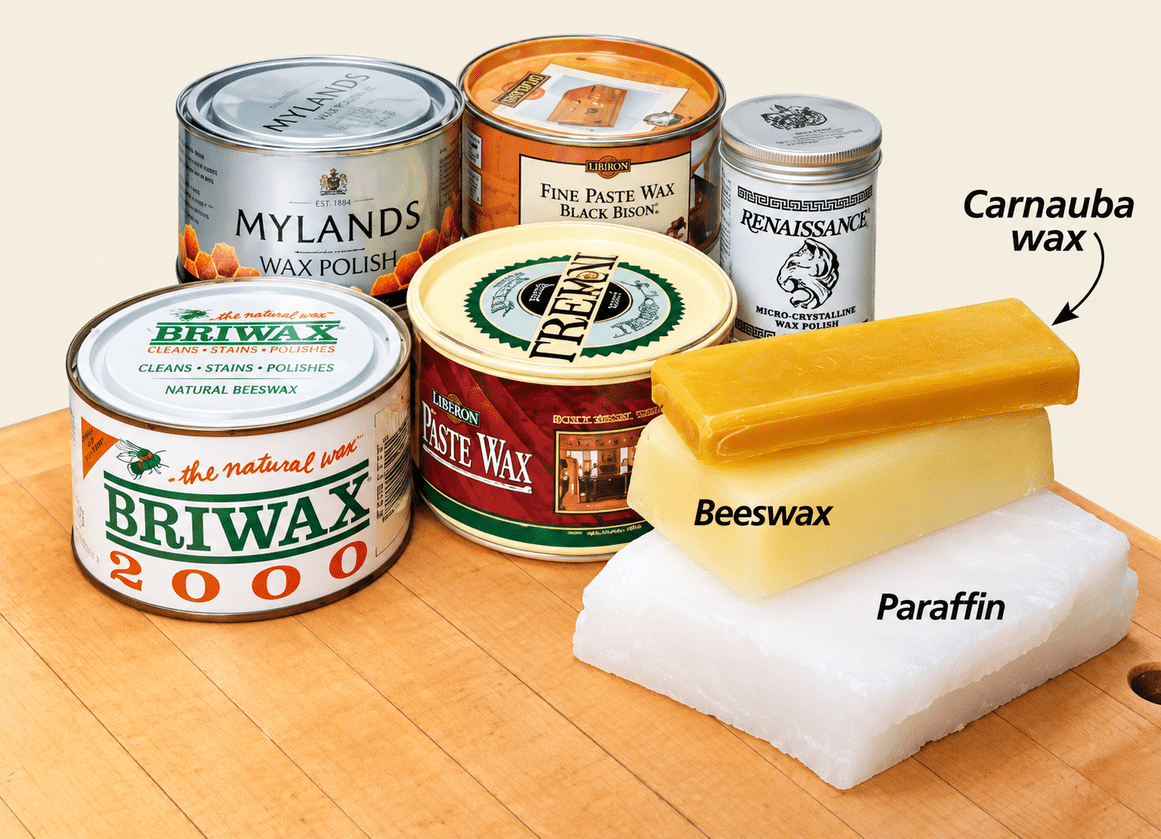
A typical furniture paste wax isn't made from a single type of wax. Most are blends of several waxes combined with a solvent. The solvent softens the blend into the creamy consistency that makes paste wax easy to spread.
Different waxes contribute different characteristics, including hardness, sheen, heat resistance, and moisture resistance.
Beeswax
Beeswax is a naturally occurring animal wax. It has a relatively low melting point and buffs to a softer film with a lower sheen.
It's also comparatively expensive, which limits how much is used in some blends.
Carnauba & Candelilla Wax
Carnauba and candelilla are plant-derived waxes. Both can form a harder film and can be buffed to a higher gloss. They're also relatively resistant to heat, making them useful components in blended furniture waxes.
Paraffin Wax
Paraffin is petroleum-derived. It's inexpensive, relatively soft, and clear, so it's a common component in wax blends.
Microcrystalline Wax
Microcrystalline waxes are also petroleum-derived. They're very clear and offer good water resistance. Their higher cost means they're often found where those properties justify the additional expense.
How to Choose a Paste Wax for Furniture
For furniture, look for a paste wax with a soft consistency that's easy to spread and buff.
Avoid assuming that a harder wax is automatically better. Very thick waxes formulated to create hard films — such as some floor waxes — aren't necessarily the best choice for furniture.
The goal is a product that allows you to apply an extremely thin, even coat and then buff it without excessive effort.
Clear wax is a versatile choice when you don't want to alter the color. Tinted wax is useful when you want to add color, create an aged appearance, disguise minor scratches, or avoid light wax residue showing in open pores.
How to Apply Paste Wax
The basic process couldn't be much simpler: Apply a very thin coat → allow it to set → buff it thoroughly.
The most common mistake is using too much wax. A heavy application doesn't provide a better finish. It simply leaves you with more excess wax to remove and makes it harder to achieve an even sheen.
Step 1: Pad On a Thin Coat
A simple cloth pad makes it easier to control the amount of wax you're applying.
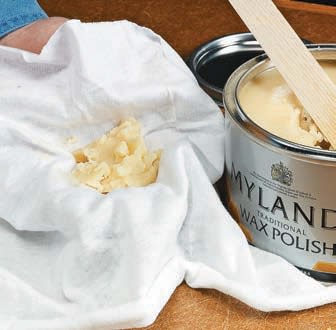
Use a piece of porous cloth, such as cheesecloth or clean T-shirt material.
Place a small amount of wax in the cloth and form it into a pad. As you rub the applicator over the surface, a controlled amount of wax works through the fabric.
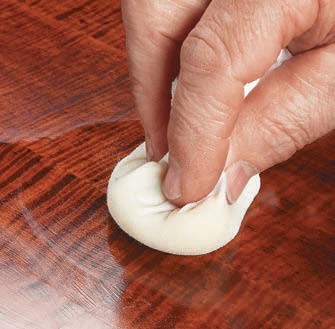
Work across the surface until you've applied a light, even film. You don't need a thick or visibly wet layer.
Woodsmith Tip: Thin Means Easier. If buffing paste wax feels like a major workout, there's a good chance you've applied too much. A very thin coat is easier to buff and makes it easier to produce a consistent sheen.
Step 2: Let the Wax Set
Don't start buffing immediately. Paste wax contains solvent that needs time to evaporate. As that happens, the surface loses its wet, glossy appearance and the wax begins to harden.
Timing matters. You want the wax firm enough to remain on the surface but not so hard that it becomes difficult to buff.
A setting time of around 10 to 15 minutes can be typical, but formulations differ. Use the manufacturer's directions as your guide rather than relying on the clock alone.
Step 3: Buff the Surface
Once the wax has set, use a clean, soft cloth to remove the excess and polish the remaining film.
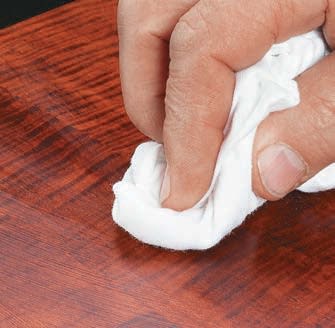
Rub the surface vigorously. A circular motion works well.
As the cloth picks up excess wax, turn or fold it frequently to expose a clean area.
The change should become obvious as you work. A surface that initially appears dull or streaky develops a smoother, more consistent sheen. Continue buffing until the surface feels slick and no excess wax remains.
How Much Paste Wax Should You Apply?
Very little. That's one of the most important lessons when working with paste wax.
You're not trying to build a thick film. The goal is to leave behind a thin layer that can be polished to an even sheen.
Several problems associated with paste wax — streaking, difficult buffing, uneven sheen, or a waxy feel — can result from simply applying too much.
When in doubt, start with less.
When Should You Reapply Paste Wax?
There's no need to wax furniture according to a rigid schedule. Instead, pay attention to the surface.
When the sheen begins to look dull or uneven and the wax layer appears worn, that's a better indication that the surface may need attention.
Before automatically adding another coat, inspect the existing wax. If there's significant buildup, cleaning away the old wax before reapplying can give you better results.
That's one of the advantages of this type of finish maintenance: the sacrificial wax layer can be refreshed without completely refinishing the furniture.
Paste Wax Is Simple — If You Keep It Thin
Paste wax doesn't replace a durable protective finish, but that's not really its job.
Used over an appropriate existing finish, it provides a thin, renewable surface that can improve sheen, revive an older piece, and give furniture a smooth, polished feel.
And the application couldn't be much simpler.
Pad on a thin coat. Let it set. Buff it thoroughly.
The biggest secret is also the easiest one to remember: when it comes to paste wax, less is usually better.
More Ways to Use Wax in Your Woodworking Shop
Paste wax isn't limited to furniture. Wax can also reduce friction, protect metal surfaces, lubricate tools, and help woodworking jigs slide smoothly.
Our 5 Ways to Use Wax in Your Woodworking Shop guide explains how to use paraffin, paste wax, and beeswax for screws, vise threads, hand tools, cast-iron machine tops, sliding jigs, and workbench surfaces.


