



Our Top Picks
Top Miter Saw Options of 2024
Best Overall Miter Saw

The DeWalt 12-Inch Miter Saw combines a powerful 15-amp motor with a host of features to make cutting jobs easier and faster. The stainless steel design makes precise, smooth cuts with the 12-inch double bevel sliding design. The high-capacity cutting machine accommodates crown molding and base molding with equal ease.
The DeWalt also earns praise for its smooth and quiet operation, especially among those who have used other miter saws in the past. Features such as the XPS cross-cut positioning system enable you to perform accurate cuts without having to adjust the saw repeatedly, so even the most complex tasks can be done with ease. That’s why this is the best overall miter saw on this list.
Pros
- Features 14 positive dent stops
- Bevels go up to 48 degrees
- Tall sliding fences
Cons
- Owner’s manual missing from packages
Best LED Cut-Line Indicator

The WEN 15-Amp 10-Inch Miter Saw is one of the top of the line miter saws available on the market today. It is a must-have for any serious woodworker or DIY enthusiast.
This saw is powered by a powerful 15-amp motor, which makes it ideal for cutting boards up to 12 inches wide and 3-1/2 inches thick. The miter options are amazing, with 45-degree miter cuts in either direction and a 45-degree bevel cut to the left. It also includes a Class II laser guide which illuminates your line of cut, making it much easier to make accurate cuts.
One of the best features of this saw is its capacity. It has a 7-1/2-inch crown molding nested capacity and a 6-3/4-inch baseboard vertical capacity, making it possible to cut larger pieces with ease. This makes it perfect for trimming or framing projects requiring more intricate work.
Pros
- Compact size and better balance compared to other models
- Uses LED lights on both sides of the blade for a shadow cut-line indicator
- Stronger and sturdier than other models in its price range
Cons
- Low-quality saw blade included
- Difficulty accessing hex wrench for assembly
Most Reliable Miter Saw

The Makita 10″ Miter Saw is an exceptional tool for any precision-cutting project. It offers a powerful 15 amp direct drive motor with 4,600 RPMs, ensuring smooth and accurate cuts. A miter cut of up to 45° left and 52° right, with nine positive miter stops at 0°, 15°, 22.5°, 30°, 45° (left and right) and 90° are available. The saw also features a bevel cut of up to 45° left.
Built sturdily with a machined aluminum base and dual aluminum base slide rails, plus a carbide tip blade, the Makita LS1040 10″ Compound Miter Saw is designed for extended longevity. It comes with features such as a vertical vise, blade, wrench, and triangular rule for added user convenience.
The combination of power and accuracy makes this product an ideal choice for hobbyists as well as professional contractors. Coming with a 1-year warranty, consumers can rest assured they will have a dependable product in their arsenal of tools. For all precision-cutting projects, this miter saw is an excellent choice!
Pros
- Accurate and easy to adjust for precise cuts
- Lightweight, portable, and powerful
- Well made with heavy gauge materials
Cons
- The vertical vise does not close tightly enough to clamp a 1x member without an extra piece of blocking
- Lacks included work aids and accessories that are found in similar products from other manufacturers
Most Versatile Miter Saw

This 10-inch compound miter saw from Genesis comes in many different styles to fit all your woodworking needs. The nine positive miter stops are great for cutting at commonly used angles. It can make bevel cuts up to 45 degrees left and perform compound miter cuts with ease! The compound cutting mode works best on crown molding, shadow boxes, picture frames, and much more.
There’s an electric brake to stop the blade in seconds for the ultimate safety feature. The arbor lock allows for quick blade changes on different materials. The laser guide is super helpful as well to see where you’re going to cut next. It just takes two AAA batteries and you’re set! You can check out this miter saw by itself, or get the one with a clamp, sawhorses, table, or stand. The possibilities with this saw are endless.
Pros
- Makes 45-degree bevel cuts
- Helpful laser guide
- Versatile choice
Cons
- Clamp sometimes doesn’t function

The Metabo HPT 10-inch Miter Saw is a lightweight, yet powerful compound miter saw. Its 15-amp motor is capable of 5,000 RPM no-load performance, making it more than capable of most crosscut and miter-cut tasks. This saw is equipped with a specially designed vice-clamping system that keeps workpieces securely in place. This helps ensure safer and more efficient operation, with much less safety risk.
A horizontal handle enhances secure fittings even further, and a dust collector attachment is included that reduces dust particles in the air. With its zero to 45-degree bevel range, it is an excellent choice for woodworkers that require utmost consistency and precision. It even has thumb-actuated positive stops that enable you to adjust miters quickly.
Pros
- Excellent precision
- Adjust miters quickly
- Handles secure fittings
Cons
- No laser guide

The Delta Miter Saw with Laser is a great addition to any woodworker’s arsenal of power tools. It offers superb value in an affordable and capable design. Features such as the battery-operated laser make blade alignment a breeze, speeding up even the most complex tasks while ensuring accuracy. It also has plenty of power to spare, with a 15-amp motor that can cut smoothly and cleanly in a single pass.
The Delta miter saw is quite a versatile unit that will work with almost any miter saw stand. The battery-operated laser guide is super helpful in conjunction with the motor. The spindle lock holds the spindle securely while the bade nut is loosened and removed. Get the most out of your woodworking session with this stellar miter saw from Delta.
Pros
- 15-amp motor works all day
- Laser guide cuts precisely
- Super versatile
Cons
- Not a high-end saw

This 10-inch dual bevel sliding compound miter saw from Skil is the most durable miter saw you’ll find on the market. The high-speed steel design can cut through anything from wood to stainless steel surfaces without any hesitation. The powerful 15-amp motor delivers 4,800 RPM for detailed, quick cuts. With the dual bevel, you can cut in four positive stop positions to get just the right angle on your surfaces.
The 2×12 cutting capacity cross-cuts lumber up to 2×12 at 90 degrees. It also cuts at common angles to get the most out of your miter saw. Not to mention the LED shadow lights show you exactly where to cut. Cut tough surfaces safely and efficiently with the Skil 10-inch Miter Saw.
Pros
- 2×12 cutting capacity
- LED shadow lights
- Cuts through tough surfaces
Cons
- Faulty sliding fence alignment

The Kobalt Compound Miter Saw is an excellent tool with a range of features that make it ideal for woodworkers and DIYers. With its die-cast aluminum construction, it is lightweight, making it easy to carry from storage to the job site. This saw can make maximum crosscuts up to 2-in x 8-in, which is ideal for framing and molding jobs.
The vertically mounted laser guide projects an accurate pre-cutting line for precise alignment and accuracy. The miter and bevel stops offer a wide range of angles for most uses and are designed for ease of use. The dual slide rail system with linear bearings makes operation smooth and effortless, ensuring that cuts are done quickly and accurately.
The Kobalt 7-1/4-in Miter Saw is an all-around impressive tool. It has excellent features that make it great for woodworking projects and other DIY tasks. Its lightweight frame makes it easy to move into any workspace, while the laser guide helps ensure accurate cuts. The positive miter and bevel stops offer easy access to the most used angles while the dual slide rail system makes operation more efficient. With this saw, you can reliably make precise and accurate cuts with ease.
Pros
- Compact size great for small spaces
- Cuts interior molding efficiently
- Durable construction
Cons
- Blade size may be too small for larger projects
- Lack of safety features like blade guards or kick-back protection devices
Finding the Right Miter Saw: A Buyer's Guide
Ready to take your woodworking projects to the next level? A miter saw can help you make quick, accurate, and precise cuts with precision. Much like most power tools, however, there is a wide variety of miter saws that range in size, power, and features. To get the most out of your woodworking efforts, it’s important to select the miter saw that best meets the needs of your specific project. Let’s break things down and discuss how to select the best miter saw for you.
What is a Miter Saw?
A miter saw is a type of saw used for making accurate crosscuts as well as miters and bevels. It consists of a circular saw blade mounted on a swinging arm that can pivot to make miter cuts at various angles. Depending on the model, it may also be able to make bevel cuts by tilting the blade. The miter saw is an essential tool for cutting wood, especially when creating trim work or other fine details with precision.
Types of Miter Saws
The two main types of miter saws are the basic “chop saw” which only makes cuts at right angles, and the compound miter saw which can cut miters and bevels both left and right. Further variations on this theme include sliding compound miters saws (which have a longer arm that slides along a track) and dual-bevel compound miter saws (which allow for adjusting both the bevel angle and miter angle simultaneously).
How to Choose the Best Miter Saw
When shopping for a new miter saw, you will want to consider your project’s specific needs before choosing one that best suits it. Here are some major features to consider when selecting a miter saw:
Motor Power
Make sure that you get the right motor power for the job – often measured in amps – as well as a variable speed function so you can adjust it according to what kind of material you’re cutting.
Blade Size and Speed
Check out the blade size and speed before making a purchase; larger blades can make broader cuts while faster speeds result in smoother finishes.
Blade Types and Cuts
There are several different types of blades available so pick one that will cut what you need with precision. Also, consider if additional attachments such as a dado stack or specialty blades are available/needed for your project.
Bevel and Miter Adjustments
Compound miter saws allow you to tilt or swivel their blades to different angles; make sure there’s enough room for working with large pieces and check the accuracy of their scales for making exact cuts more quickly and easily.
Safety Features
Safety should always come first when using any power tool; look for models with dust collection systems as well as soft-start motors to help protect against kickback injuries.
Tips for Using a Miter Saw
Once you have chosen your miter saw, here are some tips to help you get started using it safely:
- Follow User Manual Instructions – Always read through your user manual thoroughly before operating any power tool; general safety instructions should be easy to find there.
- Wear Personal Protective Equipment – Make sure you are wearing proper eye protection such as safety glasses, hearing protection like ear plugs or noise-canceling headphones, gloves or work gloves, long pants, steel-toed shoes or boots, and other safety gear depending on your project needs.
- Clamp Material Securely – Use clamps or jigs whenever possible when cutting materials with your miter saw; this will both keep them secure while allowing for better control and accuracy when making cuts.
- Use Proper Blade & Speed – Determine which blade and speed are optimal for your specific project; slower speeds are usually best when working with softer woods while faster ones are great for harder materials like metal.
- Take Your Time – Rushing through any project can lead to mistakes so take your time when cutting with accuracy in mind; angled cuts require multiple passes so give yourself enough time to get them right instead of rushing through them hastily.
Selecting the right miter saw for your project is an important decision – one that requires careful consideration of price range, type & quality of blade material, motor power, blade size & speed preferences, degree of accuracy required, additional special features desired (dado stacks or special blades), and safety features offered by each model. Taking into consideration all these factors will guarantee that you find the perfect miter saw suited specifically to your woodworking needs!
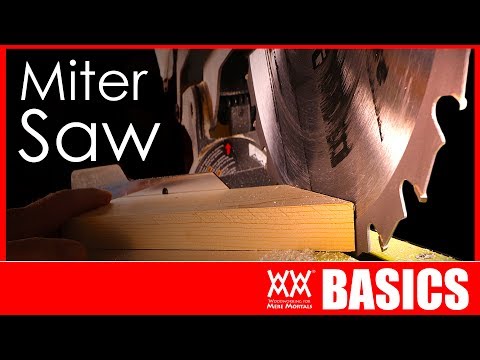
If you want to learn more about what you can do with a miter saw, check out this video by Steve Ramsey on Youtube.
Common Miter Saw Questions
How does a miter saw work?
A miter saw uses an electric motor to spin a blade that is mounted on an adjustable arm. The arm is then adjusted to make the desired cut angle. A guard or fence on the saw helps guide the material being cut into place and also helps protect against kickback from the rotating blade.
What type of cuts can I make with a miter saw?
In most cases, the blade in a miter saw is mounted on a rotating arm that can pivot from 45° to 90° allowing it to produce straight and angled cuts.
10-inch or 12-inch miter saw: Which one is better?
The blade in the 12-inch miter saw is heavier, which is why it spins a lot slower. It's also more expensive than the 10-inch miter saw, which spins faster and is more portable due to its size and weight.
Can I use a miter saw on the ground?
It's completely safe to use a miter saw on the floor as long as it has a solid surface. However, it can be a lot harder to cut this way, especially if you're working on a long sheet of wood that requires additional support while cutting.
What are some safety tips for using a miter saw?
Always stand with feet apart and keep hands away from the blade at all times when the machine is running. Wear eye protection and hearing protection, and always use a dust collection system when possible. When adjusting angles on the arm, never reach behind it while it is running, and always unplug or turn off the power before making adjustments. Additionally, be sure never to use any kind of ladders or stools in place of appropriate safety equipment while operating this type of tool.
How do you set up the blade height on a meter saw?
Setting up the blade height typically involves first setting up any supplied angle scale pointer bar so that it reflects your desired blade angle accurately; then ensuring that your adjustment knob has been locked securely before raising/lowering the handle to raise/lower your required blade height level; loosening/tightening screws to adjust your fence correctly; and finally checking your work by slowly spinning up your motor test run it stationary without any material present until you’re satisfied with your setup accuracy & stability levels achieved!


