



Our Top Picks
Top Linseed Oils on Amazon in 2024
Best Overall

Boiled Linseed Oil is a superior quality oil that has been treated with hot air, so it dries quicker forming a tough, hardwearing, and slightly glossy finish on the wood. This linseed oil is the perfect wood polish to transform dry, old wood and seals furniture, protecting it from cracks. It is also ideal for terracotta tiles, concrete, and other stone items. The Good Housekeeping Institute evaluated this product, and after rigorous testing, it has been granted the prestigious Good Housekeeping seal.
Pros
- Perfect wood sealer for all types of woods.
- Forms an attractive, subtle, glossy finish.
Cons
- It has a strong fetid smell.
Runner Up

Pure Raw Linseed Oil delivers natural protection to wood from water, weather, and wear. Apply onto unfinished wood or mix into oil-based paints and stains to extend and fortify the life of your wood. Wood exposed to the elements can fade and look tired. Bring it back to life, drawing out the natural wood grain and shine. It dries in 2 to 4 days.
Pros
- It can also be used on metal tools to stop rust in its tracks.
- You can mix it with oil-based paints to increase water repellency and to resist weathering.
Cons
- It has a bit of petroleum distillate scent to it.
Honorable Mention

Refined linseed oil is the most commonly used oil by artists. Its dimensions are 1.25 x 2.25 x 3.9 inches. You can add it to other oils to slow drying. It reduces oil color consistency. It comes in a 75-ml bottle. It can be used with water-soluble oil paint. It lets the oil o become thinner while bringing out the color vibrantly.
Pros
- Increases gloss and transparency.
- It helps to thin out the paint, makes it easier to paint on the canvas, and adds dimension to your final painting.
Cons
- It is a bit pricey.
Contender

U.S. Art Supply Refined linseed oil is the most commonly used oil by artists for adding to Oil Paints and Painting Mediums. Use in moderation to thin oils or as an ingredient in traditional painting mediums and to slow drying and aid in paint flow. It assures a uniformly tough, elastic, and glossy film that repels water, resists weather, retards chalking, and prolongs paint film life.
Pros
- It can be added directly to oil paint to make colors glossy.
- This oil can also be used as a paint binder ingredient when mixing colors from powdered pigments.
Cons
- Its packaging needs improvement.
Also Consider

It is made from the finest quality purified alkali refined linseed oil. It can be used as a paint binder ingredient when mixing colors from powdered pigments in oil painting medium recipes and added directly to oil paints to make colors glossy and fluid. It can also be used as a raw wood sealer. Good product for artists, especially for people who are just starting to paint with oil and trying new mediums.
Pros
- Perfect for thinning out oil paint for fine detail.
- It has great consistency.
Cons
- It dries very slowly.
Also Consider

Klean-Strip Boiled Linseed Oil is a classic wood finish, and natural protectant produced from the seed of the flax plant and processed to dry faster than raw linseed oil. Klean-Strip solvents and thinners are mixed into wet paint, varnish, stain, and other finishes to weaken consistency and thin them out. Moreover, it protects and seals the wood.
Pros
- Boiled Linseed Oil protects and seals unfinished wood surfaces and produces a beautiful hand-rubbed finish on fine wood and antiques.
- They’re formulated for professional use to strip years of old paint and clean up heavy-duty spills.
Cons
- Its container is sloppy.
Also Consider

The 100% pure linseed oil is extracted from flaxseed, a natural solution for wood finishing. Sustainable wood finish restores, preserves, and protects anything from weathered wood to untreated wood surfaces. It protects untreated wood from deterioration caused by moisture and outdoor elements. Use it by itself or mix it with other oil-based paints and sealants. For proper application and preservation, apply 2 – 3 coats at 12-to-24-hour intervals. It is safe for use on wooden bowls, utensils, butcher blocks, and cutting boards.
Pros
- It increases the life of your craftsmanship and prevents premature weathering.
- The superior penetration and deep nourishment of this oil enhance the wood grain’s natural beauty and color.
Cons
- It dries slowly and has a weird smell.
Best Linseed Oils Buying Guide
There are lots of linseed oils available online, but one should really pay heed while buying the best linseed oil. This is because you don’t want your money to be wasted on any third-class linseed oil. Furthermore, many things need to be considered while buying the best linseed oil. For this purpose, we have created this guide to make it easier for you to choose the best linseed oil. We have taken many things into account to make the purchase of the best linseed oil easy for you.
What Are the Key Considerations While Buying the Best Linseed Oil?
Easy to use
The linseed oil (also called flaxseed oil or flax oil) you are buying must be easy to use. The packaging, as well as the consistency of the product, should be great. This oil has multiple uses, but it should be easy to use wherever it is being applied. All the products on our list are quite easy to use.
Affordable
The linseed oil should be affordable. If you are buying oil that helps you in your painting, you surely don’t want to spend a lot on it. It should provide quality with quantity while being affordable. This proves as the best combination for a product.
Compatible with most oils
The linseed oil, that is extracted from flax seed is mostly mixed with other oils to complete a variety of tasks. For printing purposes, the linseed oil is combined with other paint oils. The linseed oil provides a great finish to the paintings and provides an unmatched classic texture. So, the linseed oil that you are buying should be compatible with other oils.
Quality
The quality of the linseed oil matters the most. The linseed oil is made up of flaxseed oil. But some of the oils are not pure and organic, and they don’t provide the desired results. The quality of the linseed oil must be taken into consideration while purchasing it.
Which Features To Look For in the Best Linseed Oil?
Glossy finish
The linseed oil is applied to the wood furniture as it helps the furniture to last longer. The foremost feature that you should be looking for in linseed oil is that it should provide a glossy finish. It would allow the furniture to look classy as well as look brand new.
Water-resistant
Water-resistance allows the wood to stay in great shape. The linseed oil you are buying must be water-resistant as it would allow the wood of your home furniture to last longer and in a nice form.
Prevents weathering
The linseed oil must be able to prevent the wood furniture from weathering. The customers mostly buy it to preserve their home furnishings. If the oil you are buying prevents weathering, then this purchase will be your favorite purchase.
Binding properties
The real linseed oil has immense binding properties, making it an ideal oil mixed with other oils. Hence it can be used for many different uses. The linseed oil that you are buying should have huge binding properties as it would increase oil usage. All the oils mentioned in our list have great binding properties, so you must buy any of these.
What Are the Uses of Linseed Oil?
- It is used in oil paints to make them more fluid, glossy, and transparent.
- It is used in putty as a sealant for glass windows which hardens within a few weeks of application and can be painted.
- Used by billiards and pool cue-makers for cue shafts.
- It is used in the manufacturing of floor covering linoleum.
- Used by a luthier while reconditioning string instruments fretboards such as guitar, mandolin, etc.
- Linseed Oil is used in the traditional oil gilding to stick sheets of gold leaf to the substrate.
Where, When, and How To Use Linseed Oils?
Linseed oil is most often used indoors, either on paneling, moldings, beams, furniture and even on floors, which in this last case requires maintenance twice a year given the high stress of the surface.
It is important to apply this finishing oil only on bare or previously oiled wood since any other finish such as paint, varnish, or wax will prevent the penetration of the oil.
Painted, varnished or waxed wood will need to be cleaned and/or stripped to bare wood before proceeding with linseed oil application. The surface must be sanded and dusted to ensure good penetration. Typically, three coats at 12-to-24-hour intervals are sufficient. When the last coat is completely dry, a light hand polishing can be done: This will enhance the satin finish and smooth the texture.
Once it’s done, plan for maintenance once a year or as needed (twice a year on floors). Superficial scratches can be easily repaired with a small application of oil locally.
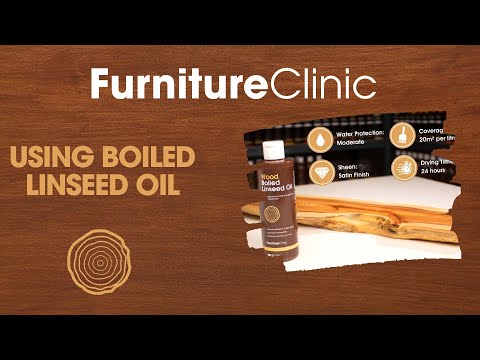
Check the video from Furniture Clinic to learn best ways to use and apply boiled linseed oil.
What Is the Price Range of Linseed Oils?
Expensive
The expensive linseed oils range from 40$-62$. If you are more concerned about the quality, you should get the product from a high-end brand.
Mid-range
The mid-range linseed oils range from 20$-40$. The products in this category offer good value for money.
Cheap
The cheap linseed oils range from 7$-20$. Though these products are available at low cost, they aren’t made of high-quality material to last longer. So, you would need to rebuy them after a few uses.
People Also Asked
What is the drying time of linseed oil paint?
Dry time depends on ambient temperature, access to ventilation, how open the wood grain is (how absorbent the substrate is), how thick the paint is applied, etc. Applying the linseed oil paint with a rag to avoid brush strokes can reduce dry time, too, as you apply thinner coats this way. A small amount of linseed oil paint goes a long way.
How to speed up the drying time of linseed oil?
You can add zinc white to the linseed oil paint. Zinc white will make the linseed oil paint dry slightly faster and harder, making the surface easier to keep clean. You can also preheat the linseed oil paint to speed up dry time.
Which paintbrush should be used to apply the linseed oil paint?
Use a stiff natural paintbrush to apply the linseed oil paint. Apply the linseed oil paint cross-grain and length grain to ensure that the linseed oil paint goes into the wood grain.
Can I add a chemical dryer to linseed oil?
Never add any petroleum/acrylic products into the linseed oil paint. Chemical driers, chemical dyes, acrylic primers, etc., are not compatible with organic linseed oil or organic linseed oil paint.


