


How to Use Beeswax for Woodworking: Finishes, Lubrication & Tool Care
Wax is one of the oldest and easiest-to-use wood finishes. But its usefulness in the woodworking shop extends well beyond finishing furniture. From protecting cutting boards and wooden utensils to lubricating screws and caring for antique hand tools, beeswax is a surprisingly versatile material to keep on hand.
As both a woodworker and a beekeeper, Woodsmith's Logan Wittmer has a steady supply of beeswax and plenty of opportunities to put it to work in his shop.
In the video, Logan shares some of his favorite ways to use beeswax for woodworking, including how to choose the right wax, apply an oil-and-wax finish, and protect wooden hand tools.
Why Use Beeswax for Woodworking?
Beeswax is a naturally occurring wax produced by honeybees to build the comb inside their hives. It's readily available from local beekeepers, woodworking suppliers, and online retailers.
Woodworkers have relied on beeswax for centuries because it's easy to apply, can be blended with oils, and produces an attractive, natural-looking finish.
Unlike many film-building finishes, beeswax leaves wood with a soft sheen and a pleasant, hand-rubbed appearance.
Some of the most useful applications for beeswax in the woodworking shop include:
- Finishing cutting boards, wooden spoons, and utensils.
- Creating traditional oil-and-wax furniture finishes.
- Lubricating wood screws and sliding wooden components.
- Protecting wooden hand planes and tool handles.
- Adding a soft sheen over an existing cured finish.
Beeswax also repels water, making it a useful addition to penetrating oil finishes. However, a wax finish provides limited protection against prolonged moisture exposure, heat, and abrasion compared with more durable film finishes.
Choosing the Right Beeswax: Soft vs. Hard Wax
Not all beeswax behaves the same way. One of the first things Logan looks for when choosing beeswax is its hardness.
Less-refined beeswax may contain residual honey and other impurities that give it a softer, tackier feel. More thoroughly refined beeswax tends to be firmer and less sticky.
Both can be useful in the woodworking shop, depending on the application.
Soft Beeswax for Wood Finishes
Softer beeswax is useful for blending with oils to create a homemade wood finish. Less-refined wax can also retain some of the pleasant aroma associated with honey.
When making an oil-and-wax blend, the oil softens the mixture and makes it easier to spread across the surface of a woodworking project.
Hard Beeswax for Lubrication
When using beeswax as a lubricant, a firm, less-tacky wax is generally preferable.
Rubbing a small amount of beeswax onto screw threads, wooden drawer runners, or other sliding surfaces can help reduce friction. A sticky wax, on the other hand, can be counterproductive.
Logan removes residual water-soluble impurities from his beeswax by remelting it in water. As the wax melts, residual sugars dissolve in the water. Once cooled, the wax solidifies above the water and can be separated.
Woodsmith Tip: Always use controlled, indirect heat when melting beeswax. Wax is combustible, so avoid direct flames, overheating, and leaving melting wax unattended.
Beeswax and Mineral Oil: A Natural Finish for Cutting Boards
Mineral oil is a popular finish for wooden cutting boards, serving boards, and kitchen utensils. It's easy to apply and brings out the natural color and grain of the wood.
Adding beeswax to mineral oil creates a blend that offers additional water repellency and a warm, soft sheen.
This combination is particularly useful for wooden kitchen items that are washed regularly, including:
- Cutting boards and butcher blocks.
- Wooden spoons and spatulas.
- Serving boards.
- Wooden bowls.
When preparing a finish for food-contact surfaces, use food-grade mineral oil and beeswax suitable for food-contact applications. Avoid wax blends containing fragrances, solvents, or other additives that aren't intended for that purpose.
An oil-and-wax finish will need periodic reapplication, especially on frequently washed items, but it's easy to renew.
How to Apply a Beeswax and Mineral Oil Wood Finish
An oil-and-wax blend can be applied at room temperature if it's soft enough to spread. However, Logan prefers to warm the mixture to make application easier.
1. Warm the Oil-and-Wax Mixture
Start by gently warming the beeswax and mineral oil mixture in a double boiler.
Indirect heat brings the mixture to a liquid state, making it easier to distribute across the surface of the wood.
2. Prepare an Applicator Cloth
Fold a clean, soft, lint-free cloth several times to create a thick applicator pad.
The extra bulk allows the cloth to absorb more of the finish and retain some warmth, helping keep the wax mixture fluid during application.
Take care when handling the warmed mixture to avoid burns.
3. Apply the Finish to the Wood
Load the cloth with the warmed oil-and-wax mixture and rub it across the surface of the wood.
As you work, you may notice the mixture cooling and becoming thicker. That's normal. Reload the cloth with more of the warmed finish as needed.
Continue working until the entire surface has received an even application.
4. Remove the Excess Wax and Buff
After application, the surface may appear slightly thick or tacky as the wax cools.
Allow the oil-and-wax blend time to penetrate the wood, then wipe away any excess with a clean cloth.
Buff the surface to produce a soft, even sheen.
The result is an attractive finish that highlights the natural color and grain of the wood without creating a thick, glossy film.
Combining Beeswax with Tung Oil or Linseed Oil
Mineral oil isn't the only oil that can be blended with beeswax.
Traditional woodworking finishes also combine beeswax with drying oils such as tung oil or linseed oil.
Unlike mineral oil, drying oils cure through a chemical reaction with oxygen. Combining these oils with beeswax can produce a finish with the warm appearance and soft luster associated with traditional hand-rubbed furniture finishes.
Furniture maker Sam Maloof helped popularize this type of oil-and-wax finishing approach, particularly on his sculpted wooden chairs.
An oil-and-wax blend can also be used over a compatible, fully cured film finish, such as varnish, to create a softer sheen and a pleasant feel.
Woodsmith Tip: Cloths containing drying oils, including linseed oil and tung oil, can generate heat as the oils cure. Never leave oil-soaked cloths crumpled or piled together. Follow the finish manufacturer's instructions for safe handling and disposal.
Using Beeswax as a Lubricant in the Woodworking Shop
Finishing is only one of the reasons to keep a block of beeswax in your workshop.
A small amount of wax can reduce friction in a variety of everyday woodworking applications.
One of the simplest uses is lubricating wood screws before driving them into dense hardwood. Rubbing the screw threads against a block of firm beeswax helps reduce driving resistance and the stress placed on the fastener.
Beeswax can also be useful on traditional wooden drawer runners, wooden vise components, and other wood-on-wood sliding surfaces.
For these applications, choose a firm wax that doesn't leave a sticky residue.
A little goes a long way. Avoid applying wax to surfaces that will later need to be glued or finished, as wax contamination can interfere with adhesion.
Protecting Hand Tools with Wax
Wax is also useful for maintaining wooden hand planes, tool handles, and other traditional woodworking tools.
There are many commercially available wax blends formulated for wood finishing and tool care. These range from conventional paste waxes to specialized products designed for furniture, antiques, and woodworking tools.
One of Logan's favorites is Alfie Shine, a traditional-style wax blend that combines beeswax, frankincense resin, and essential oils.
Using Alfie Shine Wax on Wooden Tools
Inspired by a historical wax recipe, Alfie Shine produces a protective sheen that's particularly attractive on antique wooden hand planes and shop-made wooden tools.
Because the wax is relatively firm, it takes a little effort to load a soft cloth with the product.
Once the cloth is loaded, rub the wax into the wood and buff the surface. As the finish develops, it leaves behind a warm luster that enhances the appearance of the wood.
Additional coats can be applied after allowing the previous application time to harden, following the product's directions.
And there's another benefit that Logan particularly enjoys: the distinctive aroma of frankincense.
Is Beeswax a Good Wood Finish?
Beeswax is an excellent choice when you want a natural-looking finish that's easy to apply and renew.
It's particularly well suited to decorative wooden objects, traditional furniture, wooden utensils, cutting boards, and hand tools.
For projects that require greater resistance to standing water, heat, chemicals, or heavy wear, however, a more durable film finish may be a better choice.
It's also worth remembering that wax is generally best applied as the final step in the finishing process. Applying another finish over wax can create adhesion problems unless the wax is thoroughly removed.
Put Beeswax to Work in Your Woodworking Shop
There's a good reason beeswax has remained a woodworking staple for centuries.
It's versatile, easy to use, and useful for far more than finishing wood. Whether you're mixing a mineral oil finish for a cutting board, lubricating screws before assembly, or adding a protective sheen to a favorite wooden hand plane, a small supply of beeswax can go a long way.
The next time you're looking for a traditional, natural-looking wood finish or a simple workshop lubricant, reach for a block of beeswax.
Featured Woodworking Plan: Quilted Cutting Board
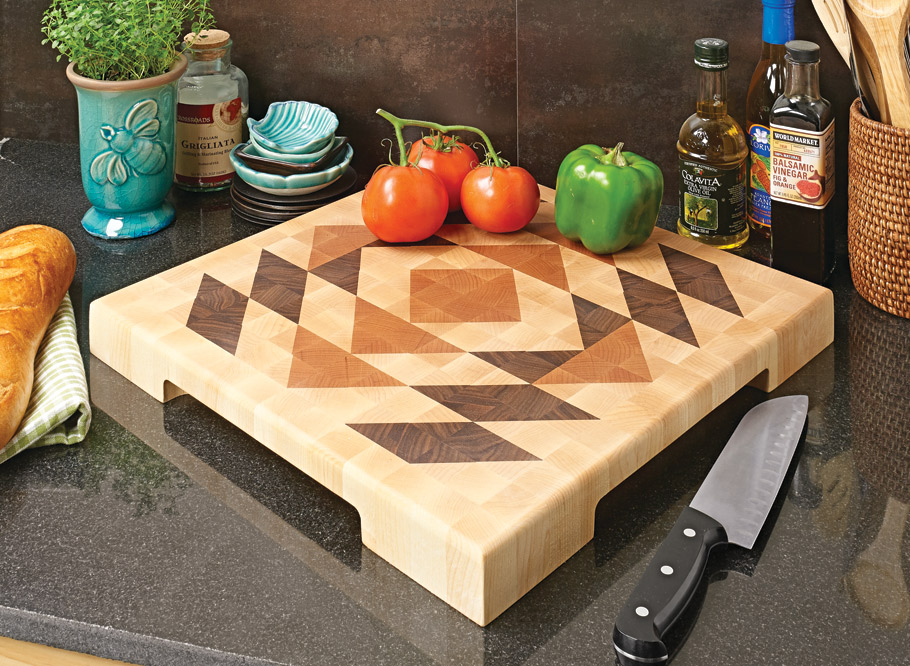
Put your new beeswax finishing techniques to work with this striking Quilted Cutting Board — the project featured in the video above.
Made from identically sized end-grain hardwood blocks, this unique cutting board captures the geometric beauty of traditional patchwork quilts. Choose from four included patterns or create your own design using contrasting wood species.
It's a rewarding weekend woodworking project and an ideal candidate for a beeswax and mineral oil finish. The oil brings out the rich colors and grain of the hardwoods, while the beeswax adds water repellency and a warm, natural sheen.
Build one for your own kitchen or make several as memorable handmade gifts.
GET THE STEP-BY-STEP WOODWORKING PLANS → Build the Quilted Cutting Board


