


The All-In-One Workstation solves that problem by combining several of the most useful woodworking tools and work surfaces into one mobile, self-contained station. Designed by Woodsmith Project Designer John Doyle, this project turns a compact benchtop table saw, router, and thickness planer into a versatile small-shop workhorse.
Get the step-by-step downloadable plans: Build the All-In-One Workstation
One Workstation, Multiple Shop Tools
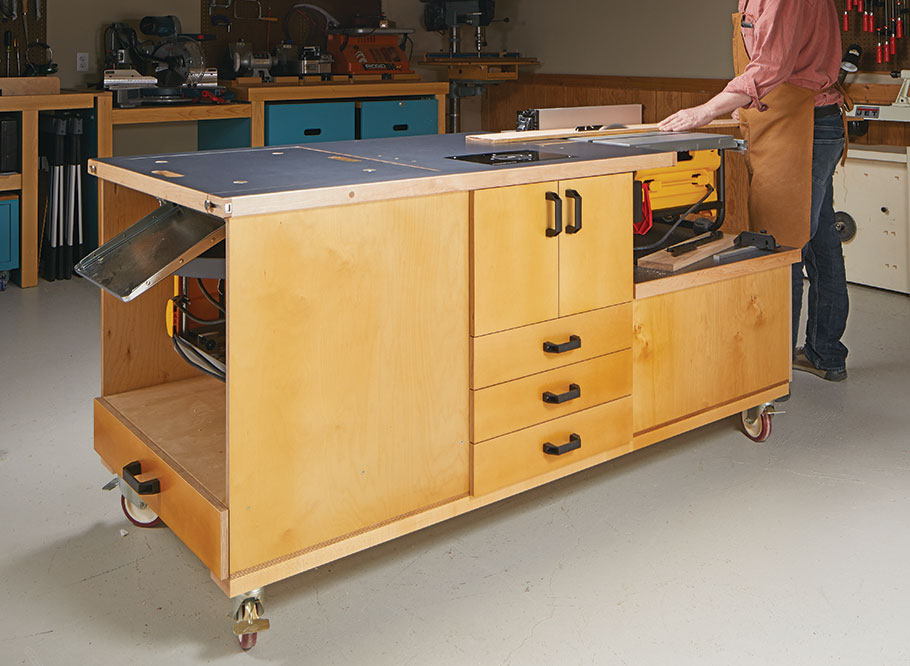
At first glance, this project looks like a large rolling table saw cabinet. A closer look reveals that nearly every part of the workstation serves more than one purpose.
The compact table saw is positioned at one end, where the surrounding top provides support for larger workpieces. The broad surface behind the blade functions as an outfeed table, making it easier and safer to cut long boards and sheet goods.
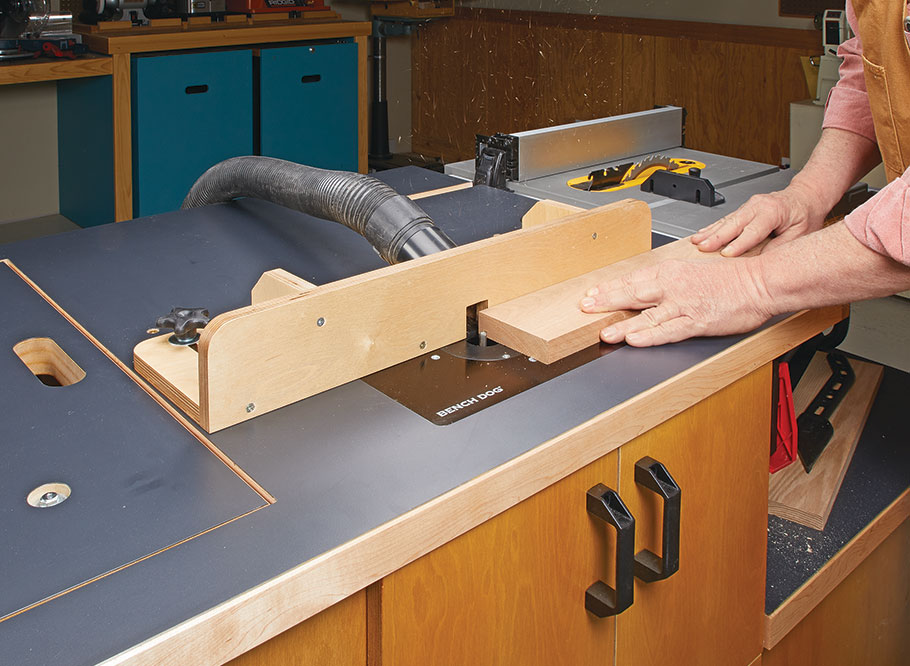
At the center of the workstation is a built-in router table. A removable insert plate holds the router below the surface, while a shop-made fence provides the control needed for routing profiles, cutting grooves, and completing other common operations. When the router is not in use, the large top remains available as an assembly or general-purpose work surface.
A Flip-Top Planer Station
The thickness planer is housed in a rotating platform at the opposite end of the workstation. When it is needed, the top flips over to bring the planer into working position. After the planing is complete, the platform rotates again to store the tool below the surface.
This flip-top system keeps a bulky benchtop planer ready to use without requiring a separate mobile base or permanent stand. The surrounding workstation also provides support for boards entering and leaving the planer.
A metal chip chute helps direct planer shavings away from the machine and makes cleanup easier. It is a practical solution for a tool that can create a large amount of debris in a short time.
A Built-In Router Table
Adding a dedicated router table can consume a surprising amount of space in a small workshop. By incorporating the router into the workstation top, this project adds another major tool without increasing the footprint of the cabinet.
The router table includes a large work surface and an adjustable fence for guiding the workpiece. Dust collection can be connected near the fence to capture chips at the source. Router bits, wrenches, featherboards, and other accessories can be stored in the cabinet below, keeping everything close to the tool.
Storage Where You Need It
A multi-tool workstation is only useful when the accessories for those tools are easy to find. The cabinet includes drawers, shelves, and enclosed compartments for organizing table saw blades, router bits, planer accessories, jigs, push blocks, measuring tools, and other shop supplies.
The drawers provide quick access to smaller items, while the larger cabinet spaces can hold bulkier tools and accessories. Instead of storing supplies in several different corners of the shop, the workstation keeps them close to the tools where they are used.
This built-in storage also adds weight and stability to the cabinet, helping create a solid platform during cutting, routing, planing, and assembly work.
Mobile When You Need It
Heavy-duty swivel casters allow the workstation to roll into position when it is time to work. In a garage shop, it can be stored against a wall and moved into the center of the room when additional infeed or outfeed space is needed.
Once positioned, the casters can be locked to create a stable working platform. This mobility makes the workstation especially useful in shops that share space with vehicles, lawn equipment, or other household storage.
Built for the Small Shop
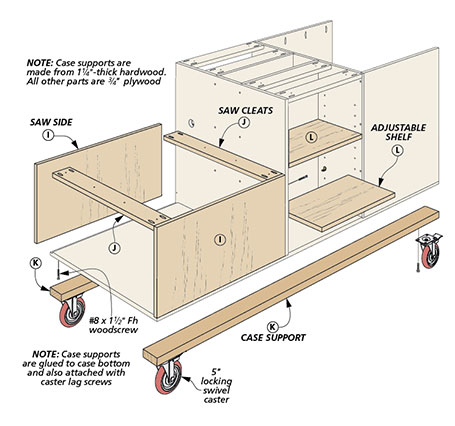
The All-In-One Workstation is built primarily from plywood using straightforward cabinetmaking techniques. Dadoes, rabbets, and grooves create strong, accurately aligned joints without requiring complicated hardware or advanced joinery.
The cabinet construction can be broken into manageable sections, making the project approachable for an intermediate woodworker. Building the workstation also offers several opportunities to customize it for a particular collection of tools.
Before beginning, confirm the dimensions of your table saw, router plate, and planer. Benchtop tools vary considerably in size, so some openings, platforms, or supports may need to be adjusted to fit specific models.
More Than a Tool Stand
What makes this workstation especially useful is the way its features work together. It is not simply a cabinet that holds three tools. The tabletop provides outfeed support, routing capacity, assembly space, and a general-purpose workbench surface. The mobile base brings the entire setup wherever it is needed, while the interior storage keeps accessories organized and close at hand.
For woodworkers working in garages, basements, or other compact spaces, combining several functions into a single footprint can dramatically improve the way the shop operates. Instead of constantly moving tools onto temporary stands or clearing off a bench, the most frequently used machines remain ready for work.
The result is a compact station that can handle cutting, routing, planing, assembly, and storage while taking up far less room than a collection of separate tool stands.
Build the All-In-One Workstation
The downloadable plans include the dimensions, materials information, detailed drawings, and step-by-step instructions needed to build the workstation.
Download the complete plans from WoodsmithPlans.com: All-In-One Workstation Woodworking Plans


