


Hole-Sawn Tenons: An Easy Way to Cut Round Tenons
Round tenons are a great way to join wooden dowels to legs, stretchers, and other furniture parts. But creating an accurately sized tenon on the end of a dowel usually means spending time at the lathe or carefully shaping the wood by hand.
Woodsmith reader Keagan Burch of Kannapolis, North Carolina, came up with a simpler solution. His technique uses an ordinary hole saw to cut round tenons without turning the workpiece on a lathe.
All you need is a block plane, a properly sized hole saw, and a hand brace or drill.
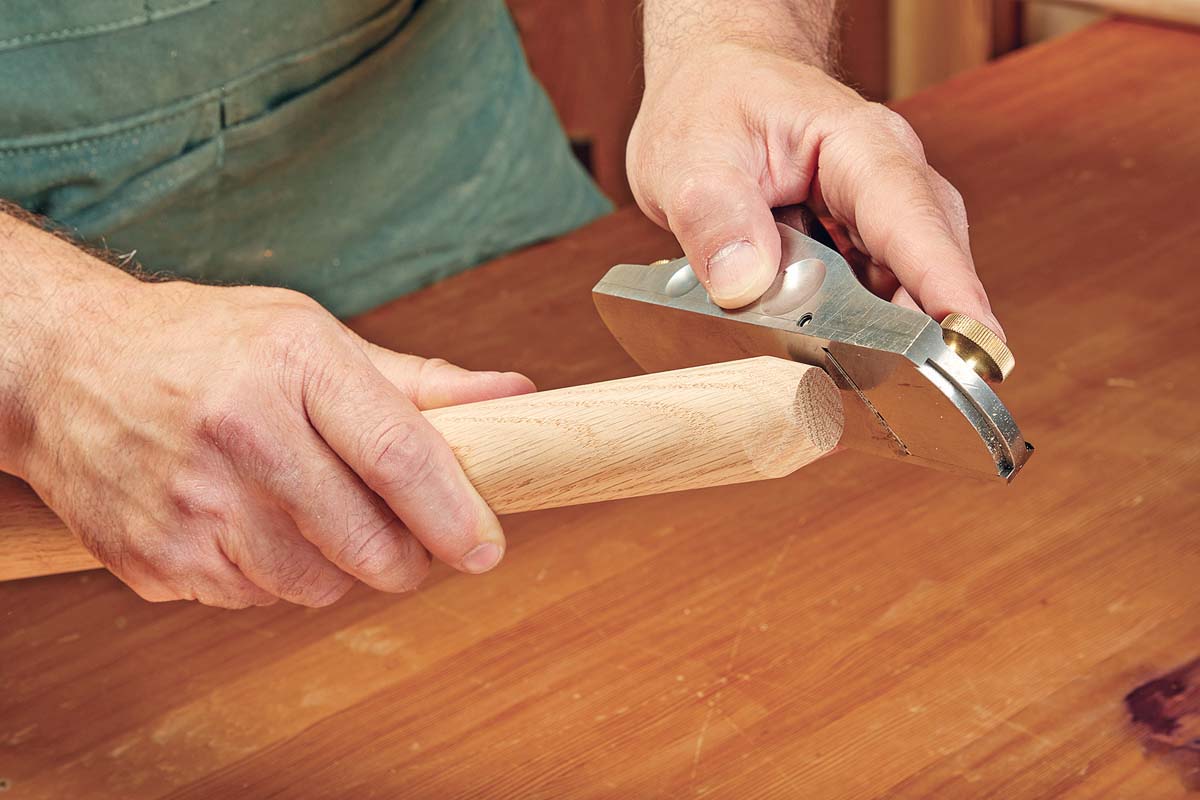
Step 1: Chamfer the End of the Dowel
Start by using a block plane to chamfer the end of the dowel.
The chamfer removes the sharp outside corner and helps prepare the end for cutting the tenon.
Work your way around the dowel to create a fairly even bevel.
Step 2: Cut the Tenon with a Hole Saw
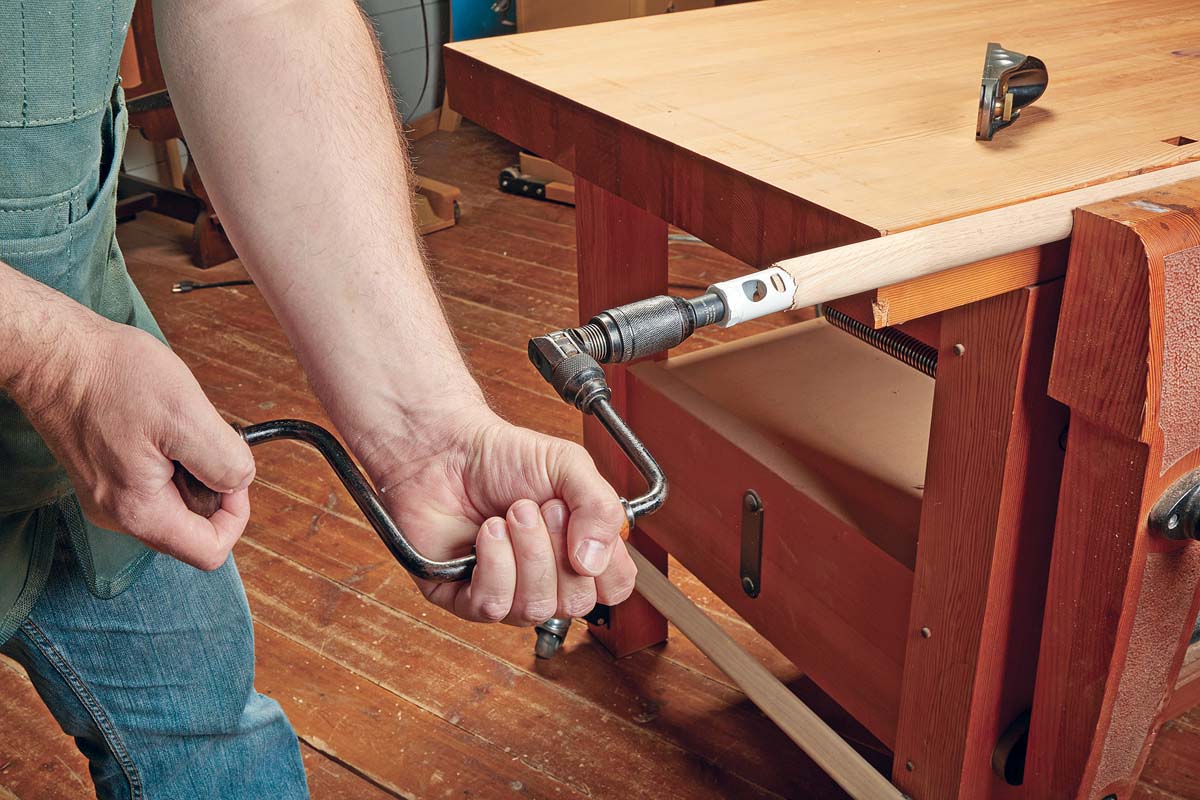
Next, select a hole saw that will produce a tenon sized to fit your mortise.
Keep in mind that the outside diameter of a hole saw isn't necessarily the diameter of the tenon it leaves behind. Make a test cut in scrap stock to confirm the fit.
Position the hole saw over the end of the dowel and begin cutting.
You can use a battery-powered drill, but Keagan prefers a hand brace. Working by hand gives him better control and makes it easier to keep the hole saw aligned with the dowel.
Advance the hole saw until you've reached the desired tenon length.
Step 3: Remove the Waste Around the Tenon
Once the hole saw reaches the correct depth, remove it from the workpiece.
The cut leaves a cylindrical tenon surrounded by a ring of waste material.
Use a sharp knife or saw to carefully remove the remaining waste at the shoulder of the tenon.
Clean up the shoulder as needed and test the tenon in its matching mortise.
The goal is a snug fit that allows the parts to assemble without excessive force.

A Simple Alternative to Turning Tenons
This hole-saw technique is especially handy when making furniture with round stretchers or dowel-style legs.
Instead of setting up a lathe or purchasing a dedicated tenon cutter, you can create round tenons with tools you may already have in your shop.
It's a straightforward way to simplify round tenon joinery while producing consistent results.
Shop Tip: Secure the dowel firmly before cutting, keep the hole saw aligned with its axis, and verify the finished tenon diameter with a test cut before working on your project parts.
Reader Tip submitted by Keagan Burch — Kannapolis, North Carolina.


