


Woodworking comes with risks. Most experienced woodworkers can probably remember a close call or two in the shop.
But woodshop safety doesn't have to mean adding cumbersome steps to every project. One of the best approaches is to design safer practices into the way your shop is organized and the way you work.
While planning a new shop, I've been thinking not only about where the workbenches and machines should go, but also about how the space can help reduce risks. Dust collection should be easy to use. Personal protective equipment should always be within reach. Push sticks and featherboards should be stored right at the machines where they're needed.
The easier a safe practice is, the more likely you are to make it part of your normal woodworking routine.
Here are five areas worth looking at in your own shop.
1. Control Wood Dust at the Source
Clean shop air starts with collecting dust where it's created.
Some woodworking machines do a good job of capturing dust. Others can fill the shop with a cloud of fine particles during almost every cut. CNC routers can be particularly challenging if the collection setup around the cutter isn't effective.
The first line of defense is dust collection at the tool.
Where practical, use a full-size dust-collection hose all the way to the collection point. A 4"-dia. hose can move considerably more air than a small hose, provided the dust collector and machine setup are designed for it.
And don't assume the dust hood that came with a machine is the best you can do.
Improve Poor Dust Collection
If a machine throws dust around the shop, experiment with the pickup location.
You don't need to fabricate a complicated dust hood immediately. Cardboard and duct tape make useful prototyping materials. Build a temporary hood or nozzle, make a few cuts, and see whether it improves collection.
Once you find a design that works, you can make a more permanent version.
Add an Air Cleaner
Even effective source collection won't capture everything produced by stationary and portable power tools.
An ambient air cleaner can help capture airborne dust that escapes the primary dust-collection system.
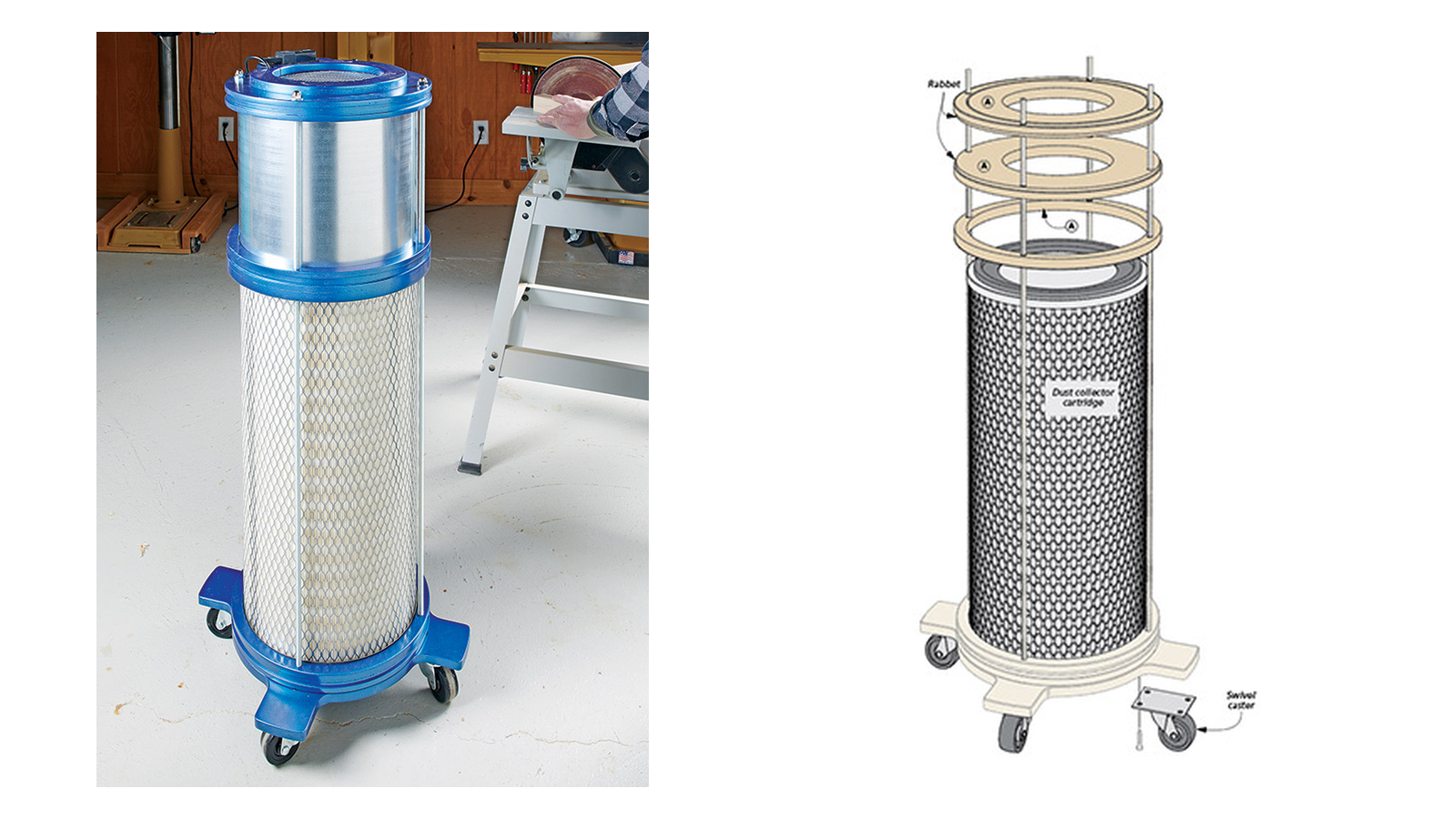
Low ceilings, pipes, ductwork, and other obstacles can make a traditional ceiling-mounted unit difficult to install. A mobile air cleaner provides another option. You can position it near the work area or move it to an open, central location in the shop.
The Woodsmith Air Cleaner from Issue 260 is one shop-built approach.
GET THE STEP-BY-STEP PLANS: Woodsmith Mobile Air Cleaner
And remember the simplest part: An air cleaner only works when you turn it on.
2. Take Oily Rag Fire Hazards Seriously
This is one shop hazard that's easy to underestimate.
Years ago, we finished a lot of projects in the Woodsmith production shop with wipe-on finishes. That meant we generated plenty of finish-soaked rags and paper towels.
One summer day, while cleaning the finishing area after several projects, some rags and paper towels damp with solvent-based finishing products ended up in a dumpster.
A few hours later, the dumpster was on fire. There were flames, smoke, peeling paint, and plenty of concern about what could have happened next.
The lesson stuck.

Why Finish-Soaked Rags Are Dangerous
Rags containing certain drying oils and finishes can generate heat as the finish cures. If those rags are crumpled together where the heat can't dissipate, they can create a serious fire hazard.
Don't simply toss finish-soaked rags into an ordinary trash can.
Follow the disposal instructions for the finishing product you're using and applicable local requirements.
Make Safe Handling Convenient
In the Woodsmith production shop, we added a dedicated drying rack for finishing rags. Making the safe practice convenient made it easier to follow consistently.

A folding clothes-drying rack can also provide a convenient place to spread appropriate rags out while they're being handled according to the finish manufacturer's directions. Store the rack out of the way when it's not needed.
The larger lesson applies throughout the shop: If you make the safer procedure convenient, you're more likely to use it.
RELATED ARTICLE: DIY Finishing Rag Drying Rack for the Workshop
3. Keep Bits and Blades Sharp
A sharp cutting edge isn't only about producing better woodworking results. It's also about maintaining control.
A dull saw blade, router bit, drill bit, or other cutter can leave burned, ragged surfaces. More importantly, dull tooling can require you to apply more force to make the cut.
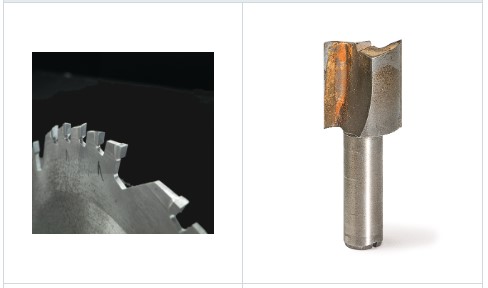
You might find yourself pushing harder to feed a board, fighting to keep the workpiece against the fence, or struggling to prevent it from lifting away from the table.
Those are all signs that you're losing some of the control you want during a power-tool operation. Sharp tooling makes it easier to feel how the cut is progressing and maintain a controlled feed.
If a bit or blade is dull, replace it or have it professionally sharpened when appropriate.
And don't forget your hand tools. Keeping chisels and plane blades sharp reduces the force needed to make a controlled cut there, too.
RELATED ARTICLE: How to Sharpen a Plane Blade
RELATED ARTICLE: How to Sharpen Forstner Bits
4. Make PPE Easy to Use
Personal protective equipment is an important part of woodworking safety.
Depending on the operation, that can include: - Safety glasses or other appropriate eye protection - Hearing protection - Gloves for appropriate finishing and chemical-handling tasks - Respiratory protection

PPE shouldn't replace controlling a hazard at its source. Capturing dust at the machine, for example, is preferable to simply allowing dust to fill the shop and relying solely on a respirator. But you can't eliminate every hazard, which is where PPE becomes important.

Comfortable PPE Gets Used
Safety equipment only works when you wear it.
If a pair of safety glasses pinches your head or hearing protection becomes uncomfortable after a few minutes, there's a good chance it'll eventually stay in a drawer.

Try different options and find equipment that's comfortable enough to become part of your normal routine.
Store PPE Where You Need It
Don't keep all your hearing protection in a cabinet on the opposite side of the shop.
I like having hearing protectors available at the miter saw, CNC router, and workbench. If they're within arm's reach, there's little temptation to make "just one quick cut" without them.
The same idea applies to eye and respiratory protection.
Keep PPE comfortable, clean, and available.
A respirator can be stored appropriately to keep it clean, and safety glasses benefit from a case that keeps dust off the lenses and protects them from scratches.
5. Set Up Your Machines for Safer Cuts
The table saw, band saw, router table, and jointer are central machines in many woodworking shops. Set them up so the accessories that help you control a cut are always close at hand.

Depending on the machine and operation, useful accessories can include push sticks, push blocks, featherboards, fences, hold-downs, clamps, and purpose-built jigs.

A featherboard, for example, can help maintain consistent pressure against a fence or table. A push block can help control the workpiece while keeping your hands farther from the cutter.
Small workpieces deserve particular attention. If you can't comfortably control the part while maintaining a safe distance from the cutter, don't simply move your fingers closer.
Instead, change the setup.
A jig, auxiliary fence, clamp, or other workholding method can often turn an awkward operation into a controlled one.
Woodsmith Tip: Store Safety Accessories at the Machine. A push stick hanging from the table saw fence is far more useful than one buried under a pile of tools. Give frequently used safety accessories a dedicated home at the machine where they're needed.
Give Your Woodshop a Safety Review
This isn't meant to be a complete list of every woodworking hazard. Every shop, machine, and project presents different considerations.
Instead, use these five areas as a starting point for looking around your own workshop: - Air quality. - Fire hazards. - Sharp tooling. - PPE. Machine setup.
Then ask a useful question: What could I change in the shop so the safer way is also the easier way?
Maybe it's adding a push-stick holder to the table saw. Maybe it's putting hearing protection next to the miter saw. Or perhaps it's finally improving the dust hood on the machine that covers half the shop in dust every time you use it.
Good shop organization isn't only about efficiency. When safety equipment and procedures are built into the way you work, safer woodworking becomes part of the routine.
Keep Your Finishing Area Better Equipped
A well-organized finishing area makes it easier to work efficiently and handle finishes safely. See the supplies we recommend keeping together for applying finishes, cleanup, surface preparation, and personal protection.
SEE 12 FINISHING ESSENTIALS → 12 Essential Wood Finishing Supplies for Your Workshop


