

Workbench Construction Basics: Build the Right Bench for Your Shop
A good woodworking workbench is one of the most important additions you can make to your shop. It's where you'll assemble projects, cut joinery, use hand tools, and tackle countless other woodworking tasks.
But not every woodworker needs the same kind of bench.
You might prefer a traditional hardwood workbench with a thick laminated top and heavy-duty vises. Or maybe a simpler design made from construction lumber and MDF is a better fit for your shop and budget.
Either way, building a great woodworking workbench comes down to a few essential features: a sturdy base, a flat worksurface, versatile workholding, and convenient storage.
In the video below, the editors of Woodsmith Magazine compare two different workbench designs and show how to build a bench that fits the way you work.
Start with a Strong, Stable Workbench Base
A workbench needs to be sturdy enough to handle the forces generated by planing, chiseling, sawing, and assembling projects.
That means more than simply using heavy legs. The base also needs to resist racking, or side-to-side movement.
In the video, we compare two approaches.
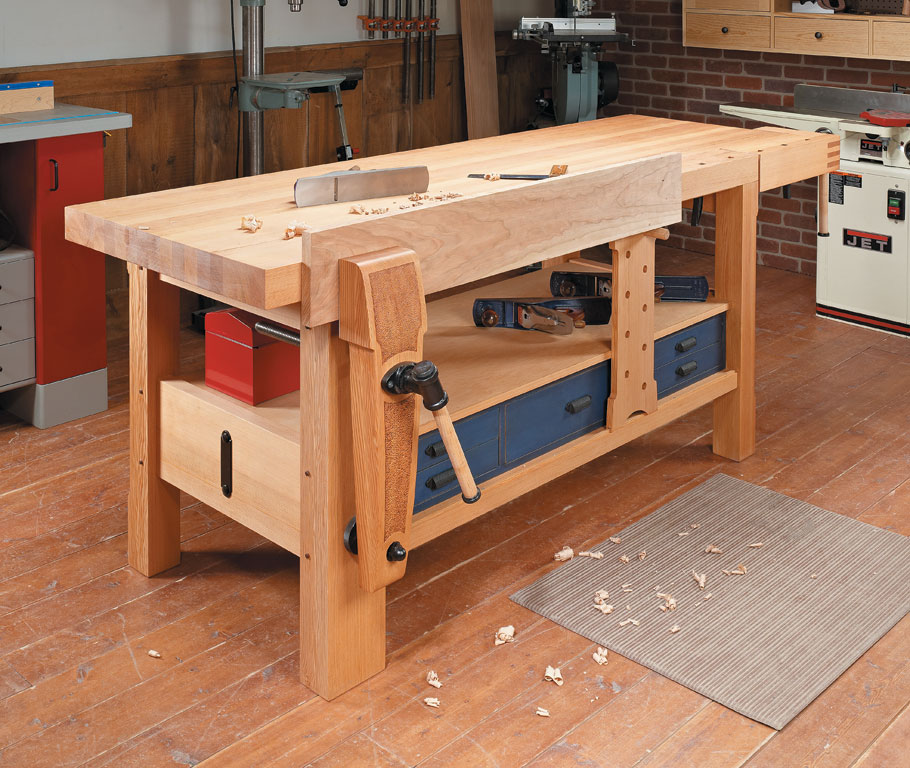
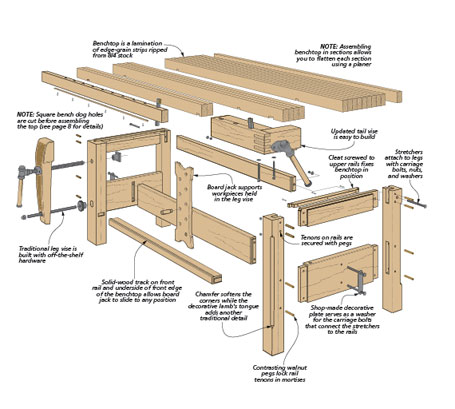
A traditional Shaker-style workbench uses heavy legs, wide rails, and mortise-and-tenon joinery. The long stretchers are secured with drawbolt connections that can be tightened if the bench loosens over time.
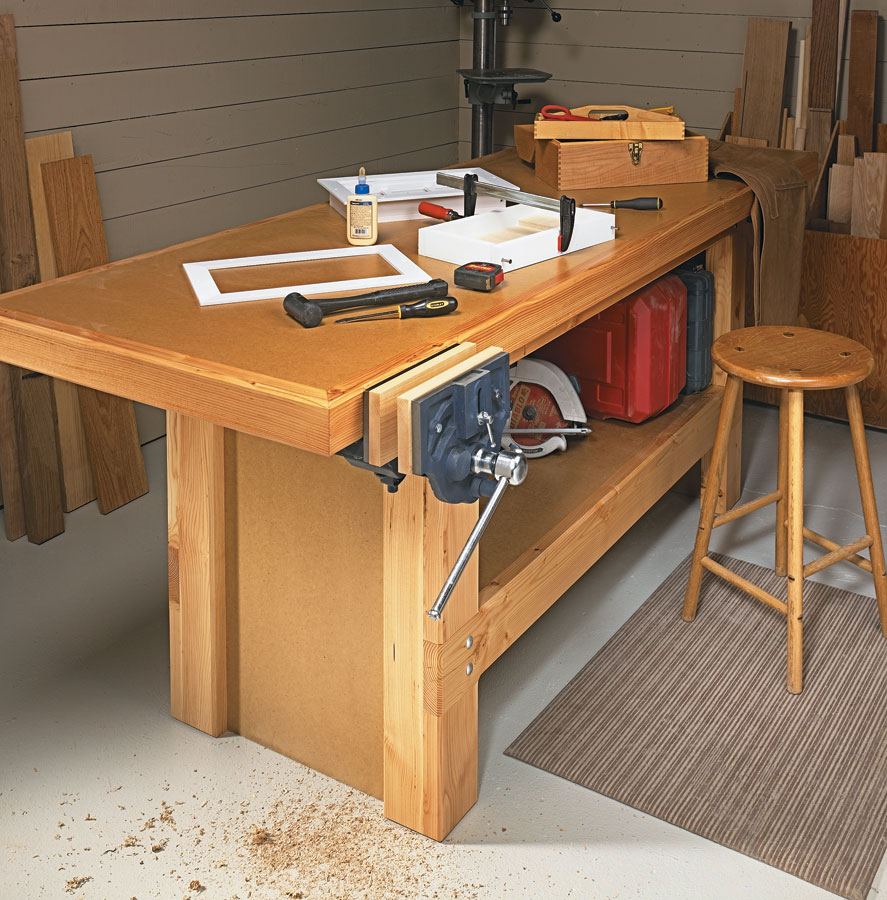
For a simpler weekend workbench, we use MDF panels, construction lumber, and bolted stretchers to create a rigid base without complicated joinery.
Both designs provide a solid foundation. The difference comes down to how much time and effort you want to invest in the construction.
Choose the Right Material for Your Workbench Top
A flat, sturdy benchtop is essential for accurate woodworking.
When you're assembling cabinets, furniture, or other projects, your workbench often serves as a reference surface. If the top is twisted or uneven, it can make accurate assembly more difficult.
Two materials work particularly well.
Traditional Solid-Wood Workbench Tops
A thick hardwood top provides plenty of mass and durability.
The video demonstrates how to glue up smaller groups of hardwood strips into manageable slabs, flatten them, and then combine them into a full-size benchtop.
This approach makes building a large, heavy top more manageable in a home workshop.
MDF Workbench Tops
For a simpler build, MDF offers a flat, stable, and economical alternative.
Laminating multiple layers creates a thick, substantial worksurface. Additional strips can reinforce areas where vises and bench dogs will be installed.
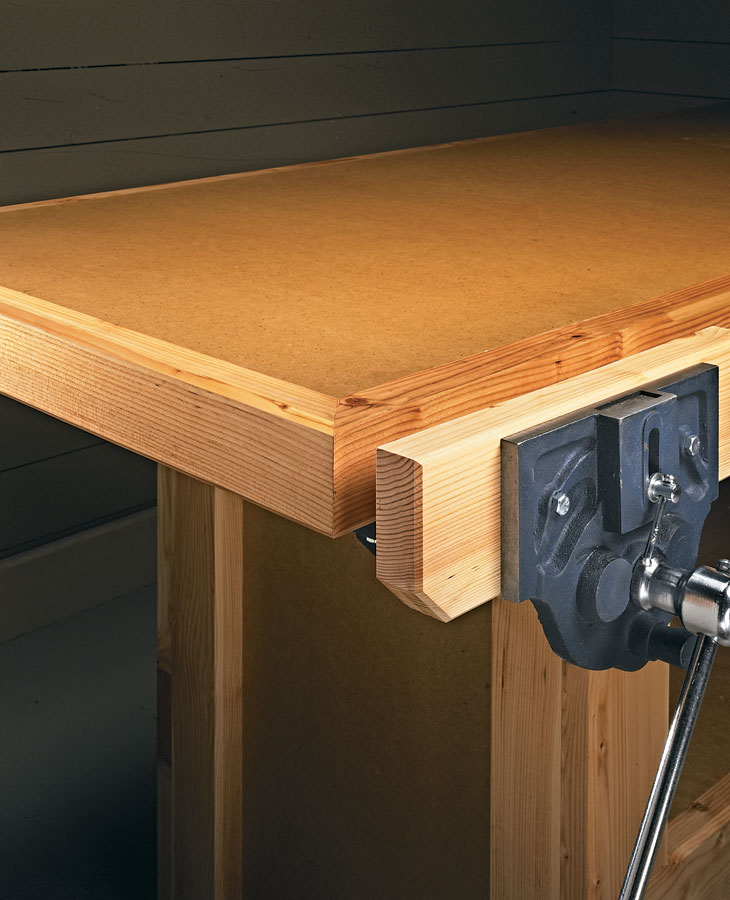
Adding hardwood edging helps protect the vulnerable MDF corners and edges from damage.
Both options can make an excellent workbench. The right choice depends on your budget, available tools, and the type of woodworking you do.
Add Workbench Vises and Bench Dogs
A workbench isn't nearly as useful if you can't hold your workpieces securely.
That's why workholding is one of the most important decisions to make when planning your bench.
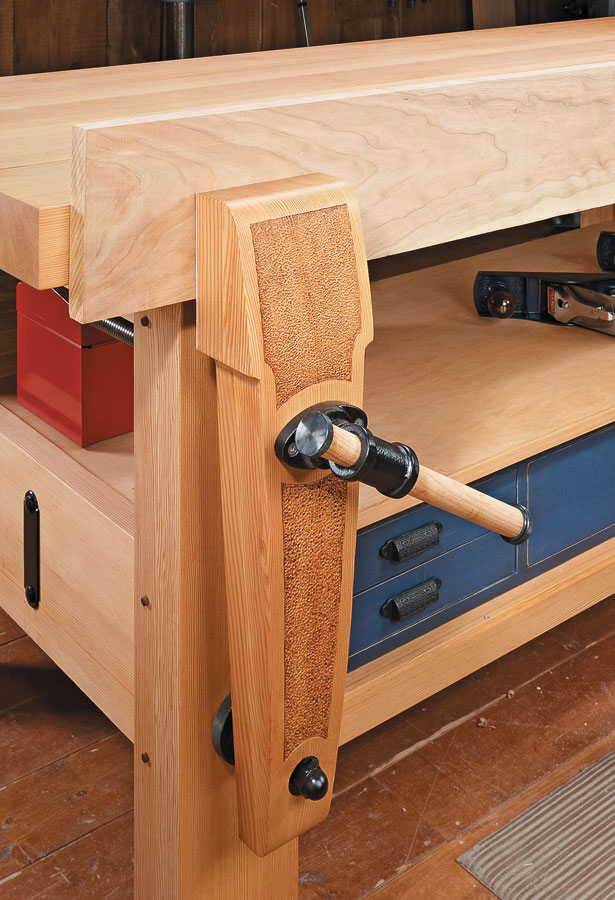
In the video, we look at several options, including traditional leg vises, quick-release face vises, and tail vises.
A face vise is useful for securing boards along the front of the bench, while a tail vise works with bench dogs to hold long boards and panels flat against the top.
Bench dogs expand your clamping options even further.
Round bench dogs can be installed in drilled holes, while traditional square bench dogs require openings incorporated into the benchtop construction.
The goal is to choose a workholding system that accommodates the projects you build most often.
Make Your Workbench More Useful with Built-In Storage
The space beneath a workbench is valuable shop real estate.
Adding drawers, shelves, or a small cabinet keeps frequently used tools and supplies close at hand.
For the traditional workbench, we demonstrate a drawer cabinet that fits between the stretchers, along with an open shelf for larger tools.
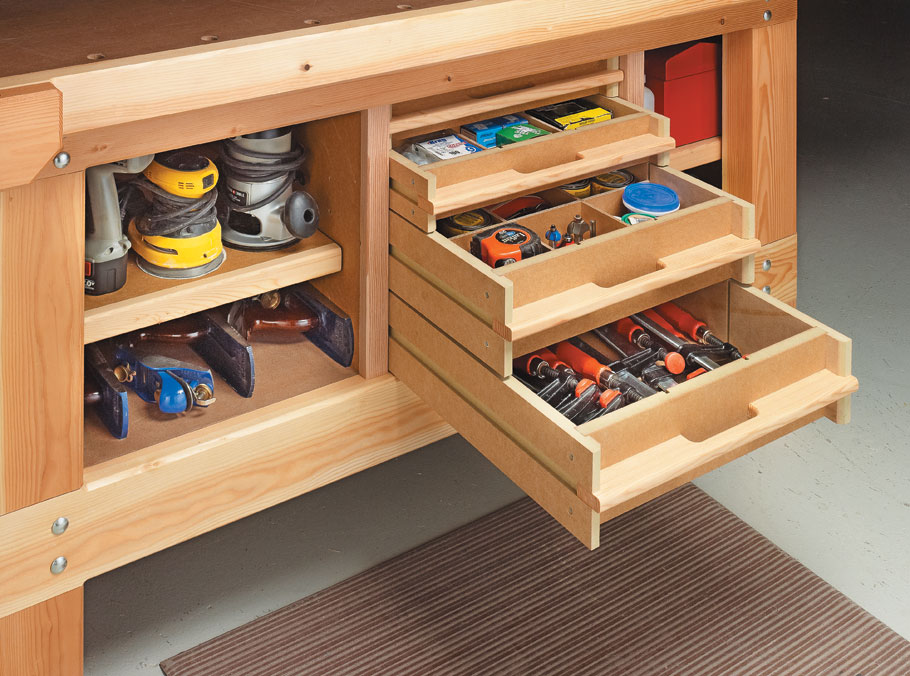
The weekend workbench takes a simpler approach, using MDF dividers and drawers to organize hardware, tools, and accessories.
You don't need elaborate cabinetry to make your bench more useful. Even a basic shelf or a few drawers can help keep your workspace organized.
Build a Workbench That Fits Your Woodworking
There's no single workbench design that's perfect for every shop.
A traditional hardwood bench can be a rewarding project that lasts for generations. A simpler weekend workbench can provide many of the same essential features with less time and expense.
What matters most is choosing a design with a stable base, a flat top, dependable workholding, and storage that suits your needs.
Watch the video above for a closer look at both workbench designs, including construction techniques, vise installation, bench dogs, and storage options.
And when you're ready to start building, explore our collection of woodworking workbench plans at WoodsmithPlans.com to find a design that's right for your workshop.