

A more organized workshop doesn't always require building cabinets or buying specialized accessories. Sometimes a short dowel makes a better tool holder, or an inexpensive floor runner provides just the protection you need on your workbench.
In this collection of Woodsmith Quick Tips, four readers share practical ideas for hanging tools, protecting work surfaces, and keeping important information close at hand.
1. Make Simple Pegboard Tool Holders from Dowels
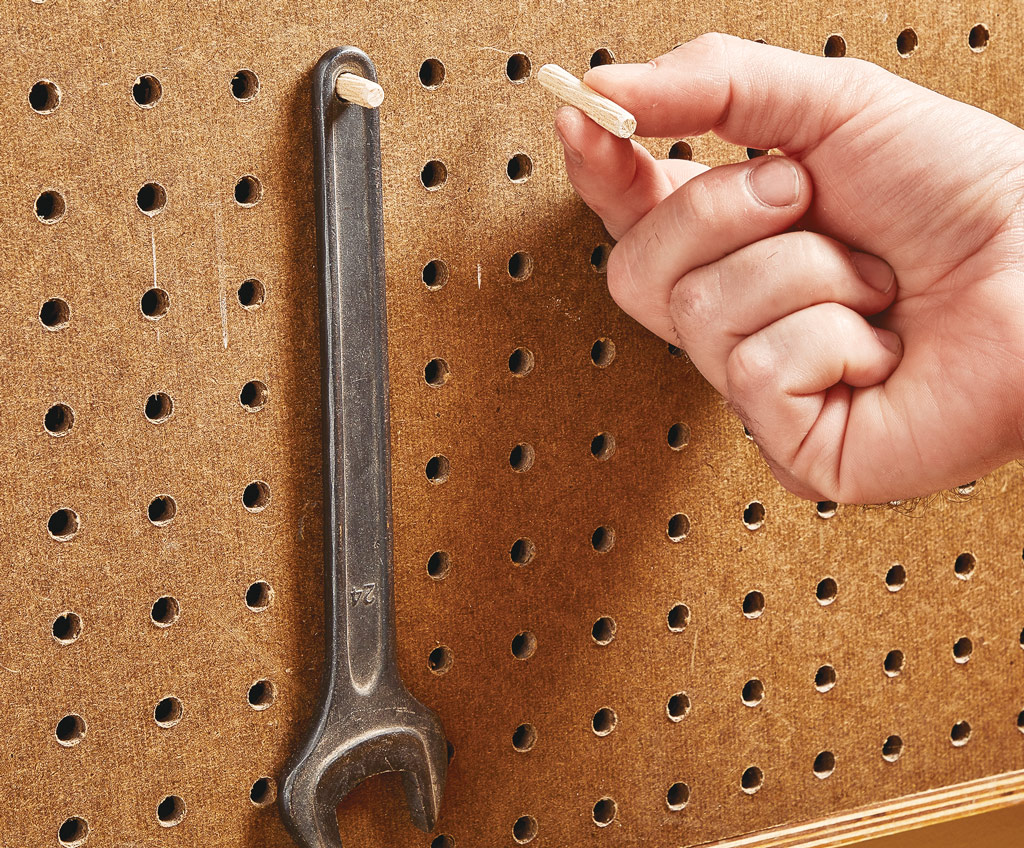
Pegboard is a convenient way to keep frequently used tools visible and accessible. But the shape of some metal pegboard hooks can make it awkward to lift a tool off its holder.
Ralph Visco of Lima, Ohio, found a simpler alternative: short lengths of 1/4" dowel.
The dowels fit into standard pegboard holes and provide straightforward pegs for hanging suitable tools and accessories. Without the extra bends found on some conventional hooks, there's less hardware to get in the way when removing an item.
Small packages of dowels are inexpensive, making it easy to add more holders as your tool collection grows.
Woodsmith Tip: Check that the dowels fit securely and can support the items you intend to hang. They're useful for lightweight accessories, but heavier tools may require purpose-made hooks or more substantial supports.
Shop tip submitted by Ralph Visco, Lima, Ohio.
2. Reuse Plastic Yard Signs as Assembly Mats
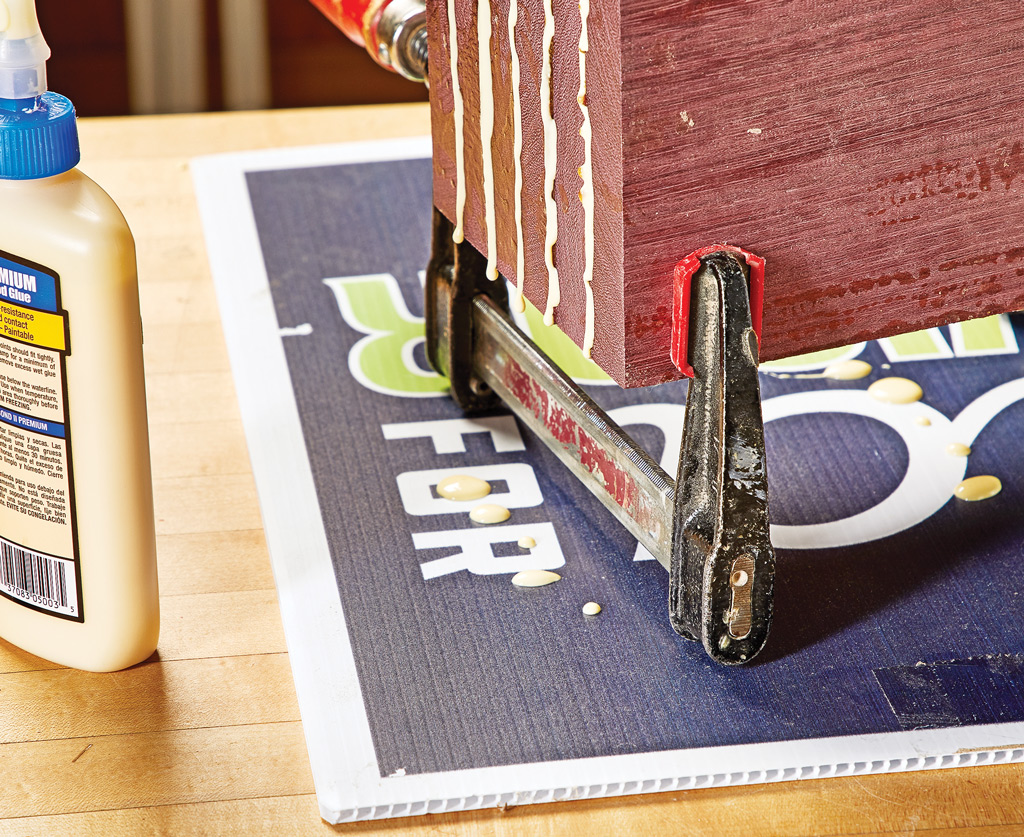
Glue-ups and project assembly can be hard on a workbench. A protective surface helps keep glue and other messes off the benchtop.
William Collett of Bettendorf, Iowa, found a useful material for this job: old plastic yard signs.
After a yard sale or other event, discarded plastic signs can provide a reusable surface for assembly work. William places one on his bench to protect the worksurface while he works on a project.
The signs can be used multiple times before they're worn out and need replacing.
Woodsmith Tip: Clean the sign before using it, and check for staples, sharp edges, or other hardware that could scratch a workpiece. Use only signs you own or have permission to take.
Shop tip submitted by William Collett, Bettendorf, Iowa.
3. Protect Project Parts with a Carpeted Workbench Mat
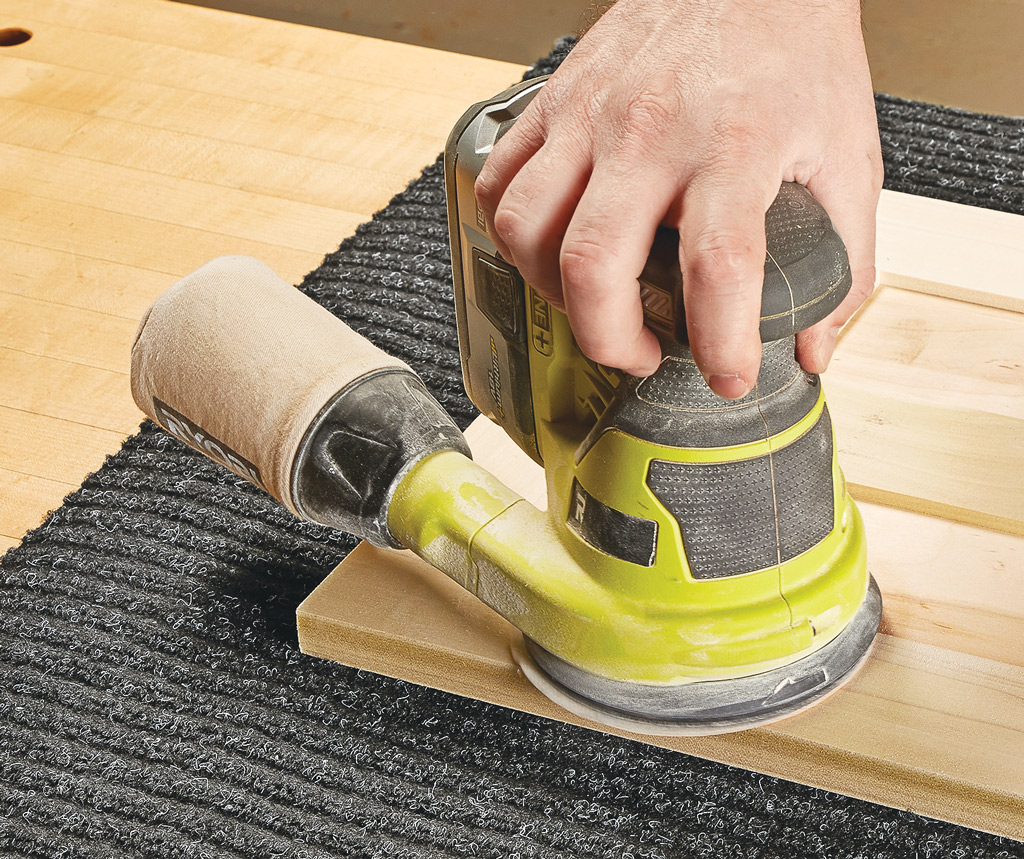
Setting finished or nearly finished parts on a hard workbench can lead to scratches and dents. A cushioned surface helps protect those parts while you work.
Jim VanWiltz of Harlan, Iowa, uses an inexpensive carpeted floor runner as a workbench mat.
The carpet provides a soft surface that helps prevent dings. It also adds some grip, reducing the tendency of parts to slide around during suitable bench tasks.
Because floor runners are readily available at big-box stores, it's an easy way to cover a larger portion of the bench without making a custom mat.
Woodsmith Tip: Keep the carpet clean and free of trapped chips, screws, and other debris that could scratch a project. For operations that require firm, precise support, work directly on a suitable rigid surface instead.
Shop tip submitted by Jim VanWiltz, Harlan, Iowa.
4. Store Power Tool Manuals Right at the Machine
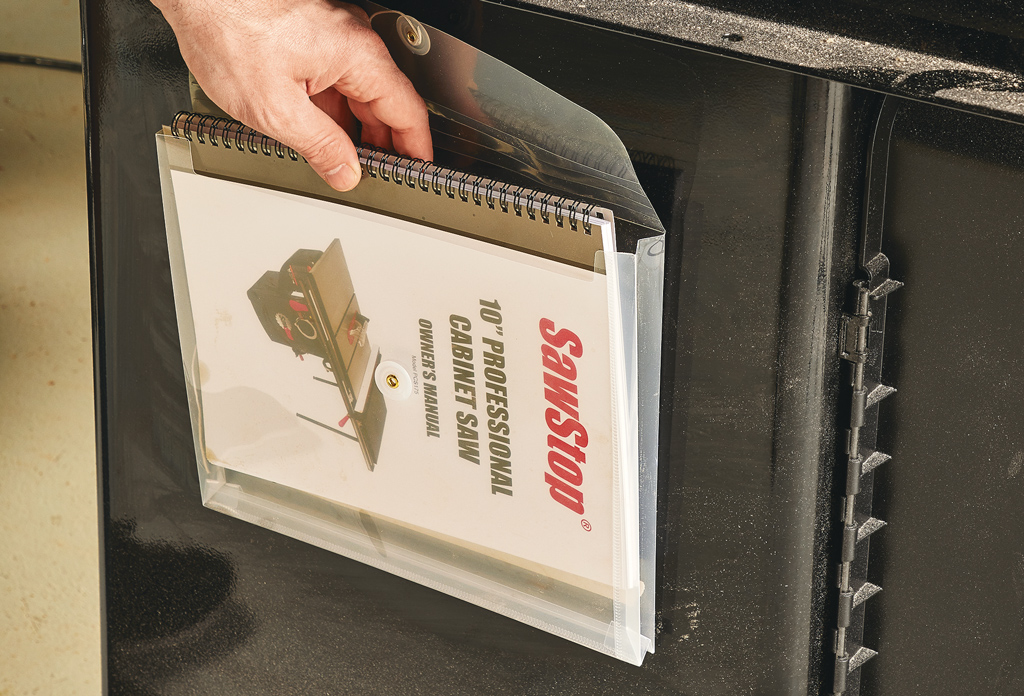
A tool manual is useful when you need to check an adjustment, look up a part, or review a maintenance procedure. But finding the right manual can be frustrating when they're all stuffed into a shop cabinet.
Richard Leif of Port Hillard, Massachusetts, keeps each manual close to the machine it belongs to.
He uses a clear expanding portfolio attached to the side of the machine with double-sided tape. The portfolio provides a dedicated storage spot, and its closure helps keep dust off the paperwork.
Now, when Richard needs information about a tool, he knows exactly where to find its manual.
Woodsmith Tip: Mount the portfolio on a stationary surface away from controls, moving parts, ventilation openings, and hot areas. Make sure the tape holds securely and the portfolio won't interfere with operating the machine.
Shop tip submitted by Richard Leif, Port Hillard, Massachusetts.
Inexpensive Ideas for a More Organized Workshop
These four reader-submitted tips show how everyday materials can improve your workspace. Short dowels offer an alternative to conventional pegboard hooks, plastic yard signs provide reusable assembly surfaces, a carpeted runner cushions project parts, and a clear portfolio keeps tool manuals accessible.
Each is a simple idea you can adapt to the tools and workbench in your own shop.